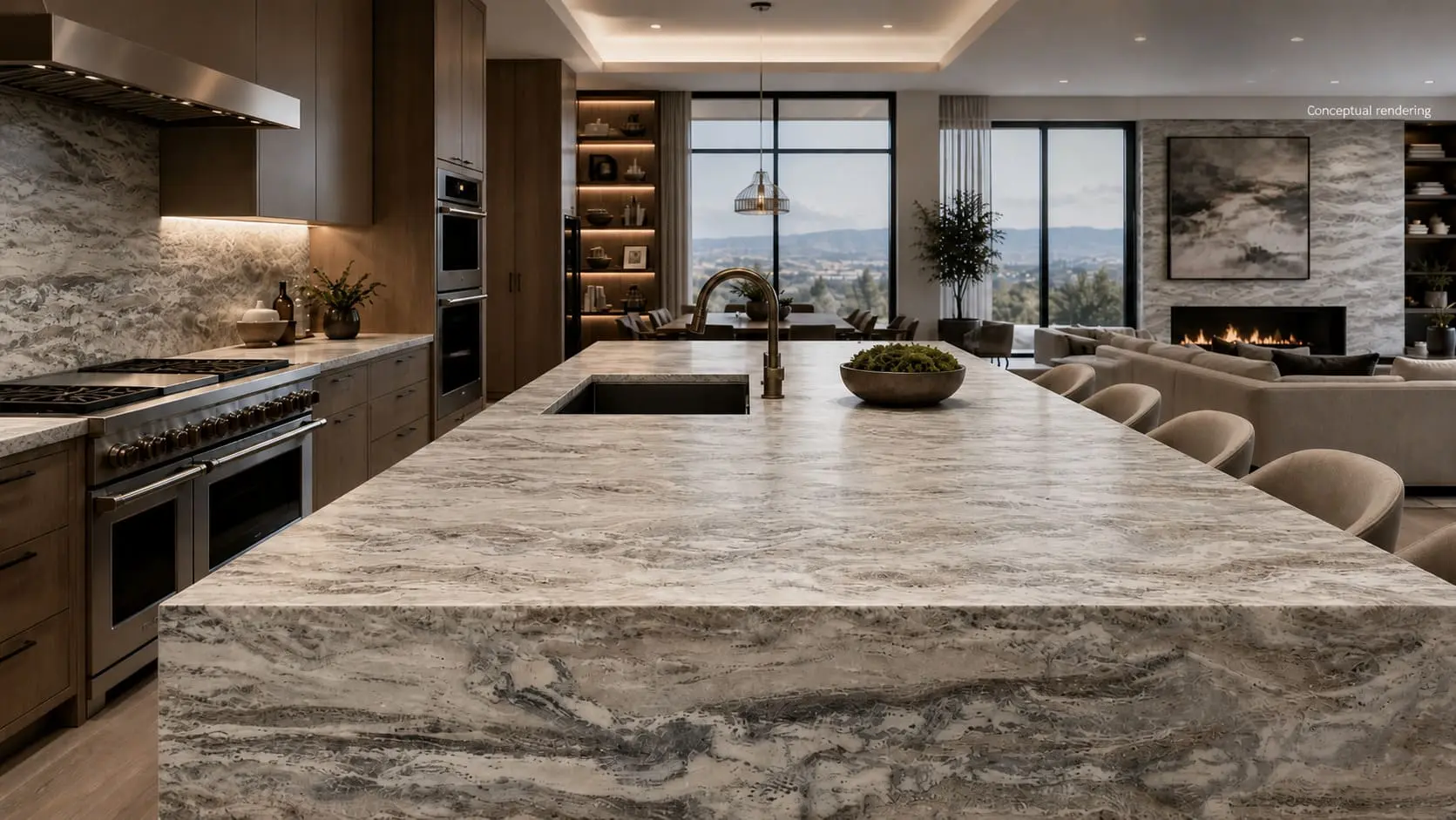
Dolomite is a natural stone composed of calcium magnesium carbonate (CaMg(CO₃)₂), formed as a sedimentary rock with a refined, mineral-rich structure. When finished with a honed surface, it is ground to a smooth, matte texture that diffuses light rather than reflecting it, creating a soft, velvety appearance. Honed dolomite is increasingly specified for countertops in kitchen remodels and bathroom renovation projects due to its understated elegance and practical surface qualities.
Dolomite forms when limestone comes into contact with magnesium-rich groundwater, a geological process called dolomitization. This process produces a stone that is generally harder and less porous than marble while sharing a similarly refined aesthetic, making honed dolomite a practical option for countertops where both appearance and durability matter. The stone is quarried from natural stone regions across the globe, with each quarry of origin influencing the slab's veining character and color range.
Because it is a natural stone, each slab tends to carry its own distinct veining pattern in shades of white, gray, beige, and taupe, which can give every project a naturally individual character.
Nova Tile and Stone's Product Range Browse Natural Stone Slabs
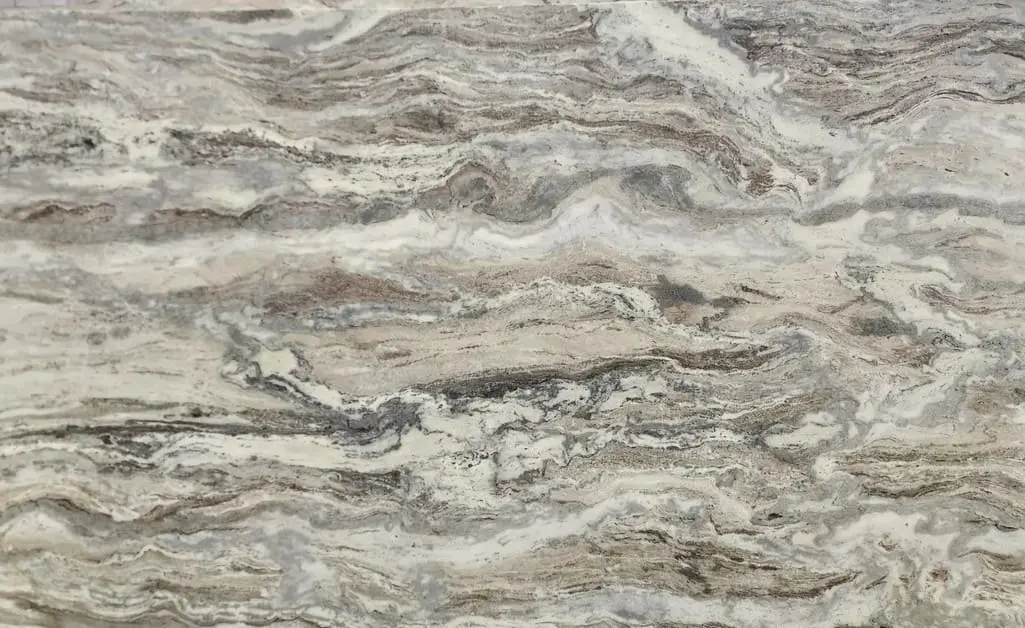
Dolomite Countertops: Durability and Performance
Dolomite rates approximately 3.5 to 4 on the Mohs hardness scale, placing it above most marble varieties, which range from 3 to 5, and below granite, which typically rates between 6 and 7. This can give the stone a scratch resistance advantage over lower-rated marble types while preserving the organic, refined look that natural stone is valued for.
Beyond scratch resistance, the stone is known for notable heat tolerance, generally handling warmth better than engineered quartz, which is resin-bound and susceptible to heat damage. It is also less porous than marble, making it somewhat more resistant to staining, though like all natural stone countertop materials, it remains porous. Periodic sealing, typically once or twice a year, is recommended to guard against acidic substances such as citrus juice or vinegar and to maintain long-term surface performance.
With proper care, honed dolomite can maintain their structural integrity and natural appearance for decades, making them a sound long-term material consideration for both residential and commercial projects.
The Distinctive Appeal of Honed Dolomite Stone
Among the qualities that make honed dolomite a notable choice is the combination of tactile warmth, visual depth, and versatility in design application. As a matte finish surface option, it diffuses light rather than reflecting it, allowing the natural veining and color variations within the stone to appear soft and evenly distributed across the surface. The result is a finish that feels grounded and refined, distinct from the high-gloss reflectivity of polished stone.
The color palette of this stone, predominantly soft whites and cool grays with subtle warm undertones, tends to work well with a wide range of cabinet colors, hardware finishes, and flooring materials. Whether paired with warm wood cabinetry, crisp white shaker-style cabinets, or bold charcoal tones, honed dolomite can serve as a grounding element that ties a space together without overpowering it.
Dolomite is available in four finish options: polished, honed, leathered, and specialty. Each finish serves a different design intention, allowing the same stone to meet a wide range of surface requirements. This versatility extends beyond the finish itself to the range of applications the material supports.
As a natural stone slab, this material is suited to a wide range of indoor applications beyond countertops, including interior walls, flooring, backsplashes, and fireplace surrounds. Its heat-tolerant composition can make it a practical consideration for surfaces near heat sources, while its matte finish and natural veining tend to work well across both high-use and decorative applications.
Dolomite Slab Origin and Sourcing
Dolomite is quarried from natural stone regions across the world, with established sources in Italy, Spain, Brazil, and China, as well as parts of North America and Europe. The specific quarry of origin influences the stone's color range, veining character, and crystalline density, all of which make selecting slabs in person an important part of the sourcing process.
At Nova Tile and Stone, that sourcing process starts with careful selection. We source our honed dolomite slabs from reputable quarries that maintain rigorous standards for quality and consistency. Each slab is evaluated for structural integrity, veining uniformity, and finish quality before it reaches our showroom floor, so that every slab we carry meets the expectations of homeowners and designers alike.
Browse Honed Dolomite Slabs for Your Next Project
Because dolomite slabs vary by quarry of origin, veining pattern, and finish, seeing them in person is the most reliable way to make the right selection. At Nova Tile and Stone, our showroom carries a curated selection of honed dolomite slabs across a range of veining styles and finish options. Our team is available to answer questions about stone properties and finish characteristics, and to help homeowners and designers identify the slab that best fits their project.
Visit our showroom today and find the right honed dolomite slab for your project.
Note: Some images on this page may be conceptual renderings created to illustrate design possibilities and may not depict actual installations.
Frequently Asked Questions
These slabs are available in four finishes. A polished finish produces a high-gloss, reflective surface that intensifies the stone's natural color. A honed finish creates a smooth, matte surface that is generally more forgiving of everyday wear and can help reduce the visibility of minor scratches and etching compared to polished stone. A leathered finish introduces subtle surface texture while preserving the stone's natural tones, lending an artisanal quality suited to both rustic and contemporary spaces. Specialty finishes address custom surface requirements for specific design or functional applications.
Honed dolomite are suitable as a material for kitchen countertops and bathroom vanities, interior wall cladding, backsplashes, feature panels, indoor flooring in entryways and living spaces, and fireplace surrounds. Their heat tolerance can make them a practical consideration for surfaces near heat sources, though protective measures such as trivets are still recommended, and their matte finish tends to perform well in both high-use functional areas and decorative applications where a natural, understated texture is desired.
When comparing dolomite vs marble for countertops, dolomite rates approximately 3.5 to 4 on the Mohs hardness scale, while marble typically ranges from 3 to 5 depending on its variety. This means the stone is generally more consistent in its scratch resistance than marble, though the two can overlap in hardness at the higher end of marble's range. It is also less porous than marble, offering somewhat better resistance to staining. Both stones require sealing, but the material tends to perform more consistently in busy kitchen environments where acidic substances and daily wear are common.
Dolomite is quarried from regions across the world, with Italy among the most historically significant sources; the Dolomite Alps of northeastern Italy take their name from the mineral itself. Spain, Brazil, and China are also established producers, along with sources in North America and other parts of Europe. The quarry of origin influences the slab's color range, veining pattern, and crystalline structure.
Daily care is straightforward: wipe down the surface with a soft cloth, mild dish soap, and warm water. Avoid acidic or abrasive cleaners, as these can etch the stone and degrade its sealant. Cutting boards, trivets, and coasters should be used consistently to protect the surface from staining and scratching. Periodic resealing, typically once or twice a year, helps maintain the stone's stain resistance. With proper care, honed dolomite countertops can last for decades.