Durability
and Performance: Built to Last
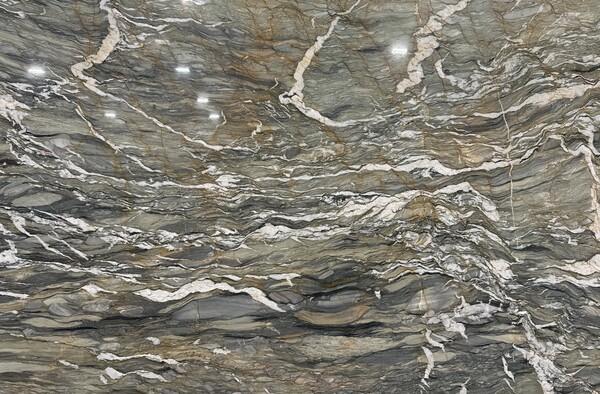
Its visual appeal, however, is only part of the story. Rating between 7 and 8 on the Mohs hardness scale, green quartzite is harder than granite (6–7) and significantly harder than marble (3–5). This translates to strong resistance to scratches and chipping under normal kitchen conditions. Because it contains no resins or synthetic binders, it does not scorch or melt under high temperatures, a clear advantage over engineered quartz, whose resin content makes the surface vulnerable to heat.
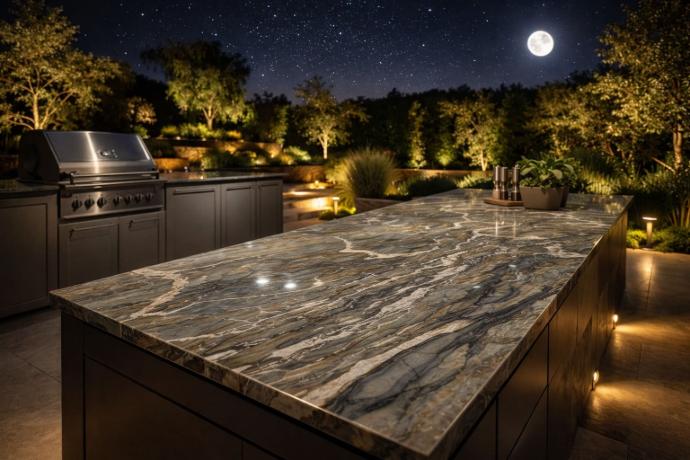
For those weighing their options, a green porcelain countertop is a common alternative, it is non-porous and requires no sealing, but it lacks the natural veining and depth that quartzite develops through geological formation. Green quartzite is also UV-stable, retaining its color and surface integrity under direct sunlight. This makes it a practical option for outdoor kitchens and covered patios in addition to indoor applications. Quartzite is porous, so professional sealing at installation and annual resealing are necessary to protect the surface from liquids and staining. Routine cleaning requires only a soft cloth, mild dish soap, and warm water.
Applications
Throughout the Home
That durability extends to virtually every room in the house. Green quartzite is well-suited for a range of applications beyond the kitchen. In bathrooms, its density and low absorption rate, when sealed, make it a reliable material for vanity tops and shower surrounds. Paired with brushed gold or matte black fixtures, it introduces a refined, spa-like quality to the space.
In living areas, it serves effectively as a fireplace surround or accent wall, where its natural color and movement create a strong visual focal point. For a cohesive finish, fabricators can cut backsplash tiles and wall cladding from the same slab as the countertop, producing a continuous flow of pattern and color across the room.