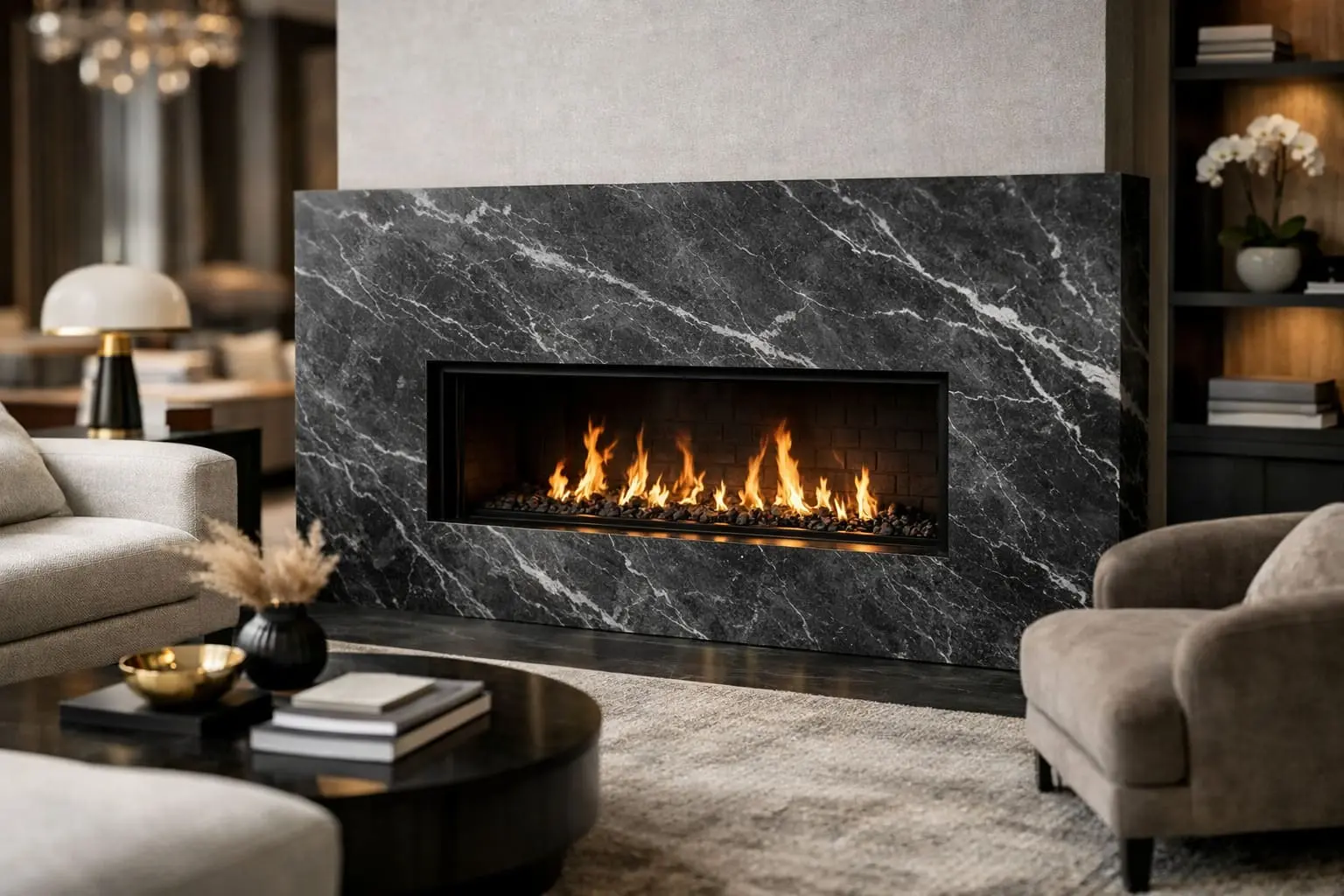
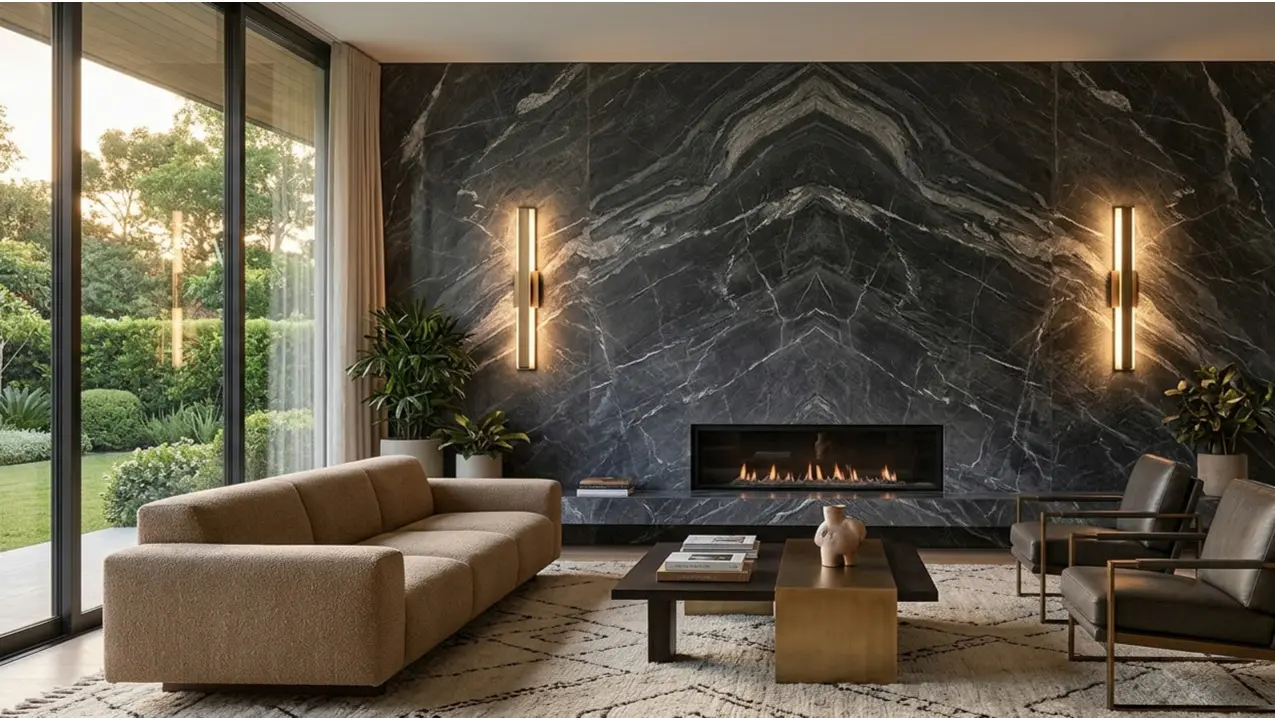
Graphite Marble as a Fireplace Material
Fireplace surrounds call for a material that holds its
presence in a prominent interior space, and graphite marble meets that
requirement through its density, depth of tone, and natural surface variation.
The dark, cool tones absorb light in a way that gives the surround a sense of
weight and intention. Marble is a suitable choice for this application, but it
is important to note that direct and prolonged exposure to extreme heat can
affect the stone over time. The surround framing is generally positioned away
from direct flame contact, which makes it a workable option when the
installation is planned correctly.
There are several fireplace surround types and configurations to consider during the planning stage,
and understanding the construction of the opening will help determine how the
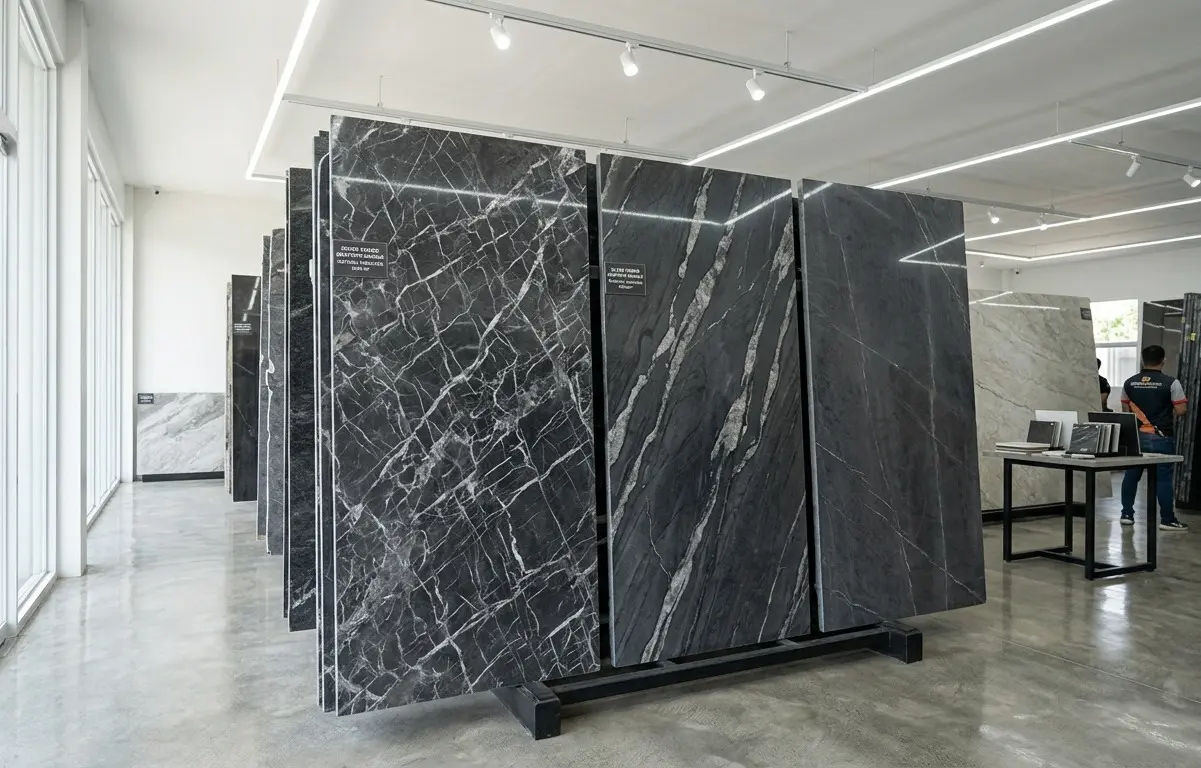
slab should be cut and fitted. Our team works with homeowners, interior
designers, and contractors to identify slabs well suited to each project's
scope and scale. For guidance on finish selection, the Natural Stone Institute offers a helpful resource on how different finishes
interact with stone in residential settings.
Surface and Performance Considerations for Fireplace Surrounds
Stone selected for a fireplace surround should be evaluated
for both its visual qualities and its surface performance. A polished finish
reflects light and brings out the tonal depth of graphite marble, while a honed
or leathered finish produces a quieter, more textured result. The surface is
durable, but edges and corners require extra care during fabrication and
installation to avoid chipping. Marble has some natural porosity, so sealing
after installation is recommended to help limit the absorption of dust, soot
residue, and cleaning products.
The stone performs well in interior
environments, but standing moisture and prolonged contact with harsh cleaning
agents should be avoided. Those interested in how graphite marble reads in
other interior applications can also browse our graphite
marble countertops. Consulting a fabricator about sealing requirements
specific to the surround installation is a useful step before the project
begins.