
Ledger stone made from granite is a natural stone cladding of thin, split-face strips stacked in tight horizontal rows, giving exterior walls and outdoor features a layered, textured masonry look. Homeowners, designers, and contractors use granite ledger stone on facades, lower wall bands, and entry walls, as well as garden walls, raised planters, retaining wall faces, columns, and outdoor kitchen islands.
Granite suits these uses because it is dense and absorbs very little water, but it is not waterproof, so contractors typically install it over a prepared wall with a moisture barrier and drainage. Our ledger stone collection and broader selection of tile, stone, and slabs let you compare granite colors and textures before the project begins.
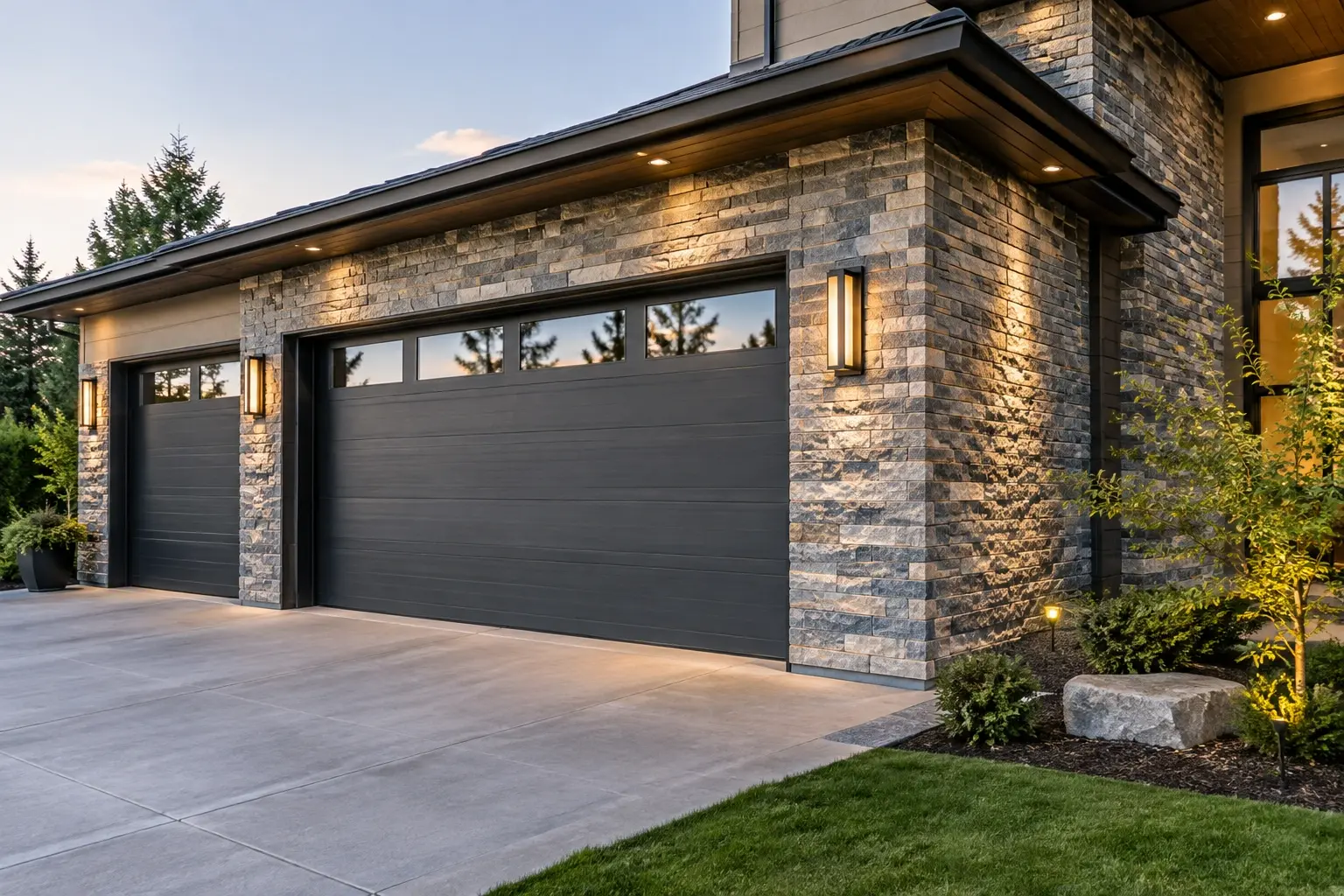
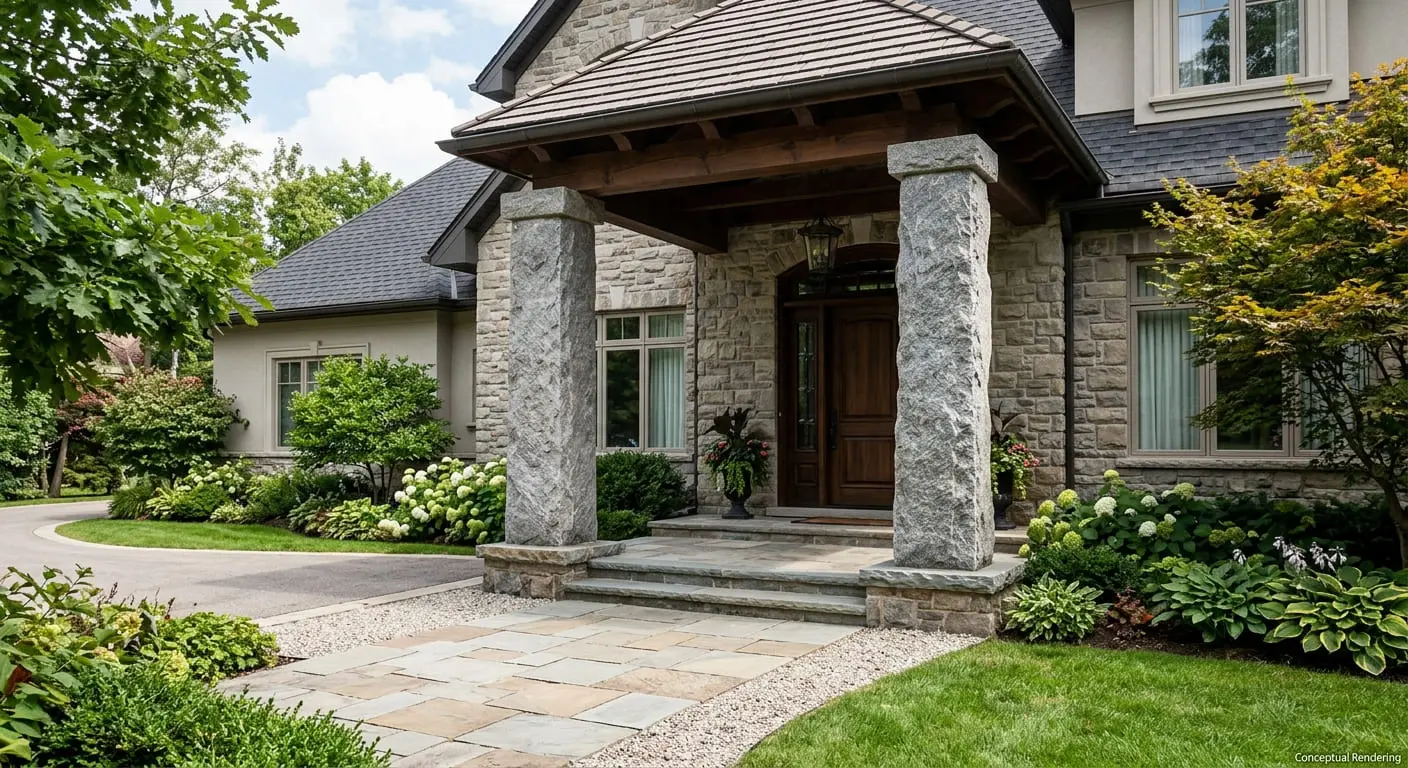
Granite Ledger Stone on Exterior Walls
On exterior walls, granite ledger stone adds texture and visual weight to the house, and it is commonly applied across a full facade, as a band along the lower walls, or on an entry wall that frames the front door. Granite suits this role because it is an igneous rock made largely of quartz and feldspar, with a tightly interlocking crystal structure that tends to resist wind, rain, and everyday weathering. It is not waterproof, though, so exterior wall applications are typically installed by the customer's contractor over a prepared wall with a moisture barrier, drainage at the base, and flashing that keeps water from getting behind the stone.
Natural stone also adds significant load, which the contractor accounts for before ordering. Our exterior ledger stone page shows how stacked stone looks on different home styles, and This Old House's guide to stone veneer explains how thin natural stone is applied to an exterior wall.
Granite Ledger Stone for Outdoor Features
Beyond the house, granite ledger stone faces the features that shape a yard, including garden walls, raised planters, retaining wall faces, gate pillars, porch columns, and outdoor kitchen islands. In each case the stone works as a decorative layer over a core of block, concrete, or framing built to carry it, so the core does the structural work while the granite provides the finished look. Raised planters hold damp soil against their walls, so their interiors are typically waterproofed during construction.
Freestanding features are exposed on several sides, which makes the top as important as the face, and this Houzz article on dry-stacked garden walls explains how capstones help keep water from entering from above. For outdoor kitchen islands, many customers pair a ledger-clad base with a countertop cut from the granite slabs in our inventory.
Pros and Cons of Granite Ledger Stone on Walls and Outdoor Features
Granite brings real strengths to exterior walls and yard features, along with trade-offs worth planning for early. The table below sets both side by side, and adding a few extra pieces to your quote request helps cover natural color variation and future repairs.
Factor | Pros | Cons |
Durability | Hard, dense stone that tends to resist weathering. | Edges and corners can chip if struck. |
Moisture | Absorbs very little water, so freeze-thaw risk tends to be low. | Water trapped behind the stone or at the base can still cause staining or damage. |
Appearance | Split faces and mineral flecks add depth, and color generally holds in sun. | Pieces vary in tone, and some granites with iron-bearing minerals can show rust spots. |
Weight | Solid, substantial look on walls, columns, and islands. | Adds significant load, so the wall or feature core must be built to carry it. |
Upkeep | Many dense granites need little or no sealing. | Textured faces collect dust and pollen, and pressure washing or harsh cleaners can cause harm. |
Repairs | Damaged pieces can typically be replaced individually. | Matching a later batch can be difficult because of natural variation. |
Caring for Granite Ledger Stone on Walls and Outdoor Features
Exterior walls and yard features clad in granite need only light, regular attention, and the Natural Stone Institute's consumer care page covers cleaning products and stain types in more depth.
Rinse walls and features with clear water a few times a year and loosen dirt in the textured faces with a soft-bristle brush, but avoid pressure washers, which can harm the stone and mortar joints.
Use a neutral cleaner or stone soap for tougher grime, and keep acidic products, abrasive powders, and harsh chemicals off the stone, especially rust removers containing hydrofluoric acid.
Treat moss or algae on shaded walls and planters with a mild bleach and water solution, rinse thoroughly, and do not combine bleach with ammonia.
Remove efflorescence by dry brushing or vacuuming instead of washing, and ask a contractor to trace the moisture if it returns.
Keep sprinkler spray, soil, and mulch off the lower courses of walls and features so standing water does not collect against the stone.
Ask our team whether the granite you choose benefits from sealing, since many dense granites need little or none, and an impregnating sealer adds stain resistance without making the stone stain proof.
Frequently Asked Questions
Granite ledger stone is commonly used on exterior walls, either across a full facade, as a band along the lower walls, or on an entry wall. The wall needs to be built or prepared to carry the weight of natural stone, along with a moisture barrier and drainage behind the stone.
Granite ledger stone is often used on garden walls, raised planters, retaining wall faces, gate pillars, porch columns, and outdoor kitchen islands. It serves as a decorative layer over a block, concrete, or framed core that carries the structural load.
The pros of granite ledger stone outdoors include a dense, weather-tolerant body, very low water absorption, and natural texture. The cons include significant weight, tone variation between pieces, and textured faces that collect dust, while trapped water can still cause staining or damage.
Rinse granite ledger stone with clear water and a soft-bristle brush, and use a neutral stone cleaner for heavier dirt. Avoid pressure washing, acidic or abrasive cleaners, and rust removers with hydrofluoric acid, and brush efflorescence off dry rather than washing it.
Granite absorbs very little water, so freeze-thaw risk on walls and outdoor features tends to be low, but it is not zero. Damage usually traces back to water trapped behind the stone, along the base, or entering an uncapped top, which then freezes and expands.
Choosing Granite Ledger Stone for Your Walls and Outdoor Features
Granite ledger stone gives exterior walls and outdoor features a layered, natural texture, and its dense body tends to handle sun, rain, and frost well with simple care. Its trade-offs, mainly weight, piece-to-piece variation, and the need for good drainage, are manageable when you plan for them early with your contractor.