Dolomite Outdoor Kitchen Countertop
Natural Stone Elegance for Exterior Spaces
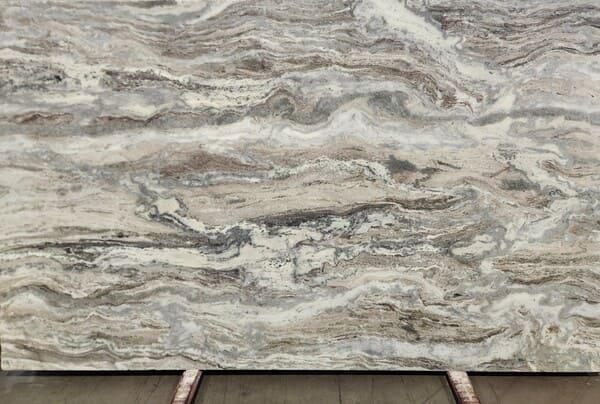
Fantasy Brown
DOLOMITE
Finish: Honed (matte)
Store Location: Minden, NV
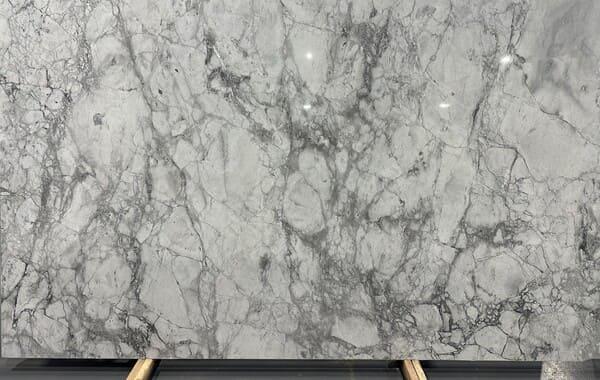
Super White
DOLOMITE
Finish: Polished
Store Location: Sacramento, CA
Dolomite outdoor kitchen countertop slabs are natural metamorphic stone surfaces composed of calcium magnesium carbonate, formed through dolomitization, a geological process where magnesium-rich fluids chemically alter limestone over millions of years.
This material ranks 3.5-4 on the Mohs hardness scale, positioning it between marble and quartzite in durability. UV-resistant mineral composition helps prevent fading from sun exposure, while the stone's moderate porosity requires professional sealing for weather protection.
These surfaces bring sophisticated natural stone character to exterior cooking environments.
Why Choose This Natural Stone for Exterior Cooking Areas
Natural stone surfaces designed for outdoor environments must balance aesthetic appeal with weather resistance. This metamorphic material offers a compelling middle ground between marble's elegance and quartzite's hardness, suitable for covered spaces with proper maintenance. Ranking 3.5-4 on the Mohs hardness scale, the magnesium-enriched composition provides better resistance to acidic rain and contaminants. While not as hard as granite or quartzite, the stone's moderate density handles typical use appropriately.
The natural color palette complements exterior design schemes, from contemporary minimalist spaces to Mediterranean-inspired courtyards. Unlike synthetic alternatives that appear artificial in natural light, organic variations create authentic ambiance. While marble outdoor kitchen countertops offer timeless elegance and natural stone kitchen countertops provide dramatic luxury, this material delivers balanced performance for protected exterior settings.
Selecting Your Dolomite Outdoor Kitchen Countertop Slab
Once this stone's aesthetic qualities appeal to you for exterior use, selecting appropriate material becomes essential. Choosing surfaces requires understanding both visual preferences and practical considerations. Thickness is typically 3cm for optimal durability. Consider these critical factors:
- Color selection: Lighter tones reflect heat and show less weathering, while darker stones may absorb more warmth and require more frequent maintenance
- Veining characteristics: Subtle variations minimize visible wear over time, while bold veining creates dramatic focal points
- Surface finish: Polished surfaces deliver reflective elegance, honed finishes offer matte sophistication, and special finishes are often available upon request
- Weather exposure: Evaluate coverage, direct sun exposure, and precipitation in your location
Beyond the physical characteristics of the slab itself, consider how the stone's natural movement and tonality will read under outdoor lighting conditions. Dolomite slabs can shift dramatically in appearance between morning sun, midday brightness, and evening ambiance, a book-matched or directional vein pattern that looks striking indoors may carry an entirely different energy in an al fresco setting. Visiting our showrooms to view full slabs in natural light, rather than relying on digital images alone, is the most reliable way to make a confident selection for your exterior space.
Professional Installation for Exterior Applications
Outdoor installations demand specialized expertise beyond standard interior work. Professional fabricators assess site-specific conditions including drainage requirements, substrate stability, and environmental exposure.
Proper installation includes moisture barriers beneath the stone, adequate slope for water runoff, and expansion joints to accommodate seasonal temperature changes. Exterior-grade sealers provide protection against moisture penetration, UV degradation, and freeze-thaw cycles. Fabricators account for weight distribution on structures, ensuring adequate support while maintaining structural integrity. Edge treatments receive additional weatherproofing attention.
Grout joint sizing and material choice also play a meaningful role in long-term exterior performance. For outdoor countertop installations, epoxy-based grouts are often recommended over cement-based options, as they resist moisture intrusion, staining, and the expansion stress caused by temperature swings. A skilled fabricator will also evaluate the countertop's proximity to a grill or fire feature, since sustained radiant heat near seams or edges can accelerate wear if not properly accounted for in the design layout.
Our Slab Knowledge Hub
Transform Your Space
Ready to enhance your exterior cooking area with natural stone sophistication?
Our tile and stone showrooms feature material selections suitable for these applications. Our design specialists evaluate your specific environment and help identify appropriate options considering coverage, climate, and maintenance commitment. Visit our locationsto discuss how dolomite outdoor kitchen countertops can elevate your exterior entertaining spaces.
Frequently Asked Questions
Yes. Dolomite outdoor kitchen countertops work well in covered or sheltered exterior cooking spaces. Its UV-resistant mineral composition helps prevent fading from sun exposure, and with professional sealing, it holds up reliably against the elements in protected outdoor environments.
Dolomite ranks 3.5–4 on the Mohs hardness scale, placing it between marble and quartzite in durability. Its magnesium-enriched composition offers better resistance to acidic rain and environmental contaminants than marble, making it a dependable choice for covered outdoor kitchen countertops with proper maintenance.
Exterior dolomite countertop slabs typically require resealing every 6–12 months due to weather exposure and temperature fluctuations. Exterior-grade sealers protect against moisture penetration, UV degradation, and freeze-thaw cycles, helping extend the life and appearance of the stone.
Granite offers superior hardness and weather resistance, making it better suited for fully exposed outdoor environments. Dolomite provides a more refined natural stone aesthetic at a lower cost and performs best in covered outdoor kitchen settings where direct weather exposure is minimal.
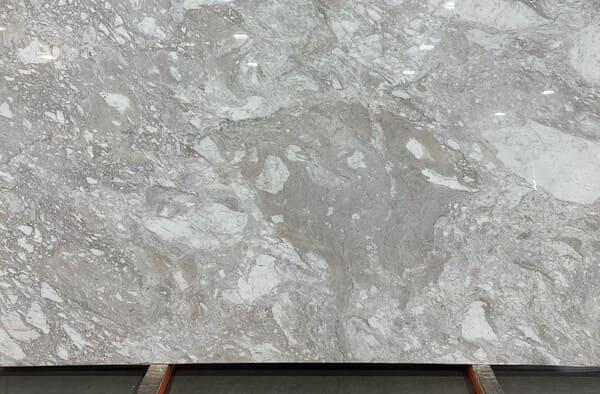
Available varieties include Fantasy Brown in a honed finish, Super White in a polished finish, and Vagli in a polished finish. Slabs are on display across showroom locations in Minden, Sacramento, and Reno, visit any location to view full slabs and find the right fit for your outdoor kitchen design.