Hard, Rare, and Built for Real Spaces: Dark Gray Quartzite Slabs
Dark gray quartzite forms when quartz-rich sandstone undergoes extreme heat and pressure deep within the earth, producing one of the hardest natural countertop materials available. It registers between 7 and 8 on the Mohs hardness scale, outperforming marble and rivaling granite in surface toughness. Standard slab dimensions typically range from 55 to 130 inches in length, providing ample coverage for kitchen islands, continuous bathroom vanity runs, and large-format floor fields.
Three finish options open the same stone to very different design outcomes. Polished brings a reflective sheen that amplifies the stone's dark depth and silver undertones. Honed delivers a flat, non-reflective surface with a softer, more matte character. Leathered adds a subtle tactile texture that enhances grip underfoot and conceals daily smudging on countertops. Unlike standard subway tile layouts where grout lines interrupt the visual field, a full quartzite slab creates a seamless, unbroken surface that is both easier to clean and far more impactful in scale.
One Stone, Endless Applications: Layout and Design Options
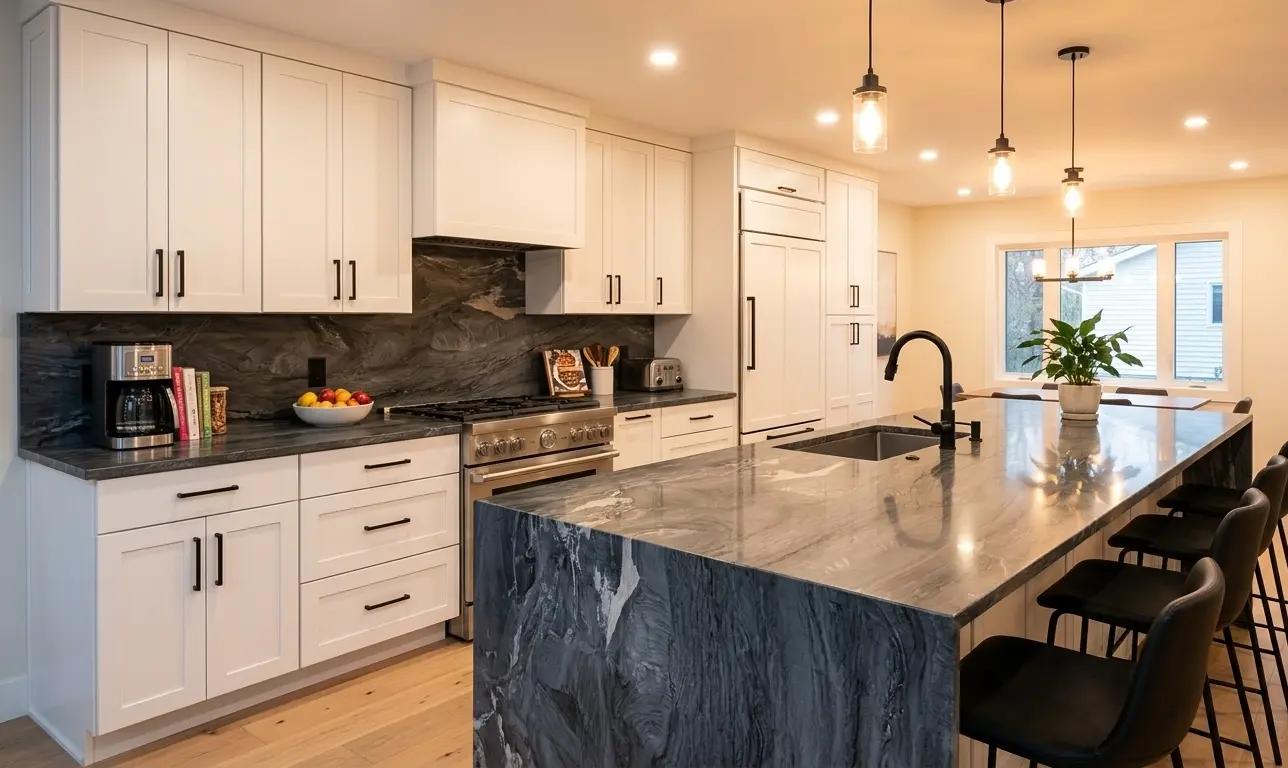
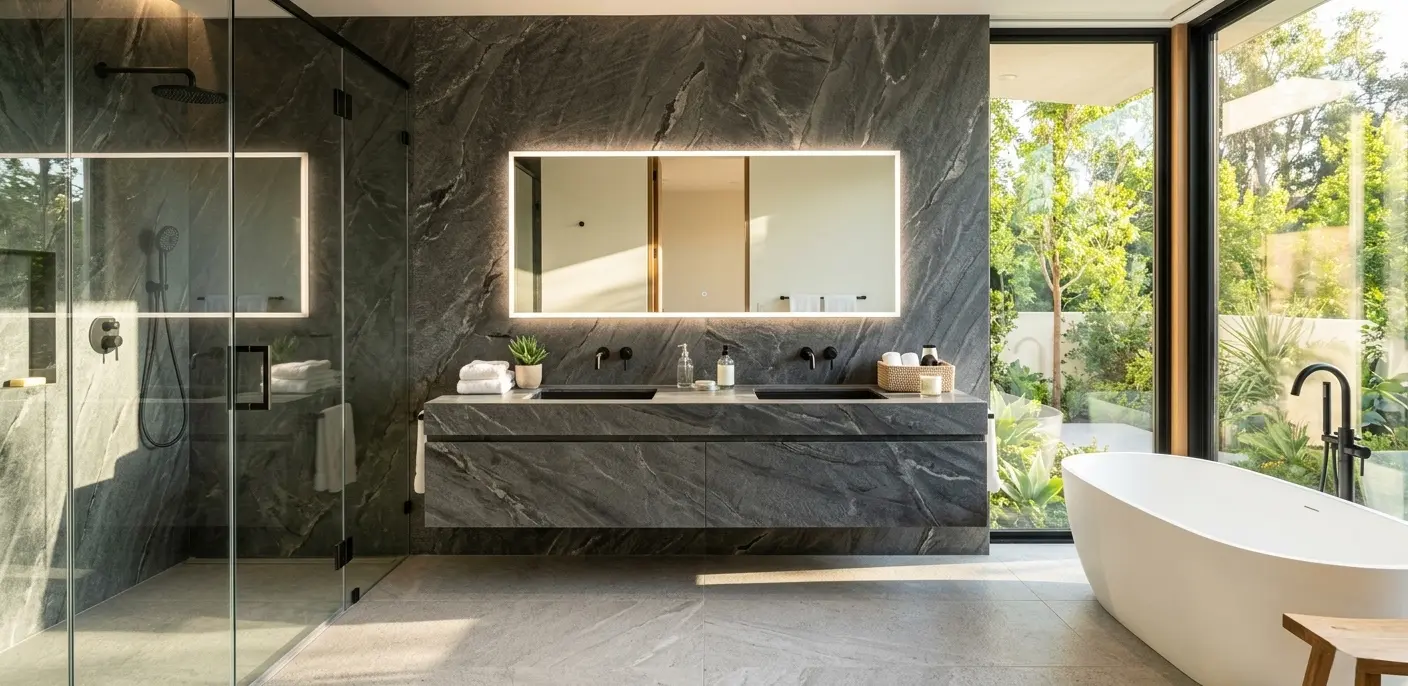
The deep tonal range of dark gray quartzite gives it unusual flexibility across interior styles. In contemporary kitchens, the stone pairs cleanly with white cabinetry, matte black fixtures, and warm wood accents, functioning as the grounding element that ties contrasting materials together. On bathroom vanity tops, its natural veining reads as intentional decoration, reducing the need for additional surface ornamentation.
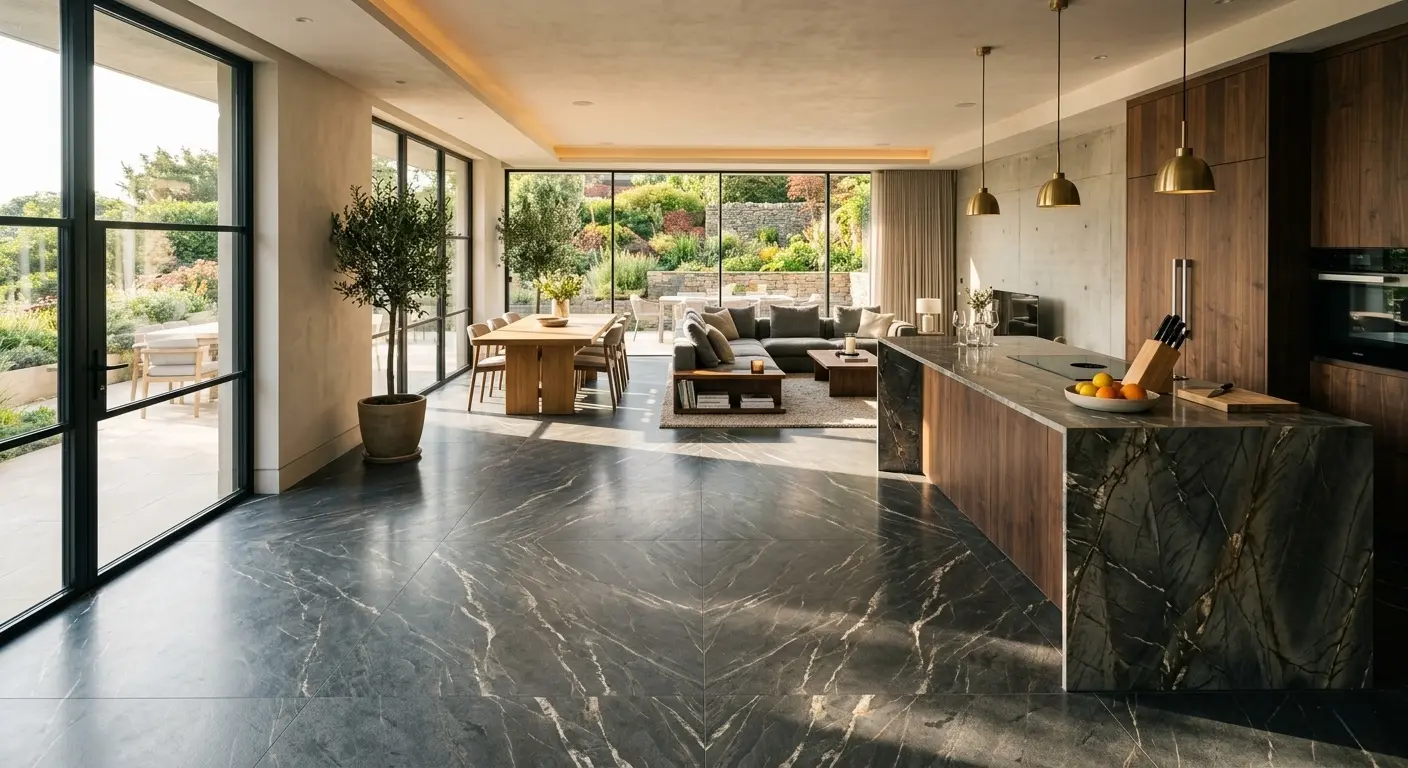
For flooring, large slab sections can be cut and placed using a bookmatched layout, where two mirrored slab faces are set side by side to create near-symmetrical veining across the floor plane. Vertical slab placement on shower walls or living room accent walls elongates the visual height of a space. Horizontal runs work well on kitchen backsplashes and fireplace surrounds. Browse current availability at the Nova Tile and Stone Live Slab Inventory to see what is in stock before committing to a design direction.
Why Dark Gray Quartzite Outperforms the Alternatives
- Hardness rating of 7 to 8 on the Mohs scale resists scratching from cookware and utensils
- Handles heat reliably near cooktops and ovens without surface damage
- Denser and less porous than marble, reducing staining risk when sealed properly
- Annual sealing is quick and maintains surface protection long-term
- Three distinct finish options match different maintenance preferences and aesthetic goals
- Rare dark coloration within the quartzite category makes each project visually distinctive
- One continuous slab surface eliminates grout maintenance across countertops and floors
- Home delivery available, with showroom pickup supported at four store locations
A Smart Investment That Only Gets Better With Time
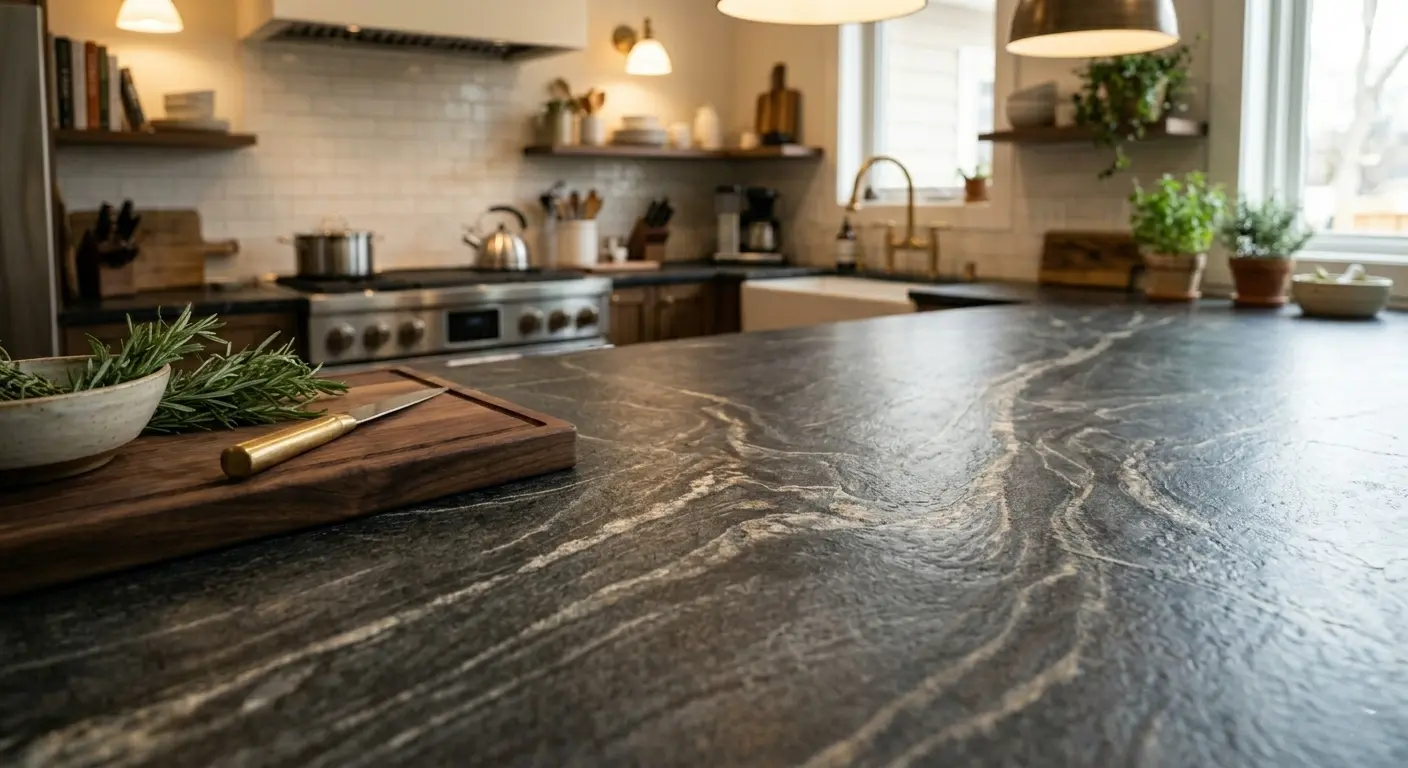
Most quartzite varieties come in white, cream, light gray or beige tones. A genuine dark gray quartzite is among the rarest color expressions in the natural stone market, which is exactly what makes it a compelling long-term investment. Real estate professionals consistently identify natural stone countertops and surfaces as among the upgrades that contribute most to resale value. The material's density and hardness mean it does not chip, dull, or visibly wear the way laminate and engineered alternatives do over years of daily use.
Rather than deteriorating, quartzite develops a subtle patina over time that adds character rather than signaling neglect. For homeowners comparing quartzite finish types and sizing before making a decision, the Taj Mahal Quartzite finishes, sizes, and design ideas guide provides a useful comparison of how finish selection influences both maintenance and appearance across different stone varieties.
Frequently Asked Questions
Yes. It ranks between 7 and 8 on the Mohs hardness scale, making it exceptionally resistant to scratching from knives and cookware. It also tolerates heat well, though trivets are still recommended for extended direct contact with hot pots.
Polished has a glossy, mirror-like surface that highlights depth and color. Honed is matte and non-reflective with a softer look. Leathered has a light surface texture that adds tactility, reduces shine, and hides fingerprints and water spots more effectively than polished.
Yes. Even though quartzite is denser than marble, annual sealing is recommended for countertop applications to prevent liquid absorption and staining over time. The process is straightforward and widely available through stone care professionals.
Quartzite is a 100% natural metamorphic stone. Engineered quartz is a manufactured material made from crushed stone bound with resin. Quartzite handles heat better and offers natural variation that engineered products cannot replicate, while engineered quartz offers more uniform color consistency.
Yes, and honed or leathered finishes are especially well-suited for floors because they provide better traction than polished. Large-format slab cutting allows for minimal or near-seamless joints across wide floor surfaces.