Brown Stone Countertop
The Enduring Appeal of Brown Stone Countertops
A brown stone countertop is a naturally occurring surface distinguished by its warm brown, tan, and beige tones, produced by mineral compounds such as iron oxide, silica, and calcium carbonate over thousands of years.
Because these tones and patterns develop entirely in nature, no two slabs are identical, making every installation inherently one of a kind. This material has been a preferred choice in residential and commercial interiors for generations, recognized for the visual authenticity that only naturally formed surfaces can provide.
Earthy
Resilient
Timeless
Distinctive
The Qualities That Set Brown Stone Apart
These surfaces stand out because of the visual depth that only genuine stone can provide. Each slab is shaped by distinct underground conditions, resulting in tonal variation and texture that factory-made alternatives cannot replicate. A travertine slab for countertop offers a softer, highly porous composition well-suited to bathroom vanities, backsplashes, and lower-traffic surfaces.
Granite is one of the densest options available, offering strong resistance to scratching, heat, and daily wear. Quartzite, formed from sandstone altered by heat and pressure, ranks among the hardest natural materials and is resistant to both scratching and acidic substances. Marble, prized for its dramatic veining and polished finish, is softer and benefits most from consistent maintenance.
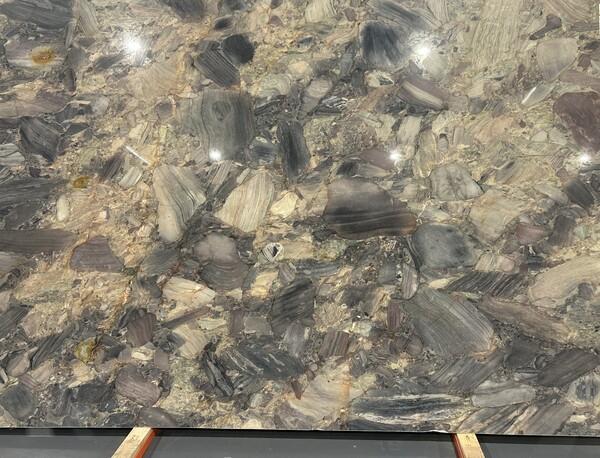
Excalibur (Granite)
Excalibur is a distinguished natural stone slab quarried in Brazil, featuring a white background accented by soft grey veining and warm brown tones that add depth and visual character to any surface. Its striking interplay of color and movement makes it a versatile choice for kitchen countertops, bathroom vanities, feature walls, and flooring in both residential and commercial settings.
With the durability, heat resistance, and scratch resistance characteristic of natural granite, Excalibur delivers both lasting performance and refined aesthetics. Each slab carries its own unique patterning, ensuring every installation is one of a kind.
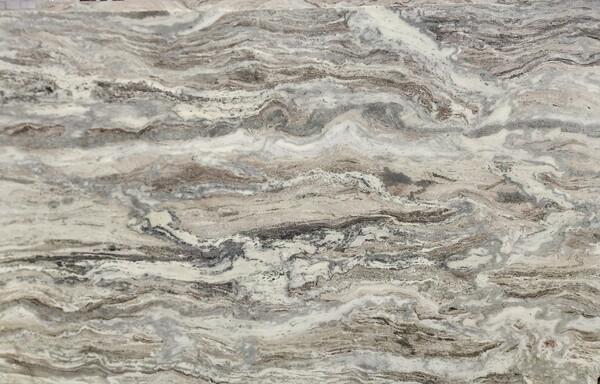
Fantasy Brown (Dolomite)
Fantasy Brown is a naturally occurring sedimentary stone quarried in Rajasthan, northern India, classified as a dolomite marble, harder and more durable than traditional marble yet softer than true quartzite. Its surface features a striking combination of cream, white, brown, and gray tones with sweeping diagonal veining and linear movement that gives each slab a dynamic, one-of-a-kind appearance.
Due to its exceptional hardness, it is cut using a granite gang saw and is well suited for kitchen countertops, bathroom vanities, fireplace surrounds, shower walls, and feature walls in both residential and commercial settings. Fantasy Brown Dolomite is recommended to be sealed annually to maintain its natural beauty and protect against staining.
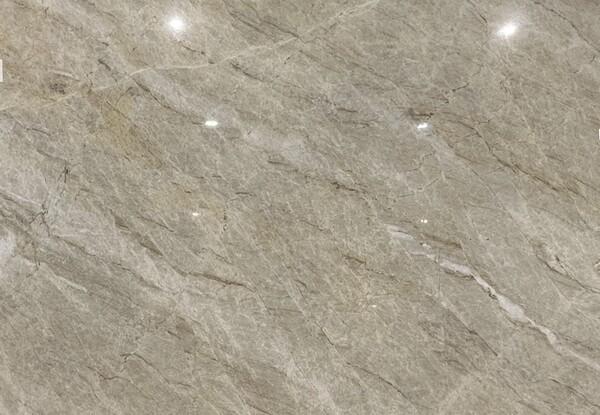
Allure (Quartzite)
Allure is a natural metamorphic stone quarried in Brazil, formed when sandstone is subjected to intense heat and pressure over millions of years, resulting in one of the hardest surface materials available in natural stone. Its background palette ranges from soft white and beige to blush gray, complemented by a dynamic interplay of creams, grays, and brown tones woven through with intricate, web-like veining that gives each slab a distinct sense of movement and depth.
Rated at 7 on the Mohs hardness scale, Allure Quartzite offers strong resistance to scratching, heat, and acidic substances, making it a practical and refined choice for kitchen countertops, bathroom vanities, backsplashes, feature walls, and flooring in both residential and commercial applications. Periodic sealing once to twice a year is recommended to maintain its surface protection and long-term appearance.
Design Versatility
One of the most compelling qualities of these surfaces is how naturally they adapt to different interior styles. As one of the most versatile earth tone countertops available, their neutral palette pairs well with cabinetry in crisp white, soft gray, deep navy, or rich walnut. Polished slabs with clean edges create a sleek aesthetic in contemporary kitchens, while honed or textured surfaces bring rustic character to traditional spaces.
They extend seamlessly to backsplashes and island surfaces. Combined with brass hardware or dark wood accents, they produce interiors that feel both refined and grounded.
Brown stone slabs for countertops also lend themselves well to open-concept layouts, where the continuity of warm, earthy tones can carry visual flow from the kitchen into adjacent living or dining areas. Because each slab is cut from a single natural formation, matching or bookmatching pieces for large islands or extended countertop runs is straightforward, and the result feels cohesive without appearing uniform.
Caring for Your Brown Stone Countertop
Sealing requirements vary by material. Travertine, being highly porous, benefits from resealing every six to twelve months. Granite typically needs resealing every one to two years, and quartzite follows a similar schedule. Marble, being more susceptible to staining and etching, is best resealed every three to six months.
For all natural stone kitchen surfaces, a pH-neutral cleaner diluted in warm water is recommended for routine maintenance. Abrasive pads, harsh chemical sprays, and acidic substances such as vinegar or citrus juice should be avoided. Wiping up spills promptly will preserve the surface's appearance and protective seal.
Finish selection also plays a role in long-term maintenance. A polished finish enhances color depth and provides a denser surface that resists staining, while a honed finish delivers a matte, understated look that may require more attentive sealing. Leathered finishes, available on select materials like granite, conceal fingerprints and minor scratches well, a practical consideration for busy kitchens. Our team at any of our four showroom locations can walk you through the finish options available for each material in our current slab inventory.
Learn More from Our Blog
Transform Your Space
At our four showroom locations, we carry an extensive inventory of slabs in a variety of materials, tones, and finishes. Whether you are in Reno, Sacramento, Minden, or Fernley, our stone slab selection spans the full range of natural materials to suit every design vision.
Our team is ready to guide you from identifying the right material to determining the best edge profile and thickness. Visit us in person to see each slab firsthand, or contact us today to schedule a consultation.
Frequently Asked Questions
Quartzite is a metamorphic stone formed from sandstone under intense heat and pressure, making it one of the hardest natural materials available and resistant to scratching and acidic substances. Marble is softer and more porous, making it more susceptible to etching and staining, but it is prized for its dramatic veining and refined finish.
Yes. Granite is one of the densest natural stone options available, offering strong resistance to scratching, heat, and daily wear, making it well suited for busy kitchen environments. Its natural variation in tone and pattern also means no two installations look exactly the same.
Granite and quartzite are the most suitable options for outdoor use due to their density and resistance to temperature fluctuations. Marble and travertine are more porous and less ideal for prolonged outdoor exposure, particularly in climates with freeze-thaw cycles.
Common edge profiles include straight, beveled, bullnose, and ogee. Straight and beveled edges suit contemporary kitchens, while bullnose and ogee profiles complement more traditional or transitional spaces. Our team at any of our showroom locations can help you select the right profile for your material and design direction.
Nova Tile and Stone carries slab inventory across four showroom locations in Reno, Sacramento, Minden, and Fernley. Visit us in person to see the full scale of each slab, compare finishes side by side, or book a free design consultation for personalized guidance.