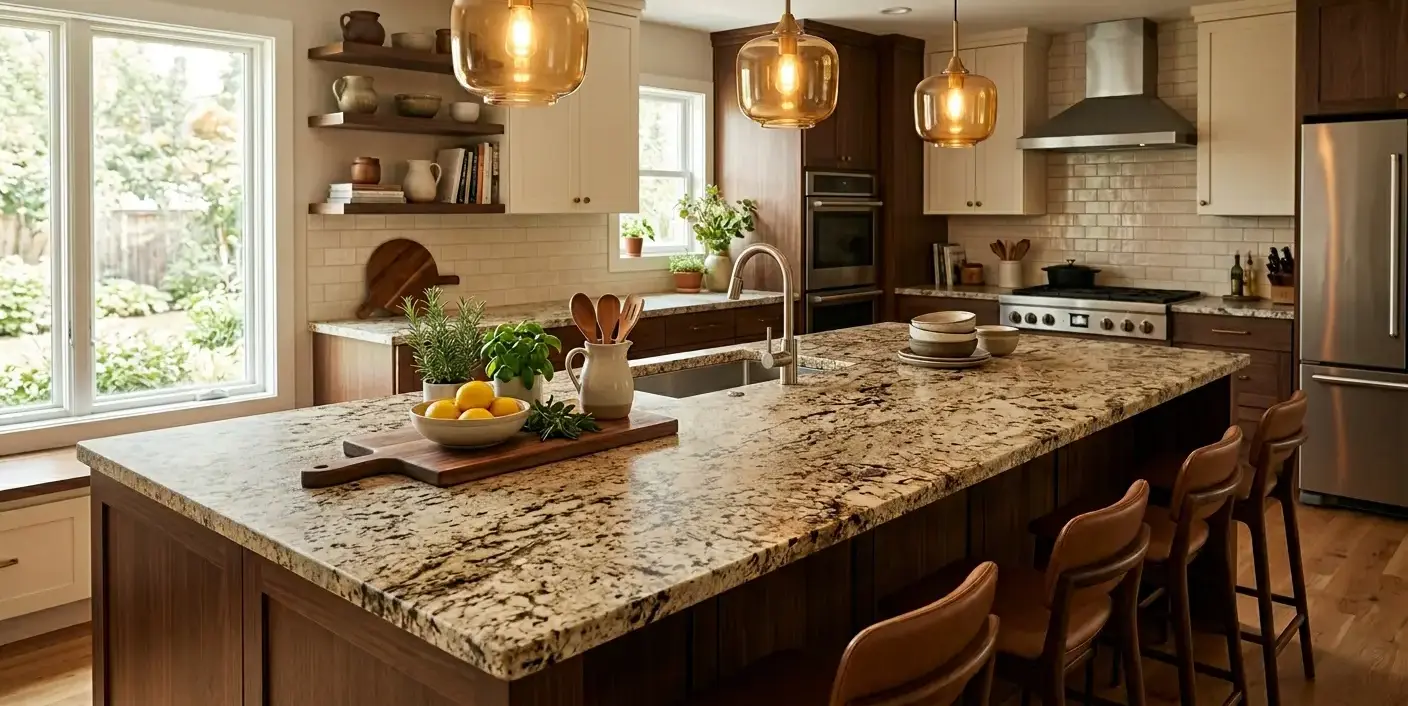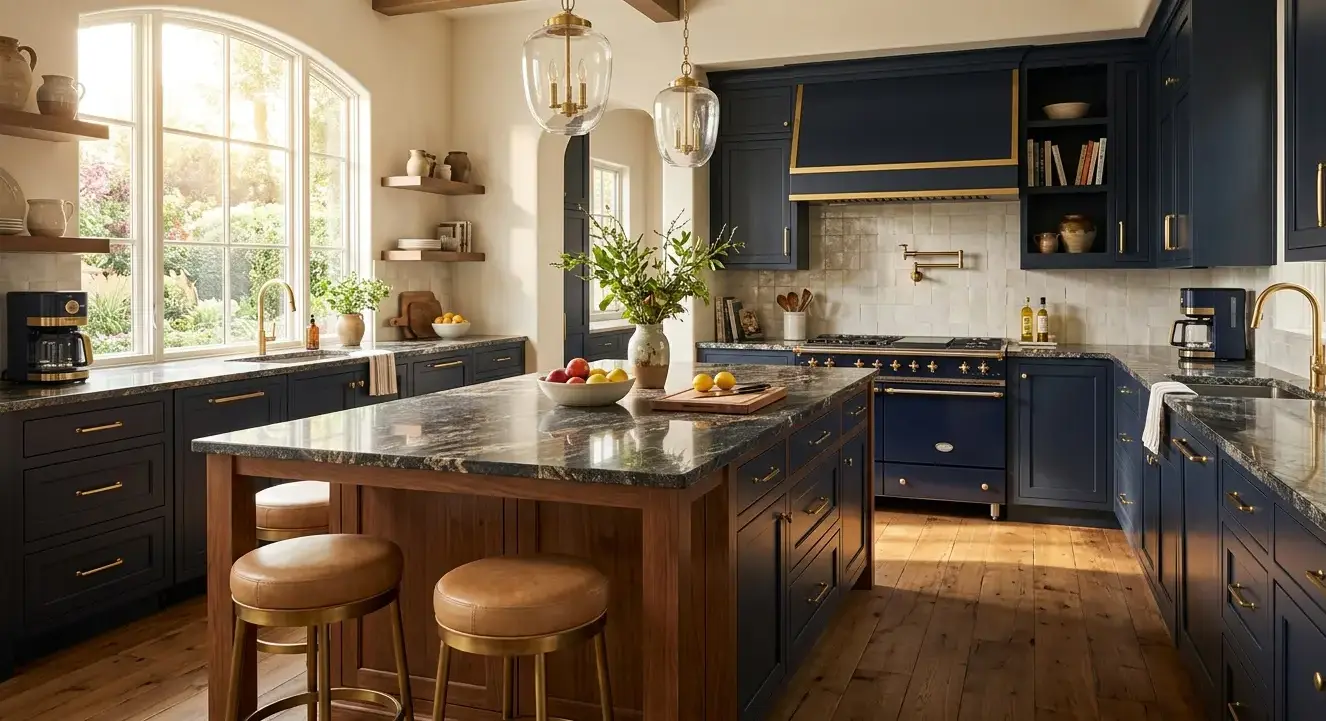
A brown slab used as a kitchen island brings natural warmth and geological depth to any kitchen layout, creating a surface that reads as both practical and design-forward. Granite leads the category for brown tones, offering polished, honed, leathered, and specialty finish options across a wide range of earth-toned slabs. Quartzite provides a vein-forward alternative in the same warm tonal range for those who prefer organic movement over granular texture.
Nova Tile and Stone slabs span both material families, with live inventory available across showrooms in Reno, Minden, Sacramento, and Fernley.
Rich Brown Granite and Quartzite: Material Origins and Stone Specifications
The warmest brown granite and quartzite options trace their origins to active quarrying regions across South Asia, Northern Europe, and South America, each producing slabs with distinct mineral compositions.
Quarry Origins: Tan Brown granite originates in Tamil Nadu, southern India, where iron-rich metamorphic activity over millions of years produced a dense chocolate-brown matrix flecked with feldspar and biotite. Baltic Brown granite is extracted from pegmatite formations along the southern coast of Finland, where slow crystallization created its signature orbicular swirls in dark brown and charcoal. Brown quartzite varieties, including those quarried in Brazil, form when quartz-rich sandstone undergoes intense heat and pressure, resulting in a dense metamorphic stone with warm earth-toned veining and exceptional hardness.
Both granite materials comply with ASTM C615, the standard specification for granite dimension stone. Quartzite slabs are generally evaluated under ASTM standards applicable to quartz-based dimension stone and are recognized for their low porosity, high compressive strength, and resistance to abrasion. Many brown granite and quartzite slabs exhibit water absorption rates well below 0.5% by weight, making them particularly well-suited to kitchen island surfaces where moisture and food contact are routine.
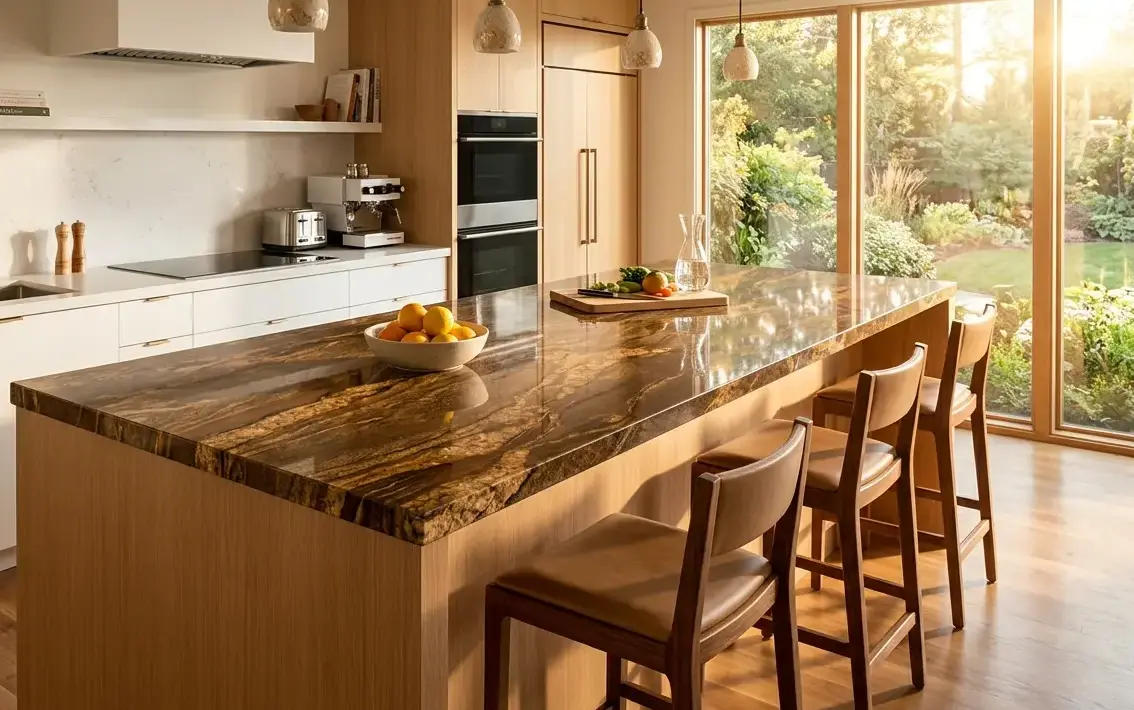 Conceptual rendering
Property | Tan Brown Granite | Baltic Brown Granite | Brown Quartzite |
Mohs Hardness | 6–7 | 6–7 | 7–8 |
Water Absorption (ASTM C97) | Below 0.4% | Below 0.4% | Below 0.3% |
Standard Slab Thickness | 3 cm | 3 cm | 3 cm |
Finish Options | Polished, Honed, Leathered, Specialty | Polished, Honed, Leathered, Specialty | Polished, Honed, Leathered, Specialty |
Compared to engineered quartz in similar tones, natural granite and quartzite deliver unrepeatable slab-to-slab patterning. No two brown slabs from the same quarry share identical mineral movement, which is something engineered quartz cannot replicate.
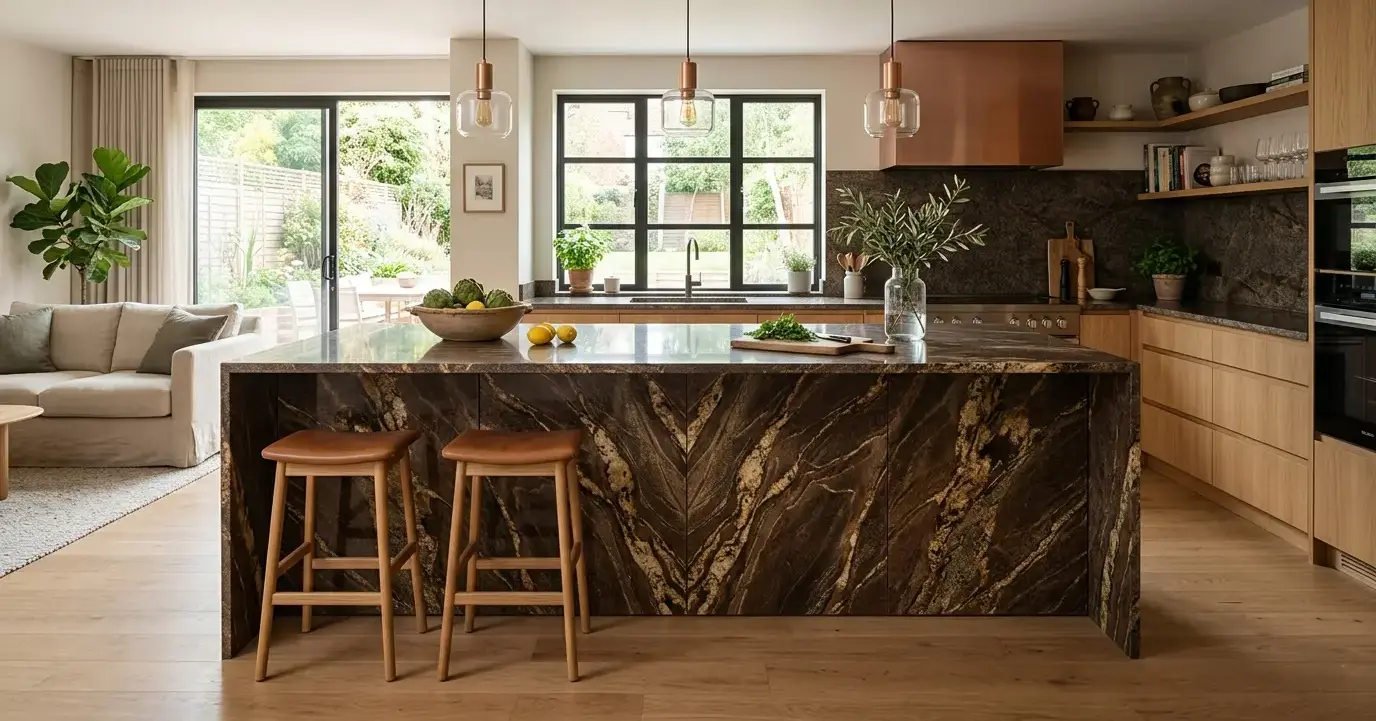 Conceptual rendering
Brown Slabs: Finishes, Layouts, and Pairing Options
Leathered and honed finishes have become the most requested surface treatments for kitchen island applications. A leathered brown slab resists fingerprints and moisture marks while preserving the stone's natural depth of color. Polished brown stone slabs create a reflective surface suited to open-plan kitchens where the island functions as an architectural centerpiece.
Brown stone surfaces pair naturally with warm-toned cabinetry in walnut, espresso, or cherry finishes. Against white or off-white cabinetry, a dark brown slab delivers high contrast that defines transitional and contemporary kitchen island designs. For islands that include seating overhangs, a 4 cm slab or a mitered edge adds visual weight appropriate to the scale.
Book-matching two Tan Brown slabs across an oversized island creates a symmetrical mineral composition, a technique that elevates the layout without requiring the extensive veining typically associated with quartzite or marble. Slab orientation relative to light sources also affects how brown tones read under both natural and artificial lighting.
Note: Some images on this page may be conceptual renderings created to illustrate design possibilities and may not depict actual installations.
Stone Surfaces Built for Daily Kitchen Demands
Brown granite slab delivers reliable performance suited to regular kitchen use:
- Heat resistance: Granite registers 6–7 on the Mohs scale and handles moderate heat exposure; trivets remain advisable to prevent potential thermal shock at the slab surface.
- Scratch resistance: The crystalline composition of brown granite resists surface marks from routine prep contact better than most softer natural stones; cutting boards help protect finish quality over time.
- Low water absorption: ASTM C97-rated granite below 0.4% absorption means spills sit at the surface for prompt cleanup, rather than penetrating the slab.
- Low-maintenance finishes: Leathered and honed brown granite surfaces maintain their appearance with standard cleaning routines; abrasive products should be avoided to preserve surface integrity.
- Color stability: Granite's mineral pigmentation remains visually consistent under kitchen lighting over time, with proper care and periodic sealing as needed.
Design professionals and contractors specifying stone surfaces for multiple projects can set up a trade account to access dedicated project support.
 Conceptual rendering
Why a Brown Kitchen Island Is a Lasting Surface Investment
A brown granite or quartzite for kitchen island holds both visual and structural value over decades. Unlike surface finish trends that cycle through design vocabularies every few years, rich brown stone has maintained consistent relevance across traditional, transitional, and contemporary kitchen styles. Natural stone also contributes measurably to long-term resale value in kitchen renovations, where premium surface materials are among the most evaluated features during property assessments.
Granite slabs meeting ASTM C615 and ASTM C97 standards provide independently verified dimensional consistency and absorption resistance. For those considering a wider range of premium kitchen stone options, the semi-precious stone countertop collection expands the material selection beyond granite and quartzite.
Fresh Insights from Our Blog
Frequently Asked Questions
Granite is the most widely recommended material for a kitchen island due to its hardness, low porosity, and broad range of warm brown tones. Tan Brown and Baltic Brown are among the most popular varieties, available in polished, honed, leathered, and specialty finishes.
Standard brown kitchen island slabs are typically supplied at 3 cm thickness, which provides adequate structural support for most unsupported overhangs. Islands that include seating areas may benefit from a 4 cm slab or a mitered edge profile for added visual presence and strength.
Brown granite with ASTM C97 absorption rates below 0.5% requires minimal sealing compared to more porous stone options. Periodic application of a penetrating sealer helps maintain long-term stain resistance, particularly around food preparation areas.
Granite is UV-stable and rated for outdoor use, making it a suitable material for outdoor kitchen islands. A leathered or honed finish is preferred outdoors due to better slip resistance and lower surface maintenance requirements.
Eased, beveled, and waterfall edges are among the most commonly selected profiles for brown kitchen island slabs. For oversized or seating-height islands, a mitered edge adds visual weight that complements the stone's natural density.