Sealing and Day-to-Day Maintenance
Like all natural stone, blue quartzite has some porosity and benefits from proper sealing. Resealing every 12 to 18 months is a reasonable maintenance schedule for most quartzite varieties, though individual slabs can vary depending on density and use. A simple water test, observing whether water beads on the surface or absorbs into it, is a reliable way to gauge when resealing is due.
For daily cleaning, a pH-neutral cleaner or mild dish soap with warm water is sufficient. Abrasive and acidic products should be avoided, as they can degrade the sealer over time. Using cutting boards during food preparation and trivets under hot cookware are straightforward habits that help preserve the surface between maintenance cycles. Trade professionals working on client projects can learn more about our trade account program for access to dedicated support and pricing.
Where Blue Quartzite Is Commonly Used
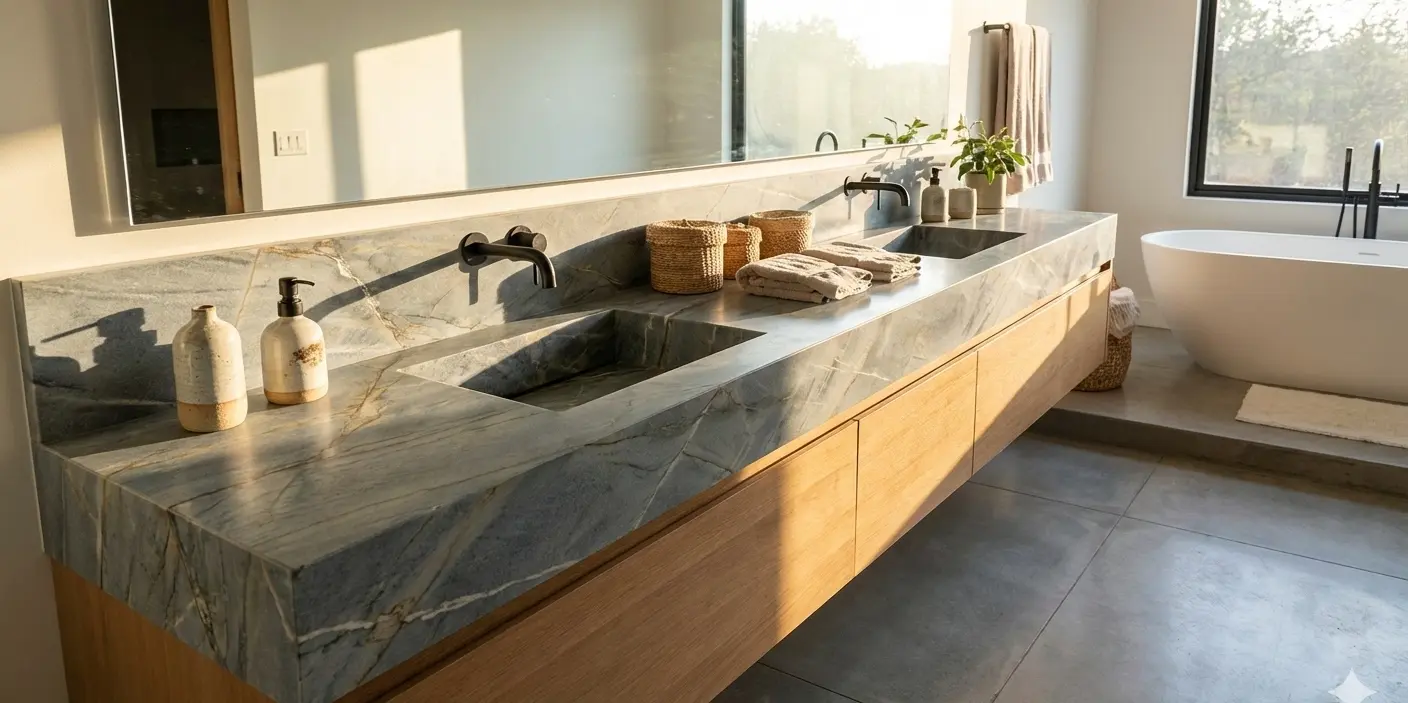
The most common application for blue quartzite is kitchen countertops, where its hardness and heat resistance are relevant factors in a high-use environment. The stone also works well for bathroom vanities, where its cool tonal palette pairs with a range of fixture and cabinetry choices. Island surfaces, full-height backsplashes, and accent feature walls are other applications where blue quartzite appears in both residential and commercial projects.
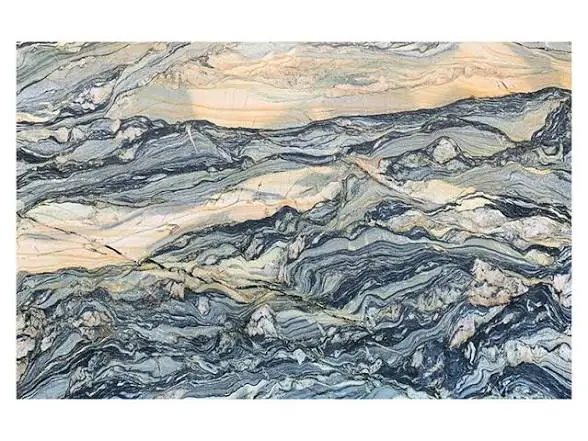
Finish selection affects both appearance and maintenance requirements. A polished finish brings out the depth of the blue tones and veining most clearly. A honed finish produces a matte appearance with less reflectivity. A leathered finish adds light texture and a more tactile surface feel. Each finish interacts differently with light and surrounding materials, so reviewing options in person is a useful part of the selection process. Our showroom locations in Reno, Sacramento, Minden, and Fernley are available to visit during regular business hours.