Subway tile is an excellent choice for laundry rooms, offering waterproof protection, chemical resistance, and easy maintenance in high-moisture environments. Glazed ceramic and porcelain subway tiles create durable, wipe-clean surfaces that resist detergent spills, bleach damage, and humidity while lasting 20 to 30 years with minimal upkeep.
Best subway tile options for laundry rooms:
- Porcelain subway tile - Most recommended overall for superior water resistance and durability
- Ceramic subway tile - Best budget option for backsplash areas and upper walls
- Glass subway tile - Best for small spaces needing light reflection
- Traditional 3x6 inch tiles work best in small laundry rooms under 50 square feet
- Gray grout provides the most practical, stain-hiding performance
Key installation priorities: Install tile 18 to 36 inches tall behind washers and dryers, use waterproof membranes in areas with direct water exposure, and choose epoxy grout for excellent stain and water resistance with minimal maintenance. White and light gray remain the most popular color choices, creating bright, clean spaces while effectively hiding lint and dust.
Your laundry room doesn't have to be the forgotten space in your home. While it may not get the same design attention as your kitchen or bathroom, this hardworking room deserves surfaces that are both beautiful and built to last. Subway tile offers the perfect combination of style and practicality for laundry rooms, handling moisture, detergent splashes, and daily wear while elevating your home's overall aesthetic.
Laundry rooms face unique challenges that make material selection critical. Between washer overflows, sink splashes, detergent spills, and high humidity, your walls take a beating. Subway tile solves these problems while adding a polished, finished look that transforms your laundry room from purely functional to genuinely enjoyable.
Why Subway Tile Works Perfectly in Laundry Rooms
Subway tile has earned its reputation as one of the most versatile and practical tile choices for wet areas. Glazed ceramic and porcelain subway tiles create a waterproof barrier that protects your walls from water damage. Unlike paint or wallpaper that can bubble and peel in damp conditions, properly installed subway tile with sealed grout provides long-lasting moisture protection.
The hard, glazed surface resists chemical damage from harsh laundry products including bleach, ammonia-based cleaners, and acidic fabric softeners that would stain or damage painted walls. The smooth surface wipes clean with just a damp cloth for daily maintenance, and stains from detergent spills or fabric softener drips wipe away cleanly without leaving permanent marks.
From a cost perspective, subway tile delivers excellent value. While the upfront installation cost exceeds paint, quality tile installations can last 20 to 30 years or more without needing replacement. The timeless style means your laundry room won't look dated in five or ten years, and according to the National Kitchen & Bath Association, well-appointed laundry rooms rank high on buyer wish lists.
Best Subway Tile Materials for Laundry Rooms
Ceramic Subway Tile (Best Budget Option)
Ceramic tile remains the most affordable option for laundry rooms. For laundry rooms, always choose glazed ceramic rather than unglazed. The glaze creates a protective, waterproof surface that resists moisture and staining according to ANSI ceramic tile standards. Ceramic works well for backsplash areas and upper wall sections, though its lower impact resistance compared to porcelain means you should consider porcelain for lower wall sections where durability matters most.
Porcelain Subway Tile (Best Overall Choice)
Porcelain subway tile represents the optimal balance of performance, durability, and cost for most laundry room projects. Fired at higher temperatures than ceramic, porcelain becomes denser, harder, and more water-resistant. It resists chips and cracks better than ceramic, making it ideal for high-traffic areas. For laundry rooms, porcelain excels in every application: behind washers and dryers, around utility sinks, and full-wall installations.
Glass Subway Tile (Best for Small Spaces)
Glass subway tile brings unique advantages to small laundry rooms where maximizing light matters. The reflective quality of glass amplifies both natural and artificial light, making cramped spaces feel more open. Glass is completely non-porous and cleans exceptionally easily, though it typically requires professional installation for best results.
Natural Stone Subway Tile (Least Recommended)
While beautiful, natural stone subway tiles are the least practical choice for laundry room environments. Stone is porous and can absorb water, detergent, and other liquids that lead to staining. Stone requires periodic resealing (test absorbency periodically with a water-bead test), and harsh laundry chemicals like bleach can damage or discolor surfaces.
Subway Tile Sizes and Colors for Laundry Rooms
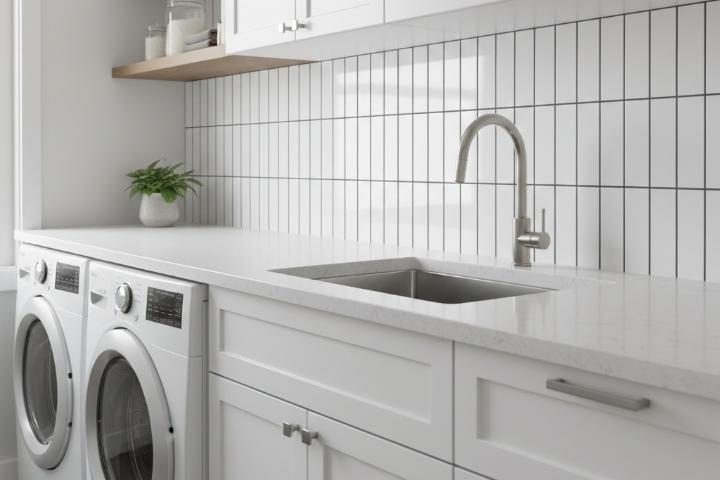
For small laundry rooms under 50 square feet, choose traditional 3x6 inch subway tiles or 2x4 inch tiles with vertical installation patterns to create the illusion of height. Medium-sized rooms (50 to 100 square feet) work well with 3x6, 3x9, or 3x12 inch tiles in any pattern.
Large laundry rooms benefit from larger format tiles like 3x12 or 4x12 inch tiles that reduce grout lines and create a streamlined appearance.
Classic white remains the most popular color choice, creating bright, clean feelings that make small spaces feel larger. White shows dirt less visibly than darker colors in laundry rooms, as lint and dust blend into white surfaces. Light gray and greige subway tiles bring modern sophistication while hiding minor water spots better than pure white. Blue and green tiles create calming, spa-like atmospheres, while bold colors like navy or charcoal work beautifully as accent walls.
Grout Selection and Installation Patterns
Gray grout is the most practical choice for laundry rooms, providing a modern look while hiding minor stains from detergent splashes. White grout creates seamless appearances but requires more maintenance. Dark grout emphasizes tile patterns with maximum contrast and superior stain resistance. For best performance, consider epoxy grout as recommended by the Ceramic Tile Distributors Association. It offers excellent stain and water resistance, requires minimal maintenance, and resists mold and mildew.
The running bond pattern (traditional brick layout with 50% offset) remains the most popular and easiest to install according to professional tile installers. Vertical stack makes ceilings appear higher, ideal for rooms with standard 8-foot ceilings. Horizontal stack creates clean, minimalist aesthetics that make rooms feel wider. Herringbone creates sophisticated visual interest but requires professional installation and generates more tile waste.
Where to Install Subway Tile
Prioritize subway tile installation behind your washer and dryer (18 to 36 inches tall minimum) where walls experience the most moisture exposure and splashes. Install tile around your utility sink backsplash (18 to 24 inches above the sink rim) to protect from water damage.
Full wall coverage provides ultimate protection and high-end aesthetics, while accent walls deliver design impact at lower cost. Wainscoting style (covering lower 3 to 4 feet) protects splash zones while managing costs.

Practical Installation Tips
Choose high-gloss or semi-gloss finishes for easier cleaning and better light reflection. Avoid textured tiles that trap detergent residue and require more intensive cleaning. Work with electricians before tiling to finalize outlet locations.
Use bullnose or decorative trim tiles for professional-looking finished edges. Install proper ventilation with an exhaust fan to control moisture and protect your installation long-term. Always install a waterproof membrane behind tile in areas with direct water exposure.
DIY vs. Professional Installation
DIY installation makes sense for simple running bond patterns, straight walls without many obstacles, small projects under 50 square feet, and when you have adequate time and basic tile tools. Hire a professional for complex patterns like herringbone, large areas exceeding 100 square feet, walls with many outlets or obstacles, first-time tiling projects, or time-sensitive renovations.
When hiring installers, verify proper licensing and insurance, ask about experience with subway tile in moisture-prone areas, discuss substrate preparation recommendations, request work guarantees, and ask for references from recent similar projects. Nova Tile and Stone staff can recommend trusted local installers throughout Northern Nevada and Northern California at any of our showroom locations.
Maintenance and Care
Wipe up detergent spills immediately, run exhaust fans during laundry activities, and perform quick daily wipe-downs with damp cloths. Clean weekly with pH-neutral tile cleaner and dry with microfiber cloths to prevent water spots.
Deep clean grout lines monthly with a grout brush, inspect for loose tiles or cracking grout, and reseal cement-based grout as needed based on a simple water-bead test. Conduct annual inspections for damaged tiles and replace deteriorating caulk around sinks and countertops.
Conclusion
Subway tile transforms laundry rooms by combining exceptional moisture resistance, easy-clean durability, and timeless style that lasts for decades. Whether you choose budget-friendly ceramic, high-performance porcelain, or striking glass subway tile, you're investing in a solution that protects your walls while elevating your home's design.
From classic white running bond to bold colored accent walls, subway tile styles adapt to your personal style while meeting the demanding functional requirements of laundry spaces. The material resists harsh laundry chemicals, wipes clean effortlessly, and maintains its attractive appearance through years of heavy use.
With proper installation including waterproof membranes, appropriate grout selection, and basic maintenance, your subway tile laundry room will serve you beautifully for 20 to 30 years or more, making it an excellent long-term investment in your home. Explore the latest bathroom tile trends for additional inspiration, or visit Coverings, the premier tile industry event, to discover innovative products and design ideas.
Featured Products
Frequently Asked Questions
Is subway tile practical for laundry rooms?
Yes, subway tile is one of the most practical choices for laundry rooms. Glazed ceramic and porcelain subway tiles are waterproof, stain-resistant, and easy to clean, which is perfect for environments with moisture, detergent splashes, and heavy use. The smooth, glazed surface wipes clean quickly and resists mold and mildew growth. Subway tile's durability means it withstands daily wear from laundry activities while maintaining its attractive appearance for decades with minimal maintenance.
What size subway tile is best for a small laundry room?
For small laundry rooms under 50 square feet, stick with traditional 3x6 inch subway tiles or slightly smaller 2x4 inch tiles. Smaller tiles create visual interest without overwhelming the limited space. Consider using a vertical installation pattern to make the ceiling appear higher, which helps small rooms feel more spacious. Avoid oversized tiles that make small spaces feel even more confined.
What's the best grout color for laundry room subway tile?
Gray grout is the most practical choice for laundry rooms. It provides a modern, contemporary look while hiding minor stains from detergent splashes better than white grout. Medium gray works with virtually any subway tile color and requires less intensive maintenance than white grout in high-use environments. For ultimate performance, consider epoxy grout. It offers excellent stain and water resistance with minimal maintenance, making it ideal for laundry rooms with frequent chemical and moisture exposure.
How do I choose between ceramic and porcelain subway tile for my laundry room?
Porcelain subway tile offers superior durability and water resistance compared to ceramic, making it the best overall choice for laundry rooms. Learn more about the differences in This Old House's ceramic vs porcelain guide. Porcelain is denser, more chip-resistant, and better suited for areas with heavy moisture exposure like behind washers and around sinks.
Ceramic tile works well as a budget-friendly option for backsplash areas and upper walls with less direct water contact. For full wall coverage or high-traffic areas, porcelain provides better long-term performance. Browse our tile types to compare different materials and find the right option for your project.
Do I need a waterproof membrane behind laundry room tile?
Yes, especially behind the washer and dryer and around utility sinks where water exposure is frequent. A waterproof membrane like RedGard or Kerdi protects the wall substrate from moisture damage that can lead to mold, rot, and structural problems. This extra step provides essential long-term protection that stops water from penetrating into walls even if water gets past the tile and grout.
For expert guidance on your laundry room project, contact us or visit our showrooms to explore our complete tile collection. We carry specialty options like terrazzo-look tiles and modern 3x12 porcelain subway tiles perfect for contemporary laundry rooms.
Learn more about Nova Tile and Stone and discover why customers throughout Northern Nevada and Northern California trust us for their tile projects. Visit our showrooms to see our full range of products and receive personalized design assistance.