Nature Meets Modern Design
Sage green subway tiles are transforming interiors in 2026, bringing botanical calm and sophisticated style to contemporary homes. These earthy tiles blend timeless appeal with on-trend color, creating spaces that feel both grounded and refreshing. As homeowners seek connections to nature indoors, sage becomes the perfect medium for expressing understated elegance.
The classic subway tiles format gains new life through this muted green palette. Whether you're renovating a tired kitchen or designing a serene bathroom retreat, sage green offers versatility that adapts to various aesthetics. From Scandinavian minimalism to modern farmhouse charm, this shade complements diverse design visions.
Throughout this guide, you'll discover practical applications for sage green subway installations. We'll explore pairing strategies, finish options, and expert tips for maximizing visual impact. You'll learn how to select the right materials and avoid common installation pitfalls while creating harmonious spaces.
Why Sage Green Subway Tiles Elevate Your Space
Sage green represents a sophisticated departure from neutral whites and grays that have dominated interiors for years. This botanical hue introduces subtle color without overwhelming spaces, making it ideal for homeowners seeking personality without commitment to bold statements. The psychological effects of green promote relaxation, making sage particularly suited for high-stress areas.
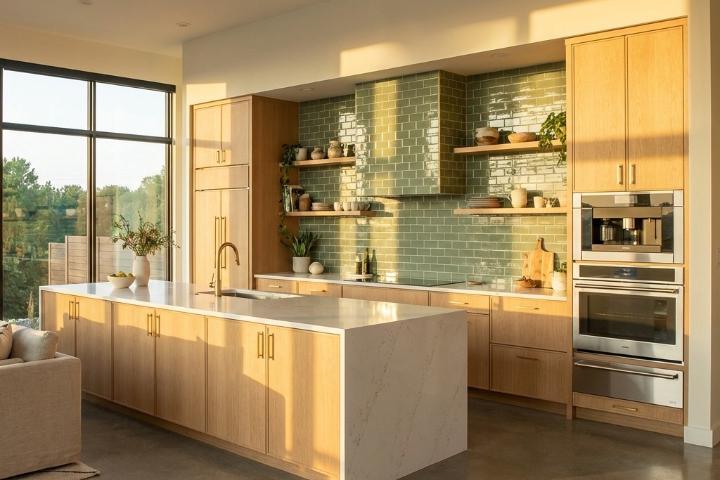
As a kitchen backsplash, sage green subway tiles create focal points that remain timeless. Unlike trendy colors that quickly date interiors, sage's natural connection ensures longevity in design schemes. The color works beautifully with both warm and cool metallics, allowing flexibility in hardware and fixture selections.
Key benefits of choosing sage green subway tiles include:
- Enhanced resale value through contemporary yet timeless color choices
- Versatility across multiple design styles from traditional to ultra-modern
- Reduced visual stress through calming botanical tones
- Excellent compatibility with natural materials like wood and stone
- Lower maintenance appearance compared to stark white surfaces
The subway tile format itself offers practical advantages beyond aesthetics. According to tile history, this configuration originated in early 1900s transit systems for its durability and cleanability. Modern versions maintain these functional benefits while incorporating contemporary color palettes.
Design Applications: From Kitchens To Bathrooms
Kitchen Backsplash Installations
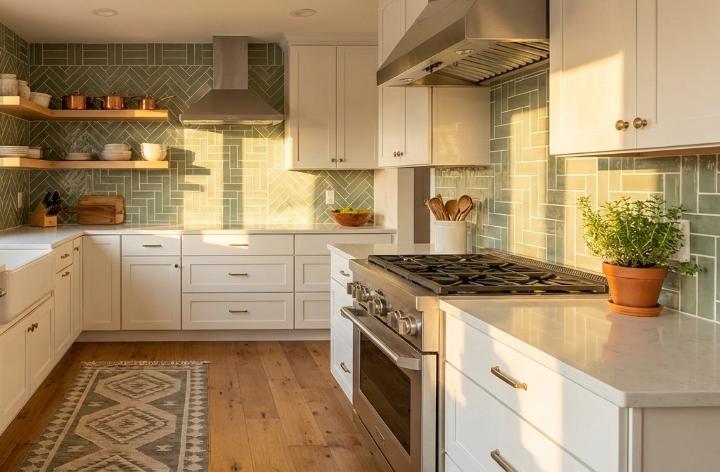
Sage green transforms kitchen backsplash areas into statement features without dominating the entire space. Pair these tiles with warm oak cabinetry for Scandinavian-inspired kitchens, or contrast them against charcoal cabinets for dramatic modern looks. The key is balancing the green with complementary neutrals.
For maximum impact, extend sage tiles from countertop to ceiling rather than stopping at standard backsplash height. This floor-to-ceiling treatment adds architectural interest and makes kitchens feel larger. Consider matte porcelain subway tiles for a contemporary finish that minimizes reflection and fingerprints.
Bathroom Feature Walls
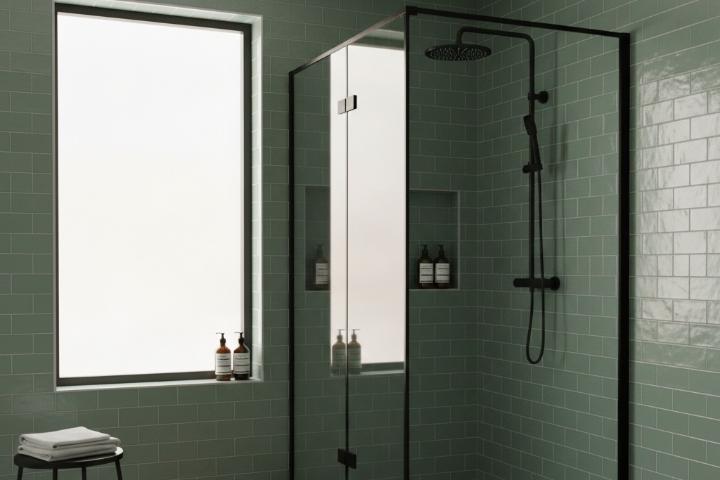
Bathrooms benefit tremendously from sage green's spa-like qualities. Install these tiles on shower walls paired with white fixtures for a fresh, clean aesthetic. The botanical tone complements natural elements like bamboo bath accessories and linen towels, creating cohesive sanctuaries.
Mix sage with white subway tiles in geometric patterns for visual interest without chaos. A vertical stripe of sage against predominantly white walls adds subtle dimension. For luxurious touches, incorporate marble subway tiles with sage veining as accent pieces.
Color Pairing Strategies
Understanding which colors enhance sage green ensures cohesive design outcomes. Black subway tiles create sophisticated contrast when used as border accents around sage installations. This combination works particularly well in contemporary kitchens with industrial elements.
Grey subway tiles in charcoal tones provide subtle transitions between sage walls and darker flooring. This gradation technique adds depth while maintaining visual flow. For brighter spaces, introduce blue subway tiles in aqua or teal shades to create refreshing coastal palettes.
Pairing Color | Design Style | Best Application |
Warm White | Scandinavian Minimalist | Full kitchen backsplash |
Charcoal Black | Modern Industrial | Accent borders and trim |
Soft Gray | Transitional Contemporary | Bathroom shower walls |
Natural Wood | Modern Farmhouse | Open shelving backdrops |
Brass Fixtures | Eclectic Bohemian | Powder room accents |
Finish Selection: Glossy Versus Matte
Glossy subway tiles in sage green reflect light beautifully, making smaller kitchens and bathrooms feel more spacious. The reflective quality enhances the color's vibrancy and creates dynamic visual interest as light changes throughout the day. These work exceptionally well in spaces with limited natural light.
Conversely, matte subway tiles offer sophisticated understated elegance that appeals to minimalist sensibilities. The flat finish reduces glare and provides a more organic, earthy appearance. Matte surfaces also show fewer water spots and fingerprints, making them practical choices for high-traffic areas.
Consider glossy 3D decorative subway tilesfor creating textured accent walls. The dimensional aspect adds architectural interest while the glossy finish plays with shadows. This approach works beautifully behind ranges or in powder room installations.
Material Choices: Porcelain Versus Ceramic
Porcelain subway tiles provide superior durability and moisture resistance, making them ideal for bathroom installations and kitchen backsplashes. Porcelain's density makes it less porous and more stain-resistant. This matters particularly for cooking areas prone to grease splatter.
Ceramic subway tiles offer cost advantages while maintaining excellent performance in most residential applications. These tiles work well for decorative installations where extreme durability isn't primary. For sage green specifically, ceramic provides slightly more variation in color depth, creating organic visual interest.
Understanding absorption rates and hardness ratings ensures appropriate material selection for specific applications.
Selecting The Perfect Tiles For Your Project
Finding quality sage green subway tiles requires understanding key product attributes and supplier capabilities. Trusted tile specialists offer curated selections that balance aesthetics with performance. Look for suppliers providing detailed technical specifications and installation support.
Sample programs allow homeowners to evaluate colors in their actual lighting conditions before committing to full orders. Natural and artificial light dramatically affect how sage green appears, making in-home testing essential. Request multiple shade variations to find your perfect match.
How To Choose Your Ideal Sage Green Tiles
- Assess your lighting conditions: Photograph your space at different times throughout the day. Sage appears warmer in morning light and cooler in afternoon shadows, so understanding these shifts prevents surprises.
- Order physical samples: Digital images never accurately represent tile colors. Request samples from knowledgeable suppliers and view them against existing finishes in your actual space.
- Consider existing elements: Evaluate how sage coordinates with countertops, cabinetry, and flooring. The tile should enhance rather than clash with these permanent features.
- Review technical specifications: Check ANSI ceramic tile standards to ensure products meet durability requirements for your specific application and climate conditions.
- Verify availability and lead times: Confirm sufficient inventory exists to complete your project without delays. Running short mid-installation creates matching challenges with different production batches.
Professional guidance proves invaluable when navigating tile selections. Experts at established tile showrooms understand how different greens perform in various settings. They can recommend specific products based on your lifestyle, maintenance preferences, and design goals.
Beyond aesthetics, consider practical factors like cleaning requirements for porcelain tiles. Sage green's mid-tone nature hides minor imperfections better than white but requires appropriate cleaning products to maintain vibrancy. Ask suppliers about recommended maintenance protocols.
Advantages of Sage Green Subway Tiles
- Timeless botanical color with enduring appeal
- Conceals minor stains better than white surfaces
- Complements diverse design styles effortlessly
- Creates calming atmosphere in any space
- Increases perceived home value through contemporary styling
- Works beautifully with natural and metallic accents
Considerations Before Installing
- Color matching challenges across different production batches
- May require specific grout colors for optimal appearance
- Limited availability compared to standard white options
- Can appear differently under various lighting conditions
- Requires careful coordination with existing color schemes
- Higher cost than basic white subway tile selections
Installation quality significantly impacts final results. Follow professional tile layout recommendations to ensure proper alignment and spacing. Consider hiring certified installers familiar with ANSI installation standards for optimal outcomes.
Grout selection deserves careful attention when working with sage green tiles. Light gray or warm taupe grouts create subtle contrast without overwhelming the botanical tones. Avoid stark white grouts that create harsh grid patterns, instead opting for complementary shades that blend harmoniously.
For comprehensive project planning, explore tiles organized by size and categorized by material type. This systematic approach streamlines selection processes and ensures all project components coordinate effectively.
Conclusion
Sage green subway tiles represent more than trending color choices; they embody thoughtful design that balances aesthetics with functionality. These botanical-toned surfaces create foundations for personalized spaces that feel both current and enduring. The versatility of subway tiles ensures your investment remains relevant through changing design seasons, especially when explored through industry showcases like Coverings, where the latest tile innovations and design trends are highlighted.
Whether transforming a compact kitchen or designing an expansive bathroom suite, sage green offers sophisticated solutions. The color's natural connection grounds modern interiors while its muted tone prevents visual fatigue. Combined with quality materials and expert installation, these tiles deliver lasting beauty-especially when paired with trusted standards from the Natural Stone Institute, which promotes excellence in sustainable and durable surface design.
Ready to explore sage green possibilities for your home? Visit curated tile collections to discover premium options suited to your project. Experience the difference that specialized knowledge and quality products make in achieving your design vision.
For personalized guidance and access to exclusive samples, connect with tile specialists who understand your unique needs. Explore local shopping options to see materials firsthand and receive expert recommendations tailored to your specific project requirements.
Frequently Asked Questions
What colors pair best with sage green subway tiles?
Sage green coordinates beautifully with warm whites, natural wood tones, charcoal grays, and brass fixtures. For bolder combinations, consider pairing with deep navy or terracotta accents. The key is balancing sage's muted botanical tone with complementary neutrals that enhance rather than compete.
Are sage green tiles suitable for small bathrooms?
Absolutely. Sage green's mid-tone nature provides visual interest without making compact bathrooms feel cramped. Choose glossy finishes to maximize light reflection and consider extending tiles vertically to create height illusions. Pair with white fixtures to maintain brightness while enjoying the botanical color.
How do I maintain sage green subway tiles?
Regular cleaning with pH-neutral cleaners maintains vibrancy without damaging tile surfaces. Avoid harsh chemicals that can dull finishes or discolor grout. For porcelain varieties, occasional sealing of grout lines prevents staining. Sage's mid-tone hides minor water spots better than white alternatives.
Can sage green work in traditional kitchen designs?
Yes. Sage green's historical connection to botanical motifs makes it surprisingly compatible with traditional aesthetics. Pair with classic white cabinetry and marble countertops for timeless elegance. The subway tile format itself originated over a century ago, reinforcing traditional design connections.
What grout color works best with sage subway tiles?
Light gray or warm taupe grouts complement sage without creating harsh contrast. These neutral tones allow the tile color to remain focal while providing subtle definition. Avoid stark white grouts that create distracting grid patterns. Test grout samples against your specific tile shade before final selection.