Subway tile layouts transform laundry rooms from purely functional spaces into stylish areas that balance durability with visual appeal. These rectangular tiles, originally designed for New York City subway stations in the early 1900s, now serve as the perfect solution for busy laundry spaces that demand both moisture resistance and timeless design.
Whether you're renovating an outdated utility room or creating a dedicated laundry space from scratch, exploring quality tile options opens up possibilities that make daily chores feel less tedious. This guide dives into practical subway tile applications that combine beauty with the hard-working performance your laundry room deserves, from classic white patterns to bold modern subway tile patterns that reflect your personal style.
Why Subway Tile Works Perfectly in Laundry Rooms
Moisture and Stain Resistance
Laundry rooms face constant exposure to water splashes, detergent spills, and humidity from dryers. Subway tiles excel in these conditions because their glazed ceramic or porcelain surfaces repel moisture naturally. According to ANSI standards for ceramic tile, properly installed tiles create waterproof barriers that protect underlying walls from damage. The smooth, non-porous finish wipes clean effortlessly, making maintenance between laundry loads practically effortless.
Beyond water resistance, subway tiles handle chemical exposure from bleach and cleaning products without discoloration or surface degradation. This durability matters in spaces where accidental spills happen frequently. When you browse through tiles organized by type, you'll notice that ceramic and porcelain subway tiles consistently rate highest for stain resistance, a crucial factor for hardworking laundry spaces.
Timeless Aesthetic Appeal
The beauty of subway tile lies in its versatility. While classic white 3x6 tiles remain popular, modern options now include diverse sizes, colors, and finishes that suit any design preference. The rectangular shape naturally guides the eye horizontally or vertically, depending on your chosen layout, creating visual interest without overwhelming smaller spaces.
Current bathroom tile trends reveal that subway tiles continue dominating residential design because they complement both traditional and contemporary aesthetics. This staying power means your laundry room investment won't look dated in five years, unlike trendy alternatives that quickly lose appeal.
Popular Subway Tile Layout Patterns for Laundry Rooms

Classic Running Bond
The running bond pattern, where tiles stack with each row offset by half a tile width, remains the most recognized subway tile arrangement. This layout creates subtle horizontal lines that make narrow laundry rooms feel wider. Installation proves straightforward, keeping labor costs reasonable while delivering professional-looking results.
For standard laundry room walls measuring 8-10 feet wide, running bond works exceptionally well because the pattern's simplicity doesn't compete with appliances and storage units. Choose 3x6 subway tiles for traditional proportion or larger formats for a more contemporary feel.

Herringbone Subway Tile Backsplash
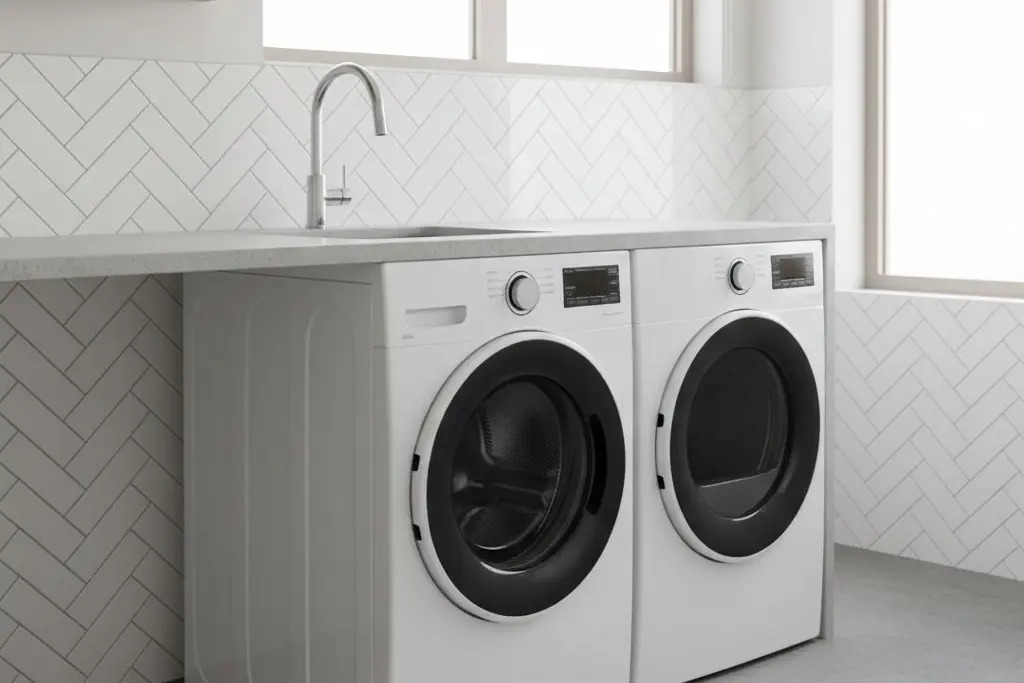
The herringbone subway tile backsplash creates dynamic visual movement through tiles arranged in V-shaped zigzag patterns. This layout adds sophistication to laundry spaces without sacrificing the practical benefits of subway tile. Behind utility sinks or along folding counters, herringbone patterns draw attention and elevate utilitarian areas into design features.
Installation requires more precision and time compared to running bond, but the visual payoff justifies the effort. The pattern works particularly well when you select subway tiles in varied colors, as the angled placement highlights color variations and creates depth.

Vertical Subway Tile Installation
Vertical subway tile orientation flips traditional expectations by stacking tiles end-to-end in columns. This approach makes rooms with standard 8-foot ceilings appear taller, an advantage in compact laundry areas. The vertical lines guide eyes upward, creating an illusion of expanded space.
Consider vertical installation behind washing machines or along narrow walls where horizontal patterns might emphasize cramped dimensions. This layout pairs beautifully with tall storage cabinets, reinforcing the vertical design theme throughout your laundry room.

Chevron Subway Tile Pattern
Chevron subway tile arrangements create bold diagonal lines that meet at perfect points, forming continuous V-shapes across walls. Unlike herringbone, where tiles create a broken zigzag, chevron patterns require precisely cut angle tiles to achieve seamless points. This geometric precision delivers striking visual impact ideal for feature walls.
The dramatic nature of chevron works best when used sparingly, perhaps on a single accent wall rather than covering entire laundry rooms. When browsing tiles by style, consider how chevron patterns interact with your overall design scheme before committing to this bold choice.

Basketweave Subway Tile Design
Basketweave subway tile creates the illusion of woven strips through strategic tile placement. Pairs of vertical tiles alternate with pairs of horizontal tiles, generating a textured appearance without actual dimensional variation. This pattern adds visual interest while maintaining the flat, easy-to-clean surface essential for laundry rooms.
The basketweave works particularly well in larger laundry spaces where the repeating pattern has room to establish rhythm. In smaller rooms, limit basketweave to backsplash areas rather than full walls to prevent visual overwhelm.
Color and Grout Combinations That Transform Spaces
Classic White with Contrasting Grout
White subway tile with dark grout remains a design powerhouse because the contrast emphasizes pattern and geometry. Black, charcoal, or deep gray grout lines transform simple white tiles into graphic statements. This combination shows every layout pattern clearly, making herringbone and chevron designs particularly striking.
Practical benefits accompany aesthetic appeal, as darker grout conceals the inevitable dirt and discoloration that lighter grout develops in laundry environments. The Certified Tile Contractor standards recommend considering maintenance when selecting grout colors for utility spaces.
Colored Subway Tile Options
Colored subway tile breaks away from white dominance, introducing personality into laundry rooms. Soft blues evoke spa-like serenity, sage greens connect to nature, and warm terracotta tones add earthiness. When selecting tiles by color, consider how hues interact with natural and artificial lighting throughout the day.
Bold color choices work best when balanced with neutral cabinetry and countertops. A vibrant teal or sunny yellow subway tile backsplash becomes a focal point when surrounding elements stay understated. For those hesitant about strong color commitments, consider using colored tiles as accent bands within predominantly white installations.
Subway Tile with Dark Grout
Pairing light-colored subway tiles with dark grout creates definition and character while maintaining brightness. This approach suits those who appreciate the clean aesthetic of pale tiles but want more visual interest than traditional white-on-white schemes provide. The grout lines create a grid framework that adds structure to open walls.
Beyond aesthetics, dark grout offers practical advantages in laundry settings where lint, dust, and splashes occur regularly. Light grout requires frequent cleaning to maintain its pristine appearance, while charcoal or espresso grout maintains a cleaner look between deep cleaning sessions.
Subway Tile Application Areas in Laundry Rooms
Behind Washing Machines and Dryers
The wall behind your washer and dryer takes the most abuse from vibrations, water leaks, and detergent splashes. Full-height subway tile installation protects this vulnerable area while creating a cohesive design element. Extend tiling from floor to ceiling or stop at countertop height, depending on your layout and budget.
When machines sit side-by-side against a wall, consider creating a unified tile backdrop that spans the entire width. This approach visually groups appliances while simplifying the space's overall appearance. Professional tile installers recommend extending tile coverage several inches beyond appliance edges to ensure complete protection.
Utility Sink Backsplash
The area surrounding utility sinks demands waterproof surfaces that handle constant water exposure. Subway tile backsplashes rising 18-24 inches above sinks provide adequate splash protection while creating opportunities for creative backsplash ideas. Mix tile sizes or incorporate decorative borders to make utilitarian sinks feel more intentional.
Consider the Matte Porcelain Subway Tile for areas around sinks where longer tiles reduce grout lines and minimize cleaning maintenance. The matte finish offers sophisticated understated elegance while hiding water spots better than glossy alternatives.
Full Wall Coverage
Wrapping entire laundry room walls in subway tile creates seamless, spa-like environments that feel intentionally designed rather than purely functional. Full coverage eliminates transitions between tile and paint, simplifying visual flow while maximizing moisture protection. This approach works particularly well in combination laundry and mudrooms where wet items and dirty shoes introduce extra moisture.
Budget considerations often influence whether full walls receive tile treatment or if installations stop at wainscot height. When working within constraints, prioritize tiling the wettest zones first, then expand coverage as resources allow.
Flooring Integration
While subway tiles typically cover walls, extending similar tile choices to floors creates cohesive design flow. Rectangle floor tiles in complementary sizes echo wall patterns without exact duplication. This coordination ties the entire room together visually while maintaining the durability both surfaces require.
Browse tiles by size to find floor tiles that harmonize with your chosen wall subway tiles. Slightly larger floor formats balance proportions nicely, preventing the space from feeling too busy with repeated small rectangles everywhere.
Modern Subway Tile Patterns and Innovations
3D and Textured Subway Tiles
Contemporary subway tiles now include dimensional surfaces that create shadows and depth. Rippled, beveled, or embossed faces add tactile interest while maintaining the classic rectangular proportions that define subway style. These textured options work beautifully as accent features within flat tile installations, drawing eyes to specific areas like behind sinks or along upper walls.
The Linear 5x10 Glossy 3D Decorative Subway Tile demonstrates how surface variation transforms simple rectangles into sculptural elements. The raised linear pattern catches light differently throughout the day, creating dynamic visual effects that flat tiles cannot achieve.
Mixed Size Installations
Breaking away from uniform tile sizes introduces contemporary sophistication. Combine standard 3x6 tiles with larger 4x12 or 3x12 formats to create custom patterns that feel current and personalized. This mixing requires careful planning to ensure patterns align correctly, but results deliver unique designs that reflect individual style.
When planning mixed installations, work with graph paper or digital design tools to visualize how different sizes interact. Professional installers appreciate detailed plans that specify exact placement, reducing on-site decision-making and potential mistakes.
Geometric Border Treatments
Incorporate geometric borders by framing subway tile fields with contrasting colors or orientations. A band of vertical tiles within horizontal fields, or a row of colored tiles interrupting white expanses, adds architectural interest without overwhelming spaces. These borders can delineate different functional zones within combined laundry and utility rooms.
Consider how borders interact with existing room features like windows, doors, and cabinets. Well-planned borders align with architectural elements, creating intentional design relationships rather than random decorative additions.
Subway Tile Kitchen Ideas Applied to Laundry Rooms
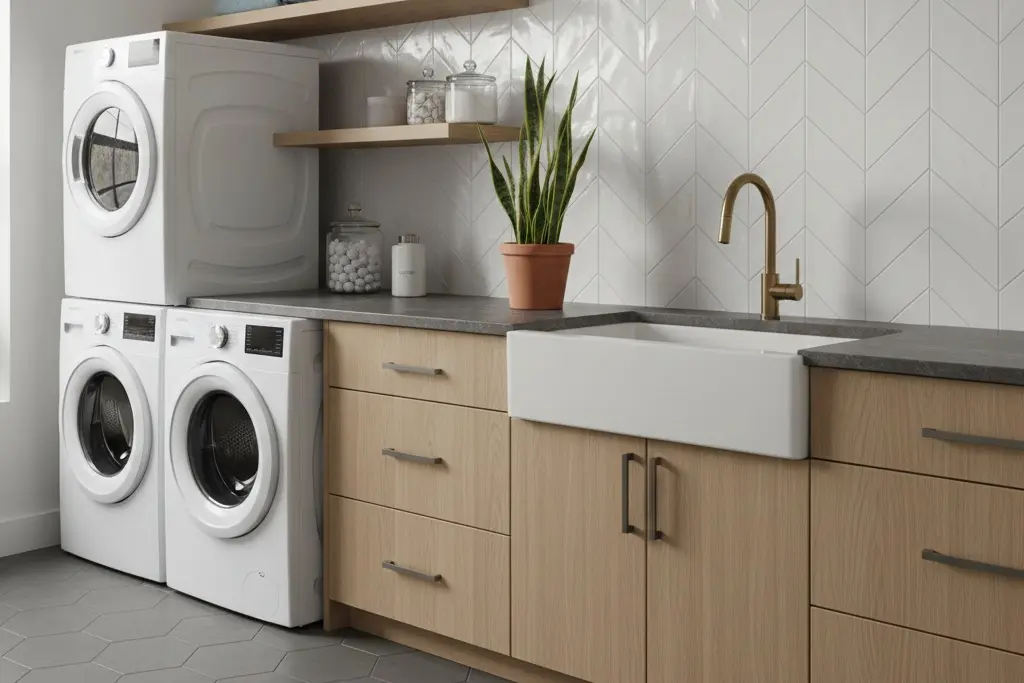
Many successful subway tile kitchen ideas translate beautifully into laundry applications. The same principles that make kitchen backsplashes functional and attractive apply to laundry room installations. Both spaces handle moisture, require easy cleaning, and benefit from durable materials that withstand daily use.
Kitchen-inspired approaches include:
- Open shelving with tiled backsplash: Install floating shelves above countertops with subway tile behind them, just like kitchen designs. This keeps laundry essentials visible and accessible while protecting walls.
- Under-cabinet lighting: Illuminate tiled backsplashes with LED strips that highlight tile patterns and improve task lighting for sorting and folding.
- Coordinated hardware: Match cabinet pulls, faucet finishes, and light fixtures to grout colors for cohesive design that feels intentionally curated.
Drawing inspiration from kitchen and bathroom design trends ensures your laundry room feels connected to broader home aesthetics rather than isolated as a purely utilitarian afterthought.
Comparing Subway Tile Options for Laundry Rooms
Feature | Ceramic Subway Tile | Porcelain Subway Tile | Glass Subway Tile |
Water Absorption | Low to moderate | Very low | Non-porous |
Durability | Good for walls | Excellent for floors and walls | Moderate (chips easier) |
Price Range | $ | $$ | $$$ |
Maintenance | Easy | Very easy | Easy but shows water spots |
Color Options | Wide variety | Extensive range | Unlimited colors |
Best Use | Wall backsplashes | Floors and heavy-use walls | Accent areas |
This comparison helps narrow choices based on your specific laundry room needs and budget. Porcelain tiles, rated for durability on the Mohs hardness scale, typically offer the best performance for high-traffic laundry areas.
Pros and Cons of Subway Tile in Laundry Rooms
Advantages
- Timeless appearance that doesn't date quickly
- Easy cleaning with smooth, non-porous surfaces
- Moisture resistance that protects walls from water damage
- Pattern versatility accommodating numerous layout options
- Resale value as buyers appreciate durable, attractive finishes
- Chemical resistance handling bleach and detergents without damage
- Budget flexibility with options ranging from affordable to luxury
Disadvantages
- Installation complexity for intricate patterns requires professional expertise
- Grout maintenance demands periodic cleaning and sealing
- Cold surface feel compared to painted walls (less concern in laundry spaces)
- Upfront cost higher than paint or wallpaper initially
- Permanence makes design changes more expensive later
- Cutting requirements around outlets and fixtures add installation time
Understanding these trade-offs helps make informed decisions about whether subway tile suits your laundry room project and budget.
Step-by-Step Guide to Planning Your Subway Tile Laundry Room
Step 1: Measure and Calculate
Accurately measure all walls you plan to tile, noting the positions of outlets, switches, windows, and doors. Add 10% to your square footage calculation to account for cuts and potential breakage. Visit local tile showrooms with measurements to discuss options and get precise quotes.
Step 2: Choose Your Pattern and Tile
Select both your tile style and desired layout pattern, ensuring they complement each other. Simple running bond suits most tile types, while complex patterns like herringbone showcase special tiles best. Review products available to understand what works within your budget.
Step 3: Select Coordinating Grout
Choose grout color that either blends seamlessly or contrasts dramatically with your tiles, depending on your aesthetic goals. Consider maintenance requirements when making this decision. Lighter grout requires more frequent cleaning, while darker shades hide everyday dirt better.
Step 4: Prepare Surfaces Properly
Ensure walls are clean, level, and structurally sound before installation begins. Proper tile edge protection prevents chips and creates professional-looking finished edges. Address any moisture issues or wall damage before tiling begins.
Step 5: Hire Qualified Installers
Unless you possess tiling experience, professional installation ensures pattern accuracy and prevents costly mistakes. Installers familiar with different subway tile layouts execute complex patterns correctly the first time. Request references and verify experience with your chosen pattern before hiring.
Drawing Inspiration from Tile Industry Trends
Major industry events like Coverings showcase emerging tile trends that filter into residential applications. Recent years have seen increased interest in terrazzo-inspired patterns that incorporate subway tile proportions. These terrazzo-look tiles blend the structure of subway layouts with the playful speckled appearance of classic terrazzo, creating fresh options for design-forward laundry rooms.
Industry publications such as Tile Letter provide practical installation guidance that benefits both professionals and informed homeowners. Understanding industry best practices ensures your project meets quality standards and performs well long-term.
Conclusion
Subway tile transforms ordinary laundry rooms into hardworking spaces that balance practical durability with aesthetic appeal. From classic running bond layouts to bold chevron patterns, the versatility of these rectangular tiles accommodates every design preference and budget level. Whether you choose timeless white with dark grout or venture into colored tiles and textured surfaces, subway tile delivers moisture resistance and easy maintenance that busy laundry spaces demand.
Ready to explore subway tile options for your laundry room renovation? Browse our complete tile collection or contact our design team for personalized guidance. We'll help you select the perfect tiles and patterns that transform your laundry space from purely functional to beautifully practical.
Frequently Asked Questions
What is the best subway tile pattern for small laundry rooms?
Vertical subway tile installation works best for small laundry rooms because the vertical orientation makes ceilings appear higher and spaces feel larger. Running bond in lighter colors also helps, as horizontal lines widen narrow rooms visually. Avoid busy patterns like basketweave in tight spaces, as they can make areas feel more cramped.
How do I choose between ceramic and porcelain subway tiles for my laundry room?
Porcelain subway tiles offer superior water resistance and durability, making them ideal for laundry rooms with heavy moisture exposure. Ceramic tiles work well for wall applications where water contact is minimal. If your laundry room includes floor tiling or experiences frequent flooding risks, invest in porcelain for better long-term performance.
Should I use the same grout color throughout my laundry room?
Yes, consistent grout color creates visual unity and simplifies the installation process. Choose darker grout shades like charcoal or gray for laundry rooms, as these colors hide dirt and staining better than white grout. If you incorporate accent tiles in different colors, matching grout to the dominant tile color usually produces the most cohesive results.
Can I install subway tile behind my washer and dryer myself?
While subway tile installation is a manageable task for experienced individuals, hiring professional installers ensures proper waterproofing, level installation, and pattern accuracy. Complex layouts like herringbone or chevron require specialized skills. If you proceed independently, start with simple running bond patterns and invest in quality tools and materials for best results.
How high should subway tile extend on laundry room walls?
For walls behind washers and dryers, extend subway tile at least 4 feet high or to countertop level if you have folding surfaces. Around utility sinks, tile should rise 18-24 inches above the sink rim for adequate splash protection. For full design impact and maximum protection, consider floor-to-ceiling installation, particularly in dedicated laundry rooms where moisture levels run higher.