Zermatt quartzite is a metamorphic natural stone quarried in Brazil, recognized for its refined toning, subtle veining, and availability in polished, honed, leathered, and specialty finishes. It scores a 7 on the Mohs hardness scale, giving it exceptional resistance to scratching, etching, and daily surface wear. Suited for both interior and exterior applications, it performs reliably across kitchen countertops, floors, walls, fireplace surrounds, and outdoor surfaces. Its natural UV resistance also makes it stable under prolonged sun exposure without fading or shifting in tone.
Choosing the right surface material for a home or commercial project is never a small decision. This Brazilian stone brings together visual refinement and structural durability in a way that suits a wide range of design directions, from traditional interiors to contemporary spaces. Its elegant toning adapts naturally to different cabinet colors, flooring materials, and architectural styles, while its performance profile holds up across demanding applications with consistent, long-lasting results. If you have been exploring natural stone options for a countertop, floor, wall, or outdoor surface, browsing the live slab inventory is a practical first step before making any decisions.
What Is Zermatt Quartzite?
Quartzite is a metamorphic rock that begins as sandstone. Over millions of years, intense geological heat and tectonic pressure deep within the earth transform that sandstone into a far denser, harder material. The individual sand grains fuse together into an interlocking crystalline structure, producing a rock with exceptional hardness and visual clarity that sandstone could never achieve on its own.
Zermatt is a specific variety of this metamorphic stone, quarried primarily in Brazil, a region long recognized for producing natural stones with vibrant, intricate patterning. What sets this variety apart is its refined color palette, featuring subtle veining in tones that shift naturally from slab to slab depending on the mineral composition of the original sandstone. Because quartzite forms through geological processes rather than manufacturing, no two slabs are identical, and every surface cut from this material carries a genuinely one-of-a-kind character.
The organic movement found in each slab is something no fabricated material can fully replicate. It is precisely this individuality that gives natural stone its lasting design appeal across both residential and commercial spaces.
What Makes Zermatt Quartzite a Standout Natural Stone
Zermatt quartzite is composed primarily of quartz crystals, one of the hardest naturally occurring minerals. Scoring a 7 on the Mohs scale, it demonstrates strong resistance to scratching and surface wear, maintaining a refined appearance across years of regular use. Its crystalline structure also means it does not etch from common household acids, a property that makes it especially well suited for surfaces that encounter daily contact with food and liquids.
The stone's natural toning and flowing veins are not just visually appealing but also remarkably versatile from a design standpoint. Its varied palette works across a broad spectrum of color schemes and material combinations, making it a natural fit for both understated, minimal spaces and more layered, richly decorated interiors. The crystalline surface structure contributes to the stone's visual depth, particularly under natural light where its texture and movement become most apparent, as explored further in This Old House's guide to natural stone countertops.
Beyond aesthetics, the material's UV resistance sets it apart as a dependable choice for exterior applications. The stone's coloring remains stable under direct sunlight without fading or shifting tone over time, a property that is not universal among natural stones.
Available Finishes and What They Offer
One of the strengths of this material is the range of surface treatments available. Each finish changes both the appearance and the practical character of the stone, making it adaptable to very different design goals. For a deeper breakdown of how each finish type performs across different applications, Use Natural Stone's finish selection guide is a reliable reference.
A polished finish brings the stone's color depth and veining to full life. The high-gloss surface amplifies light reflection and gives the natural tones a luminous, saturated quality. This finish is particularly well suited to countertops, vanity surfaces, and interior feature walls where maximum visual impact is the priority.
A honed finish produces a smooth, low-sheen surface with a softer, more understated quality. It still reveals the stone's natural patterning but without the mirror-like reflectivity of a polished surface. Honed finishes tend to feel more relaxed and livable, which makes them a natural fit for spaces where a quieter aesthetic is preferred.
A leathered finish takes a different approach entirely. A mechanical brushing process creates subtle surface texture that follows the stone's natural topography. The result is a matte surface with a tactile, artisanal quality distinct from both polished and honed options. For outdoor surfaces and fireplace surrounds, this treatment is particularly appropriate because the added texture provides grip and reduces the visibility of everyday marks.
Specialty finishes are also available for projects that require a custom surface character. These treatments go beyond the standard three options and can be selected based on specific design requirements, making this stone adaptable even to the most particular project briefs.
Where This Stone Performs Best
Zermatt quartzite's performance profile makes it genuinely versatile across both residential and commercial spaces.
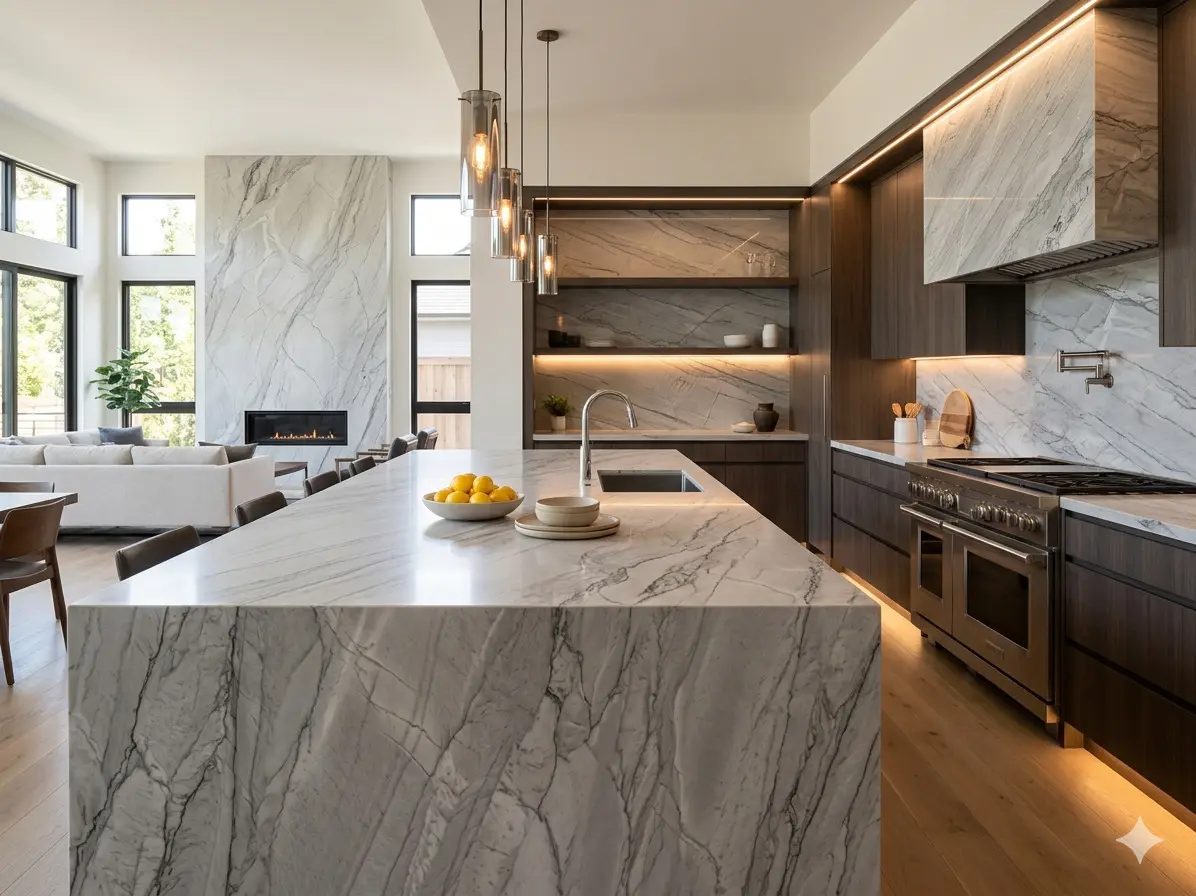
As a kitchen countertop surface, its scratch resistance and structural density hold up well against the demands of daily use. The stone's natural toning pairs cleanly with a broad range of cabinet colors and design palettes. Its veining adds organic movement to a surface that might otherwise read flat or cold.
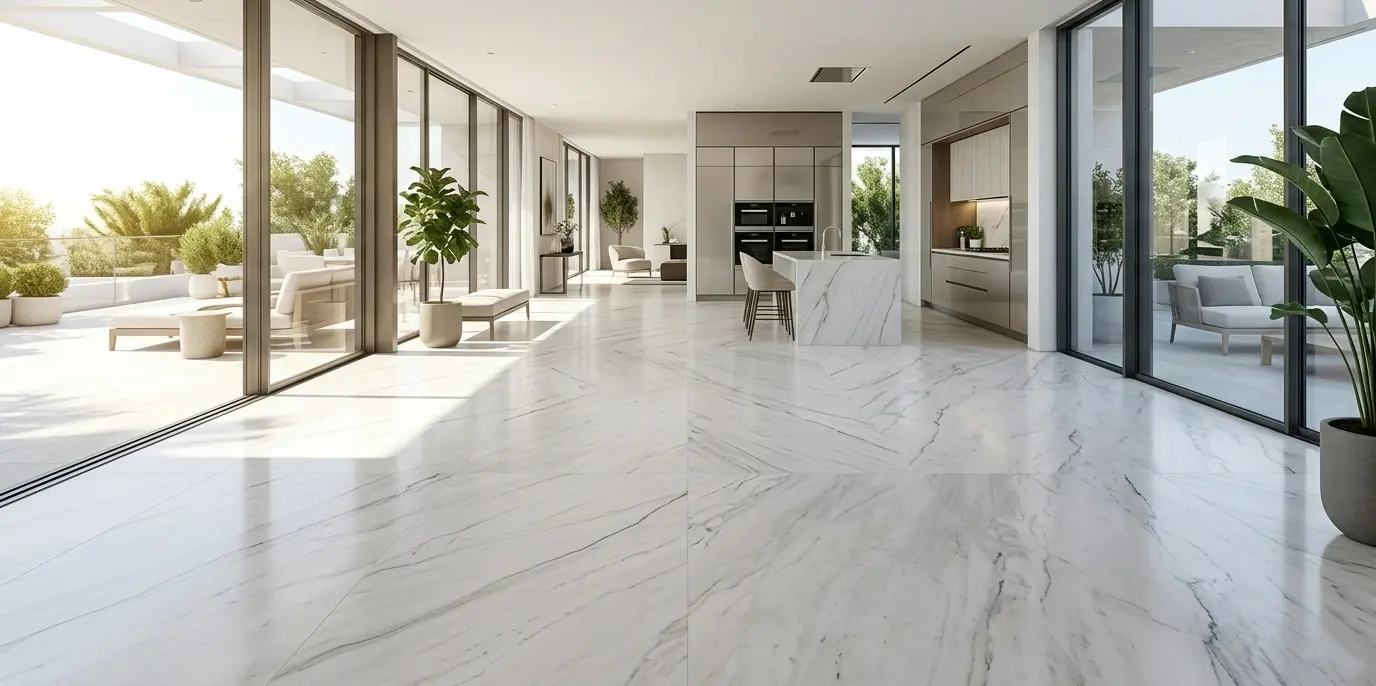
On floors, this material brings a refined, gallery-like quality that works particularly well in large-format applications. The continuity of its toning visually enlarges a space and creates a consistent backdrop that allows furniture and fixtures to take center stage. It performs well in both residential entry halls and commercial reception areas where durability and visual impact matter equally. Our team is available to help match the right finish and format to your specific floor application through a free design consultation.
Vertical applications are another strong suit. As wall cladding, the veining creates natural movement across a surface, particularly when slabs are bookmatch-oriented so that the pattern mirrors across adjacent pieces. Fireplace surrounds in this stone carry a warmth and sophistication that is difficult to achieve with manufactured alternatives. Fine Homebuilding's guide to natural stone surfaces offers additional context on how metamorphic stones perform across different architectural applications.
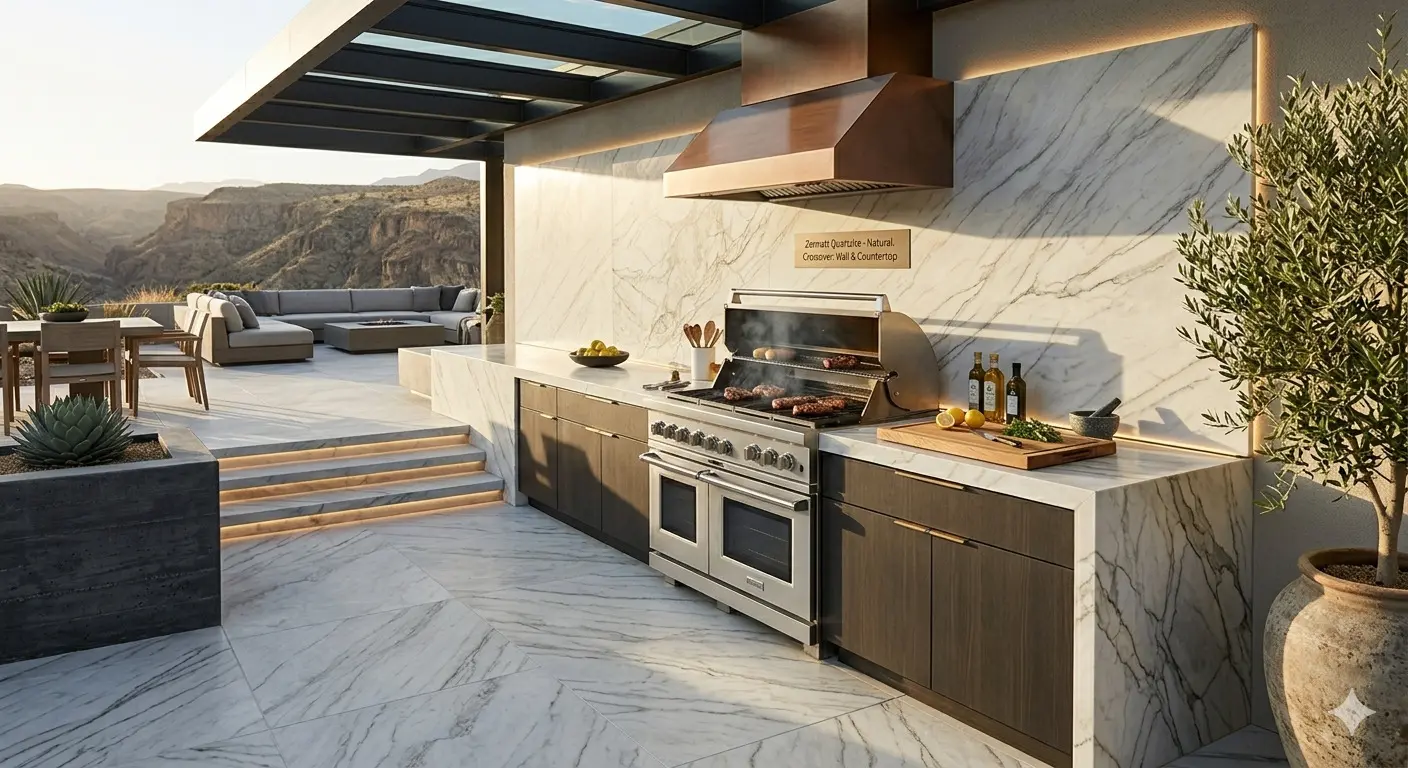
For outdoor use, the material holds up against frost, wind, and rain when properly sealed, making it a reliable choice for exterior countertops, patio surfaces, and outdoor kitchen areas.
Caring for Zermatt Quartzite
Despite its durability, natural stone always benefits from consistent upkeep. Routine cleaning with a soft cloth and a pH-neutral cleaner is all that is needed for day-to-day maintenance. Avoiding harsh chemical cleaners preserves the stone's sealed surface and prevents gradual breakdown of the protective layer.
Periodic resealing is recommended to maintain resistance to moisture and staining. The frequency depends on usage and environment, but a general guideline of every twelve to eighteen months is widely cited for quartzite surfaces in active residential settings. Promptly wiping any spills, particularly those involving oils or dark liquids, helps prevent absorption into the stone over time. If you are unsure which maintenance routine best suits your specific application, booking an appointment with one of our stone specialists is a practical way to get clear, project-specific guidance.
Understanding Slab Variation
One detail worth noting before selecting any natural stone is the degree of variation between individual pieces. Coloring can shift from slab to slab, veining patterns vary in intensity and direction, and some pieces carry more warmth or coolness in their tones than others.
This is not a flaw. It is precisely what gives natural stone its character and longevity of appeal. A surface that looks identical to every other surface in its category tends to date faster than one with genuine individuality.
For projects requiring consistent patterning across a large area, visiting one of our showroom locations in person is strongly recommended before making a final selection. Digital images and small samples rarely capture the full visual impact of a complete slab. Seeing the stone at scale is the most reliable way to evaluate how it will read in your specific space. You can begin the process remotely by submitting a slab quote request to our team.
Nova Tile and Stone offers free consultations with design specialists who can help match the right material to the right application with confidence.
Conclusion
Zermatt quartzite occupies a valuable position in the world of natural stone. It delivers visual elegance with a structural resilience that suits demanding applications across kitchens, floors, walls, fireplaces, and outdoor spaces. Its natural toning and flowing veining translate across a wide range of design styles, from traditional to contemporary, and its available finishes give specifiers genuine flexibility in how the surface reads and performs.
For anyone who wants a surface that brings both beauty and durability to a project without compromise, this Brazilian natural stone is well worth serious consideration.
Frequently Asked Questions
Is Zermatt quartzite a durable natural stone?
Yes. It scores a 7 on the Mohs hardness scale, placing it among the hardest naturally occurring stones available for residential and commercial use. This density gives it strong resistance to scratching and surface wear, making it well suited for high-use applications like kitchen countertops, floors, and outdoor surfaces.
Can this stone be used outdoors?
Yes. Quartzite is UV resistant and holds up well against outdoor conditions including sun, frost, and rain. For exterior applications, proper sealing is important to protect the surface from moisture penetration, and a leathered finish is generally preferred for outdoor areas where slip resistance and texture are practical priorities.
What finishes are available for Zermatt quartzite?
This stone is available in polished, honed, leathered, and specialty finishes. Polished delivers high gloss and deep color saturation. Honed produces a smooth, low-sheen surface with a softer look. Leathered creates a matte, textured finish ideal for outdoor and fireplace applications. Specialty finishes are available for projects with custom surface requirements.
What design styles work well with Zermatt quartzite?
The stone's natural toning and flowing veining adapt to a wide range of design directions. It suits contemporary and minimalist interiors where clean surfaces and restrained color palettes are the priority, as well as traditional and transitional spaces where the stone's natural elegance complements warmer tones and classic architectural details. Its versatility makes it a consistent choice across both residential and commercial projects.
How often does quartzite need to be resealed?
For most residential applications, resealing every twelve to eighteen months is a practical guideline. The exact frequency depends on the level of use, the specific environment, and the type of sealer applied. High-use surfaces like kitchen countertops may benefit from more frequent attention, while lower-traffic applications such as fireplace surrounds require less regular maintenance.