Marble is expensive because of a combination of geological scarcity, extraction complexity, and material variability that makes each slab difficult and costly to produce at scale. It is a metamorphic rock formed when limestone is subjected to extreme heat and pressure deep within the earth, a process that takes thousands of years and cannot be replicated artificially. The defining veins and color patterns that make marble visually distinctive come from mineral impurities introduced during formation, and no two slabs are identical as a result.
The primary cost drivers include quarry location and slab availability, with rarer varieties such as white calcite marble commanding significantly higher prices than more common dolomite types. Additional factors include slab thickness, edge profiles, surface finish, and the presence of natural imperfections like fissures or pits, all of which directly affect the final price. White marble is particularly expensive because the geological conditions required to produce it exist in only a limited number of quarries worldwide.
Beyond the raw material, fabrication, sealing, and professional installation add to the total cost of any marble project. Marble is porous and requires sealing after installation to prevent staining, and specialty finishes or custom edge detailing require skilled labor that increases fabrication time and cost. For buyers looking to manage expenses, options include selecting darker tones, sourcing offcut slabs, or using prefabricated pieces where measurements allow.
Compared to granite, marble is generally the more expensive option and requires more careful maintenance, but it delivers a high-end aesthetic that remains one of the most sought-after looks in both residential and commercial design.
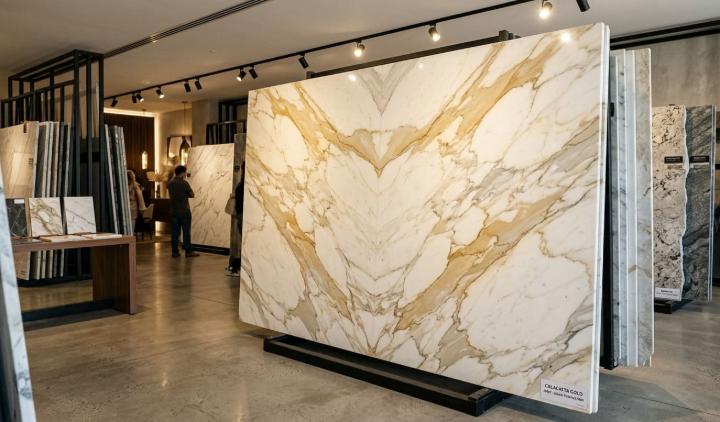
What Drives Marble Pricing?
Availability. Scarcity is one of the biggest price drivers. Rarer slabs command higher prices, and marble with minimal veining or distinctive coloration tends to sit at the higher end of the market. White marble, formed primarily from calcite, is typically more expensive than colored dolomite varieties because white marble quarries are far less common globally. For clients looking to secure better value, priority access to premium selections, and industry-level pricing, apply for a Nova Tile and Stone trade account to unlock exclusive pricing and early access to our marble inventory.
Impurities. Fissures, cracks, and surface pits reduce a slab's market value. For a clean, seamless installation, these are characteristics to avoid when selecting material.
Lifestyle Trends. Consumer demand shifts with interior design trends. When grey or black marble surges in popularity, prices for those varieties follow. Other colors may soften in price during the same period.
Application. Marble works across a wide range of uses, including flooring, wall cladding, vanity tops, and countertops. Each application carries different pricing. Flooring projects, for example, require significantly more surface area than a backsplash or countertop installation. For a deeper look at material options, design considerations, and what impacts overall cost, explore the comprehensive guide to stone countertops and surface applications.
Edge Profiles and Finishes. Specialty edge detailing and custom surface finishes add to the final cost. Both require additional fabrication time and skilled craftsmanship to execute properly.
Sealing and Maintenance. Marble is porous, which means it needs to be sealed after installation to protect against staining and discoloration. Resealing at appropriate intervals keeps the surface looking its best over the long term.
Slab Thickness. Thicker slabs cost more. Different applications call for different thickness specifications, and a heavier, thicker slab makes a bolder visual statement in any space.
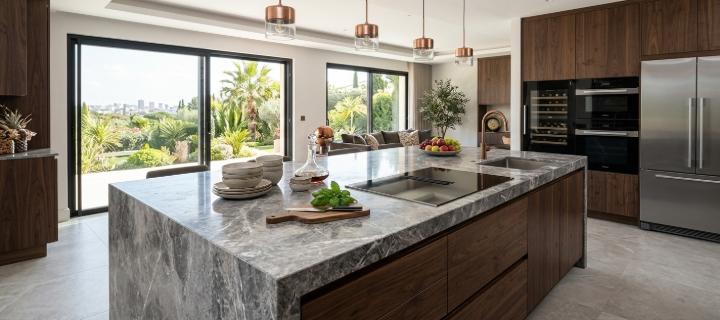
Ways to Bring the Cost Down
Marble is an investment that adds lasting value to a property when it is properly maintained. Several practical approaches can help manage the budget without compromising on quality.
- Opting for darker tones opens up a wider range of more affordable options. The natural depth and variation in these shades can complement many design directions.
- Sourcing offcut pieces from completed projects works well for smaller installations and often comes at a reduced price.
- Prefabricated vanity tops and countertops are a cost-effective alternative when standard measurements align with the project requirements.
- Slabs with minor imperfections are priced lower and, with thoughtful layout planning, those characteristics can actually become design features.
- Working with experienced professionals from purchase through installation is non-negotiable. Poor installation creates problems that cost far more to correct than the initial savings.
For those who want to stay informed on industry standards, material best practices, and upcoming stone-focused events, explore the Natural Stone Institute’s calendar of industry events and educational resources. At the same time, choosing a trusted local supplier ensures better quality control and personalized service, shop locally with Nova Tile and Stone to access carefully curated slabs and expert guidance from selection to installation.
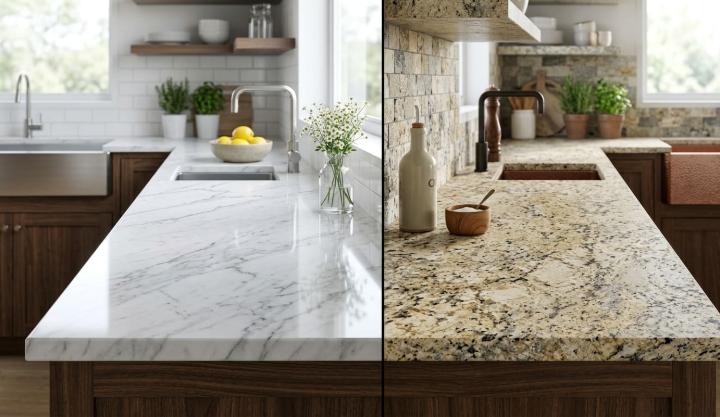
Marble vs. Granite: Which Costs More?
Both marble and granite are popular choices for kitchen and bathroom remodels, and both come in enough variation that pricing can overlap. As a general rule, granite tends to be slightly more affordable. However, the specific properties of each slab will ultimately determine the individual price.
Marble delivers a distinctly upscale aesthetic that is difficult to replicate with other materials. Granite, by contrast, handles heavy everyday use more easily. The decision comes down to priorities: appearance versus durability. That tradeoff is especially important in a kitchen environment where surfaces take a great deal of wear.
Regardless of which material is selected, whether it is a locally sourced granite or a premium Italian marble, the right choice is always the one that fits the design vision and functional demands of the space. To move forward with accurate pricing based on your selected material, measurements, and finish preferences, request a personalized slab quote from Nova Tile and Stone for expert guidance and tailored project estimates.
Conclusion
Marble's price reflects far more than aesthetics. Every factor, from quarry location and slab rarity to thickness and surface finish, plays a direct role in what you pay. Understanding these variables puts you in a stronger position to make smart purchasing decisions, whether you are working with a generous budget or looking to maximize value on a tighter one. With the right material selection and a consistent maintenance routine, marble delivers a return on investment that few other natural stones can match. It remains one of the most enduring choices in residential and commercial design for good reason.
When working with a trusted tile and stone company like Nova Tile and Stone, offering premium slab selections and knowledgeable guidance to support your project from material selection onward, you can move forward with confidence knowing you are choosing quality at every step.
Frequently Asked Questions
Why is white marble more expensive than other marble colors?
White marble is quarried from a limited number of sources worldwide, making it significantly rarer than colored varieties. Its formation relies on a high concentration of calcite with minimal mineral impurities, which is a condition that occurs in fewer geological regions. That scarcity, combined with its clean, high-contrast veining that suits a wide range of design styles, drives its price higher than more commonly available dolomite-based marbles.
Does marble increase the resale value of a property?
Yes, marble is widely recognized as a value-adding material in residential and commercial real estate. Its association with luxury finishes makes it a strong selling point for kitchens, bathrooms, and entryways. Buyers and appraisers both tend to view marble installations favorably, particularly when the material is well-maintained and professionally installed.
How often does marble need to be resealed?
Resealing frequency depends on the level of use the surface receives and the type of sealant applied during installation. High-traffic surfaces like kitchen countertops may need attention more frequently than a marble accent wall or a low-use bathroom vanity. Rather than following a fixed schedule, the better approach is to monitor the surface regularly and consult a professional when water no longer beads on the stone.
Is marble a better choice than granite for kitchen countertops?
Granite holds a practical advantage in the kitchen because it handles heat, scratches, and heavy daily use more effectively than marble. Marble, while visually superior for many design styles, is more susceptible to etching from acidic substances like citrus juice and vinegar. The right choice depends on how the kitchen is used. For a high-activity cooking space, granite is the more durable option. For a kitchen where appearance takes priority and care will be taken with surface use, marble remains a compelling choice.
Are there affordable ways to use marble without overspending?
Several strategies make marble more accessible without sacrificing quality. Using marble selectively, such as on a single feature wall, a backsplash, or a vanity top rather than throughout an entire space, reduces material costs significantly. Sourcing offcut slabs from completed fabrication jobs, choosing prefabricated pieces when measurements allow, or selecting slabs with minor natural imperfections are all practical ways to bring the cost down. Working with an experienced stone professional from the start also prevents costly installation mistakes that can outweigh any initial savings.