Choosing the right slab finish directly affects how a surface performs, how long it lasts, and how much maintenance it requires in any home environment. The four primary finish types available across natural and engineered stone slabs are polished, honed, leathered, and specialty. Each finish changes the stone's porosity, light interaction, texture, and resistance to daily wear in ways that make certain options better suited to specific rooms, surfaces, and lifestyles than others.
Polished finishes produce a high-gloss, reflective surface that reduces porosity and suits formal interior spaces, kitchen surfaces, and food preparation areas. Honed finishes deliver a smooth, matte surface with moderate porosity suited to contemporary interiors, high-traffic floors, and outdoor areas requiring slip resistance. Leathered finishes introduce a low-sheen, tactile texture that conceals fingerprints and watermarks, making them the most forgiving option for busy households and outdoor applications. Specialty finishes including brushed, sandblasted, and antiqued treatments serve custom architectural, fireplace, and feature wall applications.
The stone material itself determines which finishes are available and which environments each combination can handle. Granite accepts all four finishes and works indoors and outdoors, including kitchen surfaces and food preparation areas. Marble, dolomite, and semi-precious stone are indoor-only materials. Quartzite, travertine, and porcelain perform in both indoor and outdoor settings. Quartz is suited to indoor use only and is available in polished and honed finishes.
Browse our live slab inventory to view current natural and engineered stone selections across all available finish types.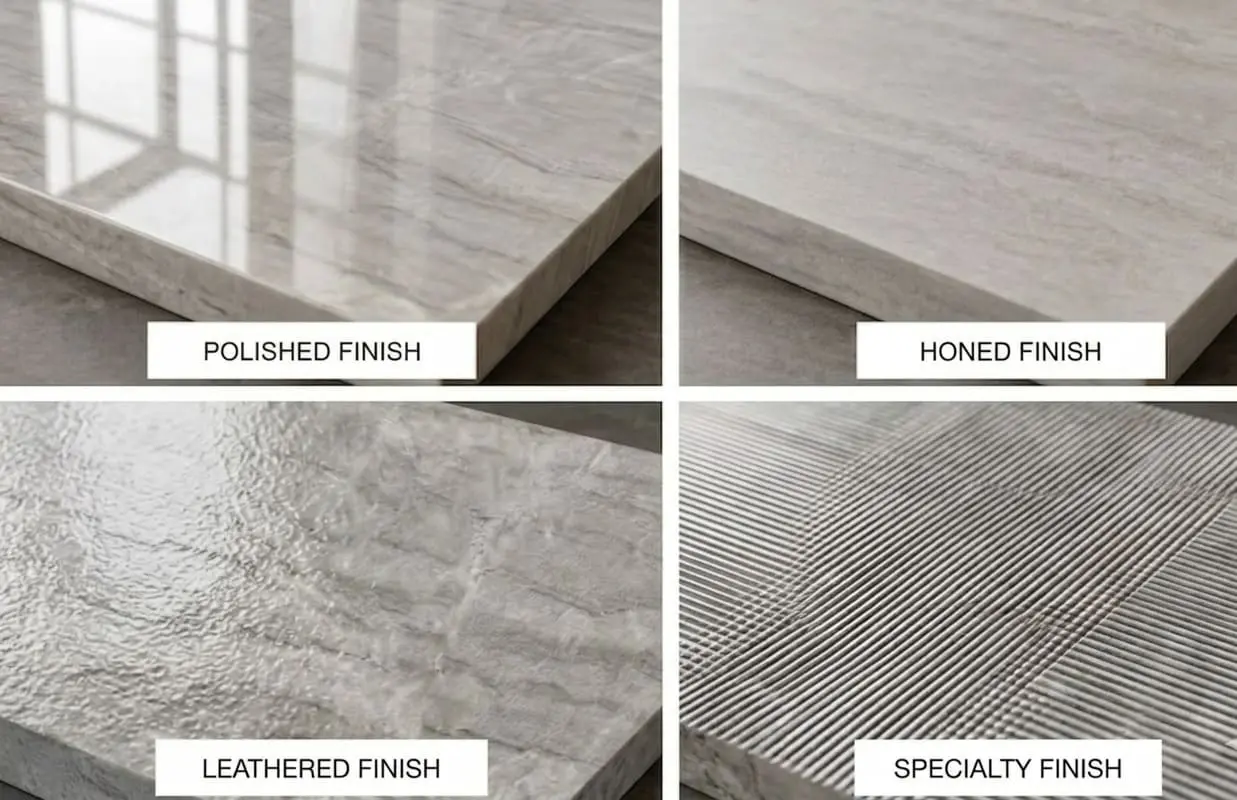
What a Finish Actually Changes
A finish is not purely cosmetic. Selecting a finish is about more than aesthetics, as it also affects how the surface feels to the touch, how easily it can be cleaned, how it resists stains or scratches, and how long it will maintain its original beauty.
A polished surface closes the stone's pores and creates a high-gloss, reflective sheen that brings out the depth of color and veining. A honed surface is ground smooth without reaching a glossy sheen, producing a matte, velvety feel suited to contemporary and understated spaces. A leathered surface goes one step further by introducing subtle texture through diamond-tipped brushes, creating a low-sheen, tactile finish with organic character. Specialty finishes such as brushed, sandblasted, and antiqued treatments expand the range further for custom applications.
Each finish changes the stone's relationship with light, moisture, and daily use. Understanding those differences is the starting point for every informed slab decision. Trade professionals sourcing slabs for client projects can access our full selection through our trade account program.
Polished Finishes: Formal, Bright, and Protective
A polished finish is the most widely recognized treatment across all stone types. The surface is ground progressively with fine abrasives until it achieves a mirror-like, high-gloss sheen that amplifies the stone's natural color and veining.
Polished granite is especially suited to kitchen surfaces and food preparation areas because the process reduces surface porosity, making it resistant to moisture, stains, and bacteria. Polished marble, dolomite, and quartzite are excellent choices for interior walls and floors where visual drama is the priority. Polished porcelain and quartz carry the same luminous quality with engineered consistency, making them reliable options for high-traffic indoor floors and walls.
A polished finish gives stone a sleek, glossy look that reflects light and enhances the natural beauty and color of the stone, and this finish is often chosen for its luxurious and reflective appearance, making it ideal for high-end surfaces, islands, and statement pieces.
Polished surfaces can show fingerprints and fine scratches more readily than matte alternatives, particularly on darker stones. For a thorough breakdown of how finish type interacts with different stone compositions, this guide to ideal stone finishes from the Use Natural Stone organization is a valuable starting point.
Honed Finishes: Calm, Contemporary, and Versatile
A honed finish produces a smooth, flat, non-reflective surface that feels soft and grounded. It sits between polished and leathered in terms of sheen level, offering a matte quality without introducing texture.
Honed marble creates a restrained, elegant look well-suited to interior floors, walls, and fireplace surrounds where understated sophistication is the goal. Honed dolomite works similarly, bringing warmth and organic calm to bathroom walls and living spaces. Honed quartzite and granite are strong candidates for outdoor floors and patios because their texture provides essential grip in wet conditions. Honed stone is less prone to showing fingerprints, smudges, or scratches, making it a practical option for high-traffic areas.
Because the honing process leaves stone slightly more porous than polishing does, periodic sealing is important for maintaining long-term performance across all natural stone types finished this way. Schedule a free consultation with one of our design specialists to identify which honed stone best suits your specific space and lifestyle.
Leathered Finishes: Textured, Tactile, and Forgiving
The leathered finish is where natural stone takes on its most organic and dimensional character. Diamond-tipped brushes run across a honed slab, wearing away softer minerals and creating subtle surface contours that give the stone a worn, tactile depth.
A leathered finish combines sophisticated looks with everyday function, and its textured surface is great at hiding the daily realities of a busy home, with fingerprints, water spots, and smudges almost disappearing on its varied surface. Carmel Stone Imports This makes it particularly well-suited to high-traffic indoor environments and outdoor surfaces where the visibility of daily wear would otherwise be a concern.
Leathered granite performs exceptionally well on outdoor floors, fireplace surrounds, and feature walls, benefiting from the stone's UV resistance and natural hardness. Leathered quartzite is equally at home outdoors, offering grip on terraces and pool surrounds while maintaining structural integrity under direct sun exposure. Leathered marble delivers a bold, antiqued quality on interior walls and fireplaces, masking the natural etching that softer stone is prone to over time.
Leathered surfaces require consistent sealing across all natural stone types, as the texture can trap fine debris between contours. Our Reno showroom carries leathered slab samples across multiple stone types so the texture and character can be experienced in person before making a final decision.
Specialty Finishes: Brushed, Sandblasted, and Beyond
Specialty finishes expand the design vocabulary of natural stone beyond the three standard treatments. Brushed finishes introduce slight texture with muted tones, sitting between honed and leathered in appearance. Sandblasted finishes create a matte, grainy surface often chosen for exterior cladding and architectural feature walls. Antiqued treatments give stone a time-worn quality suited to traditional and rustic interiors.
These options are available across granite, marble, dolomite, quartzite, travertine, semi-precious stone, and porcelain, with each responding differently based on mineral composition and density. Specialty finishes work particularly well on fireplace surrounds and accent walls where a standard treatment may feel too conventional. Specialty finishes expand creative potential and allow stone to meet specific project needs, and choosing the right finish depends on the intended use and desired interaction with light and texture.
For those weighing specialty finishes against standard options, this comparison of the best countertop materials offers helpful context on how finish and material work together across different spaces.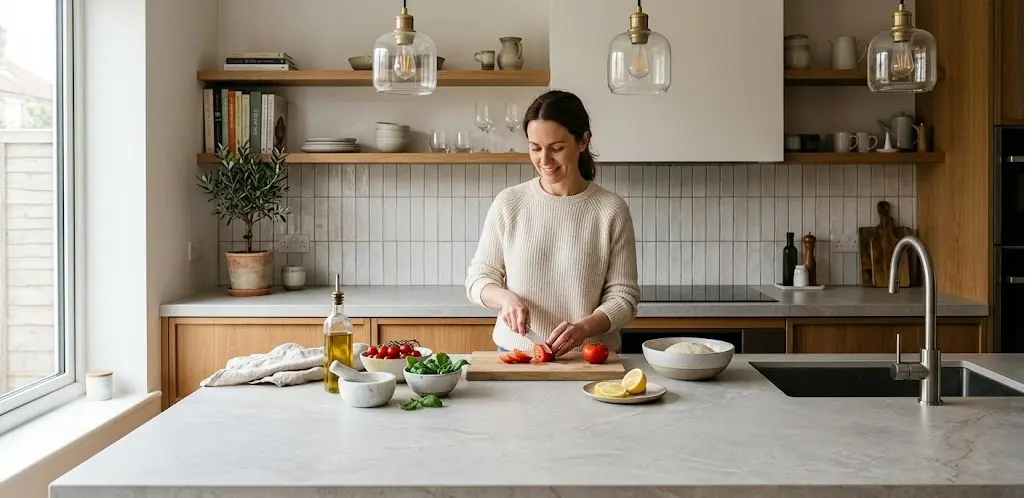
Matching Finish to Material and Application
Not every finish suits every stone or every space, and this is where the decision becomes most practical. Granite is the most versatile option across all finish types, performing well indoors and outdoors on floors, walls, fireplaces, and kitchen surfaces regardless of whether it is polished, honed, leathered, or specialty treated. Quartzite and travertine also perform reliably across all four finishes in both indoor and outdoor settings.
Marble, dolomite, and semi-precious stone are best kept indoors. Marble and dolomite accept all four finish types well on floors, walls, and fireplaces, but are not suited to outdoor environments. Semi-precious stone is available in polished and specialty finishes and works beautifully as an interior wall material. Porcelain offers engineered consistency across all four finishes for both indoor and outdoor applications. Quartz is suited to indoor floors and walls in polished and honed finishes, performing well in kitchen and bathroom settings, but is not recommended for outdoor or fireplace use.
For specific finish requirements across any stone type in our inventory, our team can arrange a slab quote request and provide guidance on which options are currently available.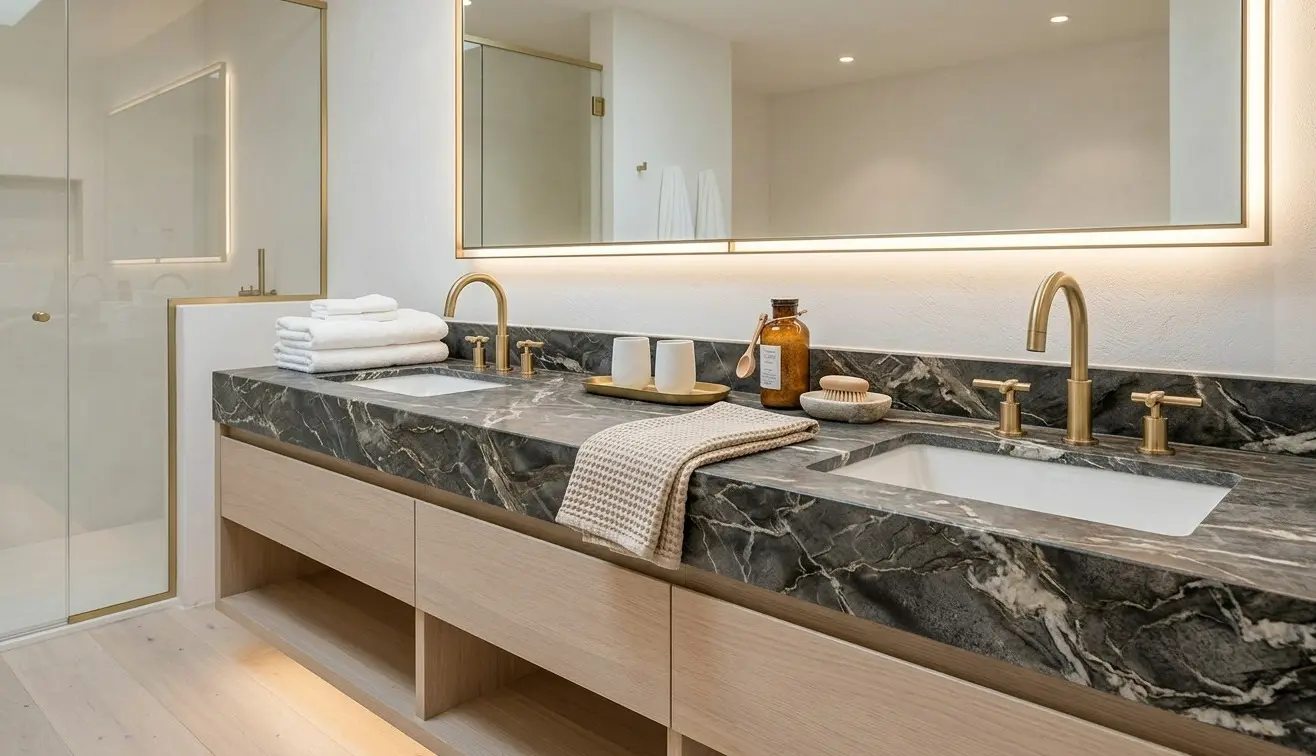
Why the Right Finish Protects Your Investment
A slab is a long-term commitment, and the finish plays a direct role in how that investment holds up over the years. The wrong finish choice for a given environment can lead to accelerated wear, increased maintenance demands, and surfaces that no longer reflect the original design intent.
Choosing the right finish is not just about looks but about lifestyle, safety, and longevity, as a stone's finish can completely change its personality.A polished granite surface in a kitchen performs differently from a honed one in the same space. A leathered quartzite floor on an outdoor terrace behaves differently from a polished slab in the same setting. Matching the finish to the actual conditions of the space is what separates a surface that ages beautifully from one that requires constant attention.
Experiencing finish samples under real lighting conditions and in the context of the actual space makes the difference between a confident selection and a costly revision. The Natural Stone Institute's care resource provides further guidance on maintaining natural stone surfaces across all finish types.
Conclusion
The finish on a slab is not a detail to be decided at the end of a project. It is a foundational choice that affects how a surface performs, how it looks through each season, and how much care it demands over the years. Polished finishes offer luminous protection and formal elegance. Honed finishes bring calm, practical versatility. Leathered finishes introduce bold texture and forgiving daily performance. Specialty finishes open the door to truly custom results tailored to the space and the stone.
Whether the project involves granite kitchen surfaces, marble interior walls, quartzite outdoor floors, or semi-precious stone accent panels, the right finish transforms a beautiful slab into a surface that works as well as it looks. Visit a showroom near you and speak with one of our design specialists to experience these finish options across our full range of natural and engineered stone selections.
Frequently Asked Questions
Which stone finish is the easiest to maintain at home?
Leathered finishes are generally the most forgiving in busy households because their textured surface conceals fingerprints, watermarks, and smudges more effectively than polished or honed alternatives. However, all natural stone finishes benefit from periodic sealing to protect against staining over time.
Can all stone types be finished in polished, honed, and leathered options?
Most natural stones including granite, marble, dolomite, quartzite, and travertine accept polished, honed, leathered, and specialty finishes. Semi-precious stone is available in polished and specialty finishes. Engineered options like porcelain support all four finish types, while quartz is available in polished and honed only.
Is a polished finish suitable for outdoor use?
For outdoor applications, honed, leathered, and specialty finishes are generally preferred because their texture provides essential grip in wet conditions. Polished surfaces are smooth and can become slippery when exposed to rain or moisture, making them less practical for exterior floors and patios.
Does the finish affect how UV resistant a stone is?
UV resistance is a property of the stone material itself rather than the finish applied to it. Granite, quartzite, and porcelain are UV resistant regardless of finish type, making each suitable for outdoor use. Marble, dolomite, semi-precious stone, and quartz are not recommended for outdoor environments.
How do I know which finish is right for my space?
The best way to determine the right finish is to experience samples in person under real lighting conditions. Factors to consider include the amount of daily traffic the surface will see, the desired level of sheen, the stone material selected, and whether the space is indoors or outdoors. A free design consultation can help narrow down the best option for any project.