White quartzite countertops are natural stone surfaces made from quartzite, a metamorphic rock formed when quartz-rich sandstone is subjected to intense heat and pressure deep within the earth. The material ranks between 7 and 8 on the Mohs hardness scale, making it harder than both granite and marble, and its silica-based composition means it does not etch when exposed to common household acids like lemon juice or vinegar. White quartzite is available in a range of varieties including Zermatt, Taj Mahal, Calacatta Macaubas, and Mont Blanc, each with a white or cream base and distinct veining in gray, gold, or taupe. It requires periodic sealing to protect against staining and is suited for kitchen countertops, bathroom vanities, and other high-use surfaces where both durability and a marble-like appearance are priorities.
We work with white quartzite slabs across our showrooms in Reno, Minden, Sacramento, and Fernley, and it consistently attracts interest from homeowners renovating kitchens and bathrooms alike. This guide covers what you need to know before selecting a white quartzite countertop, from what makes the material distinct to which varieties are commonly available and how to care for your slab over time.
What Is White Quartzite?
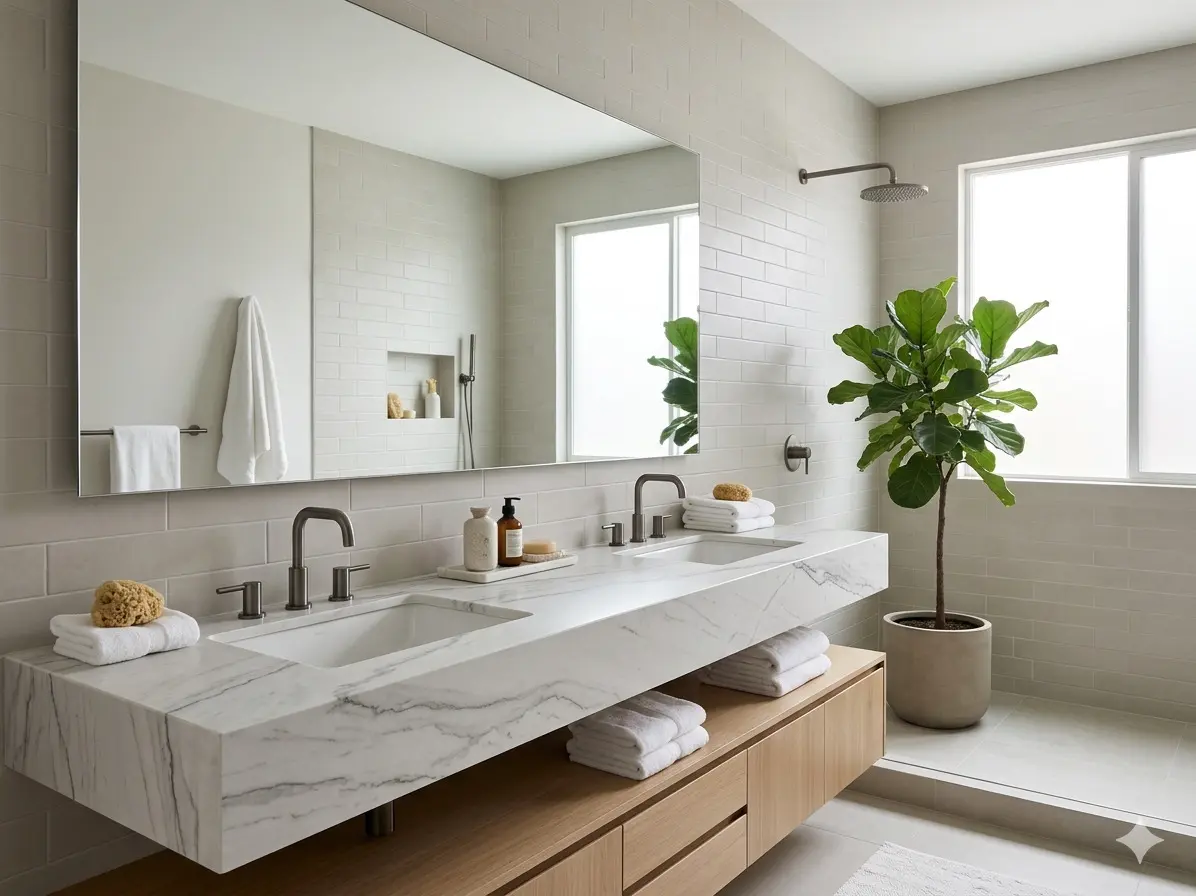
Quartzite is a natural metamorphic rock that forms when sandstone composed primarily of quartz grains is subjected to extreme heat and pressure, typically from tectonic activity deep within the earth's crust. That process fuses the individual quartz grains into an interlocking crystalline structure that is denser and harder than the original sandstone it came from. The result is a stone that ranks between 7 and 8 on the Mohs hardness scale, making it harder than granite and significantly harder than marble.
White quartzite refers to varieties where the base color of the stone is white, off-white, or light cream. The veining that runs through white quartzite comes from mineral deposits introduced during the stone's formation, producing patterns in gray, gold, taupe, charcoal, and occasionally blue or green. Because each slab forms through a unique geological process, no two pieces are identical.
One important distinction worth understanding: white quartzite is not the same as white quartz. Quartzite is a natural stone quarried directly from the earth. Engineered quartz is a manufactured material made by combining crushed quartz with polymer resins. The two look similar and are often confused by shoppers, but they differ in composition, performance characteristics, and how they are sourced. When you select a quartzite slab, you are choosing a material that formed entirely through natural geological processes without any manufacturing involvement. The CDC and NIOSH have raised awareness around silica exposure risks during the fabrication of engineered stone products, which is one reason some homeowners and designers prefer working with natural stone for their countertop projects.
Why White Quartzite Works for Countertops
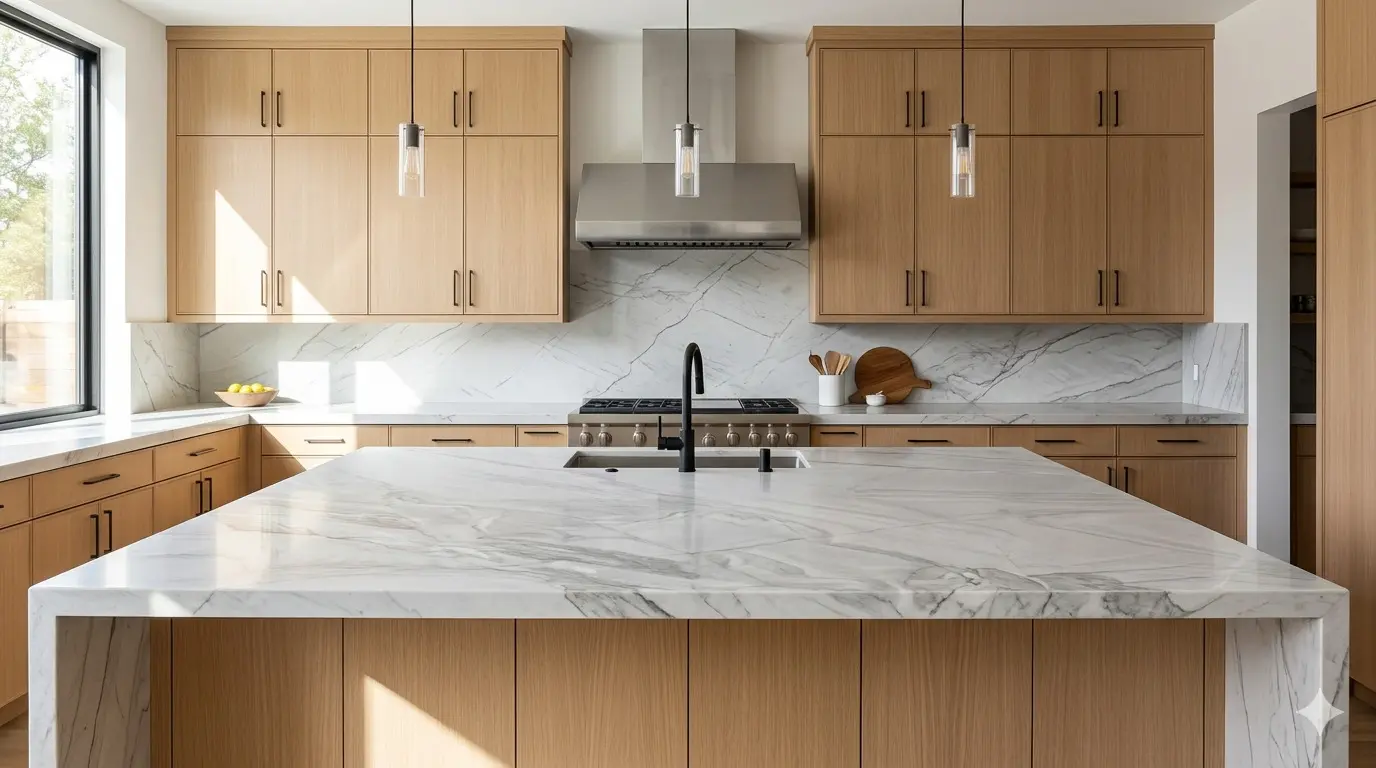
White quartzite is a frequently requested natural stone for countertop applications because it performs well across the characteristics that matter most in a kitchen or bathroom.
Scratch resistance. True quartzite is hard enough to scratch glass, which serves as a useful field test for confirming authenticity. Its hardness means it holds up to everyday prep work and the general demands of a busy household without showing surface damage easily. Cutting directly on quartzite is not recommended, however, and using a cutting board is the right practice to maintain both the stone's finish and your knife edges.
Heat resistance. White quartzite handles everyday heat exposure well. Unlike engineered quartz, which contains polymer resins that can discolor or crack under sustained heat, natural quartzite's mineral composition is more tolerant of high temperatures. That said, direct contact with very hot cookware should still be avoided, and trivets or heat pads are recommended whenever hot pots, pans, or baking sheets are involved.
Acid resistance. This is the primary advantage white quartzite holds over white marble. Marble is a calcium-based stone that reacts chemically with common household acids, including lemon juice, vinegar, tomato sauce, and wine. That reaction leaves permanent dull marks on the surface called etching. True quartzite does not etch. It resists acid contact without surface damage, which makes it better suited for kitchen countertop use than marble. If a white quartzite slab is etching from acids, it is almost always a sign that the stone has been mislabeled and is actually a softer dolomitic marble rather than genuine quartzite.
Durability over time. A properly sealed and maintained quartzite countertop can last for many years. As This Old House notes in its guide to stone countertops, natural stone countertops are considered a value-adding feature in residential design, and quartzite holds its appearance well with consistent care.
Popular White Quartzite Varieties
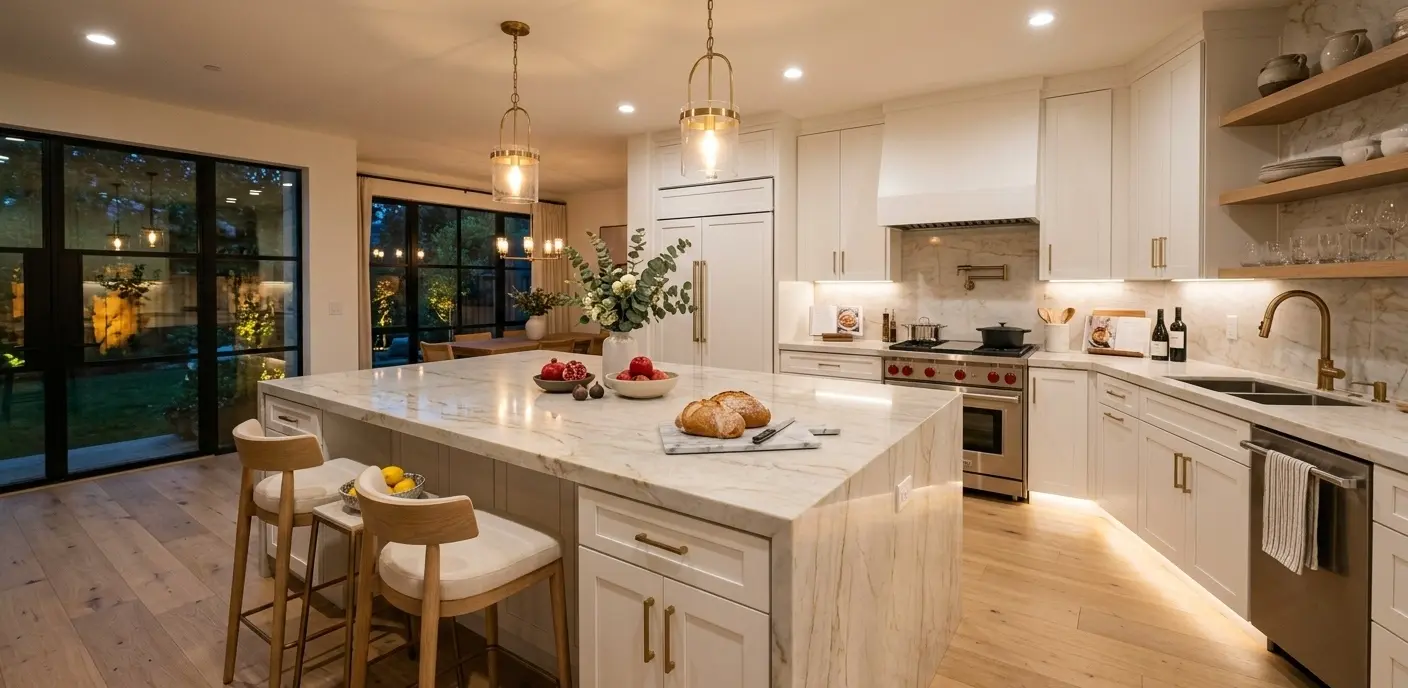
The category of white quartzite covers a range of looks, from nearly solid white with minimal veining to slabs with bold, sweeping movement. Here are some of the more commonly available varieties.
Zermatt Quartzite. Zermatt features a soft white base with subtle gray veining that runs in gentle, flowing patterns across the slab. It reads clean and refined without being stark, which makes it a versatile white quartzite that pairs well with a broad range of cabinet colors and kitchen styles.
Taj Mahal Quartzite. Taj Mahal is a well-known white quartzite variety. It has a warm, creamy white background with soft golden and taupe veining that gives it a warmer tone than cooler white quartzites. It works well in kitchens with wood tones or warm-toned cabinetry.
Calacatta Macaubas. Calacatta Macaubas is a Brazilian quartzite with smoky gray veining against a soft white background. The veining pattern closely resembles high-end Calacatta marble, making it a common choice for buyers who want that marble-inspired look with better performance characteristics.
Mont Blanc Quartzite. Mont Blanc is a creamy white variety with thin veins in both gray and gold. It has a quieter, more understated appearance compared to some of the more dramatic quartzites and works well in bathrooms and kitchens where a softer look is the goal.
White Quartzite vs. White Marble: Key Differences
Because white quartzite closely resembles white marble, buyers often weigh the two materials against each other. Both are natural stones and both add visual appeal to kitchens and bathrooms. The differences come down to hardness, acid resistance, and maintenance demands.
Marble is a metamorphic rock formed from limestone, which makes it calcium-based and reactive to acids. It etches, scratches more easily, and generally requires more attentive care in a kitchen setting. Quartzite is silica-based, not calcium-based, which is why it resists etching and performs more like granite in terms of hardness.
For bathroom vanities and lower-traffic surfaces, marble remains a suitable choice where aesthetics are the priority. For kitchen countertops in an active household, white quartzite gives you a similar aesthetic with greater durability. You can compare both materials in person at our local showrooms to see how they look under real lighting conditions before making a decision.
Finishes and Design Pairings
White quartzite is available in polished, honed, and leathered finishes. A polished finish brings out the depth and brightness of the stone's crystalline structure and veining. A honed finish produces a matte, softer surface that suits contemporary or transitional kitchen styles. A leathered finish adds subtle texture and a slightly more organic appearance that works well in warmer, more casual design settings.
For cabinet pairings, white quartzite works across a wide range. It contrasts with dark charcoal or navy cabinets, creates a tonal look with white or light gray cabinetry, and pairs naturally with wood-tone cabinets when selecting a warmer variety like Taj Mahal.
For backsplash, large-format slab backsplashes that extend the countertop material up the wall can create cohesive results with white quartzite. Honed marble tile, white subway tile, or neutral stone mosaics are all workable choices that allow the countertop surface to remain the visual anchor of the space. Our team at any of our Northern Nevada and Northern California showrooms can help coordinate countertop and backsplash selections side by side.
Maintenance and Sealing
White quartzite is a porous natural stone and requires sealing to protect the surface from staining. A penetrating sealer should be applied at installation, and resealing is recommended every one to two years as needed, depending on usage and the sealant used.
The water bead test is a straightforward way to check whether your countertop needs to be resealed. Place a small amount of water on the surface. If it beads up and sits on top of the stone, the sealant is working correctly. If the water is absorbed and darkens the stone, it is time to reseal. For daily cleaning, warm water and a mild pH-neutral dish soap applied with a soft cloth is sufficient. Avoid harsh chemical cleaners, abrasive pads, and strongly acidic or alkaline products, which can degrade the sealant over time. Fine Homebuilding's guide to natural stone countertops offers additional detail on sealing schedules and care routines that apply across quartzite varieties.
Conclusion
White quartzite countertops offer a combination of visual appeal and durability that suits a range of kitchen and bathroom applications. They deliver the veined appearance of white marble while resisting the acid etching and surface wear that makes marble a more demanding choice for active kitchens. With varieties ranging from soft, understated creams to bolder patterns with more movement, white quartzite fits a wide range of design directions.
If you are considering white quartzite for your next project, browse our slab inventory to explore available varieties and finishes. When you are ready to move forward, you can schedule a free design consultation with our team or submit a slab quote request online before your visit. As a direct stone importer, we carry thousands of slabs across our four locations and can guide you through the selection process from start to finish. Contractors and designers working on larger projects are also welcome to apply for a trade account for access to trade pricing and dedicated project support.
Frequently Asked Questions
Is white quartzite harder than marble?
Yes. White quartzite ranks between 7 and 8 on the Mohs hardness scale, making it significantly harder than marble, which typically ranks between 3 and 5. That difference in hardness is why quartzite resists scratches and acid etching more effectively than marble in kitchen countertop applications.
Does white quartzite etch like marble?
True white quartzite does not etch. Etching is a chemical reaction that occurs when acids contact calcium-based stones like marble. Quartzite is silica-based, which means it does not react the same way. If a slab marketed as white quartzite is etching from household acids, it is likely mislabeled and is actually a softer dolomitic marble or a quartzite-marble hybrid.
Does white quartzite need to be sealed?
Yes. Like all natural stone, white quartzite is porous and should be sealed with a penetrating sealer upon installation and resealed periodically, every one to two years as needed, for countertop surfaces. A properly sealed quartzite countertop resists staining from cooking oils, coffee, and wine. The water bead test is the most reliable way to check whether resealing is needed.
How is white quartzite different from white engineered quartz?
White quartzite is a natural metamorphic stone quarried directly from the earth. White quartz is a manufactured product made from crushed quartz minerals combined with polymer resins. Quartzite requires sealing and offers better heat tolerance due to its natural composition. Engineered quartz requires no sealing but is more sensitive to sustained heat because of its resin content.
What are the most popular white quartzite varieties for kitchen countertops?
Some of the more widely selected white quartzite varieties include Zermatt, Taj Mahal, Calacatta Macaubas, and Mont Blanc. Each offers a distinct combination of background tone and veining character, ranging from warm creamy whites to cooler, brighter whites with bolder gray movement. The best way to choose is to view full slabs in person under natural and artificial light.