White quartzite is a naturally formed metamorphic stone prized for its pale coloring, flowing veins, and hardness that typically registers around 7 on the Mohs scale. When used for kitchen countertops, bathroom vanities, or kitchen islands, it offers a combination of visual refinement and surface resilience that makes it a practical long-term investment for both residential and commercial spaces.
Formed when sandstone is subjected to intense geological heat and pressure over time, the stone develops a dense, interlocking grain structure that resists scratching better than marble and is generally less prone to etching from common kitchen substances. The surface is durable, but proper sealing and regular maintenance will help preserve its appearance. Each slab has natural variation in tone, veining, and movement, which means no two installations share exactly the same appearance.
For homeowners and designers weighing surface options, understanding how white quartzite performs, how it compares to similar stones, and which varieties suit different design directions is a useful starting point.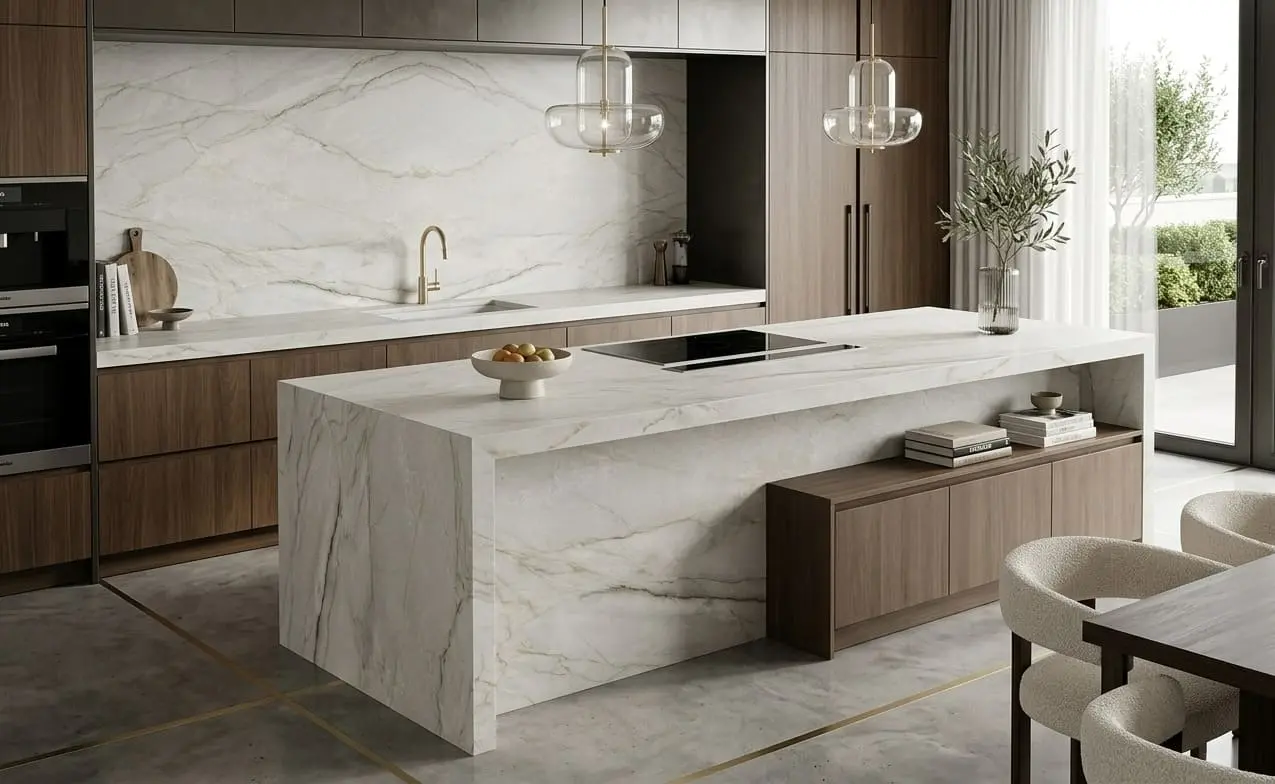
How White Quartzite Forms and What That Means for Performance
Quartzite begins as sandstone and is gradually transformed through intense geological heat and pressure deep within the earth's crust. This process causes the individual quartz grains to recrystallize into a dense, interlocking structure that gives the stone its characteristic hardness. On the Mohs scale, quartzite typically registers around 7, placing it above marble and comparable to many granites.
That hardness contributes to a surface that resists scratching better than softer stones, but edges and corners still require extra care during everyday use. The stone is suitable for high-use areas like kitchen countertops, but correct installation and consistent maintenance remain essential for long-term results. It is also worth noting that while quartzite is generally less prone to etching than marble, spills should still be cleaned promptly to protect the surface and any sealer applied to it.
Because quartzite is a natural stone, it is porous at a microscopic level. The surface is durable, but proper sealing will help preserve its appearance over time, particularly in wet or heavily used environments. This Old House's guide to stone countertops offers a helpful overview of how different natural stones compare in terms of porosity and long-term care.
The Visual Character of White Quartzite
White quartzite used on a countertop or kitchen island brings a quality of light and movement to the space that is genuinely distinct from engineered surfaces. The pale background, which can range from bright white to soft ivory depending on the slab, provides a neutral foundation, while the natural veining in shades of grey, silver, or warm gold introduces depth and visual texture.
Each slab has natural variation in tone, veining, and movement, which means installations using this stone carry an individuality that manufactured materials are not able to offer in the same way. For kitchen islands in particular, that variation becomes a visual focal point rather than simply a functional surface. Browsing the live slab inventory in person is one of the most effective ways to appreciate how much character each piece holds before committing to a selection.
In bathroom settings, white quartzite used for vanity tops or shower surrounds creates an atmosphere of calm refinement. The stone performs well in humid spaces, but proper sealing or installation may still be needed depending on the specific application and exposure level.
White Quartzite Compared to Marble
The visual resemblance between certain white quartzite varieties and marble is a frequent source of confusion, and it is worth understanding the practical differences before choosing between them.
Marble contains calcite, which reacts to acids found in common kitchen substances like citrus juice, vinegar, and certain cleaning products. This reaction causes etching, a form of surface dulling that is difficult to reverse without professional attention. White quartzite, composed primarily of quartz, is generally less reactive to these substances, though spills should still be addressed promptly.
Marble also tends to scratch more readily under kitchen conditions. Quartzite offers stronger resistance to surface wear, but cutting directly on it is still not recommended, as doing so over time can affect both the finish and any protective sealer. For a detailed side-by-side breakdown, Bob Vila's comparison of quartz vs. quartzite is a useful reference for understanding how these materials differ in composition and daily performance.
The key distinction is that marble requires more consistent and attentive maintenance to retain its surface quality. White quartzite is easier to maintain, but harsh cleaners should still be avoided, as they can break down sealer and gradually affect the stone beneath.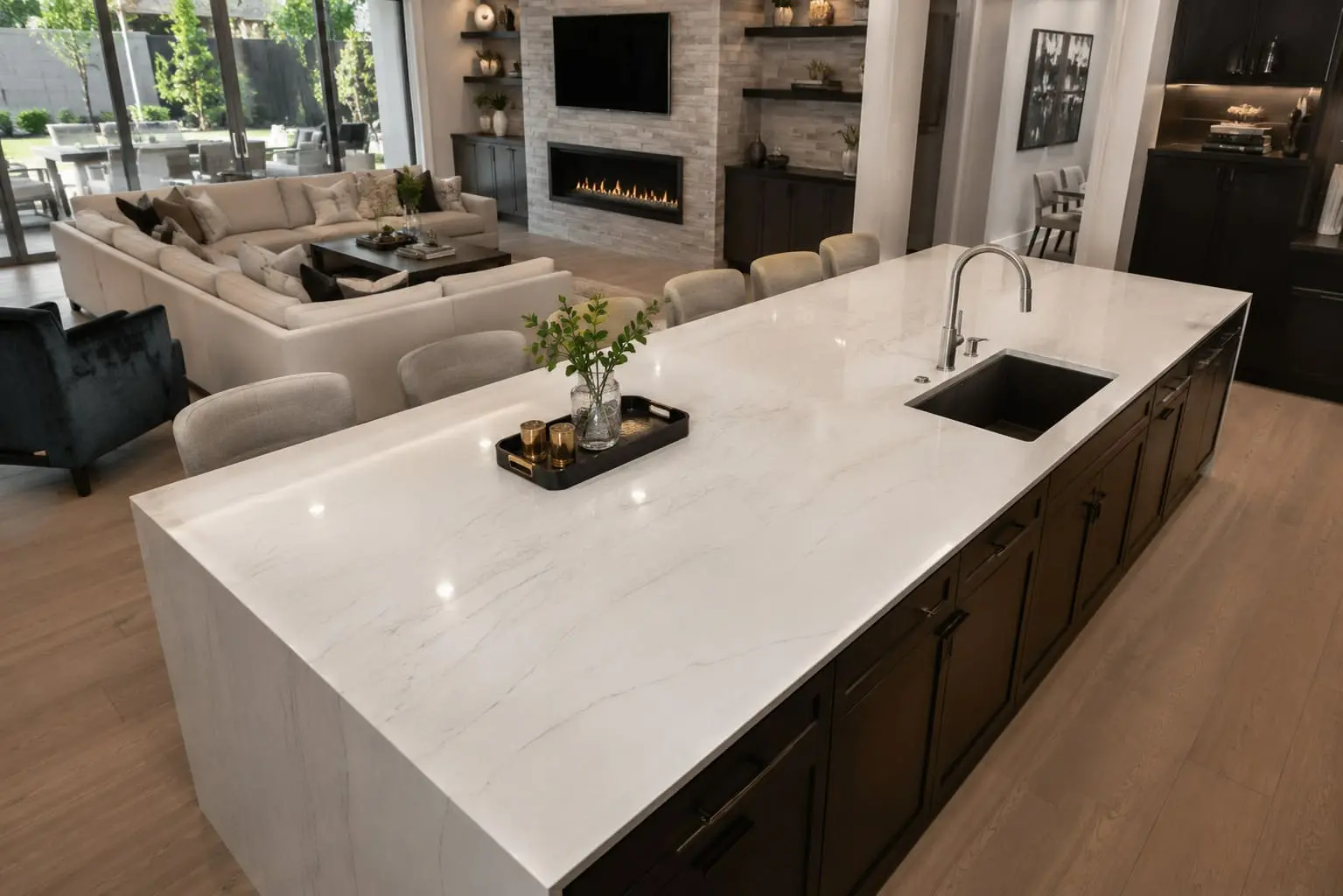
White Quartzite Varieties Worth Considering
Several varieties fall within the white quartzite category, each with a distinct character suited to different design directions.
Super White presents a crisp, bright background with restrained grey veining. It reads cleanly in contemporary and transitional spaces and pairs well with a wide range of cabinetry tones and finishes.
Taj Mahal quartzite has a warmer quality, with a creamy ivory background and softer veining in gold and taupe tones. It works particularly well alongside natural wood elements and earthy palettes.
White Macaubas features bolder silver and deep grey veining against a bright white field. Used on a kitchen island or feature wall, the stone's natural patterning takes on a more deliberate visual role in the room.
Viewing full slabs in person is strongly recommended before committing to any variety, since individual slabs within the same category can differ considerably in patterning and tone. Those based in Northern Nevada or California can visit a showroom to evaluate available options under natural light.
Caring for White Quartzite Surfaces
The surface is made to perform well over time, but proper use and maintenance remain important. Resealing once a year is a reasonable baseline for most countertop applications, though busier surfaces may benefit from more frequent attention. A simple test involves placing a few drops of water on the surface; if the water absorbs rather than beads, resealing is due.
For day-to-day cleaning, mild soap and warm water is sufficient. Abrasive scrubbing pads, bleach-based products, and strong chemical cleaners should be avoided entirely. The surface can handle normal kitchen heat better than many engineered alternatives, but direct contact with very hot cookware is still not recommended, and trivets remain a sensible precaution. The Natural Stone Institute's care guidelines provide thorough guidance on sealing, cleaning, and long-term upkeep for natural stone surfaces across different applications.
Those who would like personalized guidance on material selection or care can book a free design consultation to speak with an expert directly.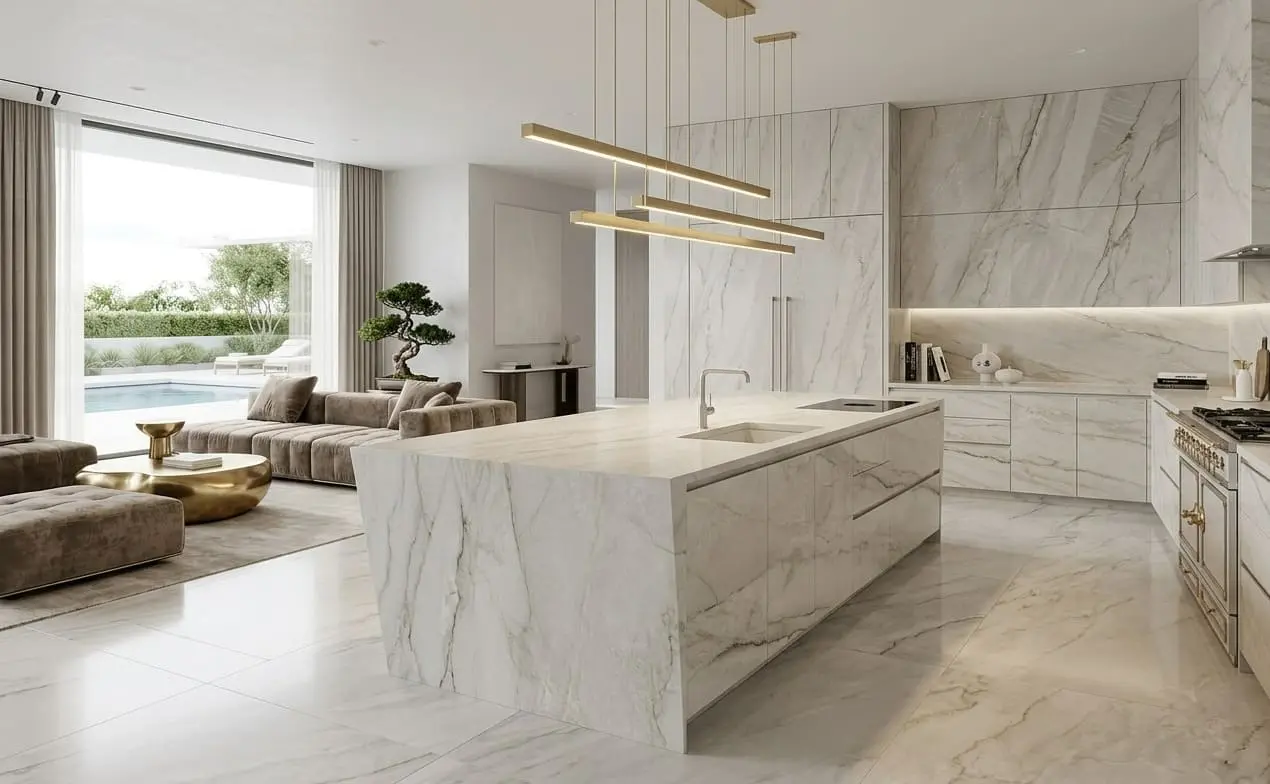
Applications Beyond the Kitchen
White quartzite used for flooring in large-format slabs creates a sense of spatial continuity that works especially well in open-plan living areas. The stone reflects light gently, contributing to a brighter atmosphere without the sterile quality sometimes associated with polished porcelain. The surface is suitable for daily use in these settings, but each application should be evaluated individually based on traffic levels and exposure.
For feature walls in living rooms or primary bathrooms, the natural variation within each slab does considerable visual work on its own, reducing the need for additional ornamentation. Those ready to move forward with a specific material can submit a slab quote request to get the process started.
Why White Quartzite Continues to Perform in High-End Design
The sustained presence of white quartzite in residential and commercial interiors is not driven by trend alone. It reflects the stone's capacity to satisfy both aesthetic and functional expectations across a wide range of applications. Its neutral palette adapts across design styles, from minimalist to richly layered, while its natural variation ensures each installation has a character of its own.
For spaces meant to remain relevant and functional over many years, the material offers a well-supported combination of visual quality and practical resilience. Trade professionals working on client projects can explore the trade account program for access to dedicated support and resources tailored to the industry. Nova Tile and Stone also offers free design consultations to help match the right material to the specific demands of each project.
Conclusion
White quartzite is a naturally formed stone that brings together aesthetic refinement and meaningful durability in a way that few materials can match. Whether applied to a kitchen countertop, a bathroom vanity, a kitchen island, or large-format flooring, its pale tones and natural veining create surfaces that age gracefully and hold their visual quality through years of real use. For anyone investing in surfaces that are meant to last, this stone consistently earns its consideration.
Frequently Asked Questions
Is white quartzite a good choice for kitchen countertops?
White quartzite is a practical material for kitchen countertops. It is harder than marble and generally less prone to etching from common kitchen substances, but spills should still be cleaned promptly and the surface should be sealed regularly to maintain its appearance.
How does white quartzite differ from marble?
The two stones can look similar, but their composition is quite different. Marble contains calcite, which reacts to acids and etches more easily. White quartzite is composed primarily of quartz, making it generally more resistant to acid damage and surface scratching, though it still benefits from proper sealing and care.
Can white quartzite be used in a bathroom?
Yes, it is well suited to bathroom vanities, shower surrounds, and flooring. The surface performs well in humid spaces, but proper sealing or installation may still be needed depending on the level of moisture exposure in the specific area.
How often should white quartzite be sealed?
Most surfaces benefit from resealing around once a year under typical use conditions. High-traffic kitchen countertops or surfaces exposed to more moisture may require more frequent attention. A water bead test is a simple way to determine whether the sealer is still performing effectively.
What is the difference between quartzite and engineered quartz?
Quartzite is a naturally occurring metamorphic rock formed through geological processes. Engineered quartz is a manufactured product made from crushed quartz bound with polymer resin and pigments. The two materials have different visual qualities, maintenance requirements, and performance profiles despite the similarity in name.
Note: Some images on this page may be conceptual renderings created to illustrate design possibilities and may not depict actual installations.