Why White Marble Slabs Remain a Top Choice for Indoor Design
White marble slab is a natural stone surface prized for its bright, veined appearance and adaptability across a wide range of indoor applications, including kitchen countertops, bathroom vanity tops, feature walls, flooring, and fireplace surrounds. It is one of the most widely used premium stone materials in residential and commercial interiors because of its ability to reflect light, complement a broad range of design styles, and hold its aesthetic value over time.
Homeowners and designers choose white marble for indoor surfaces primarily because no engineered alternative fully replicates its natural depth, crystalline surface variation, or the way its veining shifts under changing light. It works in both minimalist and ornate interiors, making it one of the most versatile natural stone materials available.
Its indoor applications span five key areas: kitchen countertops, bathroom vanity tops, feature walls, flooring, and fireplace surrounds. Each application takes advantage of different properties of the stone, from its heat-resistant quality near fireplaces to its seamless, expansive surface continuity across kitchen islands and bathroom vanities.
Understanding which finish, veining pattern, and application works best is where the decision becomes more nuanced, and that is exactly what this guide covers.
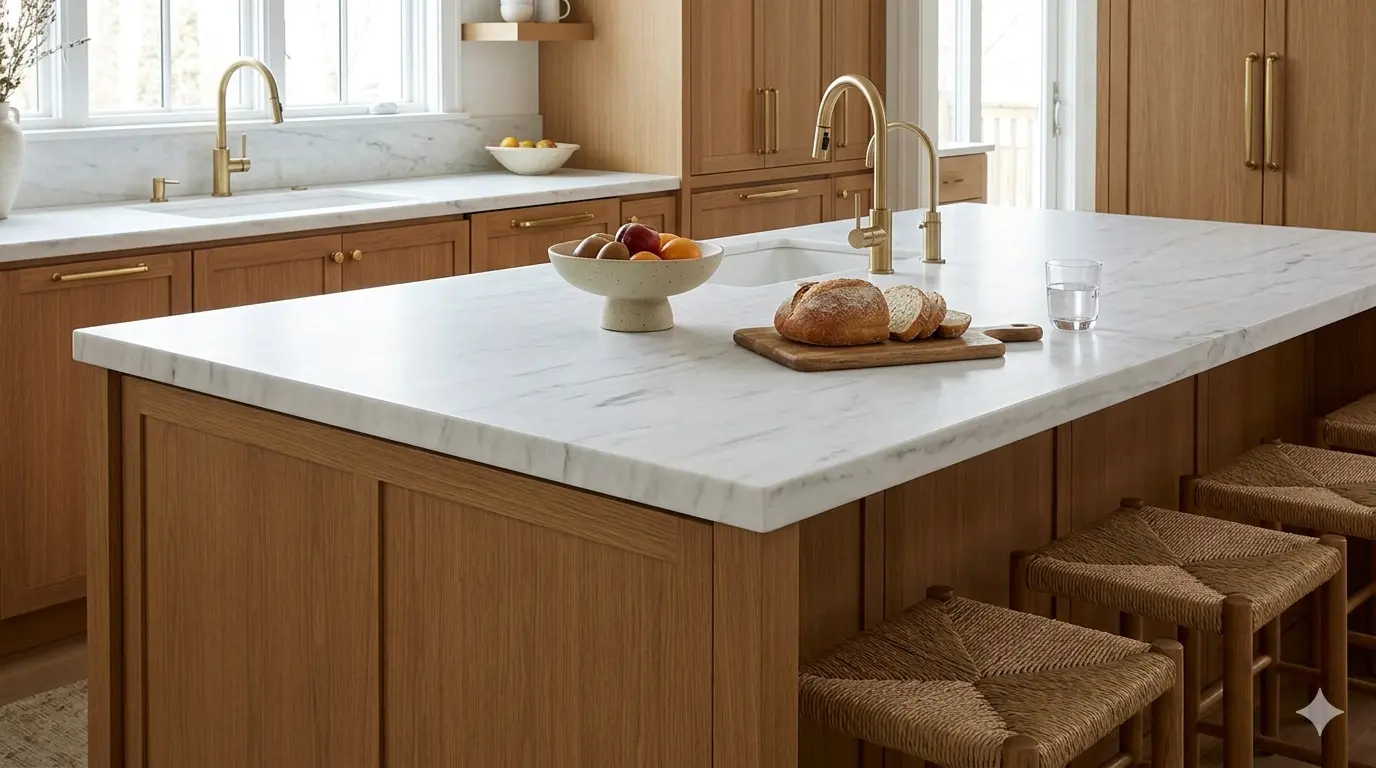
White Marble Slabs for Kitchen Countertops
The kitchen is where white marble slabs make their most immediate design statement. A full slab countertop brings a sense of scale and material integrity that no other surface quite achieves. The continuous sweep of natural veining across a kitchen island or perimeter counter creates a visual centerpiece that anchors the entire room.
White marble works across a wide spectrum of kitchen styles. It sits naturally alongside painted Shaker cabinetry, complements the warmth of natural wood, and provides a clean contrast against deep navy or charcoal cabinet finishes. Its cool, bright surface also makes it a practical choice for kitchens that rely on natural light to feel open and spacious.
One important consideration is that marble is a porous stone, and kitchen environments expose it to oils, acids, and moisture on a daily basis. Selecting the right finish and ensuring the slab is properly sealed before use protects the surface and extends its quality over time. Speaking with a stone specialist before committing to a specific slab ensures your selection suits both the aesthetic and functional demands of your kitchen. Those ready to explore available options can browse our natural stone slabs to get a sense of the veining patterns and slab sizes in our collection.
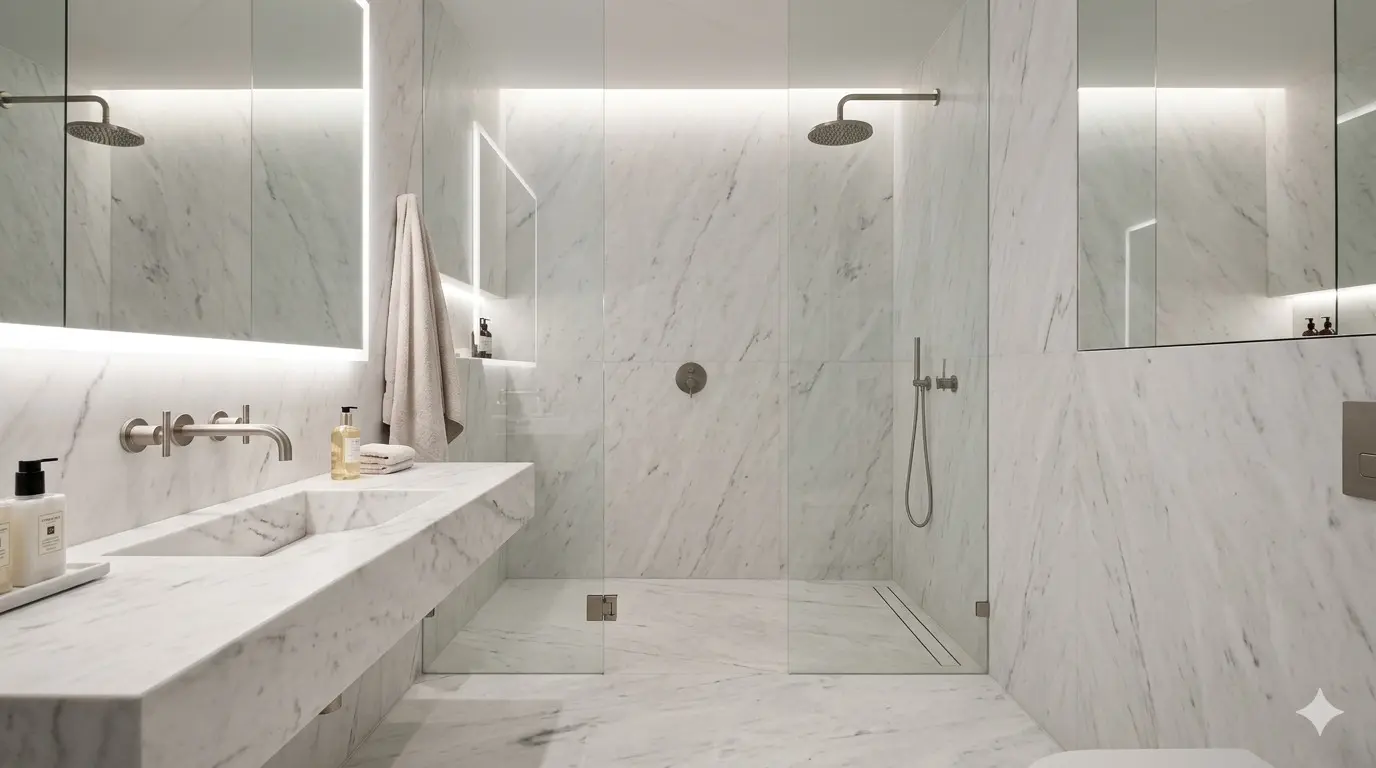
Bathroom Vanity Tops in White Marble
In the bathroom, a white marble vanity top transforms a functional surface into a genuine design feature. The stone's natural luminosity pairs beautifully with polished chrome, matte black, and brushed gold fixtures, giving designers significant flexibility without sacrificing cohesion.
Full slab vanity tops, where a single piece of stone covers the entire vanity surface, deliver the most refined result. The absence of seams gives the surface a clean, continuous quality that reads as intentional and elevated. For larger bathrooms with double vanities, bookmatched slabs, where two adjacent cuts of the same block are mirrored against each other, create a striking symmetrical effect that is unique to natural stone.
Stone backsplash surfaces carried up from the vanity top in matching marble also contribute to a seamless, spa-like aesthetic. The continuity of material from the horizontal surface to the vertical plane is one of the most effective ways to make a bathroom feel considered from top to bottom. If you are weighing finish options for your vanity slab, this guide to selecting the ideal stone finish offers a clear breakdown of how polished and honed surfaces behave differently in wet environments.
White Marble Feature Walls
A white marble feature wall is one of the most impactful ways to introduce natural stone into an interior without covering an entire room. In living rooms, primary bedrooms, and home offices, a full slab wall installation behind a sofa, bed head, or desk creates an architectural focal point that commands attention without requiring additional decoration.
What makes marble particularly suited to feature wall applications is the drama of its veining at scale. When a large slab is installed vertically, the movement of the stone's natural patterning becomes the visual centerpiece of the room. Bookmatched slab panels, where consecutive cuts of the same block are installed as mirrored pairs, amplify this effect and produce a wall surface that feels genuinely one of a kind.
White marble feature walls pair well with warm, textured furnishings. Linen, bouclé, and natural timber all complement the stone's cool tones without competing with its visual weight. Browsing our full stone collection gives a clear sense of the slab scales and veining variations suited to feature wall applications. For those who prefer to assess the stone in person before making a decision, visiting a local showroom allows you to see full slab dimensions and surface movement at life size.
Marble Slab Flooring for Indoor Spaces
White marble flooring in a living room, entryway, or open-plan interior creates an immediate sense of scale and refinement. When large slab sections are used for flooring, the minimal number of seams gives the surface a seamless, gallery-like quality that is difficult to achieve with any other material.
The continuity of a marble slab floor draws the eye across the room, creating a sense of spaciousness that benefits both compact and generous floor plans. In entryways, a marble slab floor signals quality from the first step inside, setting the tone for every space that follows. In open-plan living and dining areas, the same surface running uninterrupted across both zones visually connects the spaces and gives the overall interior a cohesive, considered quality.
Honed finishes are generally preferred for marble flooring because they offer better traction underfoot and show everyday wear less visibly than a high-gloss polish. Understanding the maintenance commitment that comes with natural stone flooring is an important part of the selection process, and this guide to cleaning marble surfaces outlines the upkeep practices that keep the stone looking its best over time.
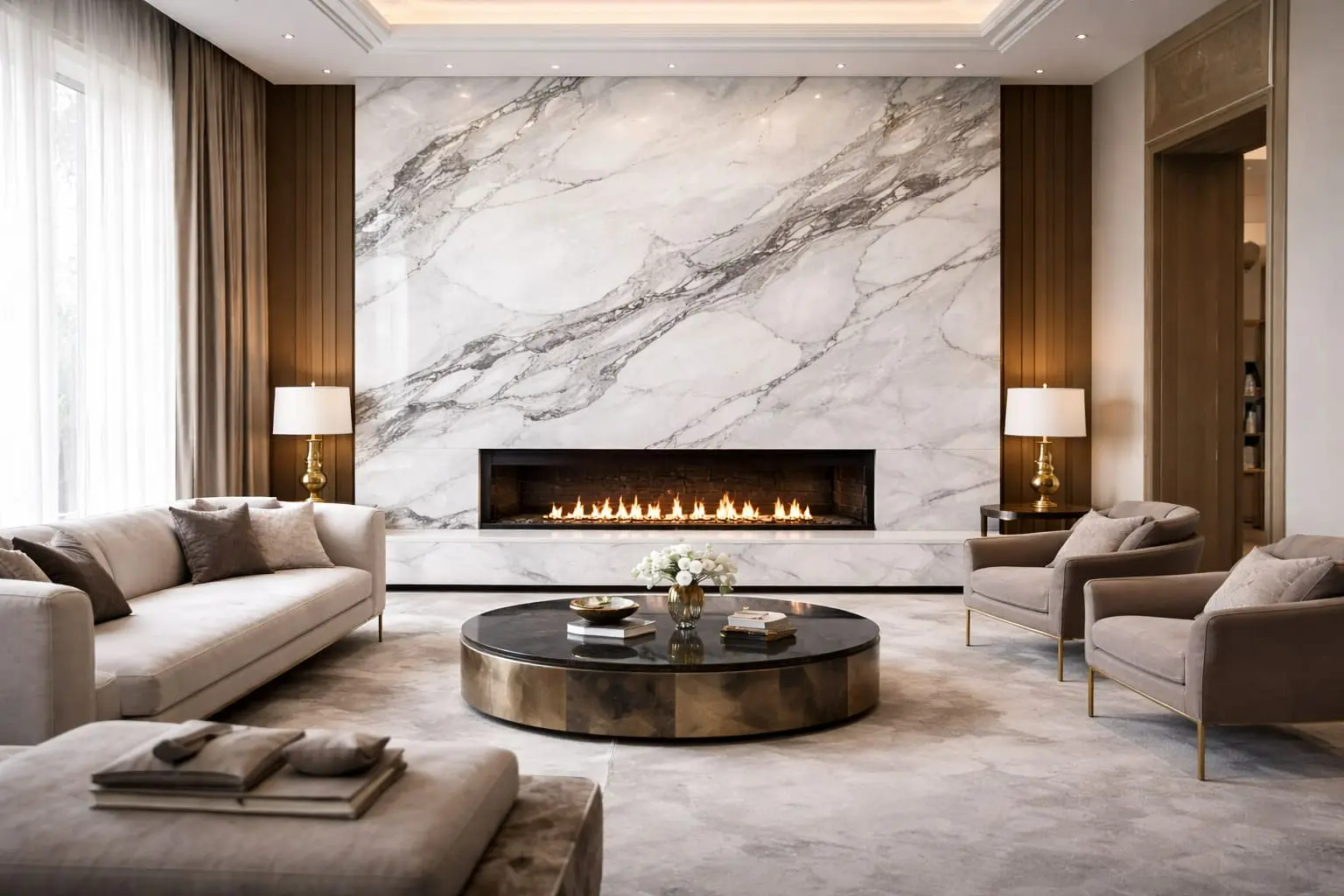
Fireplace Surrounds in White Marble
The fireplace surround is one of the oldest and most enduring applications for marble in residential interiors, and white marble remains the material of choice for this feature in both traditional and contemporary homes. The stone's natural heat resistance makes it a practical fit for the surround, while its visual presence ensures the fireplace reads as the room's focal point.
A full marble slab surround, covering the mantle face, hearth, and side panels in a continuous stone surface, creates a unified architectural statement. The veining of the stone frames the firebox naturally, drawing the eye inward while the surrounding marble surface provides a calm, refined contrast to the warmth of the flame.
White marble fireplace surrounds suit a wide range of interior styles. In classical interiors, heavily veined Calacatta-style slabs with pronounced grey and gold movement reinforce the grandeur of the space. In contemporary rooms with clean lines and restrained furnishings, a honed white marble with subtle, linear veining keeps the surround refined without being ornate. Trade professionals specifying marble for high-end fireplace applications can explore our trade account program for access to our complete slab inventory and project support.
Caring for White Marble Slabs Indoors
Marble's natural porosity means that maintenance is an ongoing part of ownership rather than a one-time consideration. Periodic sealing protects the surface from staining, and the recommended frequency depends on the application and the level of daily use. Kitchen countertops and bathroom vanity tops in active use benefit from more regular attention than feature walls or fireplace surrounds.
Polished marble surfaces show fingerprints, water marks, and surface scratches more readily than honed finishes, which age more gracefully in high-contact environments. Selecting the right finish for each specific application is as important as selecting the stone itself, and that decision is best made with input from someone who understands how different surface treatments perform in real conditions.
Choosing the Right White Marble Slab
The character of a white marble slab, its background tone, veining density, movement pattern, and finish, varies significantly from block to block. Two slabs from the same quarry can look markedly different, which is part of what makes natural stone so distinctive and also what makes in-person selection so valuable.
Nova Tile and Stone carries a curated range of white marble slabs suited to every indoor application, from kitchen countertops and vanity tops to feature walls and fireplace surrounds. Our free consultation service connects you with stone specialists who can guide your selection based on your space, style, and practical requirements. You can schedule an appointment to view slabs and discuss your project at a time that suits you. For those looking for exceptional stone at accessible investment levels, our overstock sale is worth reviewing before finalizing your selection.
Conclusion
White marble slabs bring a quality to indoor spaces that is genuinely difficult to replicate with any other material. Across kitchen countertops, bathroom vanity tops, feature walls, flooring, and fireplace surrounds, the stone delivers surfaces that feel elevated, cohesive, and grounded in something natural and enduring. The key to a successful marble interior lies in selecting the right slab for each specific application, understanding the stone's characteristics, and working with a knowledgeable supplier who can support those decisions from selection through to completion.
Whether you are drawn to bold, dramatic veining or the quiet refinement of a subtler white marble, there is a slab suited to your vision. The investment in natural stone is one that rewards over time, both in daily experience and in long-term design value.
Frequently Asked Questions
Is white marble suitable for kitchen countertops?
Yes, white marble is a popular choice for kitchen countertops. Because marble is a porous stone, it benefits from proper sealing before use and periodic resealing over time, particularly in kitchens where the surface is exposed to oils and acidic substances regularly.
What is the difference between polished and honed marble finishes for indoor surfaces?
Polished marble has a high-gloss, reflective surface that emphasizes natural veining and amplifies light. Honed marble has a matte, smooth finish that feels more understated and is generally more forgiving in high-contact surfaces like flooring and kitchen countertops where everyday wear is more visible on a glossy surface.
Can white marble slabs be used for bathroom vanity tops?
White marble is an excellent choice for bathroom vanity tops. Its natural luminosity complements a wide range of fixture finishes, and full slab vanity surfaces without seams deliver a clean, refined result that elevates the overall bathroom design.
How does white marble perform as a fireplace surround material?
Marble has natural heat resistance, making it well suited for fireplace surrounds. It is one of the most traditional materials for this application and works in both classical and contemporary interior styles depending on the veining character and finish selected.
Does white marble require more maintenance than engineered stone surfaces?
Marble is a natural stone and requires periodic sealing to protect against staining, particularly in kitchen and bathroom applications. Engineered stone surfaces are non-porous and require less maintenance, though they do not replicate the natural depth, veining variation, or visual warmth of genuine marble.