There is nothing quite like the feeling of running your hand across a beautifully veined marble slab and knowing it belongs in your home. Natural stone slabs are among the most sought-after materials in residential design today, valued for their organic patterns, long-term durability, and elevated aesthetic. Yet stepping into a large supplier yard without a clear direction can quickly turn excitement into confusion.
When selecting natural stone slabs at a supplier, evaluate surface consistency, veining continuity, thickness uniformity, and finish quality before committing. These four checkpoints separate a standout slab from one that will cause headaches after installation. Knowing what to look for protects your investment and ensures the finished result matches your vision.
By the end of this guide, you will know exactly how to assess slabs like a professional, which questions to ask your supplier, and how to match stone to specific applications in your home.
Why the Right Natural Stone Slabs Elevate Every Surface in Your Home
Choosing the wrong slab is a mistake that cannot easily be undone once installation begins. Unlike tile or paint, a slab is a permanent structural and visual commitment. The stakes are high, and the rewards of getting it right are equally significant.
Natural marble and stone surfaces add measurable resale value to a property. Buyers consistently rank stone countertops among the top features they look for in a kitchen or bathroom. A well-chosen slab signals quality craftsmanship throughout the entire space.
Every application has unique demands, and the stone must meet them:
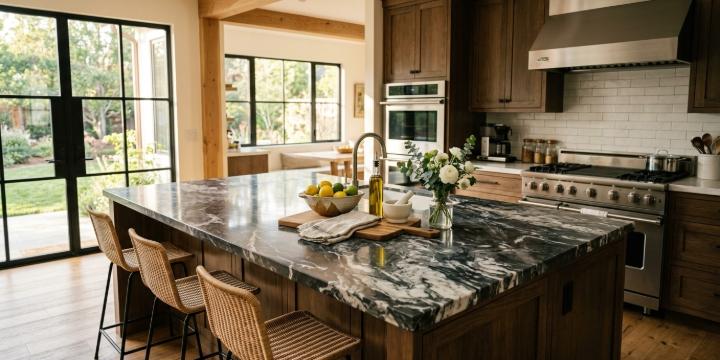
- Kitchen Island: Needs to withstand daily use, heat, and occasional impact. Look for slabs rated for high-traffic surfaces with sealed finishes.
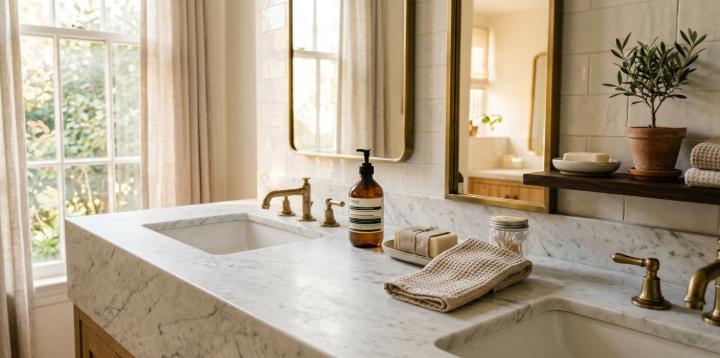
- Bathroom Vanity: Requires stone with lower porosity to resist moisture absorption and soap residue.
- Countertops: Demand consistent thickness and edge integrity so cuts remain clean and stable during fabrication.
- Feature Walls and Flooring: Prioritize visual bookmatching and uniform color tone across multiple slabs.
According to This Old House's comprehensive guide on stone countertops, the most common regret among homeowners is selecting stone based solely on photographs rather than viewing full slabs in person. Seeing the entire slab gives you an accurate picture of how it will read at scale.
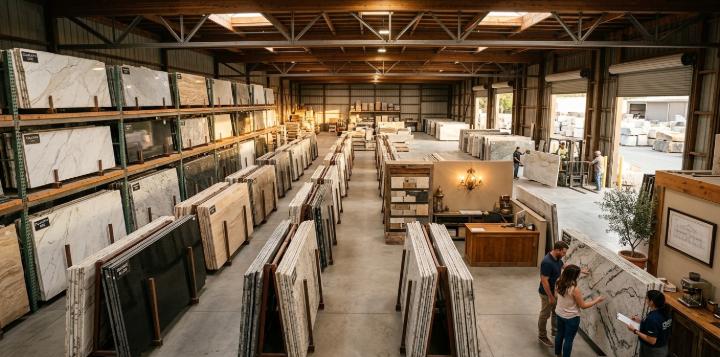
Practical Stone Selection: What to Examine at the Supplier Yard
Check Surface Consistency and Veining Flow
Veining is what makes each marble slab one-of-a-kind, but inconsistency within a single slab can create installation challenges. When inspecting at a supplier, ask staff to prop the slab upright under natural or bright artificial light. This reveals fissures, pitting, and tonal shifts that are invisible when the slab is lying flat.
Pay close attention to how the veining moves across the full surface. For a kitchen island or bathroom vanity, you want movement that feels intentional rather than chaotic. For countertops that span multiple sections, request slabs from the same block so the veining runs consistently across seams.
For guidance on selecting the right surface finish to complement the veining style you prefer, this resource from the Natural Stone Institute breaks down the differences between honed, polished, and leathered finishes in clear detail.
Evaluate Thickness and Structural Integrity
Standard residential slabs run between 2 cm and 3 cm thick. Thicker slabs offer greater strength and reduce the risk of cracking during fabrication, particularly around cutouts for sinks and cooktops. Thin spots, taper inconsistencies, or visible hairline fractures are red flags worth addressing before purchase.
Run your hand along the back of the slab. Mesh backing on a natural stone slab can indicate repair work or inherent weakness in that section of material. Ask the supplier directly about any mesh reinforcement and whether it affects the fabrication process.
Understand Finish Options Before You Decide
The finish affects both the look and the maintenance requirements of your slab. Here is a quick comparison to help you decide:
Finish Type | Appearance | Maintenance Level | Best Application |
Polished | High gloss, reflective | High (shows fingerprints) | Formal bathrooms, feature walls |
Honed | Matte, soft glow | Moderate | Kitchen island, countertops |
Leathered | Textured, dimensional | Low | Bathroom vanity, outdoor use |
Brushed | Subtle sheen, aged look | Low to moderate | Flooring, casual kitchens |
A honed finish on a kitchen island is a popular choice because it hides minor scratches better than a polished surface, while still showcasing the stone's natural depth.
How Nova Tile and Stone Supports Your Selection Process
Finding a supplier who offers genuine guidance rather than a hard sell makes the entire experience smoother. Our Tile and Stone curates an extensive collection of natural stone slabs at multiple locations, giving you the opportunity to view full-format material before making any decisions.
Their shop-local program is designed for homeowners who want to see and touch real slabs rather than relying on digital swatches. This is especially valuable when coordinating stone across a kitchen island and bathroom vanity in the same renovation.
For design and building professionals, the trade account program unlocks additional resources and pricing structures tailored to project-volume needs. Whether you are working on a single residential bathroom or a full custom build, the team offers informed guidance at every step.
Pros and Cons of Shopping for Slabs In Person
Pros:
- You see the full slab scale, not a cropped sample photo
- Lighting conditions at the yard reveal true color and finish quality
- Staff can answer fabrication and installation questions on the spot
- You can select specific slabs and tag them for your project
Cons:
- Requires travel time, especially for multiple visits
- Slab availability changes quickly and a favourite piece may sell
- Without a checklist, visits can feel disorganised or rushed
The trade-off is clearly worth it. A 30-minute in-person visit prevents weeks of post-installation regret.
Step-By-Step Guide to Evaluating a Slab at the Supplier Yard
Follow this process during your next supplier visit to ensure nothing is missed:
- Request to view the slab upright. Vertical positioning under strong light reveals fissures, tonal inconsistencies, and finish defects that are invisible when slabs are stacked flat.
- Check the back surface. Look for mesh, crack repairs, or unusual reinforcement. Ask the supplier for an explanation if any are present.
- Measure thickness at multiple points. Use a small tape measure or ask the staff. Thickness should remain consistent across the full slab.
- Photograph the full slab with a scale reference. Place a water bottle or tape measure in the shot so you can accurately visualise the pattern at home.
- Request a stone-specific care sheet. Every material has different sealing and cleaning requirements. Getting this information before purchase ensures you are prepared for proper upkeep.
Health and Safety: A Note on Engineered vs. Natural Stone
This is a detail many homeowners overlook entirely. Recent findings from the CDC's National Institute for Occupational Safety and Health highlight concerns around silica dust exposure during engineered stone fabrication. Natural marble and granite, while also requiring careful cutting practices, present a different risk profile.
If you are comparing natural stone slabs to engineered quartz products, this distinction matters both for your fabricator's safety practices and for your own awareness as a client. Ask your supplier about fabrication methods and what safety protocols their partner shops follow.
Visiting Nova Tile and Stone Locations Near You
Nova Tile and Stone operates showrooms across Northern California and Northern Nevada, making it straightforward to view slabs close to your project site.
- Reno Showroom: Serving the greater Reno and Sparks area with a rotating slab inventory.
- Minden Location: Convenient for Carson Valley and Lake Tahoe area projects.
- Sacramento Showroom: A full-format selection for Central Valley homeowners and contractors.
- Fernley Location: Positioned for Lyon County and outlying Northern Nevada projects, offering convenient access for contractors and homeowners working beyond the Reno–Sparks core.
Each location carries distinct inventory, so visiting more than one showroom broadens your choices significantly, particularly for rare marble varieties with tight availability.
Conclusion
Choosing natural stone slabs is one of the most rewarding decisions you can make for your home, but only when it is done with the right information. Inspect every slab in person, assess thickness and finish with intention, and work with a supplier who treats your project as a priority rather than a transaction.
The guidance in this post covers the core checkpoints: surface consistency, veining flow, structural integrity, finish suitability, and health-aware sourcing. Apply all five and you will walk away from the supplier yard with confidence rather than doubt.
When you are ready to browse real inventory and speak with knowledgeable staff, explore the full slab collection online or visit a showroom near you. Your ideal marble surface is waiting.
Frequently Asked Questions
How do I know if a marble slab is high quality?
A high-quality marble slab has consistent thickness throughout, clean veining without excessive pitting, and a smooth finish free of visible repairs or mesh backing. Always inspect the slab upright under bright lighting before purchasing.
What thickness is best for kitchen countertops?
A 3 cm thick slab is the preferred choice for kitchen countertops because it offers greater structural strength around sink and cooktop cutouts. A 2 cm slab can work with adequate support but requires additional substrate beneath it.
Is a honed or polished finish better for a bathroom vanity?
A honed finish is generally more forgiving on a bathroom vanity because it hides water spots and minor scratches better than a polished surface. Polished finishes look stunning but require more consistent upkeep in wet environments.
Can I order marble slabs online without seeing them in person?
It is strongly advised to view full slabs in person before purchasing. Online photographs crop the slab and can misrepresent true color, scale, and veining movement. If in-person viewing is not possible, request large physical samples.
How many slabs do I need for a kitchen island and perimeter countertops?
This depends on your kitchen layout and the slab dimensions available. A fabricator can calculate exact square footage requirements, but most full kitchen projects use two to four slabs. Always purchase from the same block for consistent veining across surfaces.