Granite has been treasured for centuries as one of nature's most remarkable materials. This igneous rock, formed deep beneath the Earth's crust through intense heat and pressure, offers a combination of beauty and resilience that few options can match. Understanding the unique characteristics can help you make informed decisions for your next project.
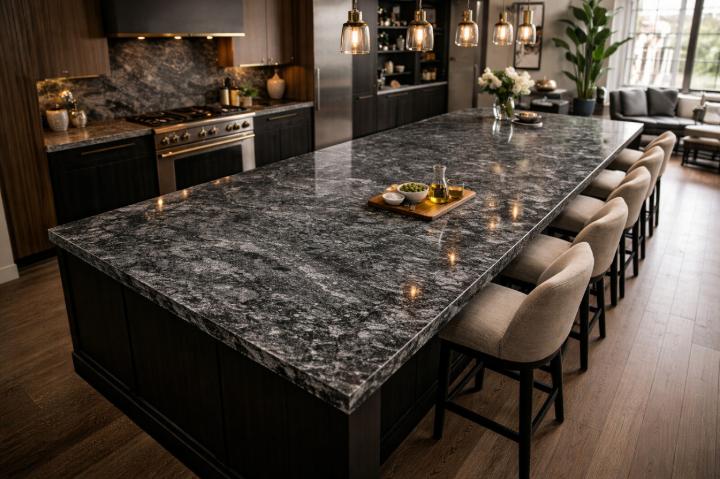
The Geological Origins of This Timeless Rock
This remarkable material begins its journey millions of years ago in the Earth's mantle. Molten magma slowly cools and crystallizes deep underground, creating the distinctive speckled appearance we recognize today. The cooling process determines the size of mineral crystals, with slower cooling producing larger, more visible formations. This development ensures that no two pieces are exactly alike, making each installation truly one-of-a-kind.
The primary minerals found include quartz, feldspar, and mica. These components contribute to exceptional hardness and durability. Quartz provides scratch resistance, feldspar adds color variation, and mica creates those shimmering flecks that catch the light beautifully. This mineral composition ranks between 6 and 7 on the Mohs hardness scale, making it one of the toughest options available for residential and commercial applications.
Understanding Color Variations and Visual Movement
The stunning array of hues available stems from different mineral concentrations present during formation. Black varieties typically contain higher amounts of biotite or hornblende, while pink and red tones come from potassium feldspar. White and gray options result from higher quartz and plagioclase feldspar content. Whether you're looking for natural stone slabs with classic neutrals or dramatic statement pieces, the extensive selection ensures you'll find something perfect for your space.
Visual movement tells the story of formation. Some pieces display consistent speckles, while others showcase dramatic veining or swirling designs. These variations mean you should always view full-size samples before making your final selection. What appears as a small speck in a sample chip might translate to bold movement across a larger area.
Durability That Stands the Test of Time
This igneous rock's legendary toughness makes it suitable for high-traffic areas throughout your home or business. Its dense composition resists scratching from daily use, maintaining pristine appearance for decades. The material withstands heat well, though using trivets or hot pads for pots and pans is still recommended to protect against thermal shock from extreme or rapid temperature changes.
Porosity varies between different varieties, affecting how liquid absorption occurs. Darker colors typically have lower porosity and require less maintenance, while lighter shades may need more frequent sealing. Properly sealed installations resist staining from common household substances, though acidic liquids like lemon juice or wine should be wiped up promptly to prevent potential etching.
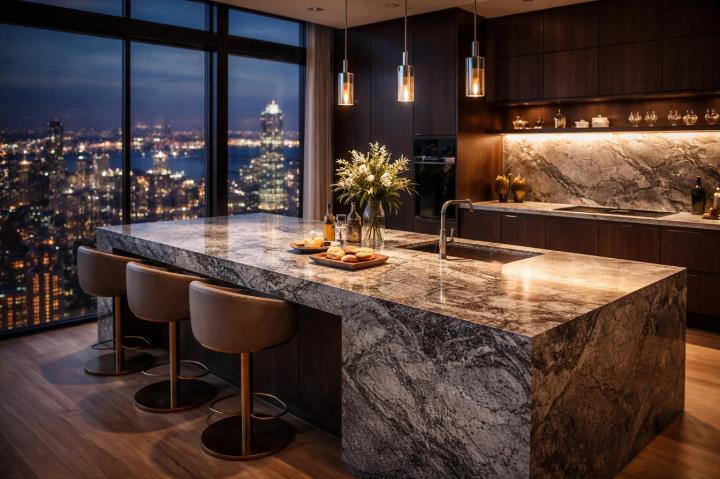
Maintenance Requirements for Long-Lasting Beauty
Keeping your countertops looking pristine requires minimal effort. Daily cleaning involves nothing more than warm water and a soft cloth or mild pH-neutral cleanser. Avoid harsh chemicals, acidic cleaners, or abrasive scrubbing pads that might damage the sealant or create scratches. This simple routine preserves luster for decades.
Sealing provides an invisible barrier that protects against stains and moisture penetration. Resealing needs vary by usage and the specific variety installed, so it's best to test periodically rather than follow a fixed schedule. You can test whether your countertop needs resealing by placing a few drops of water on the area. If the water beads up, the seal remains intact. If it darkens, resealing is necessary. For detailed cleaning guidance, expert recommendations provide helpful tips for maintaining your investment.
Popular Applications Throughout Your Space
Kitchen countertops represent the most common application. These work areas provide ample workspace for meal preparation, withstand hot cookware, and create striking focal points. Coordinating backsplashes extend the beauty up the wall, creating cohesive design flow. We offer numerous edge profiles to customize the look, from simple straight edges to elaborate ogee details.
Bathroom vanities benefit from moisture resistance and elegant appearance. The veining complements various design styles, from traditional to contemporary. Unlike some options that might warp or deteriorate in humid environments, this rock maintains its integrity and beauty regardless of exposure to water and steam. Our Reno showroom features extensive vanity displays showcasing various design possibilities.
Flooring applications showcase durability in high-traffic areas. Polished tiles create sophisticated spaces in entryways and living areas, while honed or flamed textures provide slip resistance for outdoor applications. The thickness required for flooring typically ranges from three-quarters to one and a quarter inches, providing stability underfoot.
Comparing Available Treatments and Textures
Polished installations deliver maximum shine and color depth, reflecting light beautifully throughout your space. This mirror-like appearance highlights veining and makes colors appear more vibrant. However, the glossy look can show fingerprints and water spots more readily than other options, requiring frequent wiping to maintain pristine appearance.
Honed treatments offer a smooth, matte appearance that feels soft to the touch. This subtler option works well in contemporary designs and shows less wear over time. The reduced shine minimizes the appearance of scratches and etching, making it practical for busy households. Colors appear slightly lighter in honed treatments compared to polished versions of the same variety.
Leathered textures add dimension through subtle undulations across countertops. This approach maintains much of the color while providing a unique tactile quality. The textured look helps hide fingerprints and water spots better than polished options while adding visual interest. Each variety responds differently to the leathering process, creating distinctive results. Learning about different finish options can help you choose the best treatment for your lifestyle.
Environmental Considerations and Sustainability
As a product quarried directly from the Earth, this rock requires no manufacturing process involving synthetic chemicals or binding agents. The extraction and fabrication process generates minimal waste, with remnant pieces often repurposed for smaller projects like cutting boards or tile applications. This efficient use reduces environmental impact compared to man-made alternatives.
Transportation represents the primary environmental consideration, as the rock often travels significant distances from quarry to fabricator to installation site. Choosing domestically sourced varieties when possible reduces the carbon footprint associated with your project. Exceptional longevity also contributes to sustainability, as countertops can last a lifetime or longer with proper care, eliminating the need for replacement. Understanding proper care techniques helps maintain the beauty of your investment for years to come.
Weighing Practical Considerations
The substantial weight requires adequate structural support. Countertops typically weigh between 18 and 20 pounds per square foot, necessitating sturdy cabinet construction. Flooring applications demand a solid, level substrate capable of supporting the additional load. Professional assessment ensures your structure can safely accommodate the installation before work begins.
Cost varies significantly based on color rarity, origin, and thickness. Common varieties in neutral tones typically fall on the lower end of the pricing spectrum, while exotic colors with dramatic veining command premium pricing. Thickness also affects cost, with standard three-quarter-inch material being more economical than thicker options. Visit our Minden location to explore beautiful options that align with your budget.
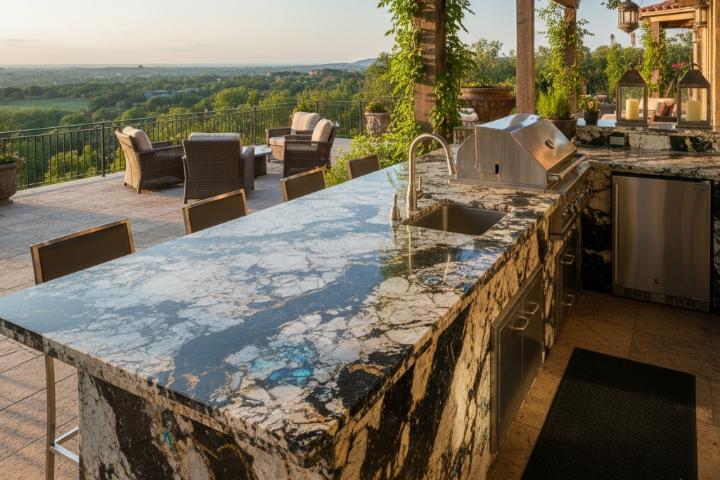
Design Versatility Across Architectural Styles
Traditional homes benefit from classic looks in warm neutrals that create timeless elegance. These versatile options coordinate with wood cabinetry, ornate fixtures, and detailed millwork. Beveled or ogee edge profiles enhance the traditional aesthetic while showcasing beauty.
Contemporary spaces often feature dramatic contrasts through bold veining or monochromatic schemes. Black countertops with white streaks create striking modern statements, while consistent speckled appearances provide subtle sophistication. Waterfall edges extending down the sides of islands or peninsulas emphasize clean lines and showcase full thickness. Our Sacramento showroom displays contemporary design inspiration perfect for modern homes.
Transitional designs blend traditional warmth with contemporary simplicity, often incorporating mid-tone grays or beiges with moderate visual movement. These balanced options work well with both traditional and modern elements, providing flexibility as design trends evolve. Simple edge profiles like eased or half bullnose complement this versatile style.
Understanding Quality Grades and Selection
Commercial grade may include minor imperfections like fissures, pits, or slight color variations. These characteristics don't affect structural integrity but might be visible in completed installations. This grade works well for projects where budget takes priority over aesthetic perfection.
Premium selections undergo more rigorous screening for consistent coloring, minimal imperfections, and uniform veining. These pieces showcase the rock at its finest, with careful attention to matching between pieces for larger projects. The additional cost reflects the rarity and visual impact of these exceptional selections. Our Fernley location offers extensive premium inventory for discerning homeowners.
Exotic varieties represent the pinnacle of beauty, featuring rare colors or dramatic veining found in limited quantities. These show-stopping options create stunning focal points worth building entire designs around. Their scarcity and transportation costs from distant quarries contribute to premium pricing. Requesting a personalized quote helps you understand pricing for your specific project needs.
Conclusion
Countertops and flooring crafted from this igneous rock offer an unmatched combination of durability, beauty, and timeless appeal that enhances any space. From geological origins deep within the Earth to final polished installation, each piece tells a unique story through distinctive veining and coloring. Exceptional hardness, heat resistance, and longevity make it a practical investment that will serve your household for generations. Whether you're drawn to subtle neutrals or dramatic statement pieces, the extensive variety available ensures you'll find the perfect match for your design vision. With proper selection, professional fabrication, and simple maintenance, these installations will continue to impress for decades to come.
Frequently Asked Questions
Can this rock crack or chip during normal use?
While extremely durable, cracking can occur if subjected to severe impact or excessive weight concentrated in one area. Chips typically happen along edges or corners where thickness is minimal. Professional fabrication with proper support structures minimizes these risks significantly. Avoiding standing or placing extremely heavy objects on unsupported areas helps prevent damage.
How does the material perform around sinks and cooktops?
Heat resistance makes it ideal for areas surrounding cooktops, and moisture resistance works well around sinks. Ensure proper sealing in these high-use zones to prevent water penetration at seams. Professional fabricators create precise cutouts that minimize stress points around these fixtures.
Will the veining I see in samples match my finished installation?
Variation means your installation will differ from small samples, though it will be the same variety. Viewing full pieces before fabrication allows you to select specific materials and determine placement for the most pleasing arrangement. Your fabricator can provide photos of your actual selection before cutting.
Does cleaning require special products?
Standard pH-neutral cleansers or simple dish soap and water work perfectly for daily maintenance. Avoid acidic cleaners containing vinegar or lemon, as well as abrasive scrubbing pads that might scratch or damage the sealer. Specialized cleaners are available but not necessary for routine care.
How long does professional sealing typically last?
Sealing longevity depends on usage habits, the specific variety installed, and the quality of sealer used. High-traffic kitchen countertops might need resealing annually, while bathroom vanities or low-use areas could go three years between applications. The water bead test helps determine when resealing is necessary regardless of timeline.