A stone slab is considered high-end based on six factors: quarry rarity, country of origin, visual complexity of the veining and color, slab dimensions, thickness and structural consistency, and finish quality. Standard-grade slabs score lower across most or all of these factors, which is why two granite slabs of the same mineral composition can differ significantly in price.
The natural stone industry does not use a universal grading standard. Suppliers classify natural stone slabs using terms like Level 1, Level 2, Level 3, Commercial, Standard, Select, and Premium, and those labels vary from one company to the next. What stays consistent is the set of underlying factors that drive classification: how difficult a stone is to source, where it was quarried, how visually complex the slab is, how large the slab dimensions are, and how well it was processed and finished. Understanding those factors gives you a practical basis for evaluating any slab on its merits, regardless of what label the supplier uses.
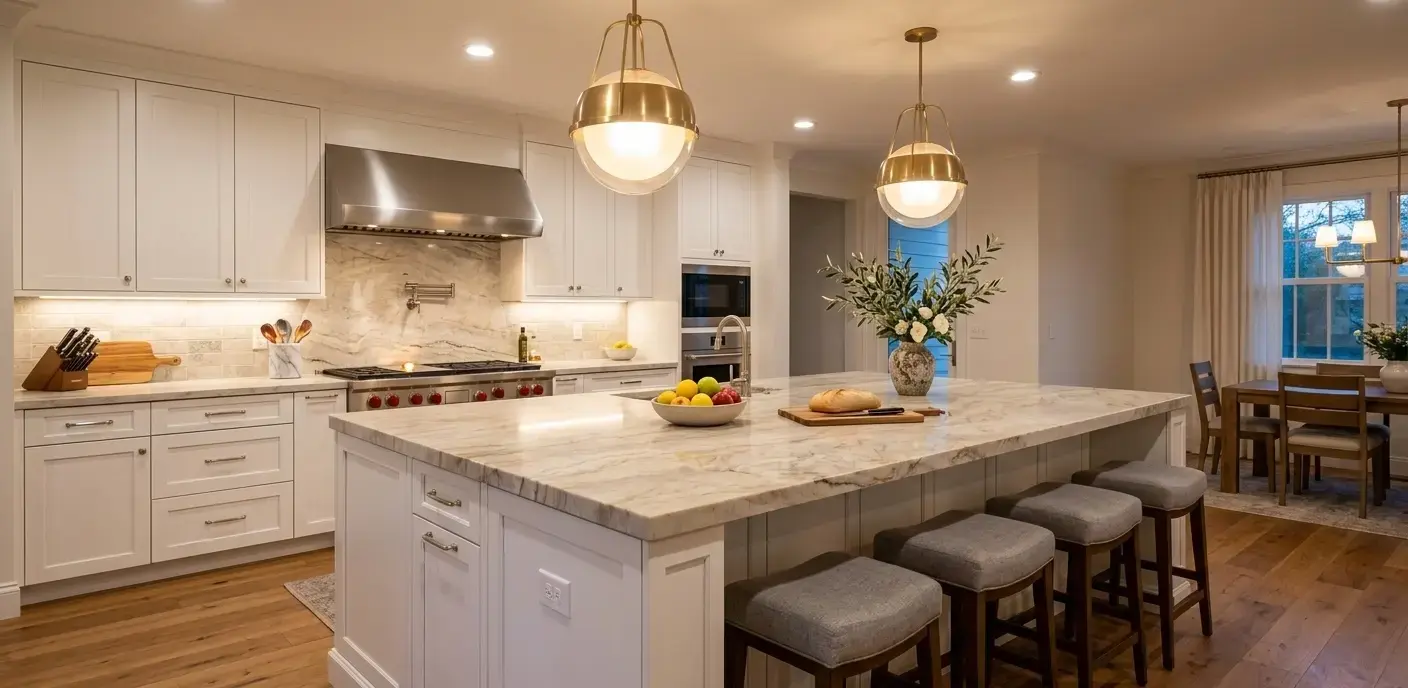
1. Rarity and Quarry Supply
The most direct driver of a slab's grade is how difficult it is to source. Stone that comes from a single quarry producing limited annual volume will carry a higher price and higher classification than stone that can be pulled from dozens of quarries across multiple continents.
Taj Mahal quartzite, for example, comes from a relatively small number of quarries in Brazil and is produced in quantities that cannot meet surging global demand. That scarcity pushes it into premium and exotic pricing tiers regardless of its physical properties. Calacatta marble from the Apuan Alps in Tuscany is quarried from a geologically specific zone where the mineral conditions that create its characteristic bold gold and grey veining on a bright white background exist only in a limited area. The more restricted a stone's source, the higher it grades.
Common granite varieties like Ubatuba are quarried in large volumes across Brazil and are available from hundreds of suppliers worldwide. That availability holds them at lower grade levels even though they are widely available and structurally sound. If you want to compare grade levels side by side, viewing slabs in person is the most practical way to understand how rarity translates to visible differences between stones.
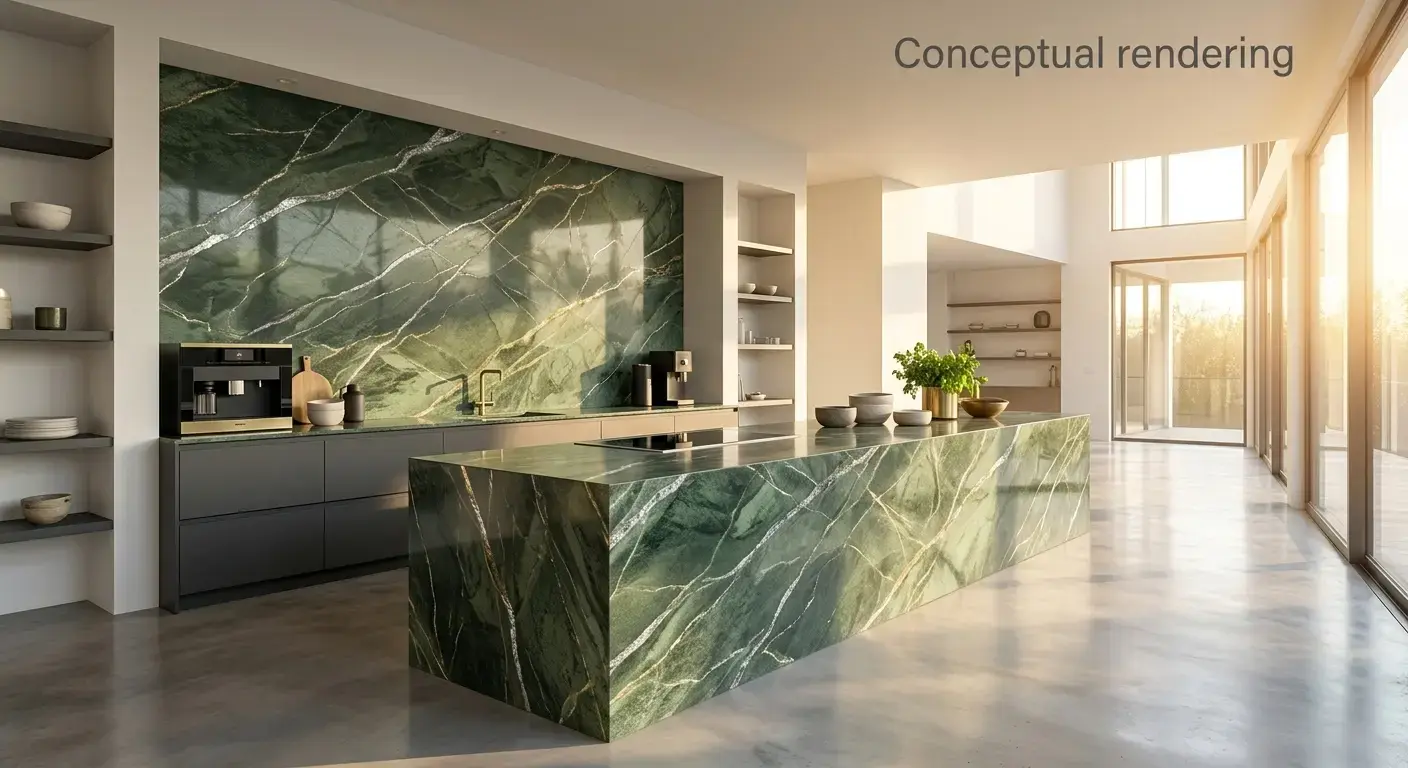
2. Visual Character: Veining, Color, and Movement
Among natural stone buyers, visual complexity is one of the most immediate signals of premium grade. Slabs with prominent sweeping veins, layered color variation, bold mineral inclusions, or rare background tones command higher classification and higher prices than stones with uniform color and minimal movement. This Old House covers how natural stone countertops are evaluated from a homeowner perspective, which provides useful context for understanding why visual character carries so much weight in the selection process.
This is partly about aesthetics and partly about geological probability. The conditions that produce a marble slab with gold veining running diagonally across a white background are geologically uncommon. The result is a slab that is visually one of a kind and represents something that cannot simply be manufactured to order. A buyer selecting that slab is paying for irreproducibility.
Standard-grade stone typically features more uniform and predictable patterns: consistent speckle across a granite, restrained linear veining in a marble, or even tone throughout a quartzite. These slabs are not visually inferior in every setting. For large commercial projects, contemporary minimalist kitchens, or applications where consistency across multiple slabs matters more than drama, standard-grade stone is often the right choice. But for a statement island or a bathroom feature wall where a single slab is the focal point, premium visual character is what justifies the premium price.
3. Country and Region of Origin
Where a stone is quarried influences its grade in two ways: geological quality and import cost.
Certain regions of the world produce stone under mineral conditions that cannot be replicated elsewhere. Italian marble from Carrara or the Apuan Alps carries a legacy of quality and an actual geological distinction. The calcium carbonate deposits, pressure conditions, and crystallization over millions of years produced stone with specific visual and structural properties that quarries in other regions cannot match identically. Brazilian quartzite from the states of Espírito Santo and Minas Gerais produces some of the most widely recognized exotic slabs in the world because of the unique mineral inclusions and metamorphic conditions found there.
Origin also affects cost through the logistics of import. A slab quarried, cut, polished, and shipped from Brazil or Italy arrives at a Northern Nevada or Northern California showroom having traveled thousands of miles. Those shipping costs, import duties, and handling requirements are factored into the price. A domestic stone, or a stone imported in large-volume commercial quantities, carries lower per-slab logistics costs and is typically graded lower as a result. Buyers who want to understand origin firsthand can visit our showroom locations to see where each slab comes from and compare stones from different regions in person.
4. Slab Dimensions
Physical size matters in grading more than many buyers realize. A full-size slab measuring 120 inches or more in length allows fabricators to lay out a kitchen or bathroom design with fewer seams, more flexibility for waterfall edges, and greater bookmatching potential. Larger slabs require quarrying larger raw blocks and involve more risk of breakage during cutting, polishing, and transport. That difficulty is reflected in higher pricing and higher classification.
Jumbo slabs, sometimes reaching 130 to 140 inches in length, are reserved almost entirely for premium and exotic tiers. Standard-grade slabs are commonly smaller or cut from the portion of a block that could not yield full jumbo dimensions. For a project requiring seamless coverage on a large island or an uninterrupted feature wall, slab size directly determines what grade you need. Design professionals working across multiple projects regularly can access priority slab selection and pricing by applying for a trade account.
5. Thickness and Structural Consistency
Slab thickness contributes to grade in part because of what it enables at fabrication. Three-centimeter slabs are considered the industry standard for countertops because they offer greater structural integrity, more edge profile options, and lower risk of cracking during installation. Two-centimeter slabs are lighter and less expensive to produce but carry more limitations. Fine Homebuilding's guide to natural stone countertops offers a detailed breakdown of how thickness and material type interact at the fabrication stage.
Beyond thickness, structural consistency, including the uniformity of density, the absence of fissures, and the degree of internal porosity, separates commercial-grade stone from premium stone. Higher-grade slabs are denser, less porous, and more appropriate for high-traffic surfaces that face moisture, heat, and daily wear. A structurally inconsistent slab may look identical to a high-grade slab in a showroom photograph but perform differently over time.
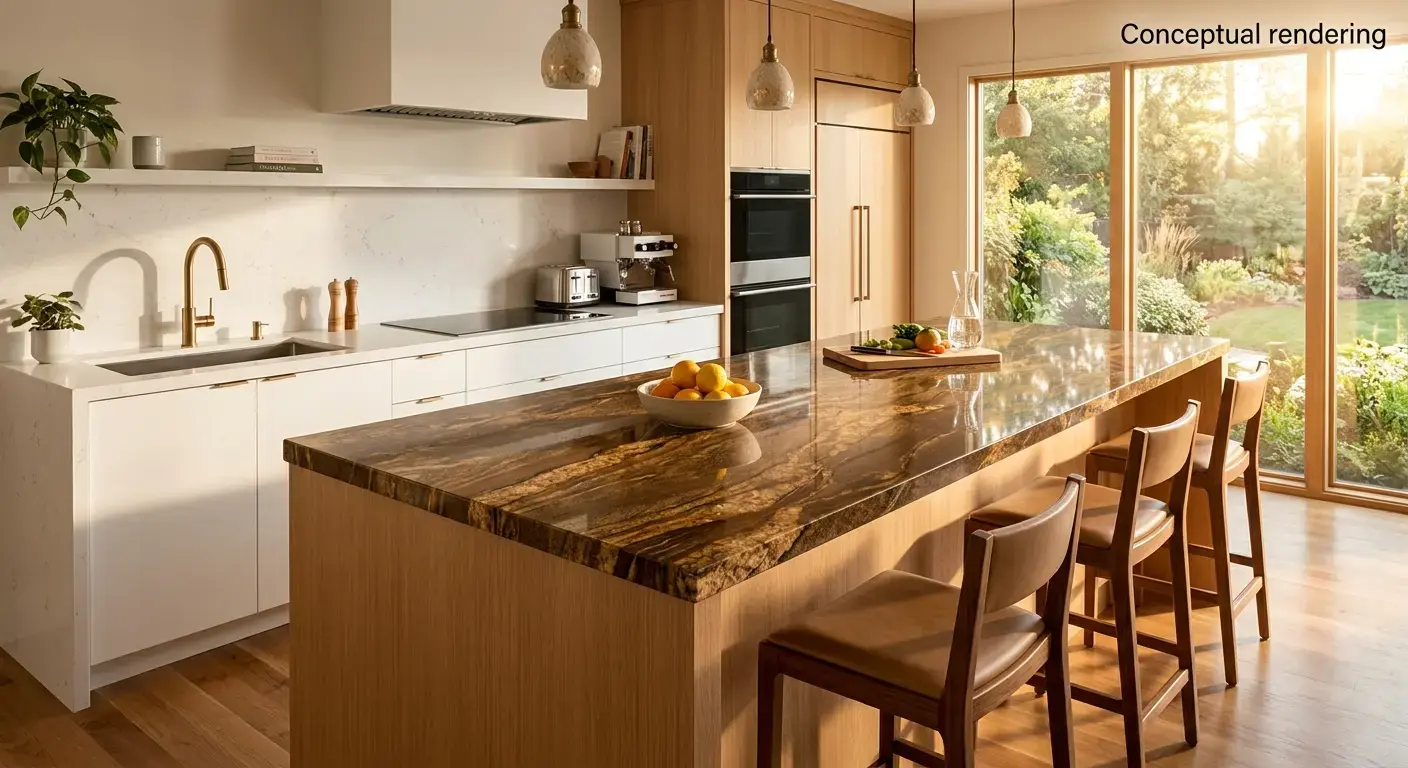
6. Finish Quality and Surface Preparation
The same raw slab can land at different points on the quality spectrum depending on how it was finished at the processing facility. A high-grade slab will have been ground, honed, and polished with precision equipment, producing a surface that is flat, free of tool marks, consistent in sheen, and properly prepared for sealing. A lower-grade finishing process may leave micro-scratches, uneven polish, or edge imperfections that affect both appearance and long-term surface condition.
This is particularly relevant when comparing stones from different countries of origin. Processing facilities vary significantly in their equipment and quality control standards. Slabs processed at modern facilities in Italy, Brazil, or Spain often reflect higher finishing quality than stone processed at lower-cost facilities in regions with less developed stone-cutting infrastructure. That difference in finishing is part of what suppliers factor into grade classification. It is also worth noting that finish quality is one reason natural stone remains a distinct category from engineered alternatives, the health and safety research on engineered stone published by CDC/NIOSH identifies silica exposure risks associated with engineered stone fabrication that do not apply to natural stone in the same way.
7. Bookmatching Potential
Bookmatched slabs are consecutive cuts from the same block, opened like the pages of a book to create a mirrored pattern. They require sequential slabs from a single block with consistent veining strong enough to read as a continuous design. Not every slab has the visual character to support bookmatching, and producing matched pairs reduces the total usable yield from a block, which drives up per-slab cost.
When a slab is graded as bookmatching-capable, it occupies a higher tier simply because of what it can accomplish in a high-end installation. A client designing a dramatic marble feature wall or a mirrored island surround needs this capability, and the price reflects the additional quarrying, selection, and logistics required to deliver matched pairs.
Conclusion
Slab grading is not a judgment about whether a stone is good or bad. It is a reflection of rarity, visual complexity, origin, size, structural integrity, and finishing quality. A commercial-grade granite can perform as well as a premium-grade granite in everyday use. But when the goal is a design that is genuinely one of a kind, that comes from a geographically specific quarry, that fills a large surface without seams, or that carries the kind of visual complexity you cannot find in a catalog, those qualities have a cost, and that cost is what grade describes.
Understanding these factors means you can walk into a showroom and evaluate a slab on its merits rather than its label. It also means you can make a clearer decision about where your project actually needs premium stone and where a standard-grade material will serve you just as well. Seeing slabs in person remains the most reliable way to assess visual character, scale, and finish quality, because no photograph captures what a slab actually looks like at countertop size under real light.
We carry natural stone slabs across the full spectrum at our Northern Nevada and Northern California showrooms, from everyday granite to bookmatching-capable quartzite and marble. Schedule a slab viewing appointment or request a slab quote to start your project.
Note: Some images on this page may be conceptual renderings created to illustrate design possibilities and may not depict actual installations.
Frequently Asked Questions
Not necessarily. Grade describes a combination of rarity, visual complexity, origin, and size, not structural performance alone. A Level 1 granite and a Level 4 granite are both natural stone and will both perform well as countertops when properly sealed and maintained. Higher grades typically reflect characteristics like rare veining patterns or limited quarry supply rather than superior hardness or long-term wear resistance.
No. The natural stone industry does not have a universal grading body that certifies every slab. Suppliers use terms like Level 1, Level 2, Level 3, Commercial, Standard, Select, and Premium in ways that vary from one company to the next. Rather than comparing grades across different suppliers, it is more useful to evaluate the specific factors behind any classification, including origin, visual character, thickness, and slab dimensions.
Origin influences both geological quality and import logistics. Certain regions produce stone with visual and structural properties that are specific to their mineral conditions and cannot be replicated elsewhere. Italian Calacatta marble and Brazilian Taj Mahal quartzite are two examples. Import costs, including shipping, duties, and handling, are also higher for stone quarried overseas and are factored into grade-based pricing.
Yes. Standard-grade stone is appropriate when design consistency matters more than drama, when a project requires large quantities with matched appearance across many slabs, or when the application is a secondary surface like a laundry room or powder room where performance outweighs visual impact. Choosing standard-grade stone for utilitarian surfaces frees up budget for premium or exotic slabs where they will have the most visual impact, such as a kitchen island or primary bathroom vanity.
Premium-grade slabs are high-quality, carefully selected stones with strong visual character and good structural consistency. Exotic-grade slabs go a step further. They come from quarries with very limited production, feature mineral compositions or color combinations that are geologically rare, and often cannot be reordered once a specific lot is sold. Exotic stones are typically priced at the highest tier and are best suited for projects where uniqueness and visual impact are the primary goals.