The most durable countertop materials are sintered stone, quartzite, engineered quartz, porcelain slabs, and granite. Sintered stone and quartzite are the hardest options overall, both rating 7 or higher on the Mohs hardness scale. Engineered quartz and porcelain slabs are the most practical for busy households because they are non-porous, never need sealing, and resist stains without any special treatment. Granite is the most heat-tolerant natural stone and performs reliably for decades with annual sealing. Marble, travertine, and onyx are beautiful but better suited for low-traffic surfaces like bathroom vanities than high-use kitchen countertops.
Choosing the most durable countertop comes down to three real-world factors: how often you cook, how much maintenance you are willing to do, and whether the surface will be used indoors or outdoors. Our showrooms in Reno, Sacramento, Minden, and Fernley carry all of these materials in full slab form so you can compare them side by side before making a decision.
What Makes a Countertop Durable?
Durability is not a single quality. A countertop that survives daily knife work may not hold up as well against acidic spills, and a surface that resists heat may still scratch easily. Before comparing materials, it helps to understand the four performance categories that matter most in a kitchen or bathroom:
Scratch resistance measures how well a surface holds up against knives, cookware, and abrasive cleaning tools. Materials ranked higher on the Mohs hardness scale generally resist scratches better.
Heat resistance determines whether a surface can tolerate hot pots, pans, or baking sheets placed directly on it without scorching, cracking, or discoloring.
Stain resistance reflects how porous a material is. Porous surfaces absorb liquids and are more prone to staining over time, especially from oils, red wine, coffee, and acidic foods. Non-porous surfaces repel liquids and are far easier to keep clean.
Impact resistance covers how well a surface holds up against heavy drops, hard impacts, and everyday collision with pots, appliances, and tools.
Understanding where a material excels and where it has limits allows you to match your countertop to your lifestyle rather than assuming the most expensive option is always the most practical.
The Most Durable Countertop Materials
Quartzite
Quartzite is the hardest natural stone available for countertops. Formed when sandstone undergoes extreme heat and pressure deep within the earth, quartzite ranks between 7 and 8 on the Mohs scale, which places it harder than granite and significantly harder than marble. It resists scratches, withstands high heat, and holds up well in high-traffic kitchens where the surface takes regular abuse.
True quartzite requires periodic sealing to protect against staining, but a properly sealed slab performs exceptionally well even in demanding environments. Its crystalline structure gives it a marble-like appearance with considerably more resilience, making it one of the most sought-after natural stone countertops for homeowners who want beauty without fragility.
For anyone who cooks frequently or needs a surface that performs under pressure, quartzite is one of the top natural stone choices available.
Granite
Granite has earned its place as the most widely used natural stone countertop for good reason. It ranks between 6 and 7 on the Mohs scale, resists heat well enough to handle hot pots without damage in most cases, and holds up against scratches from everyday kitchen use. Each granite slab is geologically unique, offering mineral variations in color and veining that no engineered material can precisely replicate.
Granite is porous and requires annual sealing to maintain stain resistance. For a deeper look at how granite and other natural stones behave over time, this guide to natural stone countertops from Fine Homebuilding covers the material science behind their long-term durability. Applying a penetrating sealer once a year protects the surface and preserves its appearance, and for homeowners willing to keep up with this routine, granite delivers outstanding long-term durability with a natural character that only improves with age.
Engineered Quartz
Engineered quartz is widely considered the most practical durable countertop for everyday residential use. Composed of approximately 90 to 95 percent crushed natural quartz bound with polymer resins, it ranks between 7 and 7.5 on the Mohs scale and is non-porous by design. That non-porous composition means it never needs sealing, resists stains from coffee, wine, and oils without any additional treatment, and does not harbor bacteria.
As an engineered stone, quartz is manufactured to precise specifications, giving it a level of consistency and performance control that natural stone cannot match. Quartz holds up against scratches from knives and cookware, although using a cutting board remains recommended to protect both the surface and your knife edges. It does have one meaningful limitation: sustained direct heat can damage the resin binders. Trivets and hot pads are necessary when placing cookware directly from the stove or oven.
For busy households where low maintenance and consistent performance are the priority, quartz is the most practical choice on this list. Its engineered consistency also means the pattern you see in a showroom closely matches what gets installed in your kitchen.
Porcelain Slabs
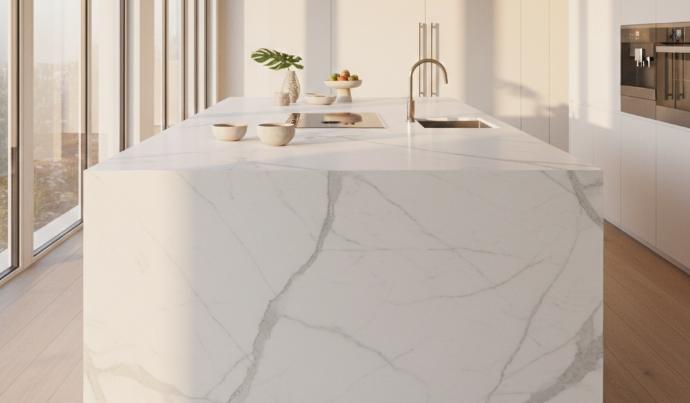
Porcelain slabs represent one of the most technically impressive countertop materials available today. Fired at temperatures exceeding 2,300 degrees Fahrenheit from refined clay and minerals, porcelain slabs achieve a density and hardness that rivals natural stone. They are non-porous, require no sealing, resist scratches, and tolerate heat exceptionally well. Their UV resistance also makes them the best option for outdoor kitchen applications where natural stone and engineered quartz would degrade over time.
Porcelain slabs are available in large formats that minimize seams, creating a cleaner visual result across long countertop runs and kitchen islands. They can realistically replicate the appearance of marble, granite, concrete, and wood at a technical resolution that holds up even at close range.
The primary consideration with porcelain is that it can chip at edges and corners under sharp impact. Selecting a thicker slab, typically 12mm or 20mm, and using an appropriate edge profile reduces this risk significantly.
For outdoor kitchens, modern bathrooms, and anyone who wants the look of natural stone with engineered performance, porcelain slabs are an exceptional choice.
Sintered Stone
Sintered stone is the most technically advanced countertop material available at our stone and tile showrooms. Produced through a manufacturing process that mimics geological formation, raw minerals are compressed under extreme heat and pressure to create an ultra-compact, fully vitrified slab. The result is a surface that is virtually impervious to scratches, stains, heat, UV exposure, and freeze-thaw cycles.
Sintered stone surfaces register at the upper end of hardness scales, making them the most scratch-resistant option in this guide. They require no sealing, no special cleaning products, and no conditioning. Because they are UV stable and highly heat resistant, they perform equally well indoors and outdoors, including in direct sun exposure that would discolor or degrade most other materials.
For homeowners building outdoor kitchens, high-performance modern interiors, or any space where absolute low maintenance is the goal, sintered stone delivers durability that outperforms every other option on this list.
Marble
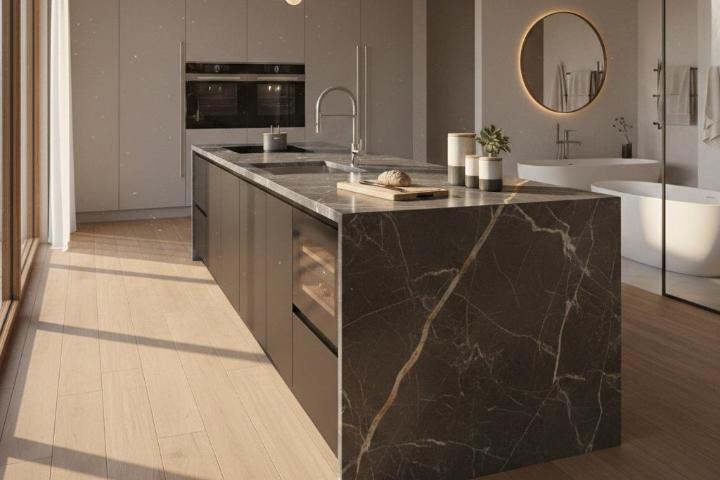
Marble earns a place in this guide not for raw hardness but for its proven longevity in the right setting. Ranking between 3 and 5 on the Mohs scale, marble is softer than granite and quartzite and is susceptible to etching from acidic substances like lemon juice, vinegar, and wine. It requires regular sealing and more attentive daily care than most other materials here.
Where marble excels is in spaces with lighter use, such as bathroom vanities, butler's pantries, baking stations, and decorative islands. In these applications, its elegant veining and natural depth are unmatched, and with proper care, marble surfaces last for generations. The key is matching the material to the right application rather than expecting it to perform like an engineered stone.
Travertine
Travertine is a sedimentary limestone that performs best in lower-impact applications. Its warm, earthy character has made it a classic material for centuries, appearing in everything from ancient Roman baths to contemporary kitchen and bathroom designs. In countertop applications, travertine requires consistent sealing and careful daily maintenance, as it is porous and susceptible to both staining and etching.
For bathroom vanities, accent countertops, and outdoor surfaces in mild climates, travertine delivers a natural warmth and authenticity that no other material replicates. It is best suited for homeowners who appreciate its character and are committed to the maintenance it requires.
Onyx
Onyx is the most visually dramatic natural stone available for countertops and one of the least forgiving in terms of durability. It is softer than marble and highly susceptible to scratching, staining, and etching. In countertop applications, onyx is best reserved for low-traffic surfaces where its translucent, backlit appearance can be celebrated without subjecting it to the wear of daily food preparation.
Onyx works beautifully on bathroom vanities, bar tops, and decorative accent surfaces where visual impact is the priority. For homeowners drawn to its extraordinary appearance, the key is using it in contexts where it will not be expected to perform like granite or quartz.
How to Match Durability to Your Lifestyle
Choosing the most durable countertop is ultimately about matching material performance to real-world use patterns.
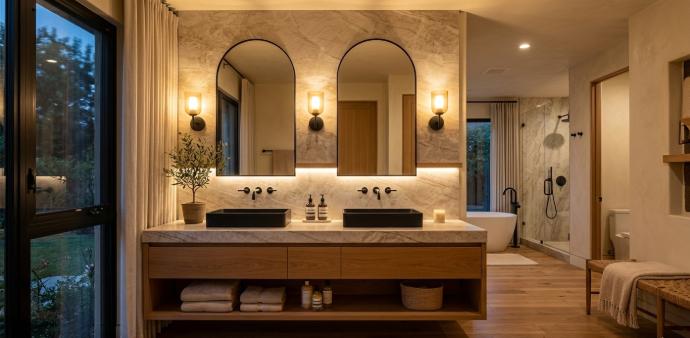
If you cook frequently, handle heavy pots, and want minimal maintenance, quartzite, engineered quartz, porcelain slabs, or sintered stone will serve you best. If you value the authenticity of natural stone and are willing to seal annually, granite and quartzite are both outstanding long-term choices. If you are designing a beautiful bathroom vanity or a light-use accent surface, marble, travertine, and onyx each bring a natural elegance that no engineered material fully replicates.
Mixed material kitchens, where different surfaces are used for different zones, have become one of the most practical and design-forward approaches to countertop selection. A highly durable engineered surface on the main prep counters paired with a more expressive natural stone on the island gives you performance where you need it and beauty where it will be most visible.
Conclusion
Durability means something different for every kitchen and every homeowner. Quartzite and sintered stone lead the field in raw hardness and performance. Engineered quartz and porcelain slabs excel when low maintenance and stain resistance are the priority. Granite delivers decades of reliable performance with straightforward annual care. Marble, travertine, and onyx reward homeowners who understand their strengths and choose them for the right applications.
Our design consultants are ready to help you find the countertop that fits both your kitchen and your lifestyle. Visit any of our four showroom locations in Reno, Sacramento, Minden, and Fernley to view our full slab selection in person, compare materials under real lighting, and make a decision you will be confident in for years to come.
Frequently Asked Questions
What is the most durable countertop material overall?
Sintered stone and quartzite rank as the most durable countertop materials overall. Sintered stone achieves the highest scratch resistance and is fully impervious to stains, heat, and UV exposure with no maintenance required. Quartzite, at 7 to 8 on the Mohs scale, is the hardest natural stone countertop available and offers exceptional performance in high-use kitchens.
Is quartz or granite more durable?
Both are highly durable, but they perform differently. Engineered quartz is non-porous and requires no sealing, making it more resistant to staining with less maintenance. Granite handles direct heat better than quartz, which can be damaged by sustained high temperatures at the resin level. For homeowners who prefer natural stone, granite is the more resilient long-term choice with annual sealing. For those who want a zero-maintenance surface, quartz is the stronger practical performer.
Which countertop material is best for a busy family kitchen?
Engineered quartz and porcelain slabs are the top choices for busy family kitchens. Both are non-porous, require no sealing, resist staining from everyday spills, and hold up well against scratches and impacts. Sintered stone is also an excellent option for households that want absolute durability with no maintenance. For families who prefer natural stone, quartzite or granite both perform well when properly sealed and maintained.
Can marble countertops be durable?
Marble can be durable in the right application. It is not suited for high-traffic cooking surfaces where acidic foods, sharp utensils, and heavy daily use would etch and scratch the surface. However, in bathroom vanities, baking stations, butler's pantries, and accent surfaces, properly sealed marble performs well and can last for generations.
What is the most durable countertop for an outdoor kitchen?
Sintered stone and porcelain slabs are the best countertop materials for outdoor kitchens. Both are UV stable, fully heat resistant, non-porous, and unaffected by freeze-thaw cycles. Natural stone options like quartzite and granite can also work outdoors with proper sealing, but they require more ongoing maintenance in exposed conditions. Engineered quartz is not recommended for outdoor use because UV exposure can discolor and degrade the resin over time.