A quartz slab is an engineered stone surface made from 90 to 95 percent natural quartz crystals bound together with resins and pigments. Unlike granite or marble, which are quarried directly from the earth, quartz slabs are manufactured, giving them a consistent appearance, a non-porous surface, and no sealing requirement.
Quartz slabs are widely used for kitchen countertops, bathroom vanities, backsplashes, and wall cladding. They are valued for their scratch resistance, stain resistance, and low maintenance needs. However, they are sensitive to direct heat and UV exposure, making them better suited for indoor use away from prolonged sunlight.
This guide covers everything you need to know about quartz slabs, including how they're made, how they compare to granite and marble, their advantages and limitations, and how to choose the right slab for your space.
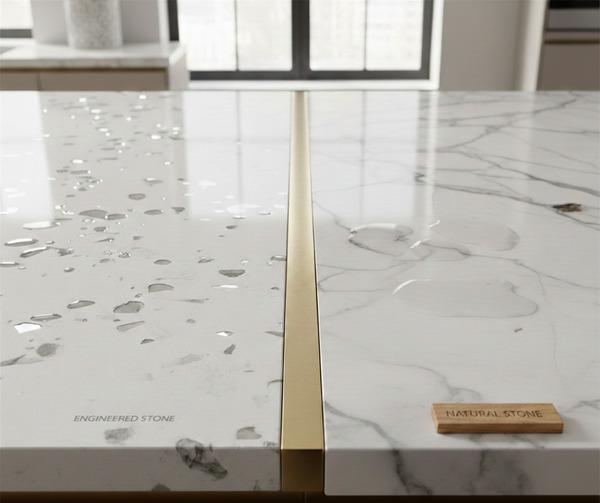
Defining Quartz Slabs: Engineered vs. Natural Stone
Quartz slabs are frequently lumped in with natural stone options, but the two aren't the same thing. The key distinction? Quartz slabs are manufactured using a combination of natural quartz crystals and resins. This engineered approach delivers greater consistency and gives manufacturers more control over color, pattern, and finish.
Quartz vs. Granite vs. Marble: Key Differences
To truly understand what a quartz slab is, it helps to compare it against other popular countertop materials like granite and marble. Granite and marble are natural stones quarried directly from the earth, each slab is one-of-a-kind, but both typically demand more maintenance. Quartz, being engineered, offers a more uniform appearance and a surface that requires no sealing. Granite tends to handle heat better, marble is softer and more susceptible to staining, while quartz hits a sweet spot, durable and low-maintenance all at once. For those interested in staying informed about industry trends and educational opportunities, the Natural Stone Institute Events Calendar is a valuable resource for upcoming programs and events related to natural and engineered stone surfaces.

The Manufacturing Process Behind Quartz Slabs
Production begins with ground quartz crystals blended with resins and pigments. That mixture is poured into molds and compressed under high heat and pressure to form solid slabs. After cooling, the surface is polished to the desired finish, a crucial step when selecting the stone finish that best complements your design vision. This controlled process makes it possible to produce a wide variety of colors and textures, from sleek contemporary aesthetics to styles that convincingly replicate natural stone.
Composition and Materials
Core Ingredients: Quartz, Resins, and Pigments
Understanding what a quartz slab is starts with knowing what goes into it. Natural quartz crystals are the primary ingredient, typically making up 90 to 95 percent of the finished product. The remainder consists of resins that bind everything together and pigments that define each slab's color. Some variations also incorporate small fragments of glass or metal to create a more distinctive, eye-catching appearance. When exploring your options, it’s always a good idea to visit our local showroom to view samples in person and make a confident, informed decision for your project.
Quality Grades and What They Mean
Not every quartz slab is built the same way. Higher-grade slabs contain more pure quartz and less resin, which translates to better durability and a superior finish. Grade affects the price, but more importantly, it determines how well the slab holds up over years of use.
Advantages of Quartz Slabs
Durability and Strength Benefits
Quartz is a remarkably tough material. It resists scratching and won't chip under normal conditions, making it an excellent choice for high-traffic kitchens and bathrooms. It handles the demands of daily use without compromising its appearance over time. For homeowners comparing materials, a comprehensive guide to countertops can further highlight its long-lasting performance and resilience.
Non-Porosity: Stain and Bacteria Resistance
One of quartz's most practical advantages is its non-porous surface. Because liquids cannot penetrate the material, stains are far less likely to set, and bacteria have nowhere to take hold. This makes quartz one of the more hygienic countertop options available, especially in food preparation areas.
Limitations of Quartz Slabs
Heat Sensitivity: What You Need to Know
Despite its strength, quartz doesn't tolerate heat particularly well. Setting hot cookware directly on the surface can cause damage. Get into the habit of using trivets or heat pads to keep your countertop protected.
Risk of Fading and UV Damage
Quartz is not the best material for outdoor installations or sun-drenched interior spaces. Extended exposure to UV rays can gradually cause the colors to fade or shift. Keep this in mind if you're planning an installation in a location that receives significant direct sunlight.
Applications of Quartz Slabs
Kitchen Countertops: The Popular Choice
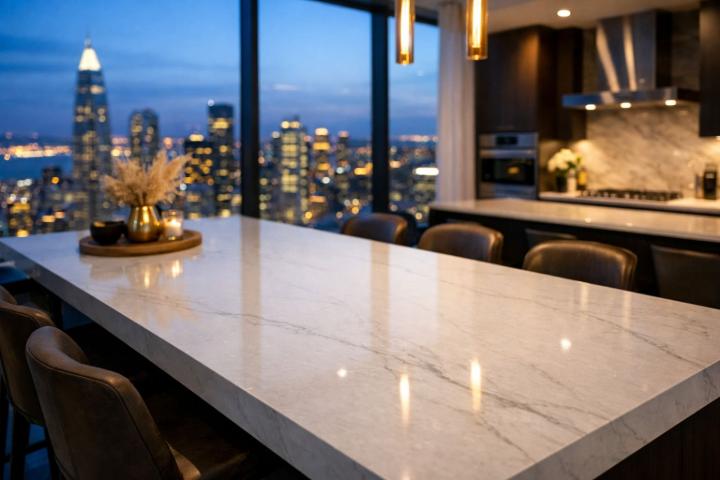
The kitchen is where most homeowners first encounter quartz, and for good reason. Its strength, broad selection of styles, and easy-care surface make it a natural fit for countertops. Whether your taste leans toward clean and modern or you prefer the look of natural marble, quartz can deliver.
Bathroom Vanities and Sinks
Quartz performs just as well in the bathroom. It holds up against water exposure and resists staining from everyday toiletries, making it a practical and attractive option for vanities and integrated sinks alike.
For contractors, designers, and industry professionals sourcing materials for multiple projects, you can also apply for trade account to access exclusive benefits and streamlined purchasing options.
Wall Cladding and Backsplashes
Many homeowners take quartz beyond the countertop, using it for backsplashes or full wall cladding. The result is a seamless, upscale look that's a breeze to clean, with no grout lines to contend with.
Quartz Slab Installation and Maintenance
Professional Installation vs. DIY
Quartz installation is generally not a do-it-yourself project. The slabs are heavy and the cuts need to be precise to ensure a proper fit. Professional fabricators and installers have the right equipment and know-how to get the job done without risking cracks or misaligned seams.
Seams, Cuts, and Edge Profiles Explained
Because quartz slabs come in standard dimensions, larger installations will involve seams. An experienced installer can minimize how noticeable those seams are. You'll also get to choose from a range of edge profiles, from clean square edges to more decorative options to complement your overall design.
Choosing the Right Quartz Slab
Comparing Brands and Warranties
The quartz market is full of options, each varying in appearance, feel, and price. Take the time to research warranty coverage before you commit, it reveals a lot about how much confidence a brand has in its product. Some quartz slabs are recognized for exceptional durability, while others focus on design innovation. To make the process easier, you can submit a slab quote request directly with our company and see firsthand why our tile and stone offerings are the best choice for your project.
Sample Testing and Color Matching
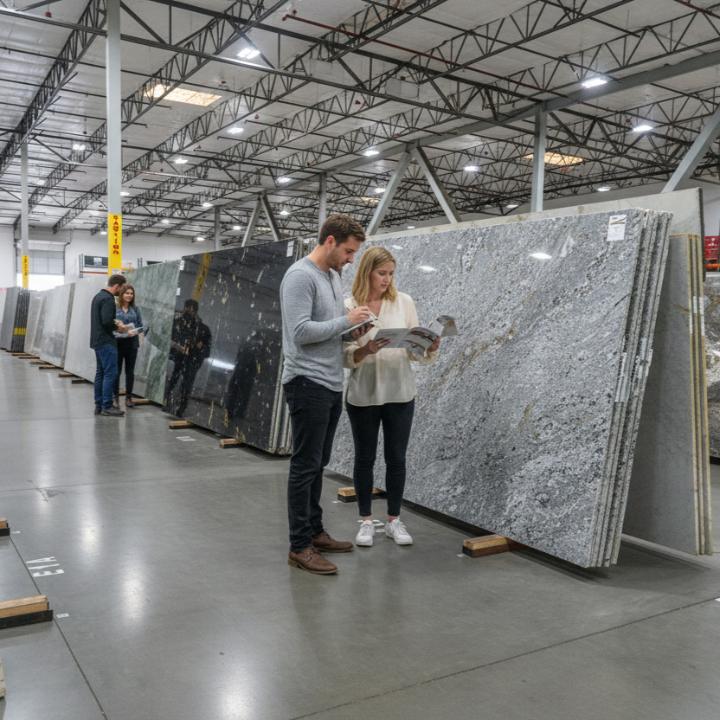
Colors and patterns on a showroom floor can look completely different once they're in your home. Always request samples and evaluate them under your actual lighting conditions. Hold them up against your cabinetry, flooring, and wall colors to ensure a cohesive result.
Budgeting and Value Assessment
Quartz isn't the most budget-friendly countertop material, but it frequently justifies the investment. Factor in the long-term payoff: minimal maintenance, a long lifespan, and a timeless aesthetic that continues to look sharp for years to come.
Sustainability and Environmental Impact
Eco-Friendly Manufacturing Practices
A growing number of quartz manufacturers are adopting sustainable production practices, including water recycling and low-emission processes. For environmentally conscious buyers, this can make quartz a more responsible choice. To learn more about our eco-friendly quartz options and discuss your specific project needs, you can easily schedule a showroom appointment with our team.
Recycled Content and Certifications
Some brands produce slabs incorporating recycled glass or stone, while others carry environmental certifications that reflect greener manufacturing standards. If sustainability is a priority for you, ask your supplier about what certifications or recycled-content options they offer.
Conclusion
Quartz slabs have earned their place as one of the most reliable and versatile countertop materials on the market, and for good reason. Whether you're upgrading your kitchen, renovating a bathroom, or exploring creative applications like wall cladding and backsplashes, quartz delivers a combination of durability, low maintenance, and design flexibility that few materials can match. Its engineered composition makes it more consistent than natural stone, while its non-porous surface keeps it hygienic and stain-resistant through years of daily use.
That said, quartz isn't without its limitations. It's sensitive to direct heat and prolonged UV exposure, so placement matters. Choosing the right grade, brand, and finish makes all the difference in how well it performs over time.
For those ready to explore premium quartz options, Nova Tile and Stone invites you to visit our showroom or browse a curated selection of slabs online through our homepage. With expert guidance and a wide variety of styles, you can find the perfect surface that balances beauty with practicality.
Frequently Asked Questions
What exactly is a quartz slab made of?
A quartz slab is an engineered stone product made primarily from natural quartz crystals, which typically account for 90 to 95 percent of its composition. The remaining portion consists of resins that bind the material together and pigments that give each slab its color. Some slabs also include small amounts of recycled glass or metal fragments for added visual interest.
How is quartz different from granite or marble?
Granite and marble are natural stones quarried directly from the earth, meaning no two slabs are identical and both require regular sealing and maintenance. Quartz, on the other hand, is manufactured, which gives it a more uniform appearance and eliminates the need for sealing. Granite is generally more heat-resistant than quartz, while marble is softer and more prone to staining. Quartz sits in the middle: tough, low-maintenance, and available in a wide range of styles.
Does quartz require sealing or special maintenance?
No, one of quartz's biggest advantages is that it does not require sealing. Its non-porous surface naturally resists staining and bacterial growth. For routine upkeep, simply wipe it down with a mild soap and warm water. Avoid harsh abrasive cleaners or scrubbing pads, as these can dull the finish over time.
Can quartz be used outdoors or in areas with a lot of sunlight?
Quartz is not recommended for outdoor installations or spaces that receive prolonged direct sunlight. UV exposure can cause the colors to fade or discolor over time. If you're planning a countertop for a sunroom, outdoor kitchen, or any area with significant sun exposure, consider a material better suited to UV resistance, such as natural granite.
Is professional installation required for quartz slabs?
Yes, professional installation is strongly recommended. Quartz slabs are heavy and require precise cutting and fitting to avoid cracks, gaps, or misaligned seams. Professional fabricators have the specialized tools and expertise to handle the material correctly and ensure a clean, long-lasting result. Attempting a DIY installation significantly increases the risk of costly mistakes.