The best countertops for dark cabinets are white marble, white quartzite, light quartz, warm-toned granite, gray or beige quartzite, and porcelain slabs in neutral finishes. White and light surfaces create contrast that reflects light and keeps the kitchen from feeling closed in, making them the most versatile choice for navy, espresso, charcoal, black, and dark walnut cabinetry. Warm-toned countertops in gold, beige, and cream pair especially well with dark wood finishes like espresso and mahogany, drawing out the cabinet's natural undertones. For homeowners who prefer a bolder look, dark-on-dark pairings using deep-veined quartzite, granite, or quartz can create a dramatic, high-end result when balanced with proper lighting and a lighter backsplash. The right countertop depends on your cabinet color, kitchen size, natural light, and finish preference, all of which this guide breaks down material by material.
Why Dark Cabinets Demand a Thoughtful Countertop Choice
Dark cabinets absorb light rather than reflect it. This is part of their appeal, giving the kitchen a grounded, dramatic presence. But it also means the countertop needs to work harder to either balance that darkness or lean into it deliberately.
In smaller kitchens or spaces with limited natural light, lighter countertops become especially important. They bounce available light across the room and visually open up the space. In larger kitchens or open-concept layouts with generous windows, you have more flexibility to go dark on dark without the space feeling cramped.
Your cabinet color also matters. Espresso and dark brown cabinets tend to have warm undertones, which pair best with countertops that carry some warmth in return, whether that is gold veining in granite, creamy tones in marble, or beige hues in quartzite. Cool-toned dark cabinets, like charcoal, slate, and black, offer more flexibility and work well with both warm and cool countertop options.
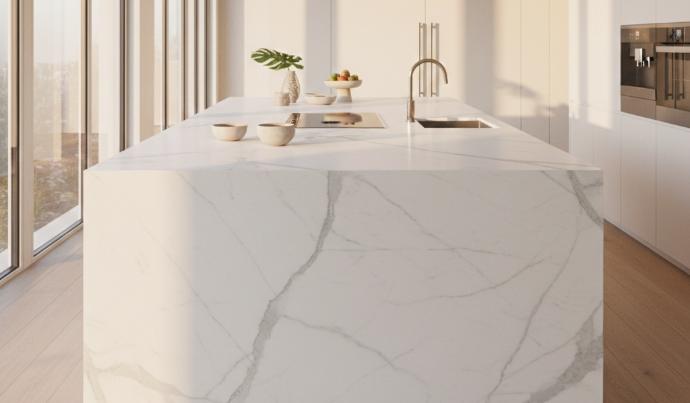
White and Light Countertops: The Classic High-Contrast Pairing
The most popular and enduring choice for dark cabinets is a white or near-white countertop. The contrast is bold, clean, and works across virtually every kitchen style, from modern and minimalist to transitional and traditional.
White Marble White marble is one of the most striking choices alongside dark cabinetry. The crisp white background amplifies light, while the natural gray or gold veining adds movement and visual depth. Carrara marble brings a soft, understated elegance with its fine gray veining. Calacatta marble takes that drama up considerably, with bold veining and a brighter white background. For dark navy or black cabinets, either variety makes an immediate statement without feeling busy.
The consideration with marble is maintenance. It requires periodic sealing and is sensitive to acidic substances. For busy households, this is worth factoring into your decision.
White Quartzite White quartzite gives you much of the visual appeal of marble with significantly better durability. Super White quartzite and similar varieties have a luminous, almost translucent quality that reads beautifully against dark cabinet finishes. Because quartzite is a natural stone, each slab has unique veining, which adds character that engineered surfaces cannot fully replicate. This Old House's overview of stone countertops is a useful reference for understanding how quartzite and marble compare in a real kitchen context.
White and Light Quartz Engineered quartz in white or soft cream is a practical and reliable high-contrast option. It is non-porous, consistent in appearance, and requires no sealing. For dark cabinet kitchens where the countertop needs to anchor a busy space, the uniformity of quartz can actually be an asset, providing a clean, calm surface that lets the cabinetry be the focal point. It is worth noting that if you are comparing engineered quartz to natural stone, the CDC and NIOSH have published guidance on engineered stone and silica dust safety that is useful context for anyone evaluating the full picture of countertop materials.
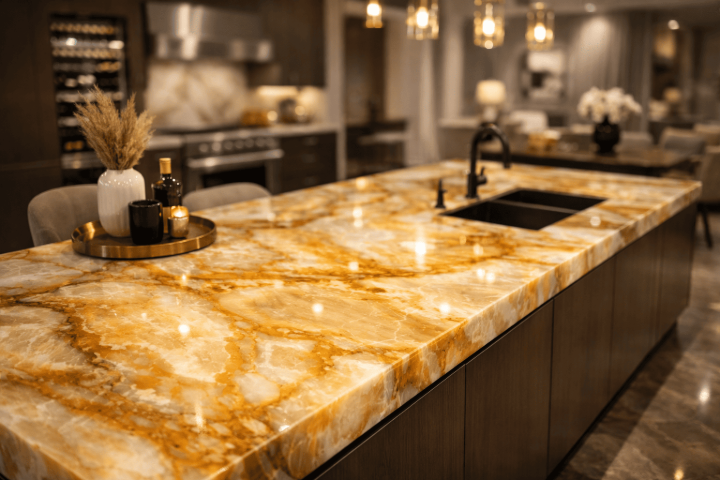
Warm Tones: Gold, Beige, and Cream
Not every homeowner wants the full black-and-white contrast. For kitchens with dark wood cabinetry in espresso, walnut, or rich mahogany, warm-toned countertops create a more harmonious, layered look that feels inviting rather than stark.
Warm-Veined Granite Granite in gold, caramel, and cream tones pairs beautifully with dark brown and espresso cabinets. The warm flecks and veining in many granite varieties draw out the undertones in darker woods, creating a cohesive look rather than a jarring contrast. This pairing suits traditional and transitional kitchen styles particularly well.
Travertine Slabs Travertine brings a warm, earthy tone that complements dark wood cabinets in a way that feels organic and grounded. Its natural variation and texture add depth to a kitchen that might otherwise look too uniform. For homeowners who want a countertop that feels artisan and unique, travertine slabs are worth serious consideration. They do require sealing and regular maintenance, so the finish and fill type matter. For a deeper technical look at how natural stone is graded and finished, Fine Homebuilding's guide to natural stone countertops covers the key considerations clearly.
Beige and Cream Quartzite Quartzite in softer beige and cream tones offers a middle ground between the high contrast of white and the drama of dark-on-dark. It reads as warm and natural, which works especially well in kitchens that lean into organic textures, natural wood elements, and earthy palettes.
Gray Countertops: Cool Sophistication
Gray is a versatile countertop choice that works across a wide range of dark cabinet finishes. Unlike stark white, gray softens the contrast while still adding brightness and clarity to the space.
For charcoal and slate-toned cabinets, a mid-gray countertop creates a tonal layering effect that feels intentional and refined. For espresso or dark brown cabinets, a light gray surface offers contrast without feeling as sharp as pure white.
Gray quartzite, gray-veined marble, and light gray quartz are all strong options here. The natural movement in stone varieties prevents the palette from feeling flat, even when staying within a narrow color range.
Porcelain Slabs: Design Flexibility for Dark Kitchens
Porcelain slabs deserve a place in this conversation because they offer something no natural stone can: an extremely wide range of colors, patterns, and finishes in a single, highly durable material. Porcelain is heat resistant, scratch resistant, non-porous, and requires no sealing.
For dark cabinet kitchens, porcelain works in several directions. A white or light-veined porcelain slab gives you the high-contrast look of marble without the maintenance. A porcelain slab running full height as a backsplash behind the range creates a seamless, dramatic focal point that complements rich cabinetry beautifully. For outdoor kitchen applications with dark cabinetry, porcelain is one of the only countertop materials built for the elements.
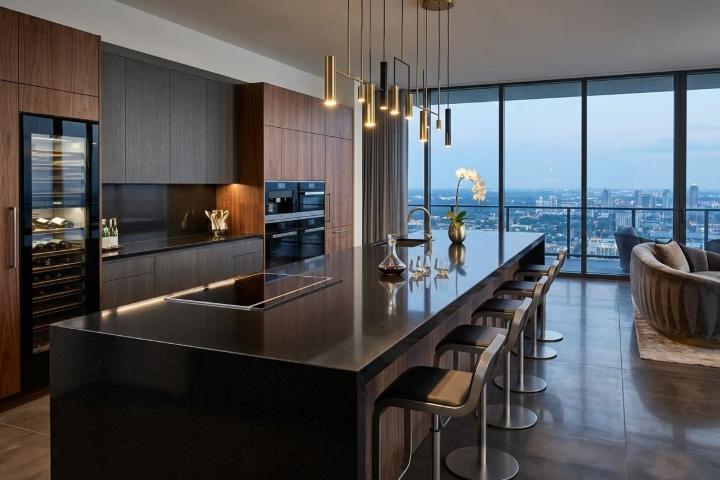
Dark on Dark: A Bold, Intentional Look
Pairing dark cabinets with dark countertops is not for the faint of heart, but when done thoughtfully, the result is a kitchen that feels luxurious, moody, and sophisticated. This approach works best in kitchens with strong natural light or generous artificial lighting, and in larger spaces where there is room to breathe.
The trick to making dark-on-dark work is variation. Rather than choosing a countertop that matches the cabinet exactly, look for a surface that shares some tones but introduces movement through veining, texture, or finish contrast. A leathered or honed finish on dark granite or quartzite, for example, adds tactile depth that keeps the palette from looking flat.
Dark quartz in charcoal or near-black tones, deep green quartzite, and black granite are all options that can carry this look with the right lighting and backsplash to balance them out.
The Role of Finish in Pairing with Dark Cabinets
The finish of your countertop affects how it reads alongside dark cabinetry as much as the color does.
A polished finish reflects light and adds brightness, which can be beneficial in darker kitchens. It also emphasizes veining and makes colors appear more vivid.
A honed finish has a matte, flat surface that absorbs light rather than reflecting it. It feels soft and understated, and pairs well with dark cabinetry when you want the countertop to complement rather than compete.
A leathered finish introduces texture and a subtle sheen that works particularly well with natural stone in darker palette kitchens. It conceals fingerprints and minor wear better than polished surfaces, making it a practical as well as aesthetic choice.
Backsplash: The Connector Between Dark Cabinets and Countertops
The backsplash plays a critical role in pulling the cabinet and countertop pairing together. For dark cabinets with white countertops, a light to medium backsplash prevents the design from feeling too sharp while adding texture and pattern. For dark-on-dark combinations, a lighter backsplash is often essential for preventing the kitchen from feeling enclosed.
Tile backsplashes give you the most control here. A soft neutral subway tile introduces lightness without competing with either the cabinetry or the countertop. For statement kitchens, a full slab backsplash in the same material as the countertop creates a seamless, high-end finish that is trending strongly in 2026 kitchen design.
Conclusion
Dark cabinets offer a kitchen a level of richness and character that lighter finishes simply cannot match. The countertop you choose either amplifies that character or brings the balance your kitchen needs to feel complete. For most homeowners, a light to mid-tone countertop in white marble, quartzite, warm granite, or light quartz is the most reliable and versatile choice. For those drawn to a bolder aesthetic, dark-on-dark pairings with the right lighting and backsplash can produce a kitchen that is genuinely striking.
At our stone and tile showroom, we carry a wide selection of natural stone slabs, engineered quartz, and porcelain countertop options in the full range of tones and finishes that work with dark cabinetry. Our locations in Reno, Minden, Sacramento, and Fernley give you the opportunity to view full slabs in person and compare options side by side. Our team offers free design consultations to help you find the pairing that works best for your space, your lifestyle, and your vision.
You can also browse our current slab inventory online or find the showroom nearest to you before your visit.
Frequently Asked Questions
What is the most popular countertop color for dark cabinets?
White and light-toned countertops are consistently the most popular choice for dark cabinets because they create a clean, high-contrast pairing that works across a wide range of kitchen styles and cabinet finishes. White quartz, white marble, and white quartzite are among the most frequently chosen options. That said, warm-toned countertops in beige, gold, and cream are popular in kitchens with dark wood cabinetry, where a softer contrast creates a warmer and more layered aesthetic.
Can you pair dark countertops with dark cabinets?
Yes, dark-on-dark combinations can work beautifully when approached thoughtfully. The key is to introduce variation through veining, texture, or finish contrast rather than matching the countertop and cabinet exactly. Strong natural or artificial lighting and a lighter backsplash are important to keep the space from feeling too closed in. This pairing works best in larger kitchens or open-concept layouts with generous light sources.
What countertop material is best for dark kitchen cabinets?
There is no single best material, as the right choice depends on your lifestyle, aesthetic goals, and the specific shade of your cabinetry. For high contrast and low maintenance, engineered quartz in a white or light tone is a reliable choice. For natural beauty and warmth, marble, quartzite, or granite offer one-of-a-kind character. For the most durable and versatile option, including outdoor applications, porcelain slabs are difficult to beat. Visiting a showroom to view full slabs in person is the most effective way to evaluate how each material will look with your cabinets.
Do dark cabinets make a kitchen look smaller?
Dark cabinets can make a kitchen feel more enclosed if the space lacks natural light or if the countertop and walls are also dark. However, pairing dark cabinets with light countertops, a lighter backsplash, and adequate lighting effectively counteracts this effect. Many designers note that dark cabinetry actually adds visual grounding and richness to a kitchen without necessarily making it feel smaller when the other elements are chosen carefully.
What finish should I choose for countertops with dark cabinets?
The best finish depends on the look you are going for. A polished finish reflects light and adds brightness, which is helpful in kitchens where the dark cabinetry absorbs a lot of natural light. A honed or matte finish offers a softer, understated look that complements the richness of dark cabinets without competing for attention. A leathered finish adds texture and visual interest, and conceals fingerprints and everyday wear well, making it a practical choice for frequently used kitchen surfaces.