Granite slabs are large, flat sheets of natural igneous rock cut from quarried granite blocks, commonly used for countertops, flooring, exterior cladding, and decorative surfaces in both residential and commercial construction. Composed primarily of quartz, feldspar, and mica, granite is one of the hardest and most durable natural stones available, with a lifespan that can extend for centuries when properly installed and maintained.
Granite slabs typically measure between 7 and 9 feet in length and range from 20 to 50 mm in thickness. They are available in a wide range of colors including white, black, grey, green, brown, and red, and can be finished in several ways, polished, honed, chip-axe, or machine-planned depending on the intended use. Because granite is a natural stone, no two slabs are identical, making every installation unique.
Key facts about granite slabs at a glance:
Material type: Natural igneous rock (plutonic)
Primary composition: SiO₂ (65–70%), with Al₂O₃, CaO, MgO, and Fe₂O₃
Common uses: Kitchen countertops, bathroom floors, exterior cladding, wall facades, stairs, and decorative surfaces
Mohs hardness: 6–7 (highly scratch and abrasion resistant)
Best finish for countertops: Polished
Best finish for outdoor use: Chip-axe or flamed
Sealing requirement: Yes, recommended every 1 to 3 years
Professional installation required: Yes
This guide covers everything you need to know about granite slabs, from how they're made and where they're used, to their advantages, disadvantages, surface finish options, and frequently asked questions.
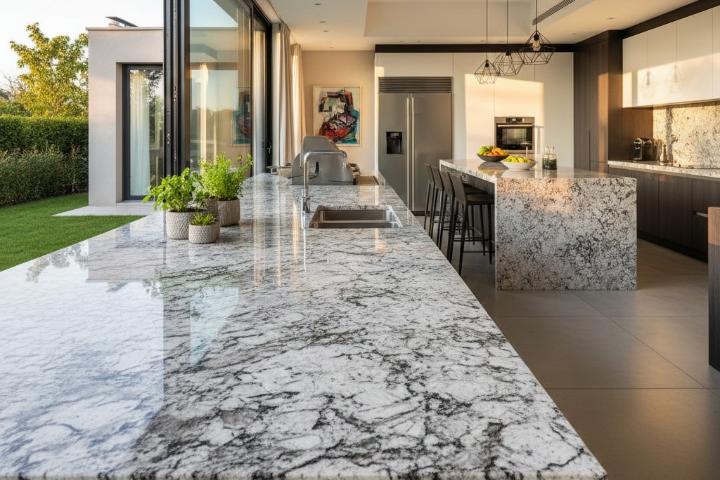
What Is a Granite Slab?
A granite slab is nature's masterpiece forged by powerful geological forces that transform ordinary rock into something extraordinary. Broader, thicker, and larger than a standard tile, granite slabs begin as massive blocks quarried directly from the earth.
These blocks are then carefully cut into flat, level sheets that are both durable and environmentally safe. No pollutants are released during the manufacturing process, and with a lifespan that can stretch into centuries, granite slabs are a material built to outlast generations. To explore premium selections and learn more about available options, visit our granite slabs collection.
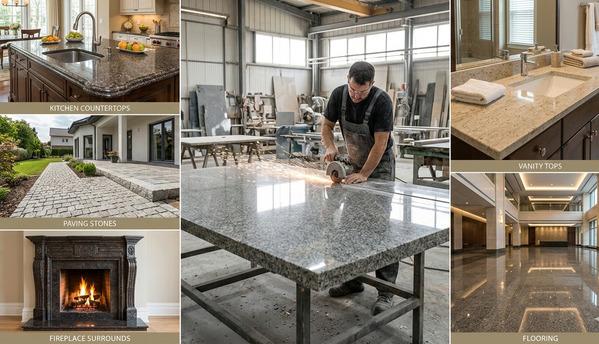
Where Can You Use Granite Slabs?
Granite slabs are incredibly versatile. Available in a wide range of colors, including white, black, grey, green, brown, and red they come in square, oval, rectangular, pentagon, and circular formats. Because granite is a natural stone, no two slabs share the same exact pattern, giving every installation a one-of-a-kind character.
At 20 to 50 mm thickness, granite tiles work exceptionally well as surface coverings for counters, shelves, cashier desks, tables, and benches. Use them on bathroom floors, room floors, dado work, and external cladding. They're also increasingly popular as replacements for door and window frames, sills, and jambs.
In kitchens with a contemporary aesthetic, granite slabs are a natural fit, ideal for countertops, tabletops, headstones, cremation urns, park benches, furniture, and more. As your trusted source for premium materials, we provide high-quality slabs tailored to your project needs, explore our selection through our locally available granite slabs.
As a premium decorative building material, polished and rubbed granite slabs feature smooth, bright surfaces with outstanding texture, making them the go-to choice for interior walls, floors, and exterior facades on large public buildings and upscale projects. Use them to enhance interior or exterior columns, dados, stairs, steps, sculptures, bar counters, service counters, and display showcases. For deeper insights into choosing the right surface for your space, read the complete guide to granite and stone countertops.
For a more raw, earthy aesthetic, rough-surfaced granite slabs are best suited for decorating exterior wall bases and floor surfaces that call for a naturally rugged, primitive look.
One important note: when sourcing granite for a single project, ensure all slabs match in appearance and pattern. Due to natural variation and manufacturing differences, slight inconsistencies can occur and these can impact both the decorative result and the ease of installation.
How Is Granite Sealed?
Once installed, granite slabs are large enough to cover most countertop surfaces in a single piece. When an additional piece is needed to complete the coverage, the two slabs meet at a seam, which is then filled with grout.
A skilled granite installer can make this seam virtually invisible but results vary depending on the stone's color and design. For example, using grey cement on white granite will produce a visible, unsightly line. Because granite is a natural material, it may carry slight imperfections, meaning edged corners at joints won't always align perfectly. Beyond appearance, poorly matched seams can create tripping hazards.
After installation, proper sealing is essential to protect the stone from moisture and staining. Granite is naturally dense, but applying a high-quality sealer enhances its resistance to spills and daily wear. Regular maintenance and resealing help preserve both appearance and performance, learn more about best practices in granite care and maintenance guide.
Before purchasing, determine how many slabs you need and what thickness is appropriate for your specific application, this will save time, money, and frustration during the installation process. If you're a contractor, builder, or industry professional, you can also enjoy exclusive benefits by completing our trade account application.
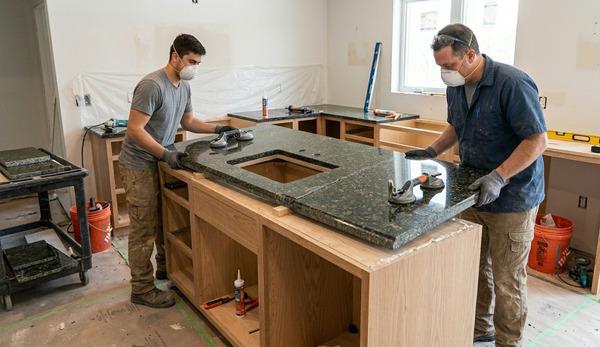
How Do You Install a Granite Slab?
Granite slab installation demands precision, specialized tools, and years of hands-on experience. This is not a DIY project, and it's not a job for amateurs. The heavier the material and the more complex the application (especially vertical cladding), the more critical it is to hire a seasoned professional. Keep in mind: the higher the material cost, the higher the labor cost, and any mistakes made during installation mean expensive material waste.
How Are Granite Slabs Made?
The process starts at the quarry, where powerful machines mine and blast raw granite blocks from the earth. Once extracted in rough form, the stone is transported to a workshop where milling machines cut and polish it into flat slabs. The finished slabs typically measure between 7 and 9 feet in length, and these are exactly what you'll find on display when you visit a granite showroom.
The fabrication standards and industry practices behind this process are often highlighted through professional gatherings and educational programs featured on the Natural Stone Institute Events Calendar, where leaders in the natural stone sector share knowledge and advancements.
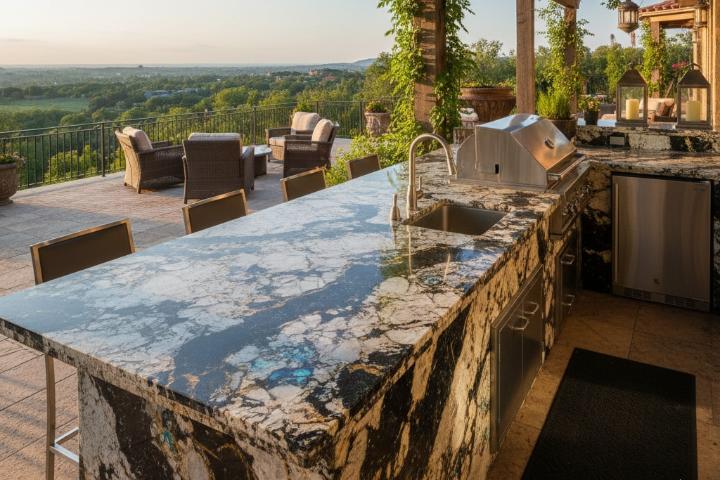
Are Granite Slabs a Good Choice?
Granite paving slabs deliver a high-end finish with minimal upkeep. Their lightly flamed surface texture adds character, and their durability ensures they hold up beautifully year-round. Like any material, though, granite comes with both strengths and limitations. Here's what you need to know.
Advantages of Granite Slabs
- Exceptional longevity and strength: granite is built to last for generations.
- High erosion resistance: making it reliable as a floor covering in demanding environments.
- Extreme weather tolerance: its toughness allows it to perform in harsh climates.
- Elegant, premium appearance: ideal for facades, flooring, and upscale interior applications.
- High impact resistance: granite won't break under normal conditions.
Disadvantages of Granite Slabs
- Higher cost: both the material itself and the installation labor are more expensive compared to alternatives.
- Slower installation process: the stone mortaring process and adhesion cure times extend the overall project timeline.
The Technical Profile of Granite
Granite is the most common type of plutonic rock, composed of quartz, feldspar, dark-colored minerals, mica, and sand. Its primary chemical composition is SiO₂ (65–70%), along with small quantities of Al₂O₃, CaO, MgO, and Fe₂O₃.
Here are its key performance characteristics:
High decorative quality. Granite's color comes from the arrangement of dark mica, syenite quartz sand, and dark-colored minerals, typically presenting in flesh red, brown, grey, and red tones. When polished, the spotted grain patterns and color variation produce a strikingly beautiful finish.
Intense hardness and high abrasion resistance. Granite stands up to heavy daily use without showing wear.
Superior durability. With low porosity and minimal water absorption, granite is highly resistant to weathering over time.
Strong acid and erosion resistance. Because SiO₂ is the dominant chemical composition, granite holds up well against acidic substances.
Poor fire resistance. This is a critical limitation, quartz within granite undergoes crystalline transition at 573°C and cubic dilatation at 870°C, causing the stone to fracture in fire events. Plan accordingly in applications where fire safety is a priority.
Granite Surface Finishes: Know Your Options
Chip-Axe Slate: A coarse surface with regular axe-cut grain patterns, ideal for textured, rustic applications.
Machine Planned Slate: Produced by a planning machine, this finish features a relatively flat surface with parallel grain lines.
Coarse Ground Slate: After coarse grinding, the surface becomes smooth to the touch but remains non-glossy.
Polished Slate: The most refined finish available. After polishing, the surface becomes brilliantly bright with exposed crystals. With further planning, it can achieve a mirror-like appearance.
Conclusion
Granite slabs remain one of the most sought-after materials in both residential and commercial construction, and for good reason. From countertops and flooring to exterior cladding and decorative facades, granite combines natural beauty, structural strength, and long-term durability that few materials can match. While the upfront cost and installation can be significant, the investment pays off in a surface that can last for generations with proper care.
Whether you prefer a sleek polished finish or a rugged chip-axe texture, our tile and stone offerings include granite slabs that suit your project, your space, and your style. You can request a granite slab quote directly from us, and our team will provide expert guidance, high-quality materials, and professional installation to ensure the best results.
Frequently Asked Questions
How long do granite slabs last?
Granite slabs are exceptionally long-lasting when properly installed and maintained, they can endure for centuries. Their low porosity, high resistance to weathering, and natural hardness make them one of the most durable building materials available. It's not uncommon to find granite surfaces in historic buildings that have remained intact for hundreds of years.
Do granite slabs require sealing, and how often?
Yes, granite slabs should be sealed to protect against staining and moisture penetration. While granite is naturally low in porosity, it is still a porous material that can absorb liquids over time. Most granite countertops and surfaces benefit from resealing once every one to three years, depending on the level of use and the specific type of granite. A simple water test, if water beads on the surface, the seal is still intact can help you determine when it's time to reseal.
Can granite slabs be used outdoors?
Absolutely. Granite is one of the best natural stones for outdoor applications. Its high toughness allows it to withstand extreme weather conditions, including heat, frost, and heavy rain. It's widely used for exterior cladding, paving, wall bases, and outdoor flooring. Rough or flamed surface finishes are especially popular for outdoor use, as they provide added grip and a natural aesthetic that blends well with exterior environments.
Is granite heat-resistant for kitchen countertops?
Granite performs well against everyday kitchen heat, you can place warm pots and pans on its surface without causing immediate damage. However, it's important to note that granite does have a fire resistance limitation at extreme temperatures. Crystalline transition in the quartz content begins at 573°C, which is far beyond normal kitchen use, but prolonged direct exposure to very high heat is still not recommended. Using trivets and hot pads is always a good practice to maintain the surface's long-term condition.
What is the difference between a granite slab and a granite tile?
The key difference lies in size and application. Granite tiles are smaller, thinner pieces typically used for flooring, wall coverings, and backsplashes. Granite slabs are much larger and thicker, usually 7 to 9 feet in length and are the preferred choice for countertops, large floor installations, and statement surfaces where seamless coverage and visual continuity matter most. Slabs tend to offer a more premium look with fewer visible seams.
To move forward with your project, you can schedule a granite slab consultation with our team to view our granite slabs and get expert guidance.