Graphite marble is one of the most practical choices in contemporary residential and commercial design, combining deep gray tones with the proven performance of natural stone slabs. Its layered veining, cool surface temperature, and broad finish compatibility make it suitable for kitchens, bathrooms, exterior walls, and floors without needing a different material for each space. This post covers the real-world benefits of graphite marble, its strongest room applications, and how to choose the right slab for your specific project.
Few surface materials hold up to the demands of modern interiors while still drawing genuine admiration. Graphite marble manages both. Its mineral composition gives it structural density that synthetic surfaces replicate in appearance but not in performance. Homeowners looking for a surface that ages well, handles heat, and resists daily wear will find graphite marble consistently delivers on those expectations.
By the time you finish reading, you will understand where graphite marble outperforms its alternatives, which finish options suit which rooms, and how to navigate slab selection with confidence before committing to a purchase.
Why Graphite Marble Outperforms Other Dark Surfaces
Choosing between dark stone options can be challenging when most visual comparisons favor granite or slate for their low maintenance reputation. Graphite marble, however, brings something those materials cannot match: a living, layered surface pattern that shifts under changing light conditions throughout the day.
From a practical standpoint, the stone's density provides natural thermal mass that keeps surfaces cool. This is especially valuable in kitchen countertop applications where hot cookware contacts the surface frequently. According to stone health certification guidelines, natural stone products meet recognized environmental and health product standards, supporting cleaner indoor environments in kitchens and bathrooms where air quality matters.
Graphite marble also holds strong resale appeal. Buyers respond to natural stone in kitchens and bathrooms more favorably than they do to engineered surfaces, giving homeowners a measurable return on material investment when they eventually sell. The stone design specialists at Nova Tile and Stone carry a curated selection across Northern Nevada and Northern California to support both residential and commercial projects.
Practical benefits that make graphite marble a sound material choice:
- Natural thermal properties keep surfaces cool in high-heat cooking areas
- Unique slab veining means no two installations look identical
- Compatible with polished, honed, and leathered surface finishes
- Proper sealing blocks surface bacteria in food preparation zones
- Adds measurable resale value compared to laminate or engineered alternatives
- Performs across countertops, floors, walls, and exterior cladding
Graphite Marble vs. Other Dark Stone Options
Feature | Graphite Marble | Black Granite | Charcoal Slate | Gray Quartzite |
Veining Character | Bold, layered | Minimal to none | None | Moderate |
Finish Options | Polished, Honed, Leathered | Polished, Honed | Natural Cleft | Polished, Honed |
Heat Resistance | High | Very High | Moderate | High |
Maintenance Need | Moderate (annual sealing) | Low | Low to Moderate | Low to Moderate |
Best Application | Countertops, Walls, Floors | Countertops, Floors | Accent Walls | Countertops, Exterior |
Visual Character | Very distinctive | Uniform | Textured | Consistent |
Pros and Cons of Graphite Marble
Pros:
- Strong visual character with organic veining that reads as refined rather than ornate
- Applicable across kitchen countertops, bathroom floors, exterior walls, and floor installations
- Natural material with verified environmental and health product declarations
- Each slab carries a pattern that no manufactured surface can reproduce
- Increases perceived quality in resale appraisals for residential properties
Cons:
- Requires periodic resealing to sustain stain and moisture resistance
- Higher upfront material cost compared to ceramic or porcelain tile
- Heavier than engineered stone, requiring structural load assessment before installation
- Susceptible to acid etching from citrus, vinegar, and cleaning products without proper sealer protection
Room-Specific Uses for Kitchens, Bathrooms, and More
Graphite marble's neutral gray palette is its most versatile design asset. Unlike heavily patterned stones that compete with surrounding decor, graphite marble works as a foundation. It draws the eye without overwhelming adjacent finishes, which is why it pairs well with both warm wood tones and cool white cabinetry.
Current design direction supports this flexibility. According to 2026 design trend data, layered natural materials and grounded neutral palettes are central to contemporary interiors. Graphite marble fits that direction naturally, making it a material choice that aligns with where residential design is heading rather than chasing a passing aesthetic.
Before selecting a finish and slab layout, confirming the project meets tile installation standards ensures the installation performs to recognized benchmarks for the specific room type and use intensity.
Kitchen Countertops and Islands
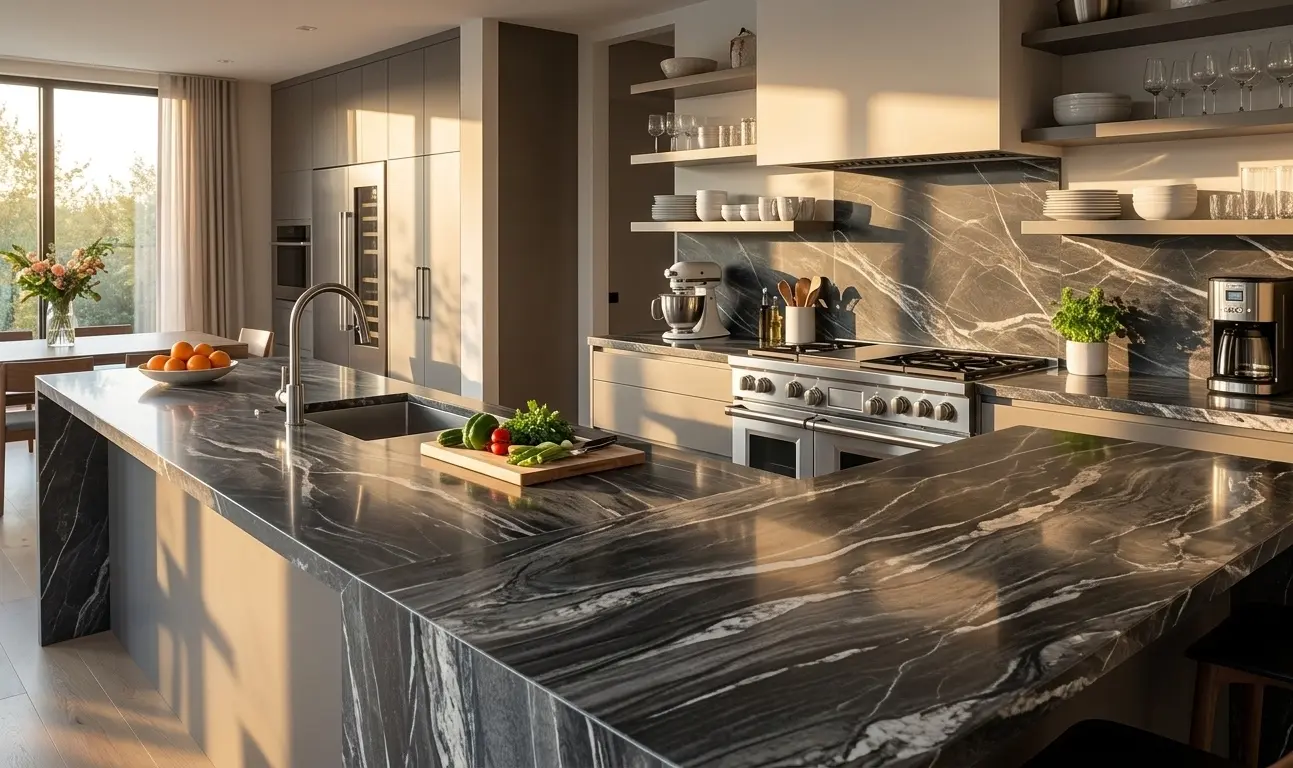
In the kitchen, graphite marble countertops provide a cool work surface that handles heat without flinching. The stone's mass and density make it resistant to warping under temperature variation. For kitchen islands in open-plan homes, a waterfall edge profile allows the slab to wrap vertically down the island sides, reinforcing the sense of solidity without adding decorative detail.
Pair graphite marble countertops with flat-front cabinetry and hardware in brass or matte black to sharpen the palette. With white or light cabinetry, the stone carries the visual weight of the space without requiring additional color through wall treatments. Browse the full slab collection to compare available graphite marble thicknesses and dimensions before finalizing your kitchen layout.
Bathroom Vanities and Shower Surrounds
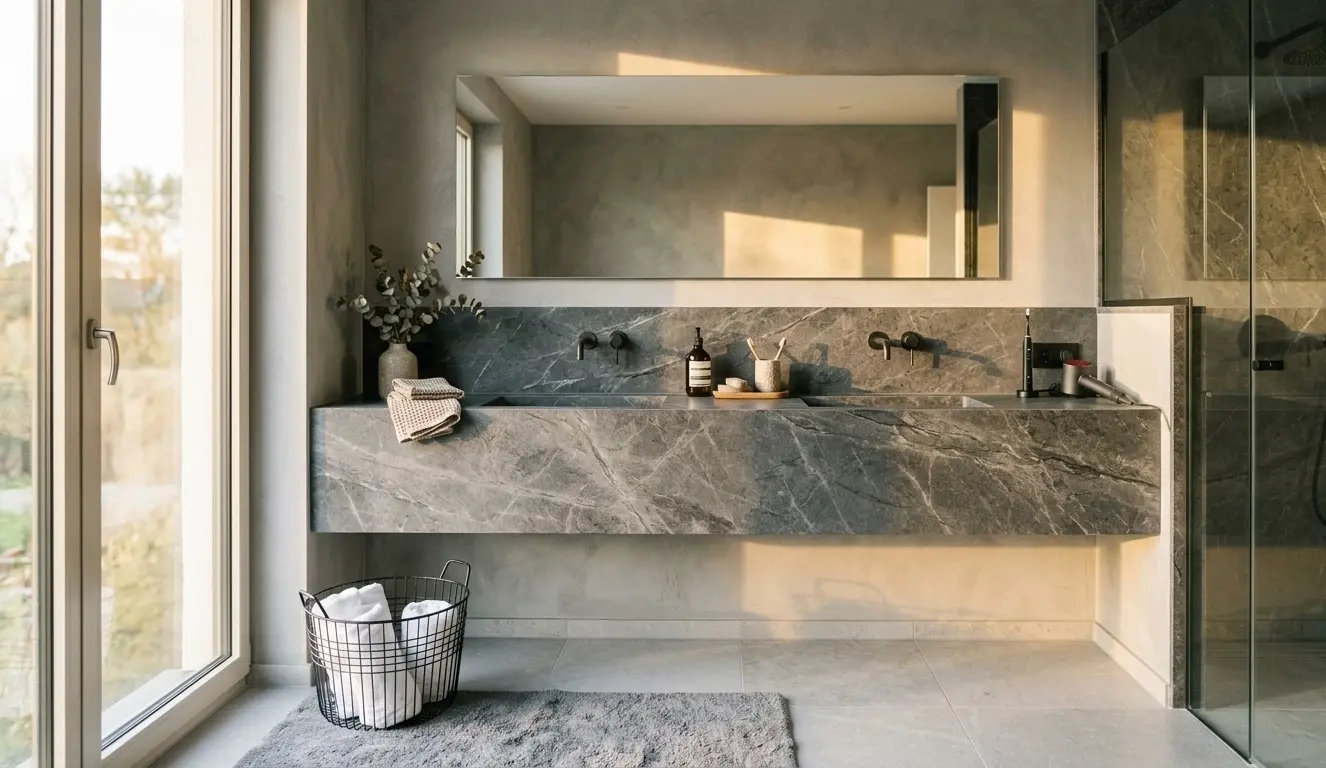
Graphite marble performs exceptionally well in bathroom vanity tops and shower wall surrounds. The natural movement in the veining creates visual interest across large wall panels, eliminating the need for decorative accent tile rows or inlaid borders to break up the surface. Each slab tells its own story without requiring embellishment.
Shower floors should use a honed or textured finish rather than polished to maintain appropriate slip resistance underfoot. Smaller mosaic cuts from the same slab material can unify the floor with the surrounding walls for a cohesive result. Homeowners near the Sacramento stone showroom can review full-size slab samples under natural light to confirm how the stone reads in their planned bathroom environment.
Exterior Walls and Cladding
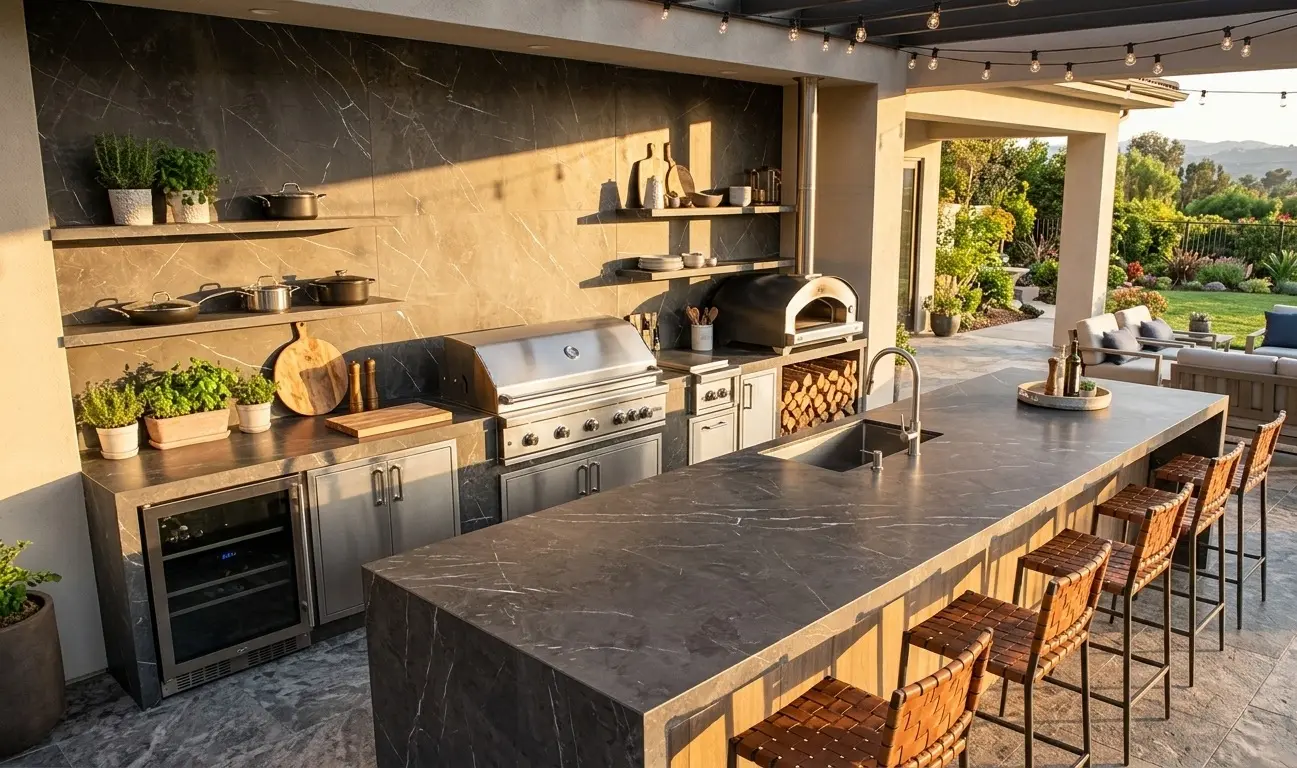
Graphite marble extends naturally to exterior wall cladding when specified at the correct thickness and sealed for outdoor exposure conditions. Thinner gauged stone panel cuts reduce structural load while maintaining the visual effect of a full slab exterior. The neutral charcoal-gray tones of graphite marble work with most exterior paint colors, wood siding, and metal architectural accents without visual conflict.
For outdoor kitchens and covered entertainment areas, graphite marble countertops coordinate well with dark grout lines and natural stone tile flooring to create a cohesive outdoor space. The material's weather tolerance in moderate climates makes it a practical exterior choice rather than a purely decorative one.
Floor Applications
Graphite marble floor tile in large format cuts reduces grout line frequency and allows the veining to read as a continuous surface movement across the room. Sizes in the 24x24 or 24x48 range work best in open-plan living areas where visual continuity from one end of the room to the other matters.
For high-traffic residential floors, a honed finish resists the scuff and scratch visibility that polished surfaces are more prone to showing over time. Layering area rugs over graphite marble in seating zones adds warmth and texture without interrupting the floor's overall visual flow.
How to Select Your Graphite Marble Slab
Walking into a stone yard or showroom without a clear process makes slab selection more difficult than it needs to be. Following a structured approach saves time and reduces the risk of ordering a slab that reads differently in your home than it did under warehouse lighting.
Follow these five steps before placing your slab order:
- Determine the application first. Kitchen countertops, bathroom floors, exterior walls, and interior wall cladding each have specific thickness and finish requirements. Knowing the application narrows your search before you even walk into a showroom.
- View slabs in person, at scale. A 12-inch sample tile does not communicate how a full slab of graphite marble reads on a countertop or wall. Visit the Fernley, Reno stone showroom or Minden stone location to see full slabs upright under showroom lighting.
- Match veining variation to your design intent. Graphite marble ranges from subtle gray movement to bold white veining. Confirm the slab on hand matches the variation level shown in your design reference images before approving the order.
- Choose the finish that suits the room's function. Polished finishes increase surface reflectivity and work well in lower-traffic areas. Honed and leathered finishes hide fingerprints and daily wear in kitchen and bathroom applications.
- Confirm sealing schedules before installation begins. Ask the fabricator which sealer formulations work with your selected slab and how often reapplication is recommended based on use intensity and installation type.
Sourcing Graphite Marble Through a Knowledgeable Stone Team
Buying natural stone through a knowledgeable source rather than a general home improvement retailer gives buyers access to more slab variety, more accurate material guidance, and a team that understands how specific slabs behave after installation. Generic retail environments carry limited inventory and staff who are rarely trained in stone-specific applications.
Trade professionals including architects, interior designers, and contractors can access the trade account access program for pricing structures and ordering processes suited to multi-room and multi-project sourcing. This removes friction from repeat stone sourcing and simplifies coordination between design specification and fabrication scheduling.
For buyers exploring showroom options across the region, the find a showroom page maps all four Northern Nevada and Northern California locations with details on each site's inventory. Whether the project is a single bathroom remodel or a full custom home, reviewing slabs in person gives the most accurate preview of what the finished installation will look like.
Conclusion
Graphite marble makes a convincing argument for natural stone slabs in any project where longevity, material authenticity, and design adaptability are all priorities. Its ability to perform across kitchen countertops, bathroom vanities, exterior walls, and floor applications from a single material simplifies specification without limiting design options.
The practical advantages go deeper than appearance. A properly sealed graphite marble surface resists heat, handles moisture, and maintains its structural integrity through years of active use. These are material qualities that matter as much on day one thousand as they do on day one.
For homeowners, designers, and contractors ready to move from planning to material selection, reviewing slabs in person is the most reliable starting point. Schedule a visit with a design specialist, compare finishes side by side, and find the graphite marble slab that fits your project with confidence.
Frequently Asked Questions
Is graphite marble a good choice for kitchen countertops?
Yes. Graphite marble handles the demands of kitchen countertop use well when properly sealed. Its dense composition tolerates heat from cookware and resists surface bacteria in food preparation zones. Annual resealing maintains the stone's protective barrier and extends its lifespan.
Can graphite marble be installed on exterior walls?
Yes, when correctly specified. Exterior wall applications require appropriate slab thickness, outdoor-rated sealer products, and installation methods that account for thermal expansion and contraction across seasons. Consulting a fabricator with exterior stone experience is strongly recommended before specification.
Which surface finish works best in a bathroom? Honed or leathered finishes are the most practical choice for bathroom floors because they provide better traction than polished surfaces. Polished finishes are well suited to vanity tops and shower walls where the reflective surface adds depth and is not a slip concern.
How frequently does graphite marble need resealing?
Most graphite marble surfaces require resealing once every one to two years depending on use frequency and installation type. Kitchen countertops and high-traffic floors typically benefit from annual sealing, while accent walls and low-contact installations can often go longer between applications.
How does graphite marble compare to black granite for countertops?
Graphite marble features prominent organic veining and a layered gray tone compared to the uniform, close-grained appearance of black granite. Marble requires more maintenance attention than granite but delivers a far more distinctive visual result. Granite offers higher resistance to etching from acidic substances, making it a lower-maintenance alternative for very active cooking kitchens.