A full slab backsplash is a single, seamless piece of natural or engineered stone, such as marble, granite, or quartz, installed along the wall behind your kitchen countertop. It runs either 4 inches high (standard) or extends all the way to the upper cabinets or ceiling (full height). Unlike tile backsplashes, a slab backsplash has no grout lines, making it easier to clean, more durable, and significantly more visually striking.
Homeowners choose full slab backsplashes because they offer superior wall protection against moisture and spills, create a cohesive and high-end look, and add lasting value to the home. Natural stone options like marble, granite, and quartzite never go out of style, while engineered options like quartz offer consistent color and low maintenance at a more accessible price point.
This guide covers everything you need to know about full slab backsplashes, including the best materials, height options, design ideas, cost considerations, and how to choose the right finish for your kitchen.
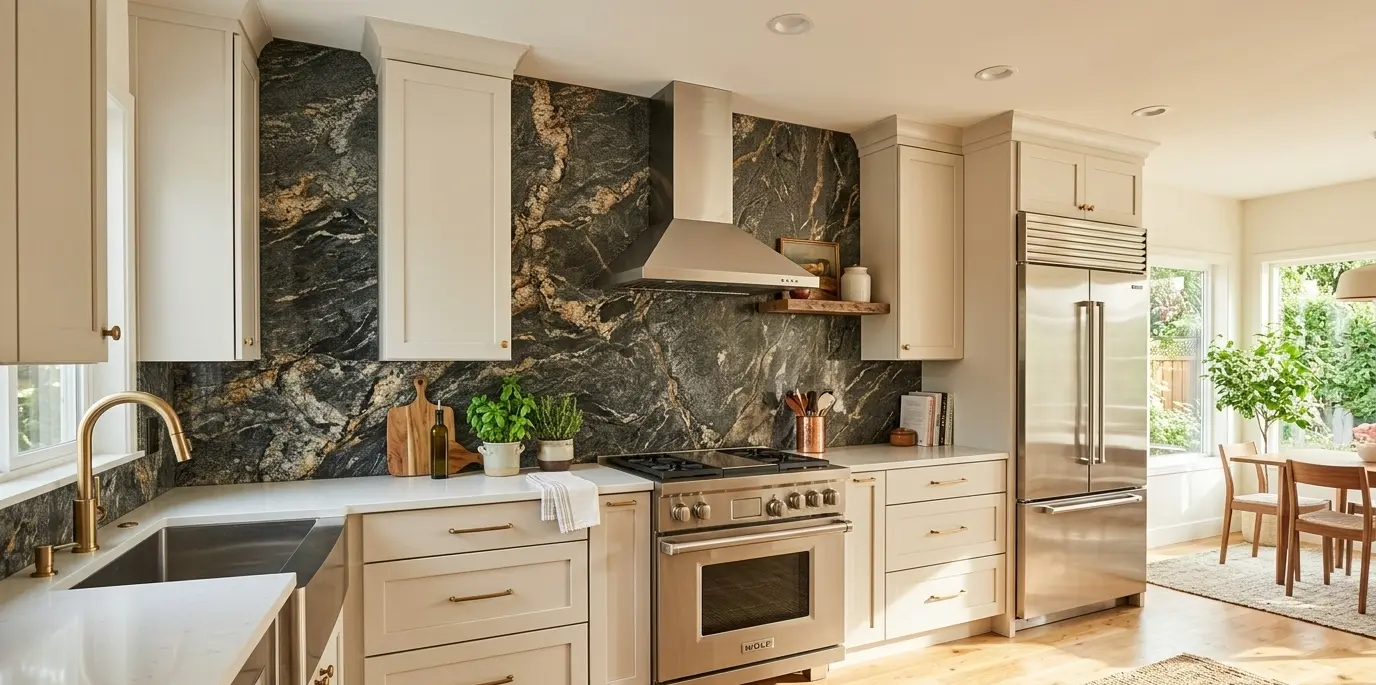
Will a Slab Backsplash Go Out of Style?
One of the greatest advantages of using natural stone in your home, whether on countertops, floors, or a backsplash, is that it never falls out of fashion. It's precisely why homeowners continue to choose natural stone finishes when refreshing their spaces.
To explore timeless backsplash materials in person, browse our locally available selection of marble slabs and premium natural stone surfaces or request project details through our slab quote request form for custom backsplash and countertop solutions.
Are Full Granite Backsplashes Outdated?
Not at all. Like every other natural stone option, full granite backsplashes remain as relevant as ever. Granite holds up beautifully across kitchens from virtually every design era. Install one today and it will complement your décor for a lifetime.
Why Choose a Granite Backsplash?
Granite earns its reputation through both beauty and resilience. Unlike common alternatives such as subway tile, a granite backsplash lets you extend the presence of this exceptional natural stone from your countertop up the wall, adding depth and sophistication to your kitchen.
It also makes a powerful statement. The distinctive veining, rich color variation, and luxurious texture create a commanding focal point that works equally well in a sleek modern kitchen or a warm, rustic setting.
On the practical side, granite's durability is second to none. It resists stains, heat, and scratches with ease, making it a smart long-term investment. Upkeep is minimal, and routine cleaning with mild soap and water keeps it looking pristine.
What Height Options Do You Have for Granite Backsplashes?
Two standard options exist: Standard and Full Height. A Standard backsplash sits at roughly 4 inches, covering a narrow strip of wall directly behind your countertop. A Full Height backsplash runs from the countertop up to the underside of the upper cabinets, or even all the way to the ceiling, for a dramatic and eye-catching effect. Custom heights are also available to suit your exact specifications.
For contractors, designers, and industry professionals sourcing custom stone solutions, you can apply for a trade account to access premium granite materials, exclusive pricing, and professional support.
What Is the Most Timeless Backsplash?
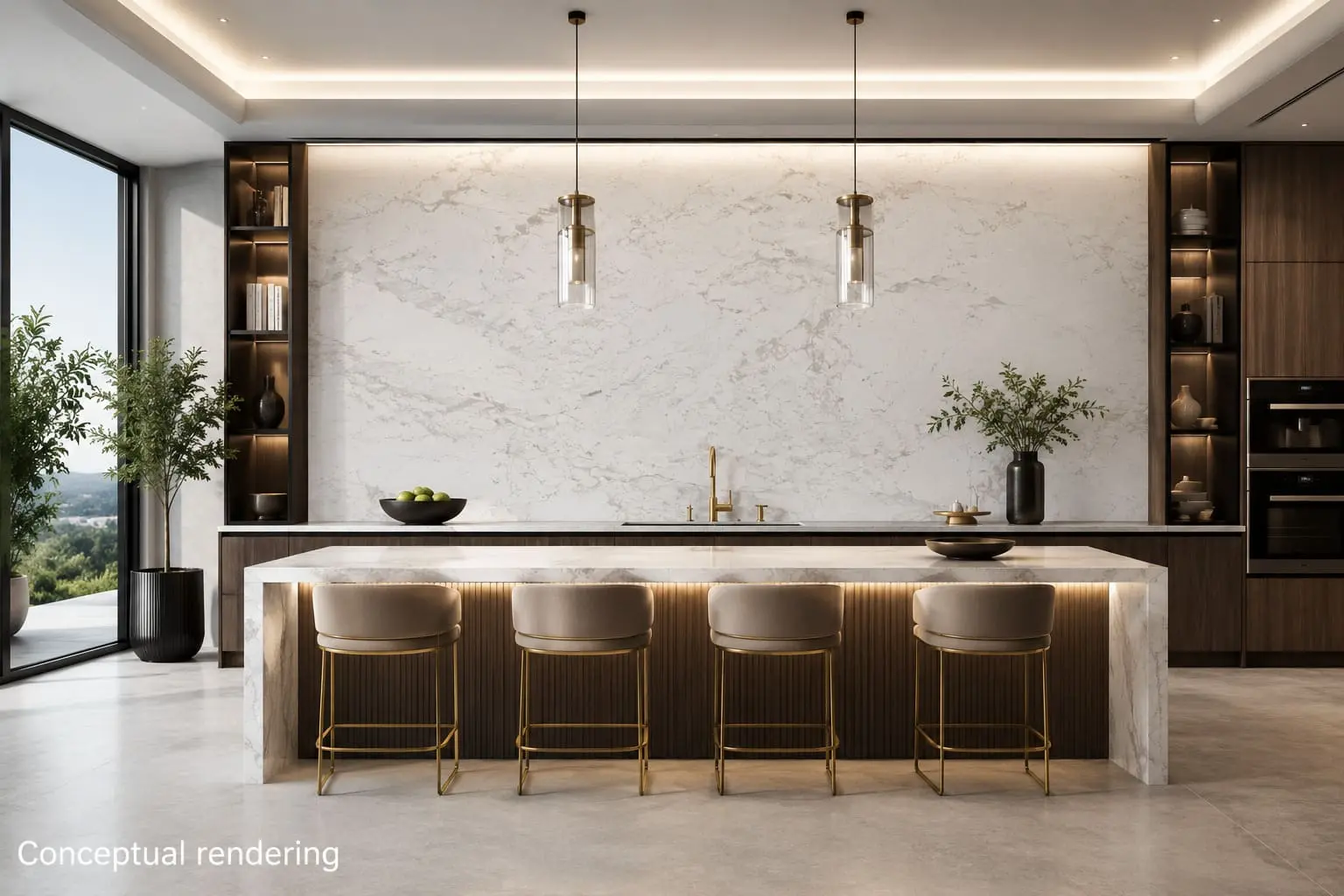
Marble holds that title without question. When it comes to kitchen design, few materials have stood the test of time quite like marble, and a solid marble slab backsplash remains simply the most stunning choice available today.
What makes marble so enduring is its unique combination of natural beauty and quiet sophistication. No two slabs are ever identical. The soft, flowing veining, the subtle variation in tone, and the cool, smooth surface give every marble backsplash a one-of-a-kind character that no engineered material can fully replicate. Whether the veining runs bold and dramatic or soft and delicate, the result is always a surface that draws the eye and anchors the entire room.
Beyond its looks, marble has a long and storied history in architecture and design, gracing the interiors of some of the world's most celebrated spaces for centuries. Bringing that same material into your kitchen connects your home to a design tradition that has never gone out of fashion and never will.
Is a Slab Backsplash More Expensive?
Cost depends on the material you choose and the size of the slab required. Tile tends to have a lower upfront price, but it demands more maintenance over time and typically needs replacing within a decade. A full slab backsplash lasts a lifetime and adds lasting value to your property. Quartz and porcelain offer accessible price points with a wide range of styles to choose from.
For homeowners looking to maximize value without compromising style, explore our overstock sale on premium slabs and discounted natural stone materials.
Full Slab Backsplash Ideas for Your Kitchen
You genuinely can't go wrong with a stone finish for your backsplash. Quartz, granite, porcelain, or marble, each one elevates the entire room. Here are a few ways to add even more character to your design.
Quartz Slab Backsplash Quartz delivers remarkable variety in color and visual texture. One defining characteristic is its thickness. While most backsplashes measure around ¼ inch, quartz slabs typically come in at 1¼ inches, providing greater wall protection and lending the kitchen an undeniable sense of quality and weight.
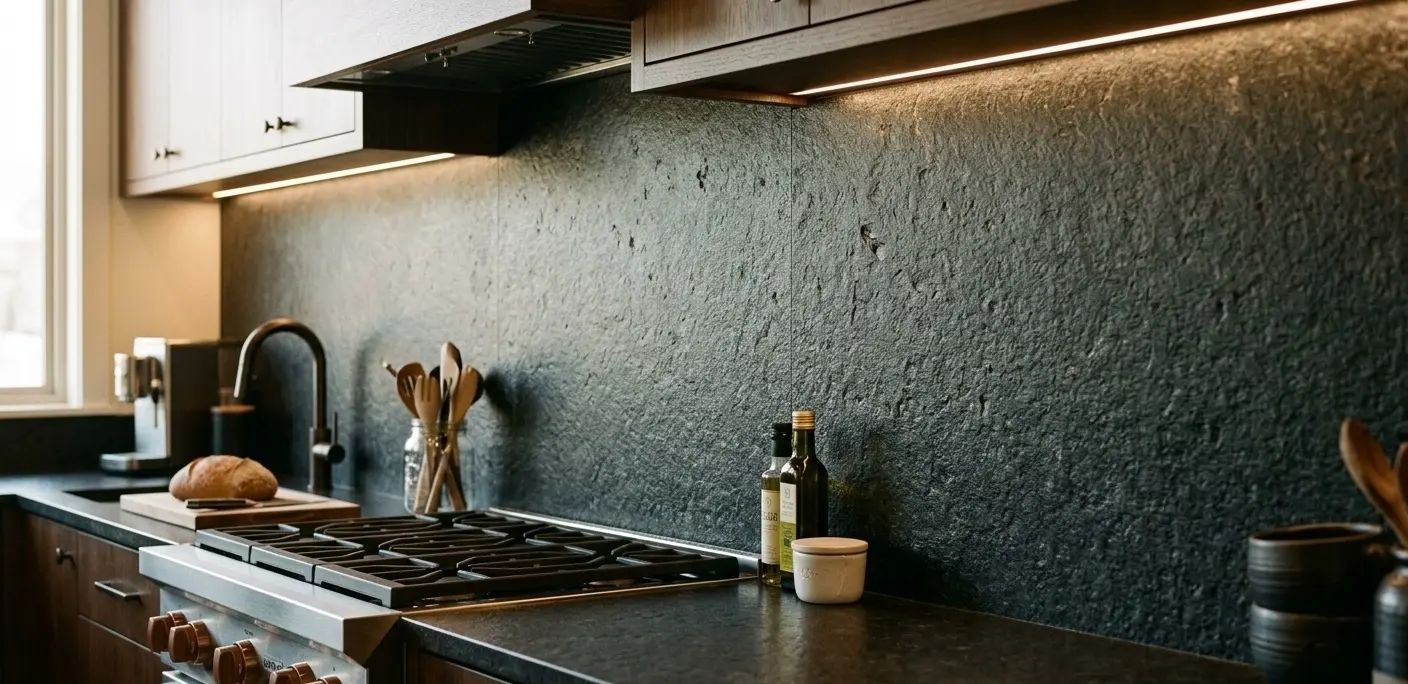
Slab Backsplash Behind the Range Positioning a slab backsplash directly behind your range is as functional as it is beautiful. The seamless, grout-free surface makes cleanup far quicker and easier than tile, while the clean lines give your cooking zone a sharper, more refined look.
Slab Backsplash with a Shelf Incorporating a shelf into your slab backsplash adds both personality and utility. Use it to display décor or keep everyday kitchen essentials within reach, and the choice of how to style it is entirely yours.
Advantages and Disadvantages of Full Slab Backsplashes
Advantages:
- Strong visual presence: Creates immediate impact and draws attention to your countertops.
- Full wall protection: Guards against moisture, splashes, and spills across the entire surface.
- Modern appeal: Prized for its seamless, contemporary look.
Disadvantages:
- Higher investment: Requires more material and labor than a standard 4-inch backsplash.
- More surface to clean: The larger area takes more time to maintain.
Ultimately, the right decision comes down to your personal style, budget, and how your kitchen is used day to day. Whichever height you choose, natural stone is always a worthwhile investment.
Conclusion
A full slab backsplash is one of the smartest investments you can make when upgrading your kitchen. Whether you gravitate toward the timeless elegance of marble, the rugged character of granite, or the versatile practicality of quartz, a stone slab backsplash delivers on every front: beauty, durability, and long-term value.
The right choice ultimately comes down to your personal style, how your kitchen functions day to day, and what fits your budget. But regardless of the material or height you select, one thing remains consistent: natural stone never goes out of style. It enhances the look of your space today and continues adding value for decades to come.
If you are ready to elevate your kitchen with a full slab backsplash, consult with Nova Tile and Stone, a trusted supplier of premium natural stone and slab materials for residential and commercial spaces, to explore your options and find the perfect fit for your home.
Frequently Asked Questions
Maintaining a full slab backsplash is relatively simple. For most natural stone options like granite and marble, regular wiping with mild soap and warm water is all that is needed to keep the surface looking its best. Avoid harsh chemical cleaners or abrasive scrubbing pads, as these can dull the finish over time. Sealing your stone periodically, typically once a year, adds an extra layer of protection against stains and moisture.
In most cases, a professional installation can be completed within just a few hours. The exact timeline depends on the size of the area being covered, the complexity of the layout, and the type of material being used. Having your countertops and backsplash installed at the same time can also streamline the process and ensure a more seamless finish.
Absolutely. While the kitchen is the most popular location, slab backsplashes work beautifully in bathrooms as well, particularly behind vanities and in shower surrounds. Natural stone slabs are also a stunning choice for fireplace surrounds and feature walls, bringing the same sense of luxury and cohesion to any room in the home.
Yes, it can. Natural stone finishes are widely regarded as premium upgrades in real estate, and a full slab backsplash is no exception. Buyers tend to respond positively to kitchens with high-quality stone surfaces because they signal durability, craftsmanship, and elevated design. While the exact return on investment varies, a well-chosen stone backsplash consistently contributes to a kitchen's overall appeal and perceived value.
A polished finish has a high-gloss, reflective surface that enhances the depth of color and veining in the stone. It gives the backsplash a sleek, luxurious appearance and is generally easier to wipe clean. A honed finish, on the other hand, has a matte or satin look that feels more understated and natural. It tends to be less slippery and can hide minor scratches more effectively, making it a popular choice for those who prefer a softer, more organic aesthetic. The best finish for your backsplash depends on your overall kitchen style and personal preference.