If you have been dreaming of a kitchen or bathroom that blends beauty with everyday function, you are in good company. Homeowners everywhere are searching for surfaces that handle daily demands without sacrificing style. Engineered stone slabs deliver exactly that. Crafted from natural quartz crystals bonded with resins and pigments, they offer the visual appeal of stone with added consistency and resilience.
Unlike purely natural materials, these slabs are produced under controlled conditions, so every piece arrives with a uniform appearance and predictable performance. Whether you are renovating a kitchen, refreshing a bathroom vanity, or adding a striking kitchen backsplash, this material checks every box. In this guide, you will discover why so many designers and homeowners reach for engineered stone, how to incorporate it throughout your space, and how to find the perfect slab for your next project.
The Key Advantages That Make Engineered Stone Worth Every Penny
Selecting the right countertop material is one of the most consequential decisions in any renovation. The surface you choose will be touched, cleaned, and relied upon every single day. Understanding what sets engineered stone apart gives you a significant edge before committing to a purchase.
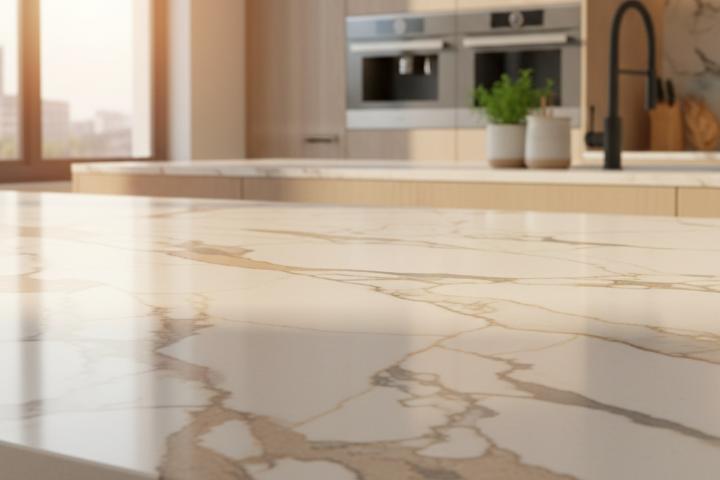
From a practical standpoint, engineered stone excels where many alternatives fall short. Its non-porous surface resists bacteria, staining, and moisture absorption, making it a top pick for kitchen countertops and bathroom vanity tops alike. According to countertop experts at This Old House, non-porous surfaces are substantially easier to maintain in high-use areas of the home.
Here are the core advantages at a glance:
- Scratch and chip resistance, ideal for busy kitchens and family households
- Consistent coloring across the full slab, unlike the unpredictability of natural stone
- No sealing required, unlike granite or marble which need annual treatments
- Heat-tolerant surface that handles everyday kitchen environments comfortably
- Wide design range spanning subtle neutrals to bold, dramatic veining
- Seamless compatibility with kitchen backsplash tile selections for a cohesive look
- Long lifespan with minimal upkeep, protecting your renovation investment
The material's durability stems from its composition. Most engineered stone slabs are roughly 90 to 95 percent natural quartz, making them exceptionally dense. That density translates directly into impact resistance and longevity, which natural stone sometimes cannot match without ongoing maintenance.
Engineered Stone vs. Common Alternatives: Pros and Cons
Review this breakdown before finalizing your material selection:
Feature |
Pros |
Cons |
Maintenance |
No sealing required; simple soap and water cleaning |
Avoid abrasive or acidic cleaners |
Durability |
Highly scratch and chip resistant |
Not fully heat-proof; trivets recommended |
Appearance |
Consistent finish; wide design variety |
Can appear less organic than natural stone |
Cost |
Competitive long-term value with low upkeep |
Higher upfront cost than laminate options |
|
Hygiene |
Non-porous; resists bacteria and moisture |
Requires pH-neutral cleaning products only |
Inspired Design Applications for Engineered Stone Slabs
Understanding the benefits is one thing. Knowing where and how to use engineered stone is what turns a solid renovation into a truly outstanding one. This material is remarkably adaptable, appearing in spaces from high-traffic kitchens to serene, spa-inspired bathrooms.
Elevating Your Kitchen Island
The kitchen island is often the hardest-working surface in the entire home. It hosts meal prep, homework sessions, casual dining, and entertaining. An engineered stone kitchen island top brings both durability and visual drama to the space simultaneously.
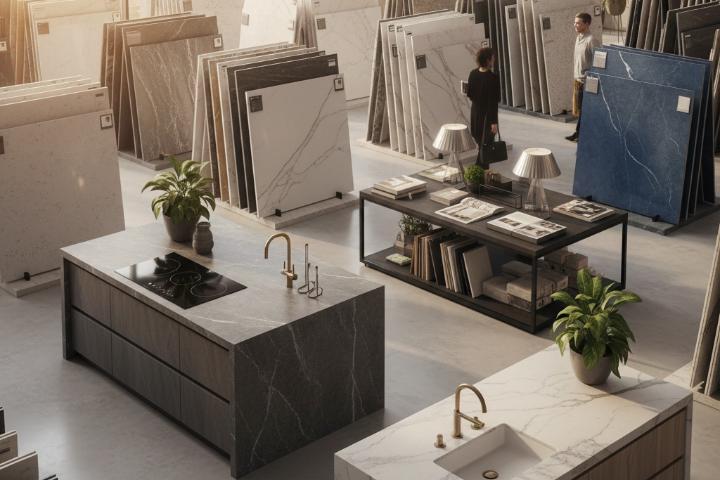
Consider a contrasting color between your island and perimeter countertops for a layered, designer-level look. Pairing a deep charcoal engineered slab on the island with lighter surrounding surfaces creates striking visual interest. Browse the full range of premium stone slabs to find tones that complement your cabinetry and flooring.
Refreshing Your Bathroom Vanity
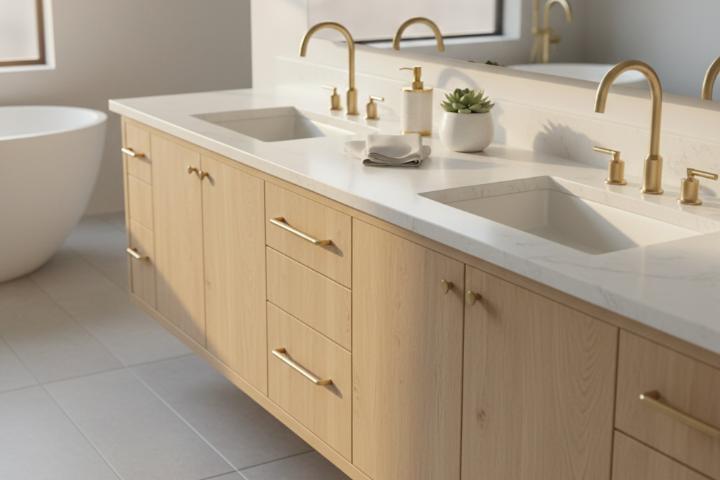
The bathroom vanity is another area where engineered stone shines consistently. Unlike marble, which requires frequent sealing and is vulnerable to acidic beauty products, engineered stone holds up beautifully in humid, product-heavy bathroom environments.
For a spa-inspired aesthetic, select slabs with soft white or warm cream tones and subtle veining. Pair with undermount sinks and minimal hardware for a clean, timeless result. The Natural Stone Institute's care guide provides helpful context on how engineered surfaces compare to their natural counterparts in terms of maintenance requirements.
Designing with Bathroom Countertops
Beyond the vanity, engineered stone works beautifully across full bathroom countertop runs, window sills, and even shower niches. Its seamless appearance and water resistance make it a practical choice that delivers on aesthetics without compromise.
Compared to natural stone slabs, engineered options offer greater control over the final result. You can expect the exact slab you select to look consistent from edge to edge, eliminating the guesswork that comes with natural variation. For deeper guidance on choosing between stone types, Fine Homebuilding's countertop guide is a trusted resource worth consulting.
How to Find the Right Slab and Where to Shop with Confidence
Selecting the right slab starts with understanding your space, lifestyle, and design direction. Working with a knowledgeable supplier simplifies the entire journey, from initial inspiration to final installation.
A Step-by-Step Guide to Selecting Your Slab
Step 1: Define Your Use Case. Identify which surfaces you are covering. Kitchen countertops, bathroom vanity tops, and kitchen islands each have slightly different requirements for thickness, finish, and edge profile.
Step 2: Set a Style Direction. Gather inspiration and determine whether you prefer bold veining, solid tones, or subtle texture. Narrow your palette to two or three strong contenders.
Step 3: View Physical Samples In Your Space. Lighting dramatically affects how a slab color reads. Visit a local showroom near you to compare full slabs rather than relying on small digital thumbnails.
Step 4: Confirm Sizing and Quantity. Work with your fabricator to calculate how many slabs you need. Account for seam placement, edge profiles, and any cutouts for sinks or appliances.
Step 5: Place Your Order and Schedule Fabrication. Once your slab is confirmed, coordinate with your fabricator for templating and installation timing. A clear timeline keeps your project on track.
Whether your project is located in Reno, Minden, or Sacramento, regional showroom access gives you the ability to view full slabs in person before committing. That real-world viewing experience makes a genuine difference when selecting materials for a major renovation.
Trade professionals will also appreciate the option to apply for a trade account, which opens access to preferred pricing, project support, and a streamlined ordering process. Whether you are outfitting a single home or managing multiple jobs simultaneously, dedicated trade support makes the process more efficient.
Conclusion
Engineered stone slabs offer a rare combination of visual beauty, durability, and low-maintenance practicality. From a hardworking kitchen island to a refined bathroom vanity, they adapt to virtually every style and use case without demanding constant attention.
Their non-porous composition, extensive design variety, and lasting strength make them one of the smartest surface investments a homeowner can make. If you are ready to explore your options and bring your vision to life, discover the full slab collection here and start your search with expert guidance behind you. The right slab is waiting.
Frequently Asked Questions
Are engineered stone slabs the same as quartz countertops?
Yes, in most cases. The terms are used interchangeably throughout the industry. Both are composed of crushed quartz crystals bound with polymer resins, resulting in a dense, non-porous surface that resists staining and bacteria.
Can engineered stone be installed outdoors?
Most engineered stone products are not recommended for outdoor use. Prolonged exposure to UV light can cause gradual discoloration over time. If you need exterior surfaces, natural stone or specially rated porcelain are generally better-suited alternatives.
How do I clean engineered stone countertops properly?
Use a soft cloth with mild dish soap and warm water for routine cleaning. Avoid abrasive scrubbing pads and harsh chemicals such as bleach or strongly acidic cleaners, which can gradually dull the surface finish and affect the resin binding.
How does engineered stone compare to natural stone in cost?
Engineered stone typically falls in the mid-to-upper price range, comparable to quality granite. However, the eliminated sealing costs and reduced maintenance requirements over time often make it the more economical choice across the full lifespan of the surface.
Do I need to seal engineered stone surfaces?
No sealing is required. Unlike granite or marble, engineered stone's non-porous composition inherently resists moisture and staining without any additional surface treatments. This is one of its most appreciated practical advantages for busy households.