The best backsplash slab materials for kitchens are marble, quartzite, porcelain, granite, and sintered stone. Each material differs in surface character, maintenance requirements, and visual range, making the right choice dependent on the specific kitchen's design direction, daily use patterns, and long-term upkeep preferences.
Marble is known for its soft veining and refined appearance but requires prompt spill management due to its sensitivity to acidic substances. Quartzite is a naturally occurring metamorphic rock that carries similar visual warmth to marble while generally being less reactive to everyday kitchen conditions. Porcelain slabs are manufactured for surface consistency and are non-porous, making them one of the more low-maintenance options for backsplash use. Granite is a long-established kitchen surface known for its hardness and natural mineral variation, and it can perform well over time when properly sealed and maintained. Sintered stone is produced under extreme heat and pressure, resulting in a dense surface that is often described as resistant to scratching and staining, though performance varies by product and application.
Each of these materials is available in a range of tones, finishes, and slab formats suited to full-height backsplash applications, accent walls, and standard backsplash bands. Selecting the right one depends on balancing visual priorities with realistic maintenance expectations and the conditions specific to your kitchen.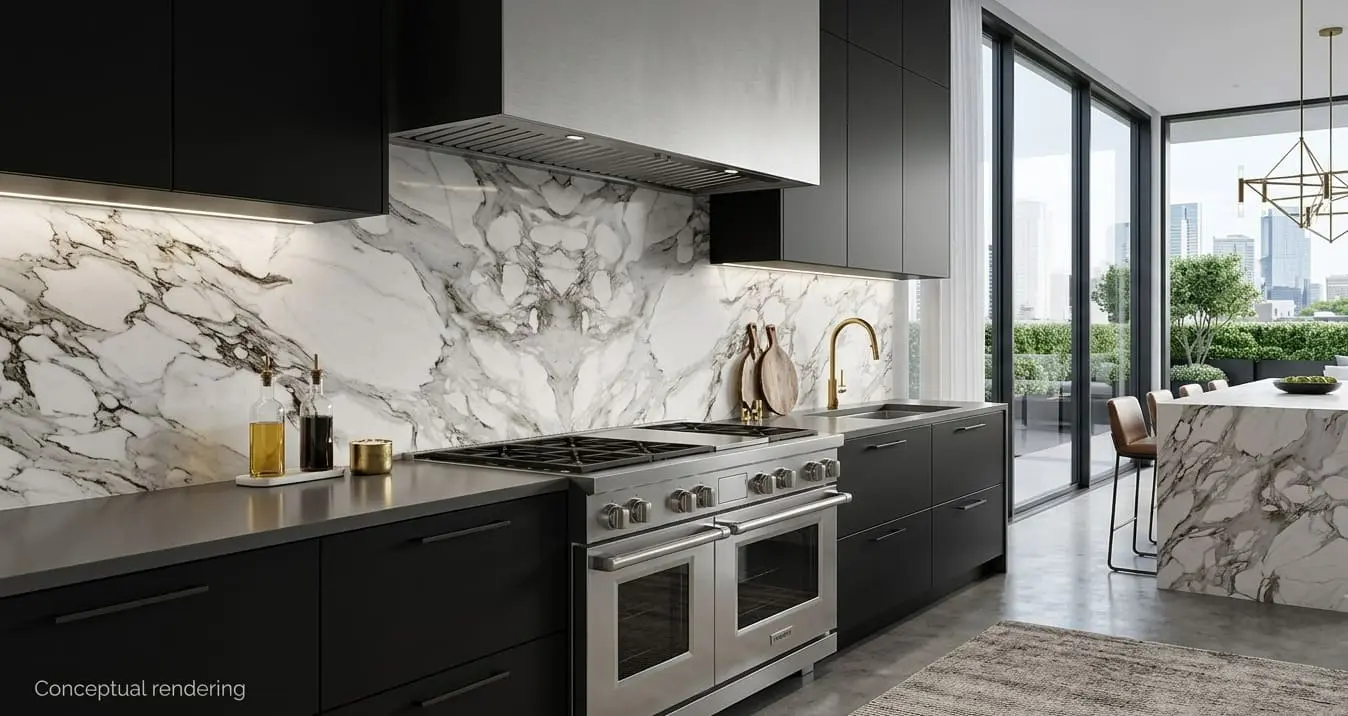
1. Marble Slabs
Marble has long been regarded as one of the most visually refined materials for backsplash applications. Its soft veining patterns and natural tonal variation bring an organic elegance that is difficult to achieve with other surfaces. Each slab has natural variation in tone, veining, and movement, which means backsplash installations in marble tend to carry a distinctive character from one kitchen to the next.
The slab is durable, but proper care will help preserve its appearance over time. Marble is generally more sensitive to acids than other stone options, so spills from citrus, vinegar, or acidic cleaning products should be wiped up without delay. It can perform well in kitchen settings when treated with appropriate attention, but each application should be evaluated individually based on the specific finish, sealing, and daily use patterns.
Polished marble can help brighten kitchens with darker cabinetry or lower natural light by reflecting available light across the surface. A honed finish offers a softer, more matte look that suits transitional and rustic design directions and may be somewhat less prone to showing surface scratches depending on the stone and finish selected. For a deeper look at how different stone finishes affect both appearance and maintenance, selecting the ideal stone finish offers a useful reference point.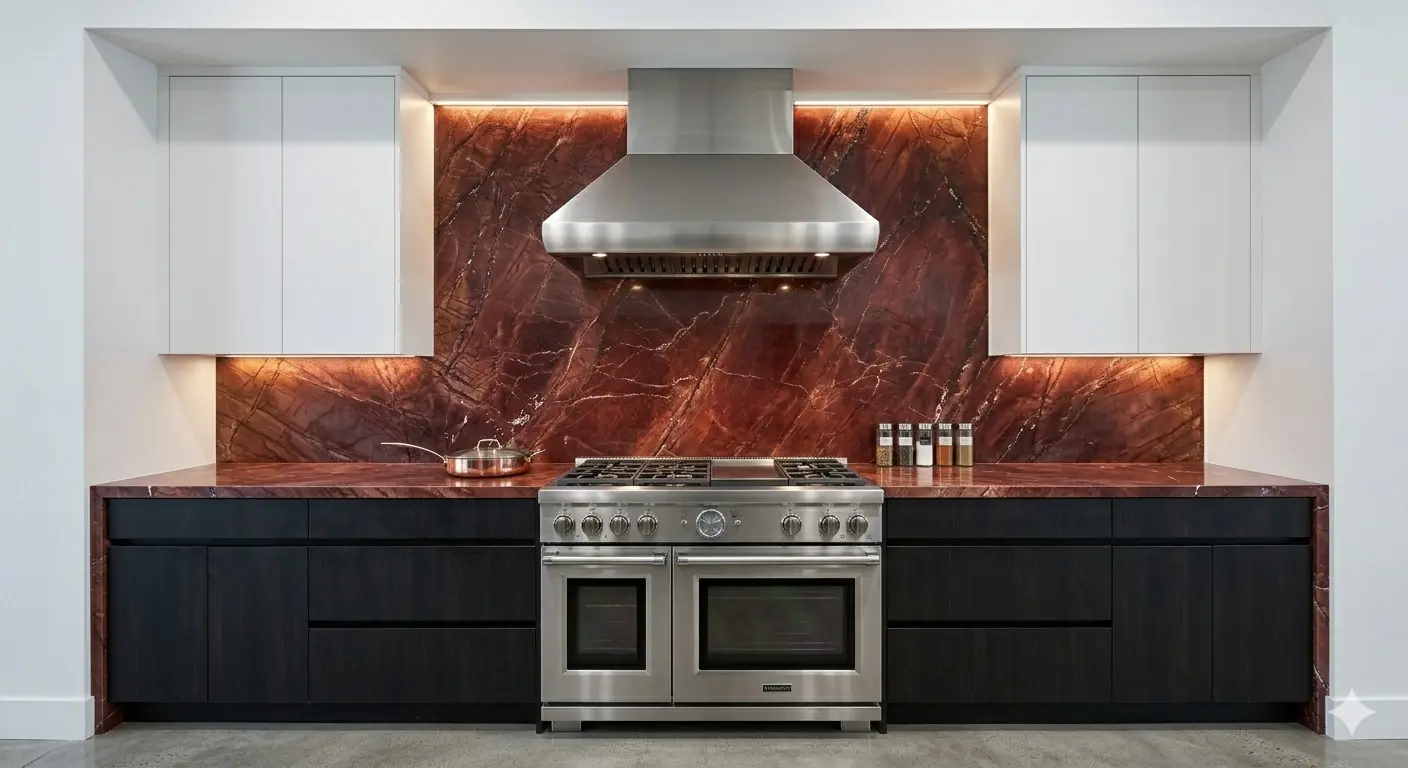
2. Quartzite Slabs
Quartzite is a naturally occurring metamorphic rock that has gained significant interest in kitchen design over the past several years, and for practical reasons. It tends to carry visual warmth and veining that some homeowners associate with marble, while generally being less reactive to everyday kitchen conditions, though performance still depends on the specific slab, sealing, and maintenance routine.
The slab is suitable for daily use, but correct installation is essential for long-term performance. Quartzite is generally considered less prone to etching than marble, but spills should still be cleaned promptly to help avoid surface damage over time. When properly sealed and maintained, it can perform well as a backsplash in a range of kitchen environments. If you are weighing quartzite against similar materials, this breakdown of quartz vs. quartzite clarifies the key differences between the two in a straightforward way.
You can browse our live slab inventory to see the quartzite options currently available and assess tone and movement before making a decision.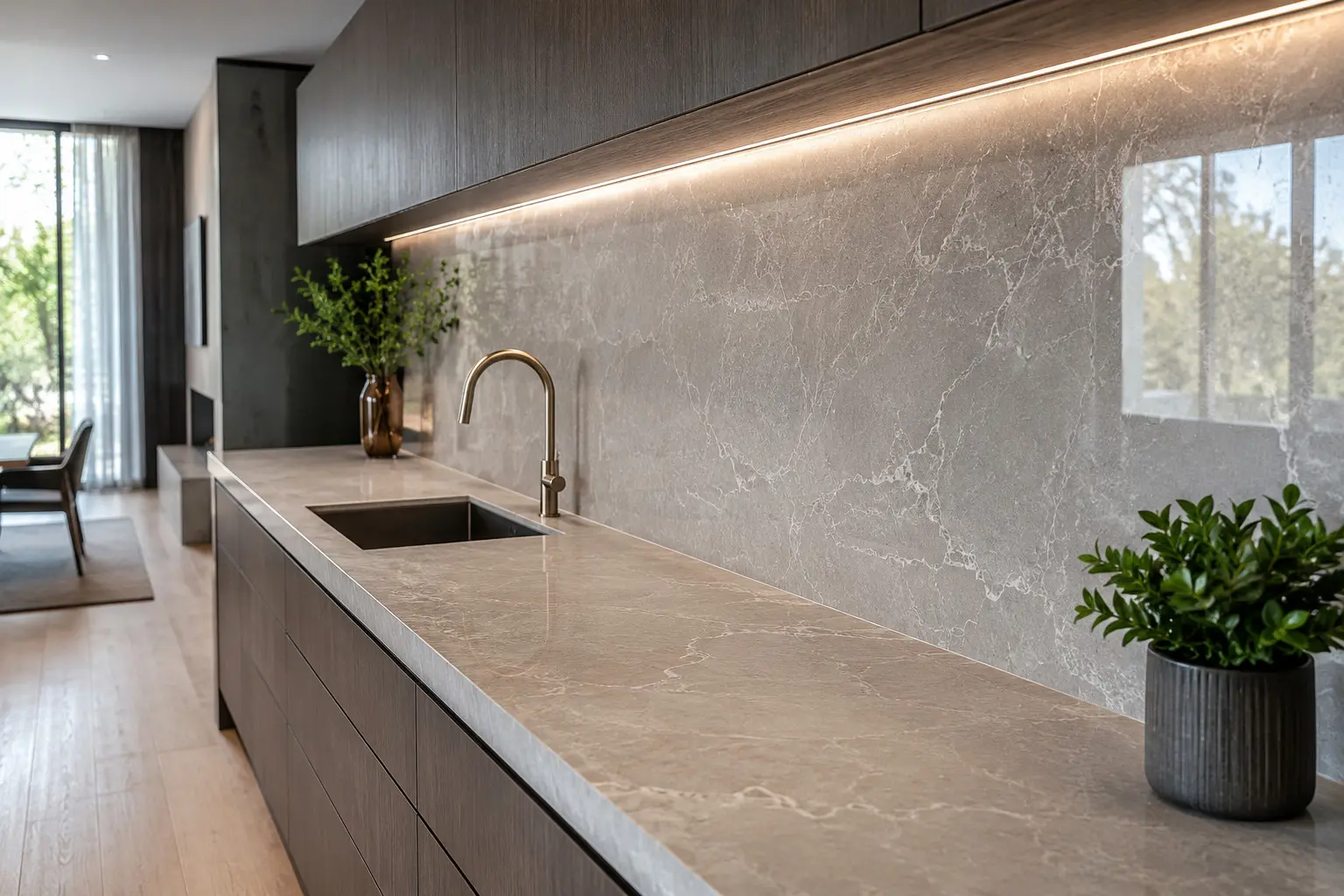
3. Porcelain Slabs
Porcelain slabs have become one of the more widely discussed materials in contemporary kitchen design, and the interest is well-founded. They are manufactured to consistent specifications, which generally allows for uniform color, finish, and patterning across large surface areas. This consistency can make them a practical option for full-height backsplash applications where visual continuity from countertop to upper cabinet is a priority.
The slab is non-porous, but regular cleaning is still recommended to prevent surface buildup over time. It resists fading, but prolonged sun exposure should still be considered, particularly in kitchens where direct sunlight reaches the backsplash wall for extended periods each day. The surface is stain resistant, but spills should be cleaned promptly regardless of the material's density.
Porcelain slabs are available in formats that closely replicate the appearance of marble, concrete, and natural stone. For homeowners who want a stone-like aesthetic with a generally more predictable maintenance routine, a porcelain slab backsplash can be a practical and visually considered option, though results will vary based on the specific product, installation, and care.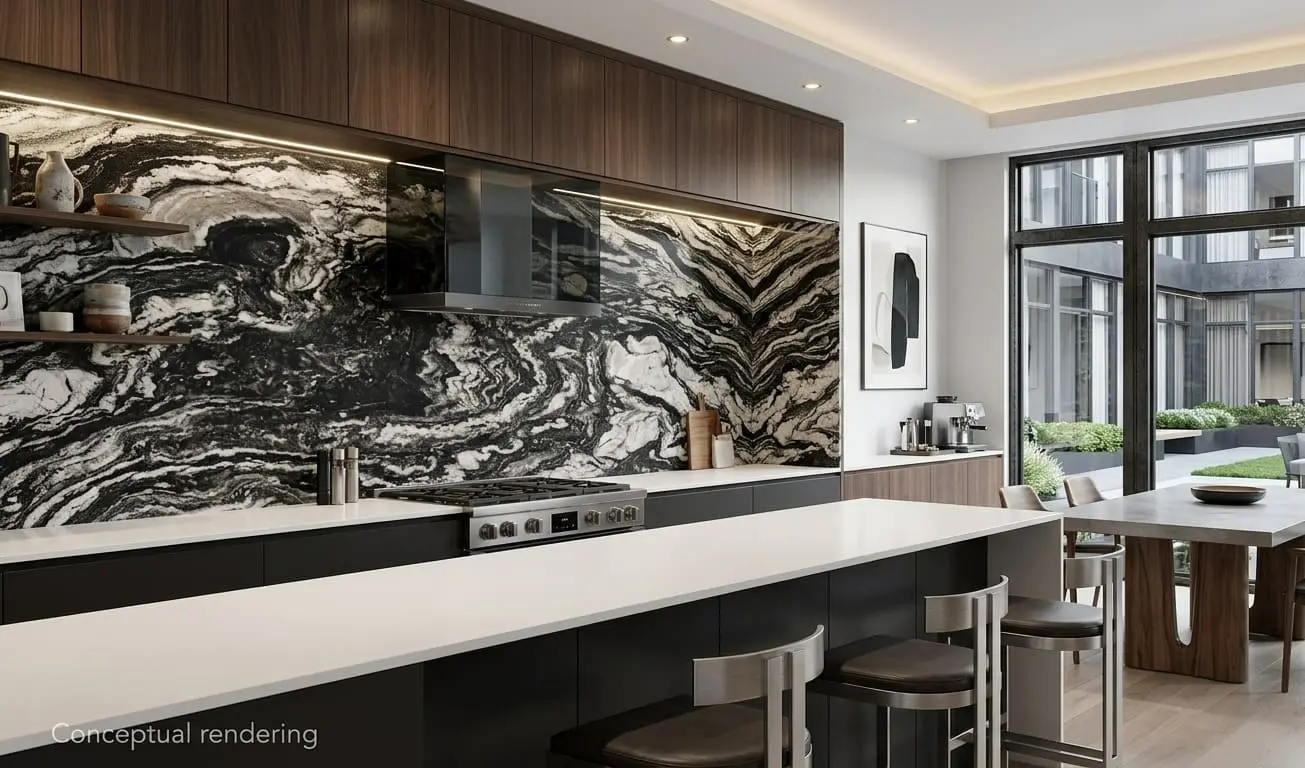
4. Granite Slabs
Granite has been a fixture in residential kitchen design for decades, and its continued presence reflects practical performance rather than trend alone. The material is known for its hardness and its ability to hold up well in kitchen environments when properly maintained. Each slab has natural variation in pattern and mineral composition, which gives granite backsplashes a visual depth that can feel grounded and substantial. For broader context on how granite compares to other common kitchen stone surfaces, This Old House offers a useful reference that puts granite's characteristics alongside other material options.
The surface is strong, but edges and corners require extra care. Granite is generally considered more resistant to surface scratching than softer stone options, but careful handling near finished edges remains good practice. The material offers good resistance to wear, but long-term performance depends on maintenance, including periodic resealing based on the specific stone and its porosity level.
Granite can work well in kitchens with wood cabinetry, earthy countertop tones, or traditional design schemes. Its natural texture and tonal range allow it to contribute to the overall composition of a space without necessarily competing with other strong design elements. If you would like to see granite slabs in person, our showrooms in Reno, Minden, Sacramento, and Fernley carry a rotating selection from our live inventory.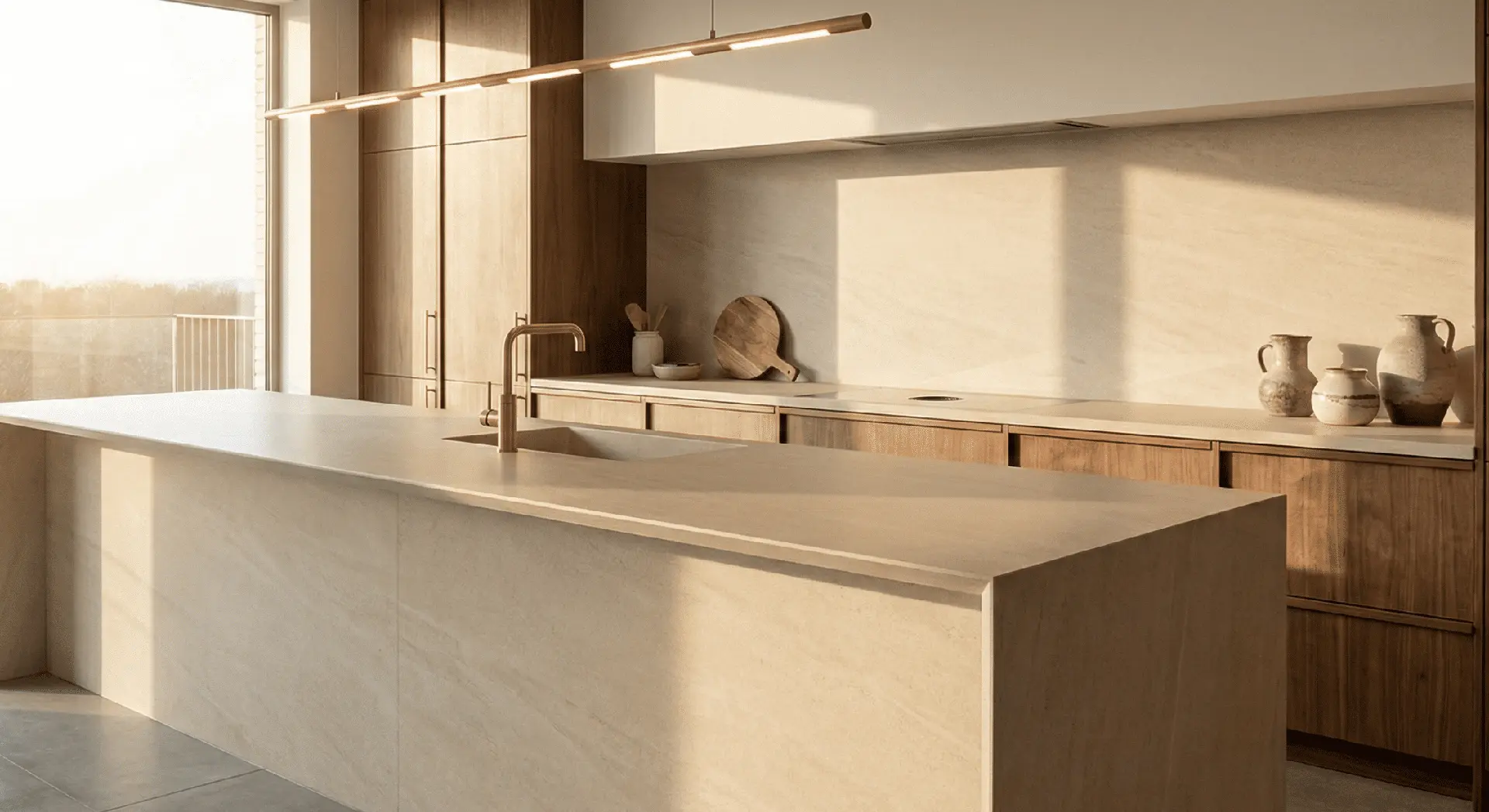
5. Sintered Stone Slabs
Sintered stone is a relatively newer category in kitchen and interior design, produced by applying extreme heat and pressure to natural mineral compounds to create a dense, uniform surface. The result is a material that can carry many of the visual qualities associated with natural stone while offering performance characteristics that may differ from those of quarried materials, though results will vary by product, finish, and application.
The slab is designed for high-use areas, but misuse can still cause damage. Sintered stone is often described as resistant to scratching, staining, and UV exposure, but performance may vary by color, finish, and installation conditions, and care instructions should always be followed. The surface is suitable for food preparation areas, but a cutting board is always recommended regardless of the material's hardness.
Sintered stone slabs are available in large formats that can allow for backsplash coverage with minimal visible joints. This makes them a strong candidate for contemporary and minimalist kitchen designs where clean, uninterrupted surfaces are a primary aesthetic goal.
How to Choose the Right Backsplash Slab
Selecting among these five options comes down to a few practical considerations. The first is the visual relationship between the backsplash and the existing elements in the kitchen. A space with a heavily patterned countertop often reads best with a simpler, more restrained backsplash material. A kitchen with plainer surfaces can generally absorb more natural variation and movement from the slab without feeling visually overloaded.
The second consideration is maintenance expectations. Porcelain and sintered stone are generally less reactive than natural stone options. Marble and quartzite benefit from attentive upkeep and periodic sealing. Granite tends to sit between these two ends, offering strong everyday performance with a relatively straightforward maintenance routine when properly cared for.
The third is scale. Full-height backsplash applications that run from countertop to upper cabinet have different visual requirements than a standard backsplash band. Larger, uninterrupted slab surfaces can emphasize veining and natural movement, which may be a strong design asset or an overwhelming element depending on the rest of the kitchen's direction.
You can book an appointment to work through these considerations with someone who understands the material range and can guide the decision based on your specific kitchen layout, existing finishes, and long-term expectations. If you would prefer to get the process started remotely, our slab quote request page makes it straightforward to submit your details and receive a response.
Conclusion
A backsplash slab does quiet but meaningful work in any kitchen. It protects the wall, anchors the design, and carries a significant share of the room's visual identity. Whether you are drawn to the refined character of marble, the natural warmth of quartzite, the consistency of porcelain, the grounded presence of granite, or the clean surface of sintered stone, each of these materials brings something distinct to the space.
Nova Tile and Stone carries a curated live slab inventory across all of these material categories. Visit our showrooms to see the slabs in person, or check our overstock sale for available options at reduced inventory pricing.
Frequently Asked Questions
Porcelain and sintered stone slabs are often considered among the more practical choices for kitchen backsplash use because both materials are non-porous and generally straightforward to maintain. Natural stone options like quartzite and granite can also perform well in kitchen environments, but each application should be evaluated individually based on the specific stone, finish, sealing, and daily use conditions.
Marble can perform well as a kitchen backsplash when it is properly sealed and maintained. The surface tends to be more sensitive to acidic substances than harder stone or porcelain alternatives, so spills should be addressed promptly. It can be a suitable choice for many kitchens, but the right finish, sealing schedule, and maintenance habits matter for preserving its appearance over time.
Quartzite is a natural metamorphic rock with organic variation in tone and veining, while porcelain is a manufactured material engineered for surface consistency. Quartzite generally benefits from periodic sealing and careful spill management, whereas porcelain is non-porous and tends to require less reactive day-to-day maintenance. Both can be suitable for backsplash applications, but they suit different design priorities and upkeep preferences.
Sintered stone is produced by applying extreme heat and pressure to natural mineral compounds, resulting in a dense surface that differs structurally from quarried stone and standard porcelain. It is often described as resistant to scratching and staining, but performance can vary by color, finish, and installation conditions. Care instructions should always be followed regardless of the material's stated characteristics.
Seeing a slab in person allows you to assess its actual color, veining, and surface movement under your kitchen's specific lighting before making a final decision. Photography often flattens the natural depth and tonal variation of stone, and comparing the slab directly against your existing cabinetry and countertop finishes helps confirm whether the combination works the way you expect it to.