Titanium Granite is a natural stone quarried in Brazil with a dark background and sweeping movement in shades of gray, black, gold, cream, and ivory. It is a highly durable surface that resists heat, scratches, and daily wear, making it a practical and striking choice for kitchen countertops, bathroom vanities, and beyond. We are direct stone importers with slab inventory across our showrooms in Northern Nevada and Northern California, where our commission-free design team can help you find the right slab for your project.
This guide covers everything you need to know about Titanium Granite: what it is, how it looks, what finishes are available, how to care for it, and which design styles it suits best.
What Is Titanium Granite?
Titanium Granite is a natural stone from Brazil, one of the world's most prolific sources of high-quality granite. It is technically classified as a migmatite, a term geologists use for a stone formed from a combination of molten and solid rock. During formation deep within the Earth's crust, some minerals reached temperatures high enough to partially melt and recrystallize, while others remained solid. The result is a stone with the rich, irregular movement that makes Titanium Granite so visually distinctive.
The stone is composed primarily of feldspar, quartz, and biotite mica, with the interplay of these minerals creating its characteristic color palette of black, charcoal, cream, ivory, and warm gold. Some slabs lean darker with subtle gold movement, while others feature broader ivory and gray clouds across the surface. Because Titanium is a natural stone, no two slabs are exactly alike, and the variation from slab to slab is part of what makes it appealing for homeowners who want a one-of-a-kind surface.
One important note when selecting Titanium Granite: pay attention to mica content when viewing slabs. Areas with heavy mica concentration can appear flaky and are softer than the rest of the stone. A knowledgeable supplier will help you identify slabs with well-balanced mineral distribution so your finished surface performs consistently over time.
Color and Appearance
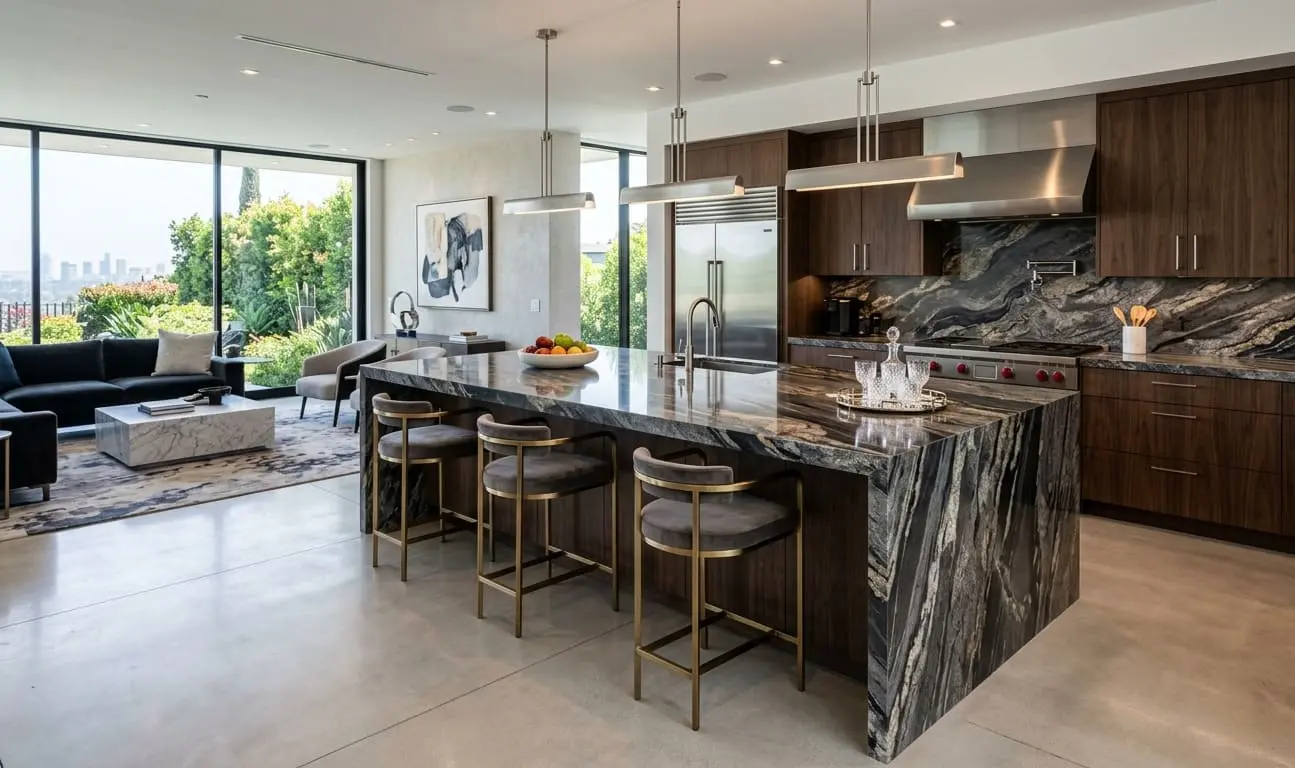
Titanium Granite's most recognized look is a deep black or charcoal base with dramatic veins and swirls of cream, ivory, and metallic gold. The movement in the stone creates the impression of liquid metal flowing through a dark landscape, which is where the name draws its character.
There is some variation within the Titanium family. Standard Titanium slabs tend to have a classic dark base with bold light movement. White Titanium slabs present a black base with white and lighter gray veining, offering a high-contrast graphic look. Gold-forward slabs feature warmer tones with more pronounced amber and honey hues running through the stone.
This range of variation means Titanium Granite works across a surprisingly wide spectrum of kitchen and bath palettes. It pairs naturally with white and off-white cabinetry, where the contrast between the dark stone and light cabinets creates a dramatic focal point. It also works well with warm wood tones, charcoal, and deep navy cabinetry, where the stone's own tones echo and complement the surrounding palette. For guidance on pairing your stone with cabinetry and surrounding finishes, our commission-free design consultants at our Reno, Sacramento, Minden, and Fernley showrooms are available to walk through your options in person.
Finish Options for Titanium Granite
The finish you choose for a Titanium Granite slab will significantly affect both its appearance and its everyday performance. There are two primary finish options worth understanding.
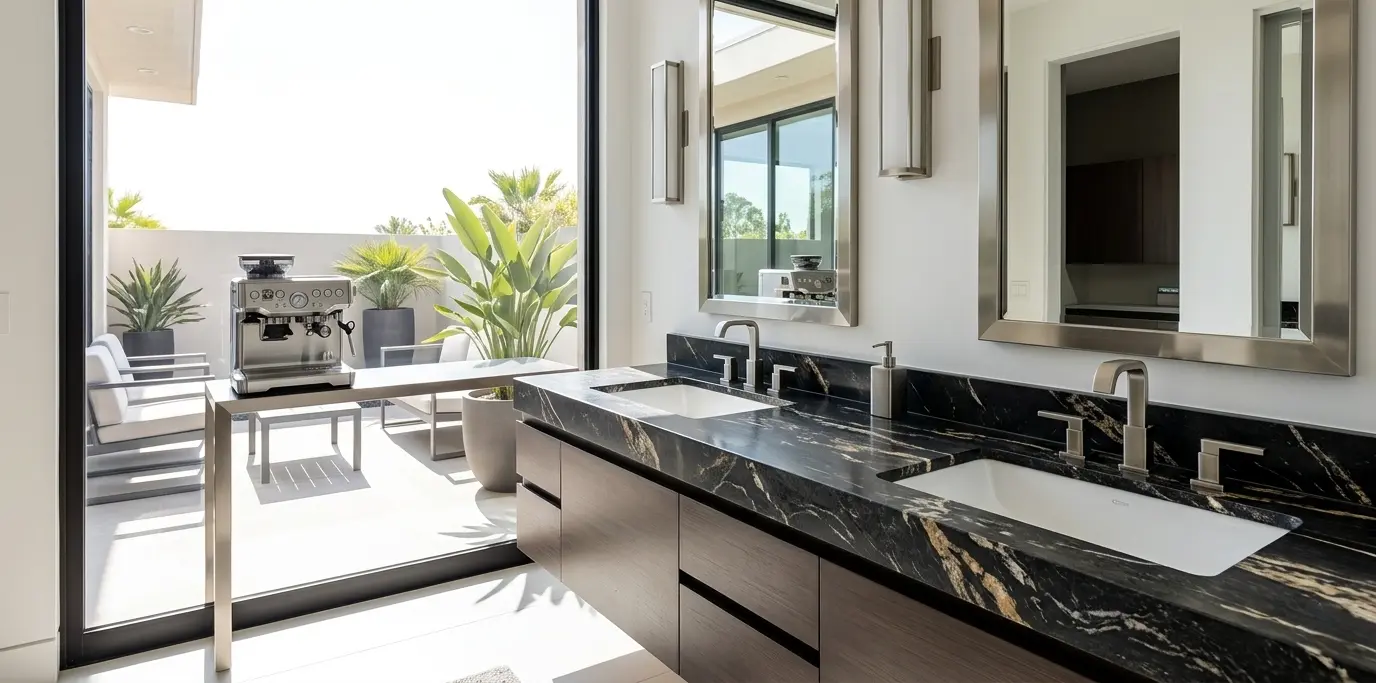
Polished: A polished finish produces a smooth, reflective surface that brings out the depth and richness of the stone's color. The dark background of Titanium Granite intensifies under a polished surface, and the metallic and ivory movements become more luminous. The trade-off is that dark polished granite shows fingerprints, smudges, and water spots more readily than lighter stones. With regular wiping and proper sealing, this remains manageable, but it is worth considering if your kitchen sees heavy traffic.
Leathered: A leathered finish involves texturing the surface of the stone to create a tactile, matte quality reminiscent of natural leather. This process softens the reflectivity of the surface, which reduces fingerprint visibility and gives the stone a more casual, organic feel. Leathered Titanium Granite is particularly popular in transitional and rustic kitchen designs where a less formal surface character is desirable. One consideration with leathered granite is that the texturing process can slightly open the stone's pores, making proper sealing even more important. According to Fine Homebuilding's guide to natural stone countertops, leathered stone finishes have grown in popularity as homeowners seek surfaces that feel less formal and more tactile.
Both finishes are available in Titanium Granite slabs, and the right choice depends on your design goals, maintenance preferences, and how the surface interacts with the lighting in your space. We encourage you to view both options in person at our granite and natural stone slab gallery before making a final decision, as the difference in appearance and feel is significant.
Durability and Performance
Titanium Granite is a dense, hard natural stone that performs well in demanding environments. Granite in general scores between 6 and 7 on the Mohs hardness scale, making it highly resistant to scratching from everyday kitchen tools and utensils. Unlike softer stones such as marble or travertine, granite does not require the same level of protective caution during daily use.
Titanium Granite handles heat well. Placing a warm pot or pan on the surface briefly is unlikely to cause damage, though we always recommend using trivets or hot pads as a best practice to protect the stone's seal and surface integrity over the long term. This Old House notes that while granite is heat-tolerant, thermal shock from extreme or sudden temperature changes can affect the stone over time.
The stone's density also makes it resistant to bacteria harborage when properly sealed, as a well-maintained seal prevents liquids from penetrating the surface. Titanium Granite works equally well indoors and outdoors, making it suitable for outdoor kitchen countertops and bar tops in addition to interior applications.

Sealing and Maintenance
Like all natural granite, Titanium Granite requires periodic sealing to protect it from staining. Most granite countertops benefit from resealing once a year, though the actual frequency depends on how heavily the surface is used and how porous the specific slab is. A simple water absorption test will tell you when it is time to reseal: place a small amount of water on the surface, and if it absorbs within a few minutes rather than beading up, the seal needs refreshing.
For daily care, mild dish soap and warm water are all you need. Avoid acidic cleaners, vinegar, citrus-based products, and abrasive scrubbers, as these can degrade the seal and dull the surface over time. Wipe up spills quickly, especially oils and dark liquids, to prevent staining.
When resealing, make sure the space is well-ventilated. The CDC/NIOSH has published guidance on silica dust exposure and stone surface work, and proper ventilation is recommended when working with stone sealer products in enclosed spaces. Always follow the manufacturer's instructions for the specific sealer you use.
Polished Titanium Granite will show smudges and water spots more than lighter stones or leathered finishes. A dry microfiber cloth is useful for buffing the surface to a streak-free result after cleaning.
Design Applications
Titanium Granite's bold color and movement make it a natural statement surface. It is most commonly used as a kitchen countertop or island top, where its dramatic appearance becomes the focal point of the room. It also performs well in bathroom vanity applications, fireplace surrounds, bar tops, and exterior surfaces.
Because the stone commands visual attention, many designers recommend using it selectively rather than throughout an entire kitchen. A Titanium Granite island paired with a quieter perimeter countertop creates a layered, dynamic look without overwhelming the space. We have covered this design approach in detail in our guide to mixing countertop materials.
For homeowners who prefer a more cohesive look, Titanium Granite can work on all countertop surfaces when balanced by simpler cabinetry, minimal backsplash patterns, and neutral flooring. The key is letting the stone do the visual work while keeping surrounding elements restrained.
Supporting local stone suppliers when sourcing natural stone ensures you can view full slabs rather than small samples before committing.
Conclusion
Titanium Granite is one of the more distinctive slabs in the natural stone world. Its deep, dark background and sweeping movement in gold, cream, and charcoal create a surface that feels both timeless and bold. Backed by granite's well-established durability, it is a practical choice as well as a beautiful one. Whether you are drawn to a polished, reflective surface or the more organic character of a leathered finish, Titanium Granite offers options that suit a wide range of design directions. We carry granite slabs across our showrooms and invite you to come in, view full slabs in person, and speak with our design team about how Titanium Granite could work in your home.
Frequently Asked Questions
Is Titanium Granite a true granite?
Titanium Granite is technically classified as a migmatite, a mixed igneous and metamorphic rock formed when some minerals partially melted during the stone's formation deep in the Earth's crust. In the stone industry, it is marketed and sold as granite, and it performs comparably to granite in terms of hardness, durability, and heat resistance.
What colors does Titanium Granite pair well with?
Titanium Granite pairs naturally with white, off-white, and cream cabinetry, where the contrast between the dark stone and light wood creates a dramatic effect. It also works well with warm wood tones, charcoal, navy, and deep greens. Its warm gold undertones give it flexibility across both cool and warm palette combinations.
Does Titanium Granite need to be sealed?
Yes. Like all natural granite, Titanium Granite requires periodic sealing to protect against staining. Most surfaces benefit from resealing annually, though usage and porosity levels vary by slab. A water absorption test is a reliable way to determine when the seal needs refreshing.
What is the difference between polished and leathered Titanium Granite?
A polished finish is smooth and highly reflective, intensifying the stone's depth and color but showing fingerprints and water spots more readily on the dark surface. A leathered finish is textured and matte, reducing reflectivity and fingerprint visibility while giving the stone a more organic, tactile character. Leathered surfaces require diligent sealing because the texturing process can open the stone's pores slightly.
Can Titanium Granite be used outdoors?
Yes. Titanium Granite performs well in outdoor environments, including outdoor kitchen countertops, bar tops, and other exterior applications. Its density and hardness make it resistant to the elements, and it tolerates freezing temperatures well. Proper sealing is still recommended for outdoor applications to maintain resistance to moisture penetration over time.