What Makes Titanium Granite Finishes Worth Understanding?
Choosing a surface finish for your natural stone slabs is one of the most consequential decisions in any kitchen or bathroom project. Titanium granite, with its dramatic silver veining and layered tonal depth, looks entirely different depending on how it is treated. The same slab can read formal and luxurious or relaxed and organic, based on finish alone.
Polished, honed, and leathered are the three standard surface treatments for titanium granite. Polished delivers a reflective, glass-like sheen. Honed creates a flat, matte appearance. Leathered adds a brushed, textured quality with subtle depth. Each one changes how the stone performs, how it feels underfoot, and how much attention it demands from you on a daily basis.
By the end of this guide, you will have a clear picture of which finish belongs in your space and what to expect from each one over time.
Why Your Finish Choice Shapes Every Countertop, Kitchen Island, and Bathroom Vanity
The surface treatment on your granite does more than affect its appearance. It changes pore exposure, stain resistance, slip resistance, light reflection, and long-term maintenance requirements. A finish that works beautifully on a formal bathroom vanity can become frustrating on a heavily used kitchen island.
Here is a quick breakdown of what each finish means in practice:
- Polished surfaces reflect overhead lighting, amplify the stone's depth, and create a high-end visual impact.
- Honed finishes reduce glare, soften the stone's visual weight, and integrate easily with mixed material palettes.
- Leathered textures increase surface tactility, reduce visible smudging, and add a handcrafted character to countertops.
- Each finish interacts differently with cooking oils, cleaning products, and water over time.
- Wet environments like bathroom vanities require a tighter seal than dry kitchen zones.
Design professionals and architects frequently discuss finish performance at forums like the International Surface Event, where material science and aesthetics converge. For installations in commercial or high-traffic residential settings, the Tile Contractors' Association of America recommends working with certified specialists who understand how each finish behaves under real conditions.
Understanding the differences between finishes early in your project saves both money and regret.
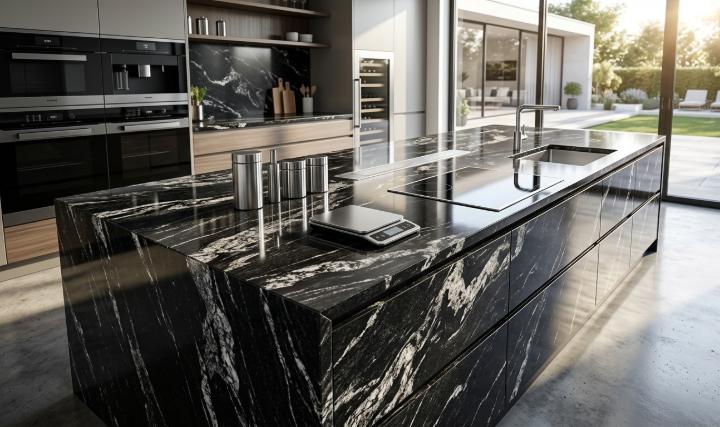
Design Applications: How Each Finish Performs in Real Spaces
Titanium granite adapts beautifully across rooms and design styles. The three finish options each serve specific aesthetic and functional roles. Let us look at how they translate in the spaces where they matter most.
Polished Titanium Granite on a Kitchen Island
A polished finish transforms a kitchen island into a room's anchor. The mirror-like surface catches pendant lighting and reflects the stone's metallic veining at full intensity. Titanium granite's charcoal and silver palette becomes especially dramatic under a polished treatment.
That said, polished granite does show fingerprints, water drops, and minor smudges more readily than any other finish. In a busy kitchen, daily wiping is part of the routine. The payoff is a surface that never stops looking expensive.
Pairing a polished island with flat-front cabinetry or concrete-look tile creates a layered contrast that feels intentional and refined. You can explore current slab availability to confirm which titanium granite options are in stock in polished.
Honed Granite for a Sophisticated Bathroom Vanity
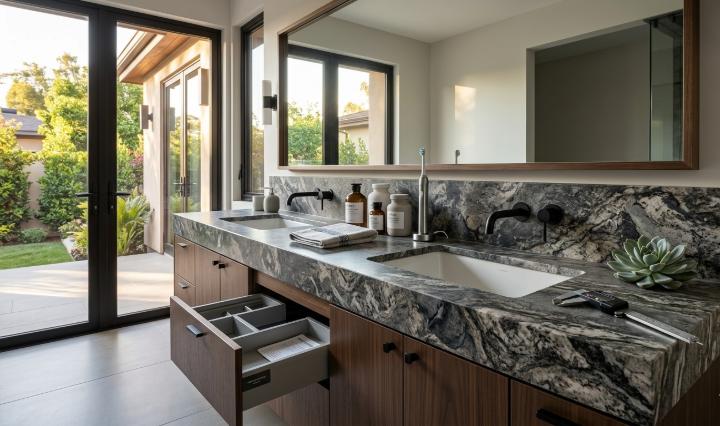
Honed titanium granite suits bathroom vanities where a quieter, more meditative aesthetic is the goal. The flat surface absorbs light rather than reflecting it, which creates a grounded, spa-like calm that pairs well with warm wood tones, white plaster walls, or brushed bronze fixtures.
Honed surfaces are more porous than polished, which means consistent sealing is essential in wet zones. A properly sealed honed vanity top resists moisture effectively and rewards you with a surface that feels both natural and refined. The tactile quality of honed stone is also noticeably pleasant underhand, something photos cannot fully communicate.
Leathered Granite for Countertops With Texture and Personality
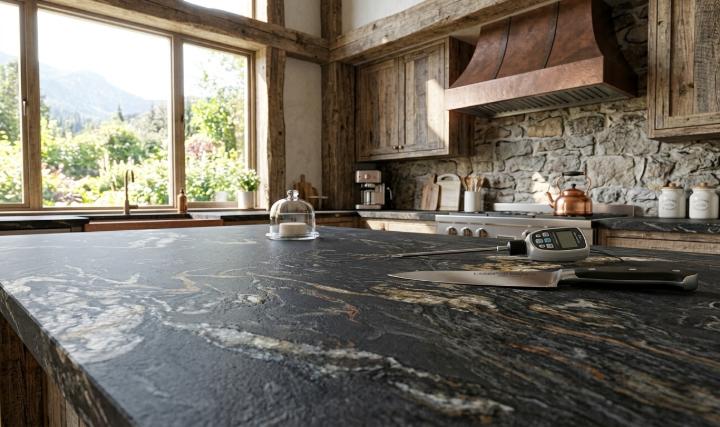
Leathered countertops suit kitchens and bar areas where the design leans industrial, rustic, or transitional. The brushing process used to achieve a leathered finish partially closes surface pores, which actually improves resistance to staining compared to honed. The subtle ridges and variation across the surface create a handmade quality that polished stone cannot replicate.
During meal prep, leathered surfaces forgive crumbs and light spills more graciously. Smudges and fingerprints are far less visible, which makes this finish a practical favorite for high-use kitchens.
Practical tip: Leathered granite is also a strong candidate for outdoor kitchen countertops in areas where UV exposure and temperature swings are concerns.
Finish Comparison at a Glance
Finish | Sheen Level | Pore Exposure | Best Application | Maintenance Frequency |
Polished | High gloss | Low | Formal kitchens, feature vanities | Daily wiping |
Honed | Matte | Moderate | Primary bathrooms, transitional kitchens | Regular sealing |
Leathered | Low texture | Low to moderate | Casual kitchens, outdoor counters | Occasional sealing |
Pros and Cons of Each Titanium Granite Finish
Polished
- Pros: Maximum visual depth, easy to wipe clean on flat surface, dramatic light interaction
- Cons: Fingerprints and water marks show clearly, can feel cooler and harder underfoot
Honed
- Pros: Elegant matte appearance, hides minor surface scratches, softer tactile quality
- Cons: Higher porosity requires more frequent sealing, especially near sinks
Leathered
- Pros: Conceals smudges naturally, strong stain resistance, rich tactile character
- Cons: Textured surface traps fine debris, harder to achieve a fully dry wipe
How to Choose the Right Finish: A 4-Step Process
Selecting a surface treatment is straightforward when you approach it methodically.
- Identify your primary use case. Kitchen island, bathroom vanity, and laundry countertops each face different levels of moisture, impact, and cleaning frequency.
- Request physical samples. Viewing a slab under your actual lighting conditions, both natural and artificial, reveals things a screen image never can.
- Evaluate your cleaning routine honestly. Polished surfaces reward those who enjoy maintaining a pristine surface. Leathered and honed suit a more relaxed maintenance approach.
- Confirm sealing requirements with your supplier. Climate, humidity levels, and the specific stone batch all affect how often resealing is needed.
After installation, regular care is straightforward. Bob Vila's granite maintenance guide covers the cleaning process clearly for all three finish types.
Where to Source Premium Natural Stone Slabs With Confidence
Finding the right supplier matters as much as selecting the right stone. A supplier who offers hands-on guidance, physical samples, and a broad inventory reduces both the stress of the decision and the risk of costly mistakes after the fact.
This stone design resource carries titanium granite in polished, honed, and leathered finishes, with knowledgeable staff who can match you with the right slab for your project scope, timeline, and style direction. Samples are available so you can evaluate the finish in your actual space before committing.
Architects, contractors, and interior designers working on multiple projects can open a trade account for priority inventory access, trade pricing, and dedicated project support. If you prefer evaluating material in person, use the showroom locator to find a location near you.
Showrooms are currently serving clients in Reno, Minden, Fernley, and Sacramento, each with displays designed to show you how titanium granite performs under realistic lighting conditions.
Conclusion
Titanium granite rewards careful decision-making. The finish you select shapes everything from morning light reflections on your bathroom vanity to how your kitchen island holds up during a dinner party. Polished delivers maximum drama, honed offers understated refinement, and leathered brings texture and everyday resilience.
All three finishes work across countertops, islands, and vanity surfaces when the selection is guided by both lifestyle and aesthetic goals. Natural stone slabs of this quality are a long-term investment, and the finish is the layer that determines how that investment performs for decades.
Browse the full collection of stone slabs and connect with a design specialist to find the finish that fits your vision and your daily life.
Frequently Asked Questions
Is polished titanium granite harder to maintain than leathered?
Yes. Polished surfaces show fingerprints, water marks, and minor smudges far more readily. Leathered finishes naturally conceal these blemishes, making them a lower-maintenance choice for busy kitchen environments.
Can I install honed titanium granite on a kitchen island?
Absolutely. Honed granite works well on a kitchen island, particularly in transitional or modern farmhouse kitchens. Consistent sealing is important to protect against staining from cooking oils and acidic foods.
Which titanium granite finish suits a bathroom vanity best?
Both honed and leathered finishes suit a bathroom vanity well. Honed offers a cleaner, spa-like appearance. Leathered adds organic texture and character. Both require proper sealing to perform reliably in wet environments.
How often do titanium granite countertops need resealing?
Sealing frequency depends on the finish and usage level. Polished countertops typically need resealing every one to two years. Honed and leathered surfaces may benefit from more frequent sealing, especially in high-moisture bathrooms.
Does the surface finish change the cost of titanium granite?
Yes. Finishing processes vary in labor intensity. Leathered finishes generally carry a slight price premium over polished due to the additional brushing process. Honed pricing typically falls between the two depending on the supplier.