Quartzite is a natural metamorphic stone formed when sandstone recrystallizes under intense geological heat and pressure deep within the earth's crust. The result is one of the hardest, densest stones available for surfaces, prized for its polished, honed, leathered, and specialty finishes. It performs across floors, walls, fireplace surrounds, and outdoor spaces, and its UV resistance makes it a reliable material for both interior and exterior applications.
What sets it apart is not just how it looks, but how broadly it performs. It transitions effortlessly from interior floors and feature walls to fireplace surrounds and sun-drenched outdoor terraces. At our tile and stone showrooms, a range of surface finishes and slab options are available to suit virtually any design vision, and the guarantee that no two slabs are identical makes quartzite one of the most compelling choices in natural stone surfaces.
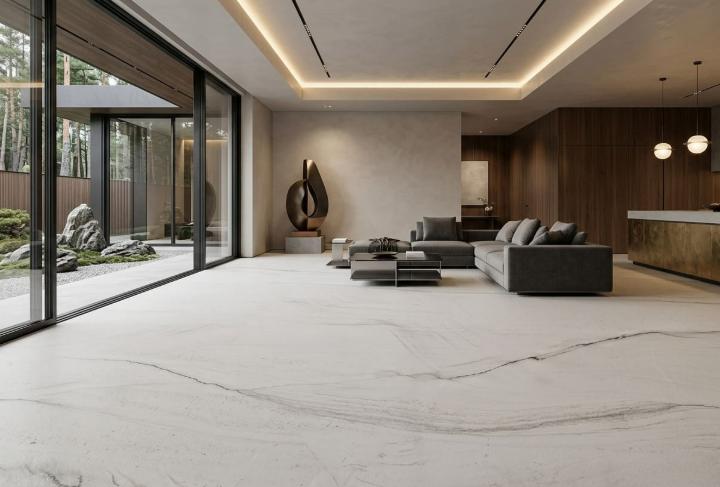
Millions of Years in the Making: What Is Quartzite?
Quartzite begins as sandstone, a sedimentary rock composed primarily of quartz grains. Over geological time, tectonic compression subjects those grains to extraordinary heat and pressure, causing them to fuse and recrystallize into a surface far harder and denser than the original material. The result is a metamorphic rock that sits among the most durable natural stones available for residential and commercial use.
That hardness translates directly into scratch resistance and long-term resilience under foot traffic, weather, and daily use. But durability is only part of the story. Quartzite's visual range spans soft whites, warm creams, layered grays, subtle blues, and earthy taupes, all shaped by the unique mineral composition of the original stone. Iron oxides produce pinks and reds, while other trace minerals introduce greens, yellows, and blues. The veining and movement within each slab are completely unrepeatable, which means every project receives a surface that is, by definition, one of a kind.
Choosing quartzite means choosing a material shaped by geological forces rather than a production line, and that distinction shows in the final result.
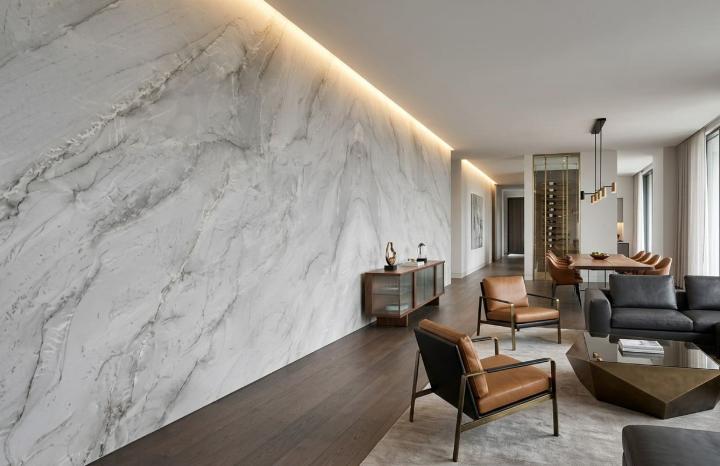
Four Ways to Wear It: Finish Options That Change Everything
The finish applied to a quartzite slab does more than alter its appearance. It changes the texture underfoot, the way light moves across the surface, and the overall atmosphere of the room. Understanding each option is essential to making the right choice. For a deeper breakdown of how different stone finishes compare across material types, this guide on selecting the ideal stone finish offers a helpful reference point.
Polished: The Mirror Effect
A polished quartzite surface is smooth, luminous, and highly reflective. The crystalline structure of the stone responds to polishing exceptionally well, producing a high-gloss finish that amplifies color depth and highlights every detail of the veining. In spaces where brightness and visual expansion are priorities, polished quartzite delivers a dramatic, gallery-worthy result.
Honed: Quiet Sophistication
Strip away the reflectivity and what remains is a smooth, low-sheen surface with a calm, understated presence. Honed quartzite reads warmer and more approachable than its polished counterpart, making it a natural fit for spaces where a refined but relaxed aesthetic is the goal. It also tends to be more forgiving of everyday marks and fingerprints compared to polished versions.
Leathered: Texture You Can Feel
The leathered finish is produced by running diamond-tipped brushes across the stone's surface, creating a softly textured, matte result with an artisan quality that is immediately noticeable. It preserves the stone's natural color more faithfully than polishing and introduces a tactile depth that distinguishes a room at first glance. For fireplace surrounds and feature walls where warmth and character are the priority, leathered quartzite is difficult to surpass.
Specialty: Built for a Specific Vision
For projects that call for something beyond the standard range, specialty finishes open up further possibilities. Brushed, sandblasted, and other custom surface treatments can be applied to produce a quartzite surface tailored precisely to a specific design direction. Our free design consultation is the ideal starting point for identifying which finish serves your vision most effectively.
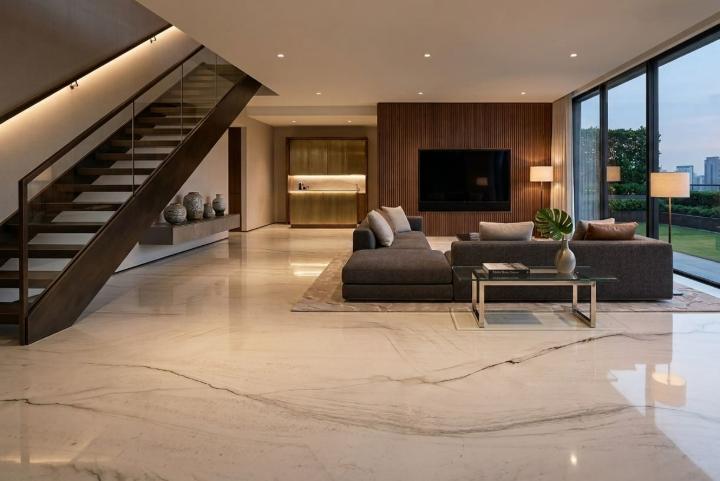
From the Ground Up: Where Quartzite Truly Belongs
Floors That Last a Lifetime
Quartzite's hardness makes it exceptionally well-suited to flooring. It withstands heavy foot traffic, resists surface wear, and maintains its appearance over years of use in ways that softer stones simply cannot match. Large-format slabs create a seamless, expansive look across open floor plans, while smaller formats introduce structure and visual rhythm. Browsing our natural stone slab inventory is a practical first step in identifying which slab weight, tone, and veining pattern suits the scale of your space.
Walls That Become the Focal Point
When quartzite moves from the floor to the wall, it transforms from a functional surface into a statement piece. The stone's layered veining and natural movement draw the eye across a room and hold attention in a way that painted or standard tiled walls rarely achieve. Whether used as a full accent wall, a bathroom feature, or an entryway cladding, vertical applications allow quartzite's visual character to take center stage without the wear considerations of high-traffic floors.
Fireplaces Worth Gathering Around
Few material choices frame a fireplace as powerfully as natural stone. Quartzite brings both the heat tolerance and the organic drama that a well-designed fireplace surround demands. The stone's natural patterning complements the warmth of an open fire in a way that manufactured surfaces simply cannot replicate. Leathered and honed finishes are particularly popular for this application, offering a grounded, tactile presence that polished surfaces do not always convey.
Outdoors: Built to Face the Sun
UV resistance is one of quartzite's most practical advantages for exterior applications. Many natural stones shift in color or degrade structurally with extended sun exposure, but quartzite holds its appearance reliably over time. This makes it a sound, long-term investment for outdoor patios, pool surrounds, garden pathways, and exterior wall cladding. Its dense composition also resists moisture absorption and handles temperature fluctuation well, addressing two of the most common challenges in outdoor stone applications. The Natural Stone Institute provides helpful guidance on long-term care for natural stone surfaces, which applies equally to exterior quartzite installations.
Finding Your Perfect Slab: What to Consider
Selecting the right quartzite begins with understanding the demands of the space. Lighter slabs with prominent gold or gray veining tend to create an airy, luminous quality that works especially well in interiors with natural light. Darker, earthier tones bring warmth and grounding to rooms where a more intimate atmosphere is the goal. For a broader look at how natural stone performs across different surface types, Fine Homebuilding's guide to natural stone countertops is a useful reference when weighing your options.
Finish selection should respond to the room's function as much as its aesthetics. High-gloss polished surfaces amplify light and visual depth in smaller or darker interiors, while matte and leathered options deliver texture and subtlety in spaces where sensory richness matters more than reflectivity.
Viewing slabs in person makes a significant difference when assessing how veining, tone, and finish interact under real lighting conditions. Our Reno showroom is a great place to start if you are in the area, or you can submit a slab quote request to get the conversation started remotely.
Stone That Endures: Why Quartzite Is Worth the Investment
There is a reason quartzite continues to appear in some of the most thoughtfully designed residential and commercial spaces. It offers the irreplaceable authenticity of a natural material alongside performance characteristics that hold up under real-world conditions. Whether the goal is a dramatic interior floor, a serene honed wall surface, a textured fireplace surround, or a UV-resistant outdoor terrace, quartzite rises to meet the brief with consistency and visual impact.
Working with specialists who understand both the material's capabilities and the nuances of each finish type ensures that every decision, from slab selection to surface treatment, serves the larger design vision. Trade professionals seeking dedicated support and access to our full slab collection can explore our trade account program for tailored service.
Conclusion
Quartzite occupies a unique position among natural stone materials. It delivers the geological authenticity and visual depth that only a true natural product can offer, while its range of finishes and application settings makes it broadly adaptable. From polished indoor floors to UV-resistant outdoor cladding, from fireplace surrounds finished in leather to feature walls given a refined honed surface, this stone responds to creative direction with consistency and character.
Understanding the distinctions between finish types, the performance expectations for each setting, and the aesthetic possibilities of different slab selections is the foundation of a successful quartzite project. Our design specialists are available for free consultations to ensure that every choice, from material to finish, serves your vision accurately and endures for years to come.
Frequently Asked Questions
Is quartzite a good choice for outdoor applications?
Yes, quartzite is well-suited to outdoor use. Its natural density and UV resistance allow it to retain color and structural integrity even under prolonged sun and weather exposure. It is commonly used for patios, pool surrounds, garden paths, and exterior wall cladding.
What is the visual difference between polished and honed quartzite?
Polished quartzite has a high-gloss, mirror-like surface that amplifies color depth and veining detail. Honed quartzite has a smooth but low-sheen finish that reads softer and more understated. The right choice depends on how much light reflection and visual intensity you want in the space.
Why is quartzite recommended for fireplace surrounds?
Quartzite handles heat well and brings a natural visual drama to fireplace settings that manufactured surfaces rarely match. Its organic patterning complements the warmth of fire, and finishes like leathered or honed add a tactile, grounded quality that suits the setting particularly well.
How does a leathered finish differ from a honed one?
Both finishes produce a matte result, but they are not identical. A honed surface is smooth and uniform with a quiet sheen, while a leathered surface has subtle texture created by mechanical brushing. Leathered finishes feel more artisanal and tactile, while honed finishes offer a cleaner, more refined look.
What finish options does quartzite come in?
Quartzite is available in polished, honed, leathered, and specialty finishes. Each produces a distinct visual and tactile result, and the best option depends on the room's function, lighting conditions, and overall design direction. A free design consultation can help clarify which finish fits your specific project.