A countertop should do more than look good on move-in day. Graphite marble countertops deliver a surface that strengthens the character of a room over years of daily use. Their deep charcoal base and organic veining create visual depth that engineered alternatives struggle to replicate at the same scale.
Many homeowners hesitate to choose natural marble because of maintenance assumptions. The reality is that properly sealed and cared-for graphite marble resists staining effectively, though prompt cleanup of acidic spills remains important. This post covers the financial, aesthetic, and functional reasons this stone holds its relevance across decades.
Readers will walk away with a clear comparison against competing materials, room-specific application strategies for kitchens, bathrooms, and bars, plus a step-by-step approach to selecting the right slab.
Why Graphite Marble Countertops Hold Their Worth
Natural stone carries a reputation for longevity that few surface materials can match. Graphite marble specifically benefits from its dark mineral base, which masks minor wear patterns that lighter stones tend to reveal. This characteristic alone extends the visual lifespan of the surface, though regular sealing supports that performance over time.
From a resale perspective, stone countertops consistently rank among the top features buyers seek during home tours. A polished graphite marble kitchen counter signals a level of material quality that prefabricated surfaces cannot communicate. The TCNA Handbook outlines industry standards for stone performance in residential settings.
Key Advantages at a Glance
- Heat tolerance: Marble handles warm cookware better than most engineered surfaces, but always use trivets to prevent thermal shock.
- Unique patterning: Every slab carries one-of-a-kind veining. No two countertops will look identical.
- Finish versatility: Available in polished, honed, leathered, and specialty finishes to suit different rooms.
- Multi-room continuity: The same slab color works in kitchens, bathrooms, and entertainment bars without clashing.
- Aging character: Marble develops a subtle patina over time. Some homeowners consider this an asset rather than a flaw.
Pros and Cons of Graphite Marble Slabs
Pros:
- Visually complex surface that improves under varied lighting
- Compatible with indoor, outdoor (covered), wall, floor, and fireplace applications
- Strong thermal mass keeps surfaces cool during food preparation
- Available in four finish types for different functional needs
Cons:
- Requires periodic sealing to maintain stain resistance
- Polished finishes show etching from acidic liquids if not cleaned promptly
- Not UV-rated, so outdoor placement should favor shaded or covered areas
- Softer than granite and quartzite, meaning cutting boards are essential
Where Graphite Marble Works Best in Kitchens, Bathrooms, and Bars
Kitchen Countertops and Islands
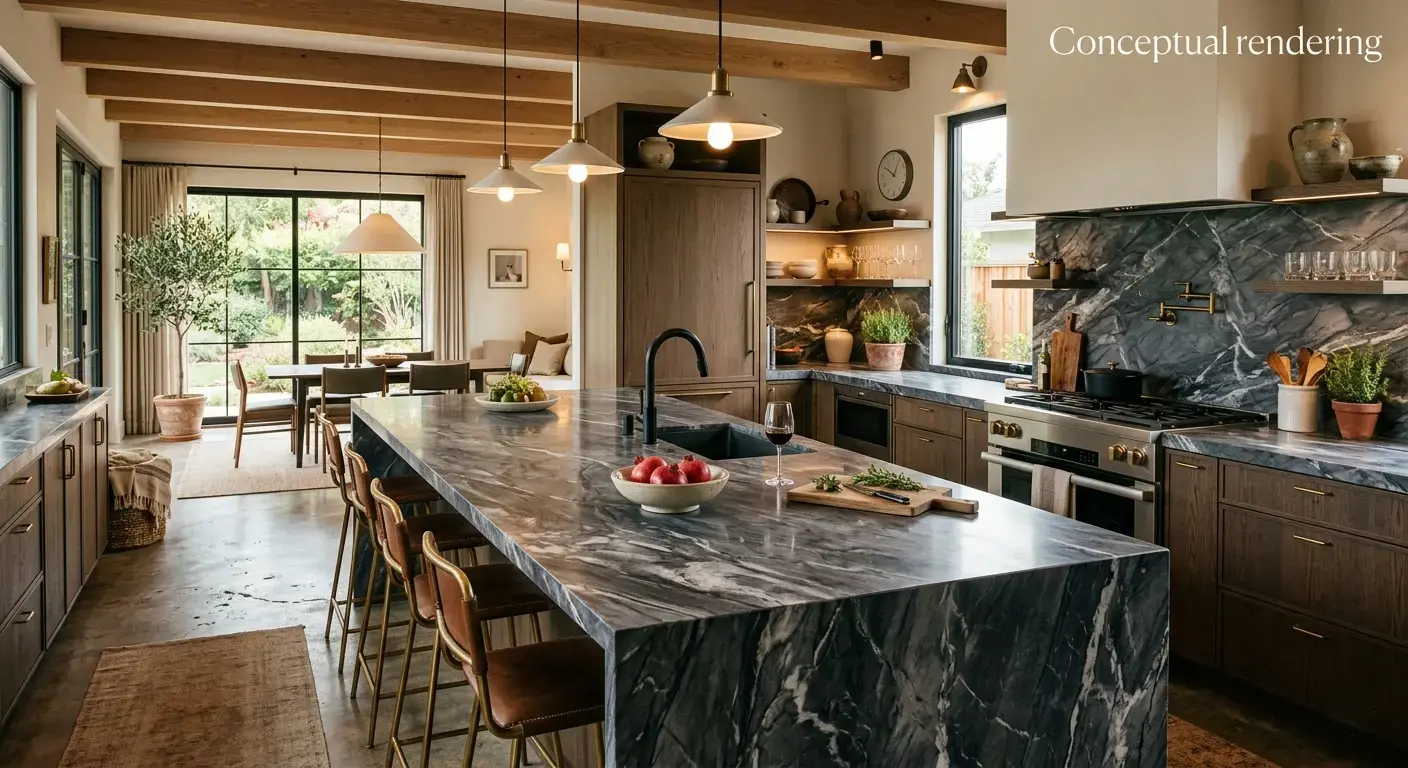
A graphite marble slab anchors a kitchen with authority. Its cool surface temperature makes it particularly effective for pastry preparation, where dough benefits from contact with a naturally cold surface. Honed or leathered finishes offer better grip and hide minor scratches more effectively than polished options in high-traffic cooking zones.
Pairing graphite marble with light cabinetry creates a strong contrast that draws the eye toward the countertop. Brass or brushed gold hardware complements the warm undertones hidden within the stone's gray layers. For those building a slab quote request, specifying the intended kitchen layout helps match veining direction to the counter's longest run.
Bathroom Vanities and Shower Surrounds
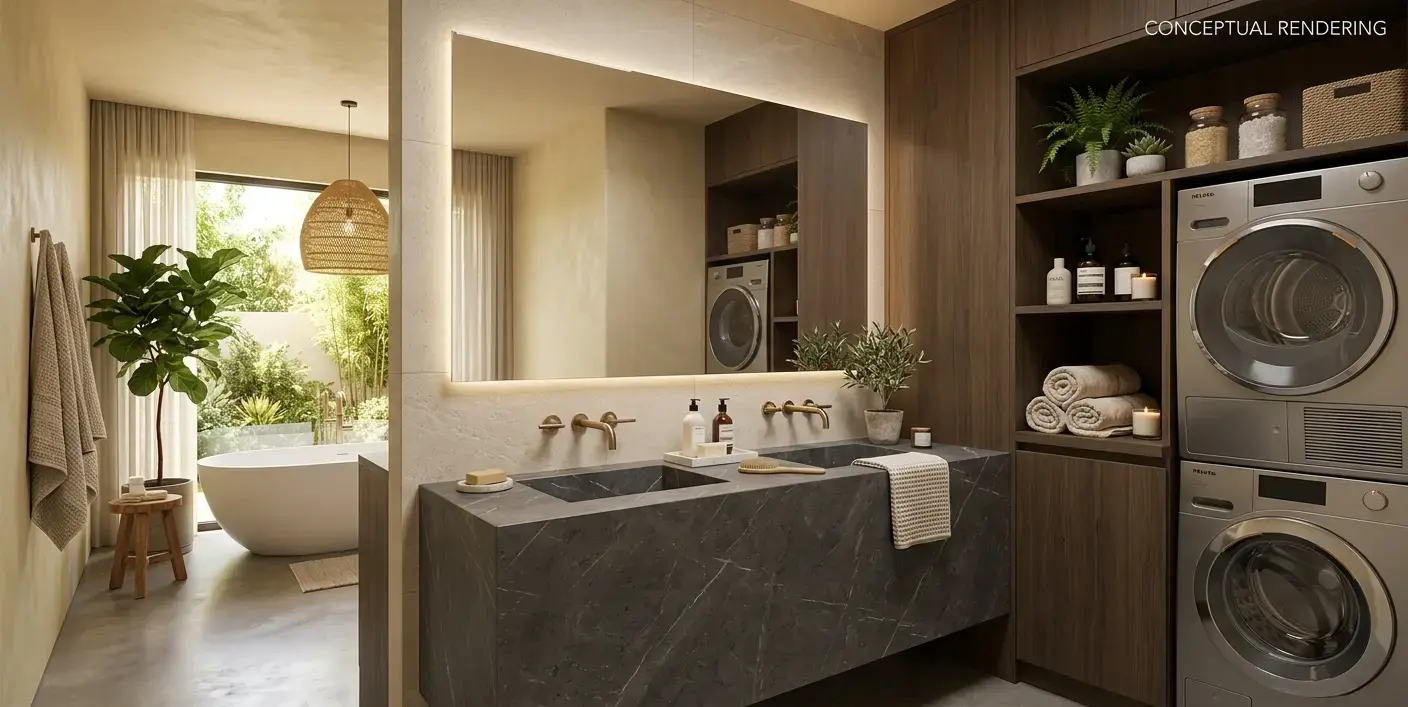
Bathrooms benefit from graphite marble's moisture tolerance when the surface is properly sealed. A polished vanity top in a powder room delivers a high-impact focal point without the upkeep demands of a full kitchen countertop. For shower wall cladding, a honed or leathered finish reduces slip risk and resists water spotting more effectively.
Designers attending the 2026 Dezeen events have highlighted dark natural stone as a continuing trend in spa-inspired residential bathrooms. A single bookmatched slab behind a freestanding tub creates mirror-image veining that becomes the room's defining feature.
Bar Tops and Entertainment Areas
Home bars and beverage stations put countertops under direct guest scrutiny. Graphite marble's dramatic surface pattern makes it a natural conversation piece. A leathered finish adds tactile interest while also improving resistance to fingerprints and condensation rings.
For trade professionals outfitting hospitality spaces, a trade account application streamlines slab procurement across multiple projects.
How To Select the Right Graphite Marble Slab
Comparison: Graphite Marble vs. Alternative Dark Countertop Materials
Feature | Graphite Marble | Black Granite | Dark Quartzite | Engineered Quartz |
Veining complexity | High | Low | Moderate | Manufactured |
Heat resistance | Strong (use trivets) | Strong (use trivets) | Strong (use trivets) | Moderate |
Scratch resistance | Moderate | High | Very High | High |
UV suitability | Not rated | Rated | Rated | Not rated |
Finish options | Polished, Honed, Leathered, Specialty | Polished, Honed, Leathered, Specialty | Polished, Honed, Leathered, Specialty | Polished, Honed, Specialty |
Outdoor use (covered) | Yes | Yes | Yes | No |
Fireplace surround | Yes | Yes | Yes | No |
The porcelain certification program at TCNA offers additional benchmarks for those comparing engineered porcelain slab alternatives.
Five Steps to Confident Slab Selection
- Define the application: Identify whether the slab will serve a kitchen, bathroom, bar, or multi-room project. Each space has different finish and performance requirements.
- Visit a showroom: Viewing slabs in person reveals color variation that screens cannot reproduce. The Reno showroom and Minden location both carry full-size graphite marble slabs.
- Choose the finish: Polished suits formal spaces like powder rooms and dining bars. Honed and leathered work better in kitchens and bathrooms where grip and stain concealment matter.
- Confirm slab dimensions: Measure the longest countertop run and verify the slab covers it without unnecessary seams. Larger slabs reduce joint lines and preserve veining continuity.
- Coordinate with your fabricator: Discuss edge profiles, cutout locations, and bookmatching options before the slab is cut.
Selecting Graphite Marble With Expert Support
Slab selection benefits from hands-on guidance, especially when matching veining patterns across large countertop runs. The showroom teams at Nova Tile's showroom locations walk clients through full-size slabs arranged under showroom lighting that approximates residential conditions.
Booking a showroom appointment ensures dedicated time with a stone specialist who can recommend finish types based on the intended room and usage level. This step eliminates guesswork and reduces the risk of selecting a finish that underperforms in its final setting.
For homeowners still narrowing their material options, browsing the full slab inventory online provides a starting point before committing to an in-person visit.
Conclusion
Graphite marble countertops reward homeowners who value surfaces that age with character rather than decline with use. The stone's density, finish flexibility, and visual complexity make it a strong candidate for kitchens, bathrooms, and entertainment bars where both performance and appearance matter.
Proper sealing, prompt spill cleanup, and the right finish selection are the three pillars that keep graphite marble looking sharp across decades. For those ready to evaluate slabs in person, Nova Tile's stone experts offer guidance at every stage of the selection process.
Frequently Asked Questions
How long do graphite marble countertops typically last?
With proper sealing and routine care, graphite marble countertops can perform well for 25 years or longer. Longevity depends on maintenance habits, the finish selected, and the level of daily use the surface receives.
Is graphite marble suitable for outdoor bar countertops?
Graphite marble can be placed outdoors in covered or shaded settings. However, marble is not UV-rated, so prolonged direct sun exposure may affect color stability over time. Covered patios and pergola bars are the best candidates for outdoor placement.
What finish is best for a graphite marble kitchen countertop?
Honed and leathered finishes tend to perform best in kitchens. They conceal minor scratches and etching more effectively than polished surfaces, and they provide better grip during food preparation tasks.
Does graphite marble stain easily?
Properly sealed graphite marble resists most household stains. Its dark base color also helps mask minor discoloration. However, acidic liquids like wine, citrus, and vinegar should be wiped up promptly to prevent etching on the surface.
Can the same graphite marble slab be used across multiple rooms?
Yes. A single slab or matched lot can supply countertops for a kitchen, bathroom vanity, and bar top, creating visual continuity throughout the home. Coordinating the order through one supplier ensures consistent color and veining across all pieces.