Travertine is a natural sedimentary stone formed around hot springs from calcium carbonate deposits. As a countertop material, it is valued for its warm ivory-to-walnut color range, four surface finish options, and heat resistance. It is generally less expensive than marble or granite, but requires more maintenance due to its porosity and sensitivity to acidic substances.
Pros: timeless appearance, heat resistance, repairability, multiple finishes, versatile applications. Cons: porous surface, acid etching, frequent sealing, softer than granite or quartzite.
If you are weighing travertine against other natural stone options, here is what you need to know before making your decision.
What Is Travertine?
Travertine is a natural sedimentary stone formed around hot springs and mineral-rich water sources. As calcium carbonate and other minerals are deposited over thousands of years, the stone develops its characteristic soft colors, natural veining, and small pores or holes caused by gases bubbling through the forming material. Those holes are filled during fabrication to create a smooth, countertop-ready surface.
Travertine has been quarried and used in construction for millennia. Ancient Roman structures including the Colosseum were built with it, a testament to its durability and enduring appeal. Today, travertine is quarried primarily in Italy, Turkey, Mexico, Iran, and Peru, and it remains one of the most recognized natural stone countertop materials in residential and commercial design.
We carry travertine slabs across our showrooms in Reno, Minden, Sacramento, and Fernley. Our design consultants can walk you through the grades, finishes, and edge profiles available to help you find the right fit for your project.
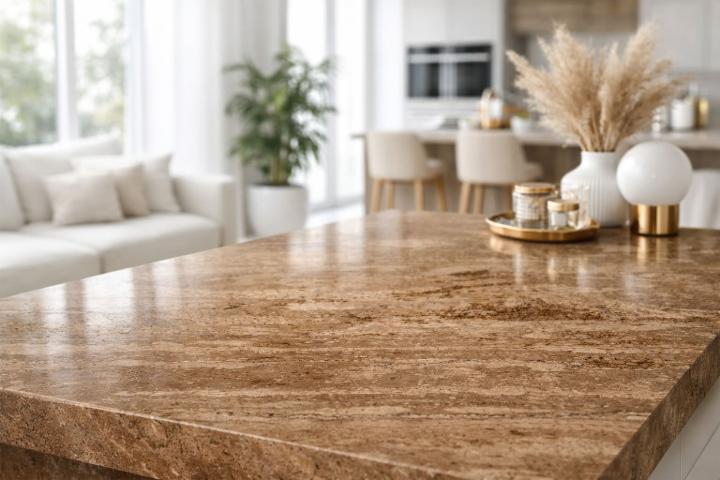
Travertine Grades
Not all travertine is equal. Slabs are sorted into three grades that reflect color consistency, the amount of fill used, and overall visual uniformity. The durability and performance of each grade are essentially the same; the grade primarily affects appearance and price.
Premium (First Choice): The highest grade features consistent color with minimal filler. Most premium travertine originates from Italy and carries the highest price point. This grade suits homeowners who want a refined, polished look with tight color control.
Standard: The most widely available grade, standard travertine has greater color variation and slightly more filler. Most travertine sold through stone warehouses and tile showrooms falls into this category, with material typically sourced from Turkey. It delivers excellent visual appeal at an accessible price.
Commercial: This grade has the most color variation and the most extensive filler use. While it is primarily used for exterior wall cladding and commercial applications, some commercial grade travertine is close to standard quality and works well for residential use in lower-traffic areas.
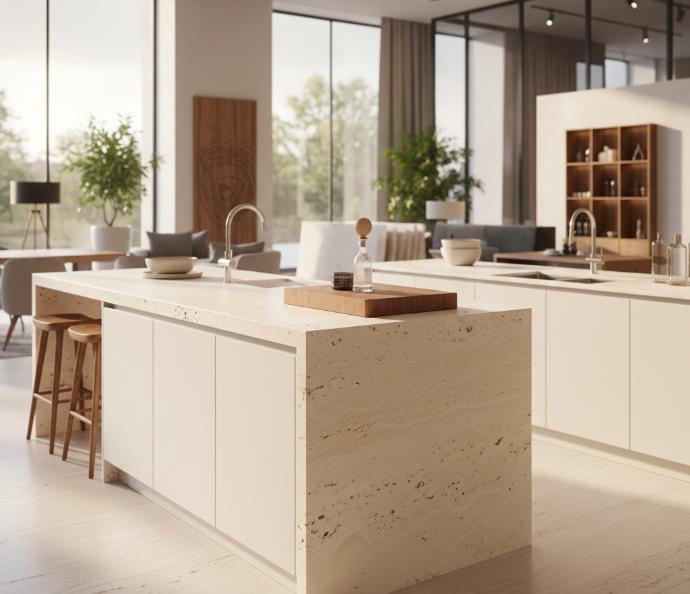
Pros of Travertine Countertops
Timeless, Natural Beauty
Travertine carries a warmth and character that synthetic materials simply cannot replicate. Each slab is unique, with subtle variations in color, veining, and texture that give the finished surface an organic, lived-in quality. This is a material with centuries of architectural history behind it, and it translates that heritage directly into your kitchen or bathroom.
Multiple Finish Options
Unlike many countertop materials that come in only one or two finishes, travertine is available in four distinct surface treatments, each producing a different look and feel.
Polished: A high-gloss finish that closes the stone's pores for better stain resistance and a sleek, contemporary look.
Honed: A smooth, matte finish that is the most popular choice for travertine countertops. It highlights the stone's natural variation and creates a calm, sophisticated atmosphere without excessive shine.
Brushed: A textured finish with a slightly rough surface and crisp edges. Brushed travertine works well in kitchens where you want a more rustic, natural look.
Tumbled: The most textured and aged-looking finish, with worn edges and an old-world character. Tumbled travertine is popular for backsplashes and flooring rather than countertops, but it can be used in accent applications.
All travertine countertops should be filled before installation to create a smooth, hygienic surface.
Heat Resistance
As a natural stone, travertine can withstand heat better than engineered surfaces like quartz or laminate. It will not scorch or discolor from normal kitchen heat exposure. That said, using trivets and heat pads is still recommended to avoid thermal shock, which can affect any stone surface over time.
Repairability
One advantage travertine has over harder stones is that most damage is repairable. Stains can be treated, etching can be polished out, and cracks or chips can be filled and refinished. With the right products and care, travertine countertops can be brought back to near-new condition even after years of use.
Versatility Across Applications
Travertine works in more spaces than just kitchen countertops. It is equally at home as a bathroom vanity, backsplash, fireplace surround, outdoor kitchen surface, and tile flooring. If you are designing a space around a cohesive natural stone look, travertine offers the flexibility to carry that aesthetic across multiple surfaces. Browse our full slab collection to see the travertine options available across our locations.
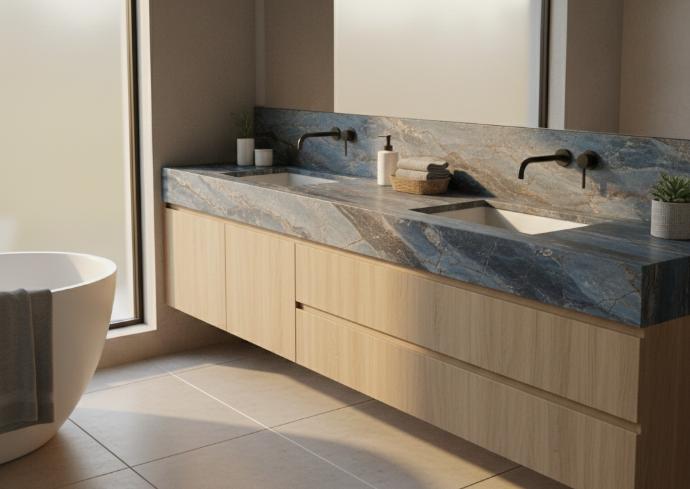
Cons of Travertine Countertops
High Porosity
Travertine is a porous stone, meaning it can absorb liquids if left unsealed or improperly maintained. Spills that are not wiped up promptly can penetrate the surface and leave stains. This is the most significant practical limitation of travertine in high-use kitchen environments.
Acid Sensitivity and Etching
Because travertine is composed of calcium carbonate, it reacts chemically with acidic substances. Common kitchen items like lemon juice, vinegar, tomato sauce, and wine can etch the surface, leaving dull spots in the finish. This is particularly noticeable on polished travertine, where the contrast between etched and unaffected areas is most visible. Homeowners who cook frequently with acidic ingredients should consider whether travertine is the right fit for their kitchen countertops. If low maintenance and acid resistance are priorities, engineered alternatives like quartz are worth comparing though it is worth noting that quartz fabrication carries documented silica dust health risks that natural stone does not.
Requires Regular Sealing
To protect travertine from staining and moisture absorption, it must be sealed at installation and resealed periodically. Honed, brushed, and tumbled finishes are more porous and require more frequent resealing than polished surfaces. For most travertine countertops, plan on resealing every one to two years depending on use.
Softer Than Granite and Quartzite
Travertine is softer than granite, quartzite, and porcelain slabs, making it more susceptible to scratching from hard or sharp objects. Cutting directly on the surface will damage it. Always use cutting boards, and avoid dragging heavy cookware or appliances across the stone.
Damage Can Be Difficult to Repair Structurally
While surface-level etching and staining are generally repairable, serious structural damage like deep cracks or significant chips can be challenging and costly to address. This is worth factoring in for kitchens with heavy use or homes with young children.
Travertine Colors
Travertine's color palette centers on warm neutrals. The most common shades range from ivory and cream to honey, beige, walnut brown, and tan. Rarer and more premium colors include silver gray, burnt orange, red, and gray-green tones produced by mineral deposits during formation.
The current design trend toward warm, earthy neutrals plays directly to travertine's strengths. Ivory and warm beige travertine in particular complement natural wood cabinetry, brushed brass hardware, and linen or cream-colored textiles for a grounded, organic kitchen aesthetic.
Travertine vs. Marble
Marble is the closest natural stone to travertine in both composition and performance. Both are derived from limestone, and both share the same sensitivity to acids, the need for regular sealing, and comparable hardness levels. According to Fine Homebuilding's guide to natural stone countertops, both materials require similar care routines and perform best when properly sealed and maintained.
The key differences are visual. Marble tends to feature more dramatic veining and a wider color range, from classic white and gray to green, gold, and black. Travertine has a more subtle, mottled patterning with warmer, more consistent tones. If you want bold movement and high contrast, marble is more likely to deliver it. If you prefer understated, earthy warmth, travertine is the stronger choice.
Travertine vs. Granite
Granite outperforms travertine on nearly every durability metric. It is harder, denser, less porous, and more resistant to scratching, etching, and daily kitchen abuse. Granite requires sealing but is far less reactive to acids than travertine.
The tradeoff is aesthetic. Granite has a more structured, modern appearance with distinct mineral grain patterns. Travertine offers a softer, more ancient quality that suits Mediterranean, Tuscan, farmhouse, and transitional interior styles particularly well.
If your household includes heavy cooking and high kitchen traffic, granite or quartzite will generally be a more practical choice than travertine. If your priority is warmth and old-world character in a lower-traffic application, travertine is a compelling option.
Conclusion
Travertine countertops bring a natural warmth and timeless character that few materials can match. Their soft, earthy tones and four distinct finish options make them highly adaptable to a wide range of interior styles, from rustic farmhouse kitchens to elegant Mediterranean bathrooms. The tradeoffs are real: travertine demands more maintenance than granite or engineered stone, and it is not the best choice for heavy-use kitchens where acid spills are common.
For homeowners who are willing to commit to the sealing and care routine, travertine delivers a unique beauty and a connection to natural stone history that is genuinely difficult to replicate with synthetic alternatives.
We carry travertine slabs and can help you evaluate whether it is the right surface for your space. Visit one of our stone showrooms in Reno, Minden, Sacramento, or Fernley to view slabs in person alongside our full range of natural stone countertop options. Our team offers free design consultations to guide you through the selection process.
Frequently Asked Questions
Does travertine need to be sealed?
Yes. Travertine is a porous natural stone and must be sealed to protect it from staining and moisture absorption. It should be sealed at installation and resealed every one to two years depending on the finish and how heavily the countertop is used. Polished travertine requires less frequent resealing than honed, brushed, or tumbled finishes.
Can travertine be used for kitchen countertops?
Yes, but with some caveats. Travertine works well in kitchens where spills are wiped up quickly and acidic ingredients like lemon juice, vinegar, and tomato-based foods are kept off the surface. For kitchens with heavy cooking activity or homeowners who prefer low-maintenance surfaces, granite or quartzite may be a better fit.
What is the difference between honed and polished travertine?
Polished travertine has a high-gloss finish that reflects light and offers better stain resistance because the surface pores are closed during polishing. Honed travertine has a smooth, matte finish that is softer in appearance, highlights the stone's natural character, and is more forgiving of everyday use. Honed is the most popular finish for travertine countertops.
How does travertine compare to marble for countertops?
Both travertine and marble come from limestone and share similar performance characteristics: both are sensitive to acids, require regular sealing, and are softer than granite or quartzite. The main difference is visual. Marble has more dramatic veining and a wider color range, while travertine offers warmer, more subtle tones and a more understated, rustic pattern.
Is travertine a good choice for bathroom countertops?
Yes. Travertine performs particularly well in bathrooms, where it is less likely to encounter the acidic spills common in kitchens. Its warm tones and natural texture complement a wide range of bathroom styles, from spa-inspired vanities to more classic and traditional designs. Regular sealing is still required to prevent moisture absorption in wet environments.