The best kitchen countertop materials fall into two categories: natural stone slabs including granite, marble, quartzite, travertine, and onyx, and engineered stone slabs including quartz, porcelain slabs, and sintered stone. Each material offers different benefits for durability, maintenance, and aesthetics.
Natural stone countertops like granite and quartzite provide one-of-a-kind patterns with excellent heat resistance but require annual sealing. Engineered countertops like quartz and porcelain slabs offer superior stain resistance with zero maintenance requirements.
When choosing kitchen countertops, consider these key factors:
- Durability: Quartzite, granite, and porcelain slabs rank highest for scratch and heat resistance
- Maintenance: Quartz, porcelain, and sintered stone require no sealing
- Appearance: Marble and onyx deliver dramatic veining; granite offers unique mineral patterns
- Outdoor use: Only porcelain slabs and sintered stone are UV resistant for outdoor kitchens
At our Northern Nevada and Northern California showrooms, we import natural stone slabs directly from the quarry and stock thousands of countertop options. Whether you prefer natural stone or low-maintenance engineered surfaces, our design consultants help you find the perfect material.
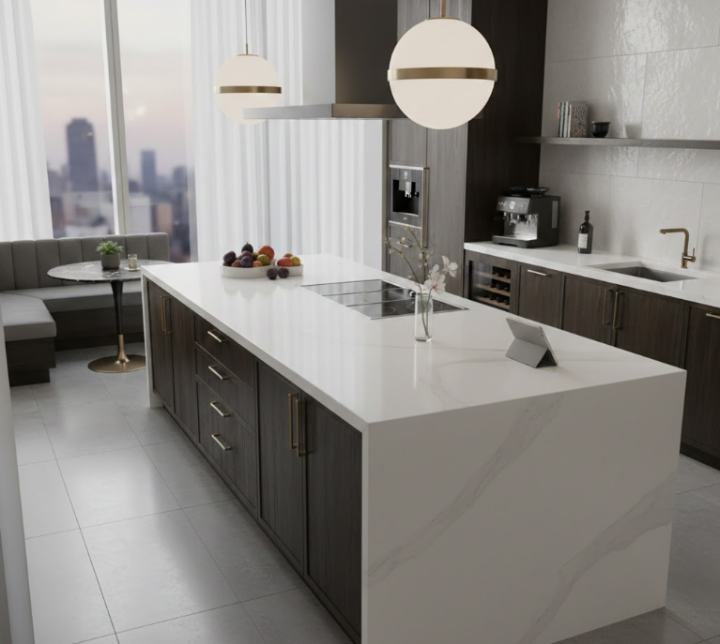
Key Questions Before Choosing Your Countertop
Before exploring specific materials, consider these essential factors:
Visibility and Design Integration: How prominent will your countertops be from adjoining living areas? In open-concept homes, countertops become a focal point visible throughout the main living space.
Usage Patterns and Durability Needs: How intensively will you use your kitchen? Can your chosen surface withstand hot pans, acidic spills, sharp utensils, and the demands of a busy family?
Connected Features: What elements will your countertop integrate with? Consider how the material works with undermount sinks, cooktop installations, or breakfast bar seating.
Maintenance Commitment: Beyond daily wiping, are you prepared for specific maintenance tasks like periodic sealing or professional care?
Many homeowners find that mixing materials creates both visual interest and functional zones. Consider one surface for your island and another for perimeter counters, or designate a marble section specifically for baking tasks.
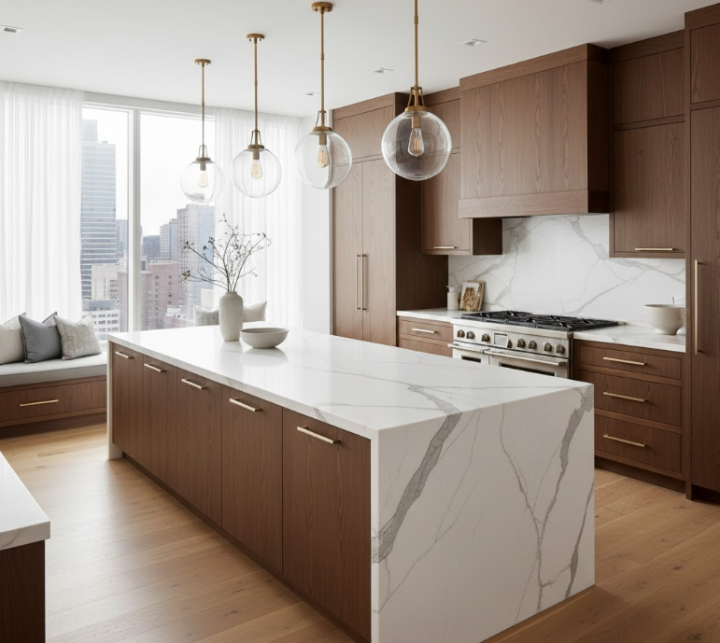
Natural Stone Slabs
Natural stone slabs are quarried directly from the earth, offering one-of-a-kind patterns and variations that cannot be replicated. Each slab tells a geological story millions of years in the making, bringing authentic natural beauty into your home.
As a direct stone importer, we source granite, marble, quartzite, travertine, and onyx slabs from premier quarries worldwide. Visit any of our showrooms to browse full slabs and discover the perfect natural stone for your project.
Granite Countertops
Granite established itself as a kitchen countertop standard over two decades ago and maintains strong popularity today. Homeowners continue choosing granite for its natural beauty, impressive durability, and manageable maintenance requirements. Every slab features unique patterns and mineral grains, ensuring no two installations look identical. Granite handles heat excellently and resists daily wear, though its porous nature requires annual sealing. With proper cleaning and care, granite countertops maintain their beauty for decades.
Advantages: Natural heat resistance for hot cookware. Enormous range of colors, patterns, and mineral variations. Maintains excellent resale value.
Considerations: Shows wear from cutting directly on surface and may etch from acidic spills. Requires annual sealing. Can crack from improper installation or extreme impact.
Marble Countertops
Marble remains highly sought after for its timeless elegance, distinctive veining patterns, and unique natural variation. Each slab adds sophistication to both traditional and contemporary kitchen designs.
Due to its porous nature, marble often works best in designated zones such as baking stations or bar areas where heavy daily use remains limited. Many homeowners appreciate how marble develops a natural patina over time. Understanding how to properly clean and maintain marble helps preserve its stunning appearance for years.
Advantages: Naturally cool surface ideal for pastry work. Exceptional aesthetic appeal with luxurious appearance. Pairs beautifully with wood, metal, and other natural materials.
Considerations: More susceptible to staining, scratching, and etching from acidic substances. Requires frequent sealing and prompt attention to spills.
Quartzite Countertops
Quartzite is a natural stone formed when sandstone undergoes intense heat and pressure deep within the earth. Often confused with engineered quartz, quartzite is entirely natural and offers stunning visual appeal with exceptional hardness that rivals granite.
This metamorphic stone features beautiful movement and veining similar to marble but delivers significantly better durability. Quartzite works beautifully for homeowners who love the marble aesthetic but need a more resilient surface.
Advantages: Extremely hard and scratch-resistant. Heat resistant for hot cookware. Stunning marble-like appearance with superior durability.
Considerations: Requires periodic sealing. Can be more challenging to fabricate due to hardness. Some varieties may etch from acidic substances.
Travertine Countertops
Travertine brings warm, earthy tones and distinctive texture to kitchen designs. This limestone-based natural stone features characteristic pitting and variation that creates an old-world, Mediterranean aesthetic appreciated in traditional kitchens.
Available in filled and unfilled finishes, travertine offers design flexibility ranging from smooth, polished surfaces to more textured, rustic appearances.
Advantages: Warm, inviting aesthetic with natural earth tones. Works beautifully in traditional and Mediterranean designs. Heat resistant for normal kitchen use.
Considerations: More porous than granite, requiring diligent sealing. Susceptible to etching from acidic foods. Softer than granite or quartzite.
Onyx Countertops
Onyx represents the pinnacle of dramatic natural stone, featuring translucent properties and bold veining that creates breathtaking visual impact. This semi-precious stone transforms countertops into stunning focal points, particularly when backlit.
Due to its softer composition and higher maintenance requirements, onyx typically works best for bar areas or accent sections rather than primary kitchen work surfaces.
Advantages: Stunning translucent properties for dramatic backlighting. Extraordinary visual impact. Available in striking colors including greens, reds, and honey tones.
Considerations: Softer and more delicate than other natural stones. Requires careful use and regular sealing. Best suited for low-traffic areas.
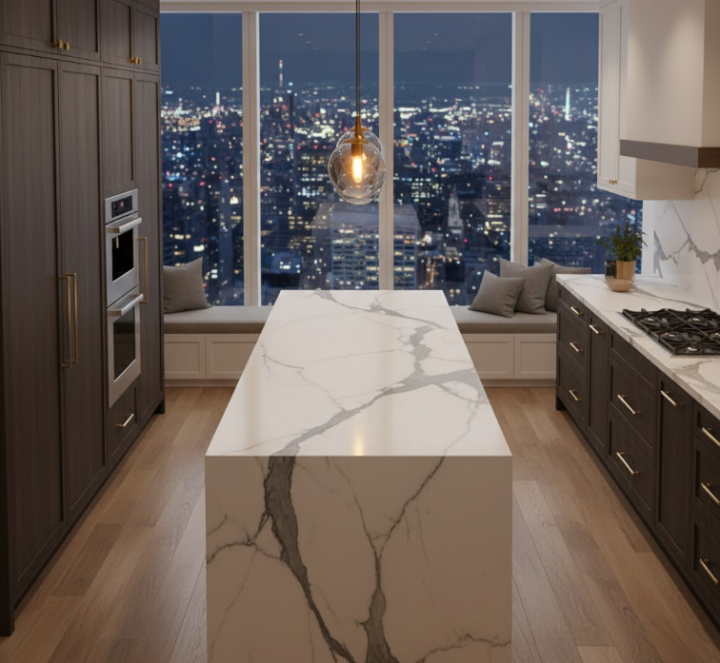
Engineered Stone Slabs
Engineered stone slabs combine natural materials with advanced manufacturing technology to create surfaces that often outperform natural stone in durability and maintenance while offering extensive design options.
We carry a comprehensive selection of engineered slabs including quartz, porcelain, and sintered stone. These innovative materials deliver stunning aesthetics with exceptional performance, making them ideal for busy households. When selecting engineered stone, working with experienced fabricators who follow proper safety protocols ensures quality installation and protects worker health.
Quartz Countertops
Engineered quartz ranks among the most durable countertop surfaces available today. Composed of approximately 90 percent ground quartz mixed with pigments and polyester resin, this material creates dense, non-porous slabs with excellent stain resistance.
The extensive design options range from realistic granite and marble patterns to pure whites, deep blacks, and bold contemporary colors.
Advantages: Exceptional resistance to stains, scratches, bacteria, and fading. Vast selection of patterns and colors. Zero sealing required.
Considerations: Some patterns may not fully replicate natural stone depth. Can crack under severe impact. Not recommended for outdoor use due to UV sensitivity.
Porcelain Slab Countertops
Porcelain slabs represent one of the most exciting developments in countertop materials, offering durability, design versatility, and low maintenance. These ultra-compact surfaces are manufactured from refined clay and natural minerals fired at extremely high temperatures, creating dense, non-porous slabs.
Available in large formats, porcelain slabs minimize seams and create sleek, contemporary surfaces. Advanced digital printing allows porcelain to convincingly replicate marble, granite, concrete, and wood.
Advantages: Virtually impervious to moisture, heat, scratches, and stains. UV resistant for outdoor kitchens. Zero sealing required. Lightweight compared to natural stone.
Considerations: Requires professional installation due to large format handling. Edge finishing options may differ from traditional stone profiles.
Sintered Stone Countertops
Sintered stone represents cutting-edge surface technology, created by subjecting natural minerals to extreme heat and pressure that mimics geological processes. The result is an extraordinarily dense, durable surface combining natural stone beauty with enhanced performance.
These innovative slabs resist scratches, heat, UV exposure, and chemical damage while maintaining their appearance for decades.
Advantages: Exceptional resistance to heat, scratches, stains, and UV damage. Non-porous surface eliminates sealing requirements. Suitable for interior and exterior applications.
Considerations: Requires experienced fabricators familiar with the material. Limited availability compared to more established options.
Conclusion
Selecting the ideal kitchen countertop requires balancing aesthetic preferences with practical performance needs. For maximum durability with minimal maintenance, engineered quartz, porcelain slabs, and sintered stone provide excellent long-term value. Homeowners prioritizing timeless natural elegance may gravitate toward granite, marble, or quartzite.
We recommend visiting one of our showrooms to view full slabs in person, as photographs cannot fully capture the depth and texture of countertop materials. Our experienced design team offers free consultations to help you evaluate options based on your specific needs. With showroom locations in Reno, Minden, Sacramento, and Fernley, we serve homeowners throughout Northern Nevada and Northern California. Stop by today to explore thousands of slab options for your next kitchen project.
Frequently Asked Questions
What is the most durable kitchen countertop material?
Engineered quartz, porcelain slabs, sintered stone, granite, and quartzite rank among the most durable options. Engineered quartz, porcelain slabs, and sintered stone offer superior stain resistance without sealing. Granite and quartzite provide excellent heat resistance while requiring annual sealing.
How often do natural stone countertops need sealing?
Granite typically requires annual sealing, while marble may need sealing every few months depending on usage. Quartzite and travertine also benefit from regular sealing. Test absorption by placing water droplets on the surface; if water absorbs within minutes, resealing is necessary.
Can I cut directly on my countertops?
Most countertop materials should not be used as cutting surfaces. Cutting directly on granite, marble, quartzite, quartz, porcelain, or sintered stone will damage the countertop, your knives, or both. Always use cutting boards.
What countertop material works best near sinks and high-moisture areas?
Engineered quartz, porcelain slabs, and sintered stone perform best in high-moisture environments due to their non-porous composition. Granite and quartzite work well when properly sealed. Marble, travertine, and onyx require more diligent attention to standing water.
How do I choose between natural stone and engineered alternatives?
Natural stones offer unique, one-of-a-kind patterns with organic variation. Engineered materials provide more consistent appearance, superior stain resistance, and zero maintenance requirements. Consider whether you prefer natural uniqueness with maintenance responsibilities or consistent appearance with minimal upkeep.