Every few years a material crosses over from specialty choice to mainstream favorite. Quartzite is doing exactly that right now. What was once considered a well-kept secret among designers and stone enthusiasts has become one of the most requested countertop materials we see in our showrooms. The reasons are straightforward: quartzite looks like marble, performs like granite, and carries the character that only a natural stone can offer. If you are planning a kitchen or bathroom renovation and have not yet considered quartzite, this article will explain why so many buyers are choosing it in 2026.
What Quartzite Actually Is
Quartzite is a metamorphic rock that begins as sandstone. Over millions of years, intense heat and pressure deep within the earth fuse the individual sand grains together into one of the harder, denser natural stones available. The result is a material composed almost entirely of quartz mineral not to be confused with engineered quartz, which is a manufactured product made from crushed stone and resin.
That geological transformation is important for a few reasons. First, it is what gives quartzite its hardness. On the Mohs scale, quartzite typically registers around 7, putting it at or above granite and well above marble, which sits around 3 to 4. Second, it is what gives quartzite its visual character. The pressure and mineral movement that occurred during formation produce the flowing veins and layered patterns that make quartzite a recognizable countertop material. No two slabs are alike, and that uniqueness is a large part of what draws buyers to it.
We carry quartzite at Nova Tile and Stone across all four of our showroom locations, and we source it directly as importers, which means we see a wide range of slab colors and movement types coming through our inventory throughout the year.
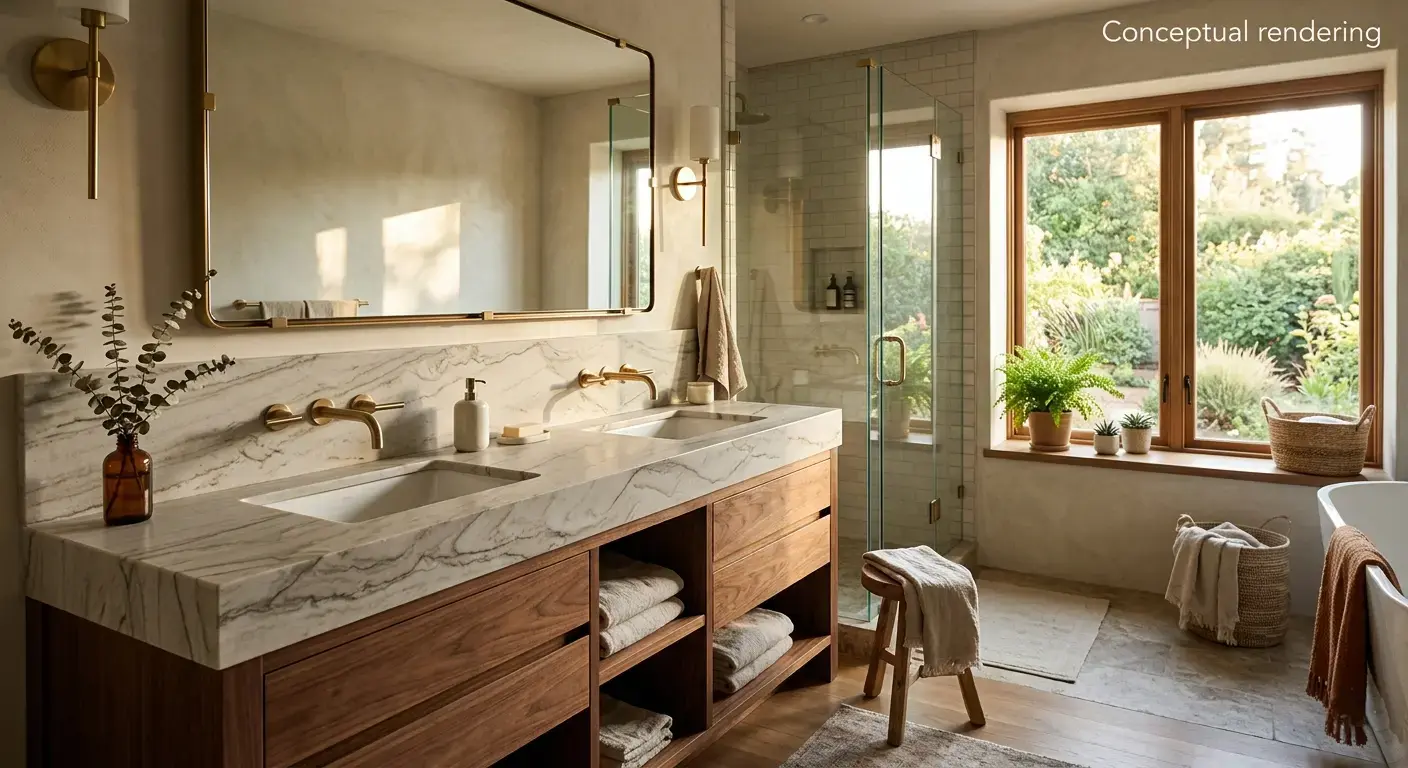
Why Quartzite Is Gaining Ground in 2026
Demand for quartzite has been building steadily, but 2026 has brought a notable shift. According to the National Kitchen and Bath Association, 62 percent of design professionals surveyed expect quartzite to be one of the most popular countertop materials over the next several years, second only to engineered quartz. That is a meaningful number, especially considering how recently quartzite was considered a niche product.
Several things are driving this momentum.
The marble look without the marble problems. Marble has dominated aspirational kitchen design for years, but many homeowners who choose it eventually run into frustrations: etching from lemon juice, wine, or vinegar; staining from oils and daily use; the need to be consistently careful about what touches the surface. Quartzite offers veining, movement, and soft tonal variety that is visually very similar to marble, while being significantly harder and more resistant to the acids that cause etching. For buyers who love the aesthetic but want something that holds up in an active kitchen, quartzite addresses that tradeoff.
Growing design confidence. A few years ago, most buyers defaulted to granite or engineered quartz because they were familiar and easy to specify. As more quartzite installations have appeared in homes and design media, buyers are arriving at showrooms already having done their research. They know what Taj Mahal quartzite looks like. They have seen Sea Pearl on Instagram. That increased awareness has made quartzite a much easier conversation to have.
Texture and finish options. Quartzite takes well to finishes beyond polished. Honed quartzite has a soft, matte presence that works beautifully in understated or Japandi-influenced kitchens. Leathered quartzite adds a subtle tactile depth and hides fingerprints in busy households. These options have expanded the design range of quartzite well beyond its earlier association with only bright, dramatic white slabs.
You can browse our quartzite slab inventory, including available colors and movement types, through our slab gallery.
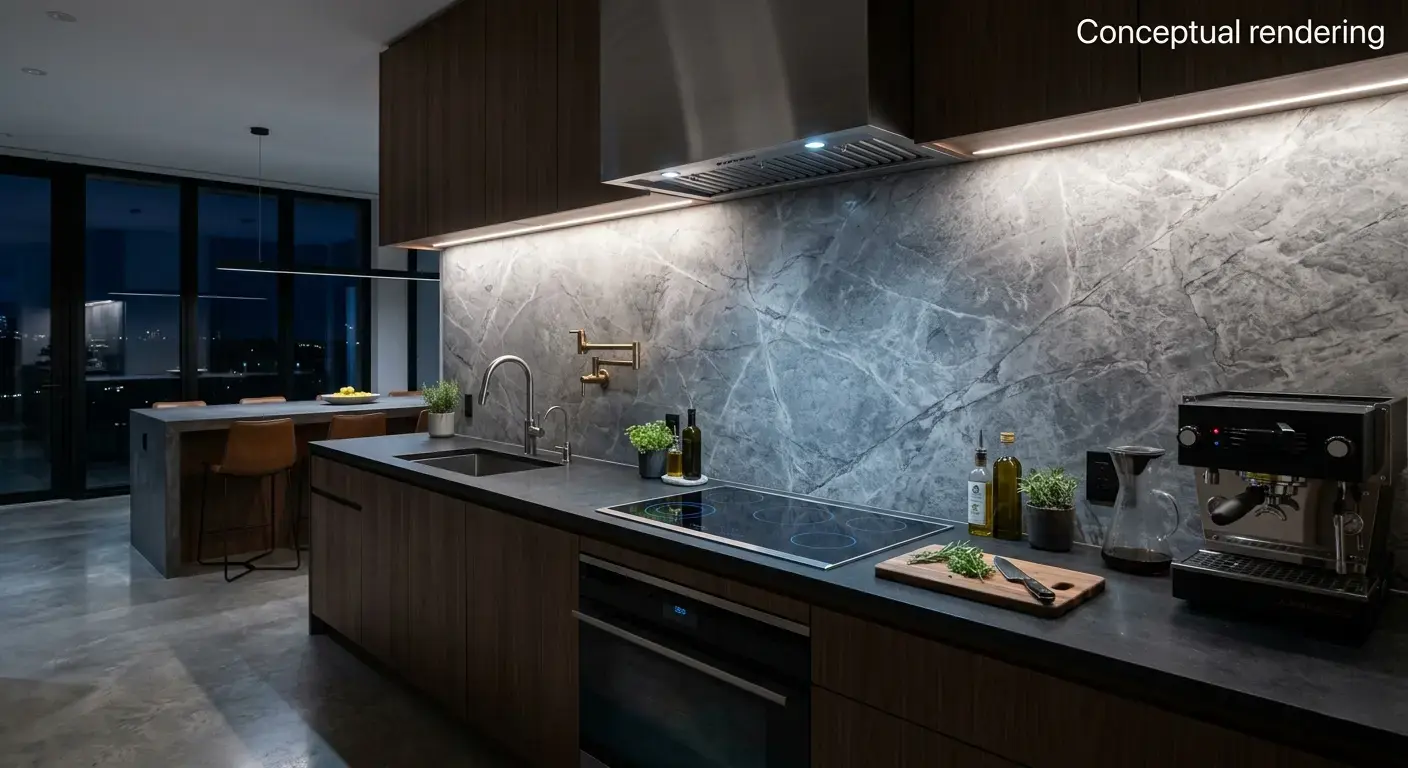
How Quartzite Compares to Other Materials
Understanding where quartzite sits relative to other countertop materials helps buyers make a confident decision.
Quartzite vs. Marble Marble is calcite-based, which is why it reacts to acids and etches. Quartzite does not have the same calcite content and is far more resistant to etching and scratching. Both are natural stones with unique patterning, but quartzite is the more practical choice for kitchen surfaces that see daily cooking activity. Marble remains an excellent choice for powder rooms, bathroom vanities, and lower-traffic applications where its softer beauty is appreciated and the maintenance is manageable.
Quartzite vs. Granite Granite is an igneous rock with excellent durability and a long track record in kitchens. Quartzite is generally comparable in hardness and, in some cases, harder. The primary difference is visual: granite tends to read as speckled or granular, while quartzite has flowing veins and more painterly movement. Buyers who want the performance of granite but prefer a more fluid, marble-inspired look typically find quartzite to be a natural fit.
Quartzite vs. Engineered Quartz Engineered quartz is consistent, non-porous, and requires no sealing. Those are real advantages. But it is a manufactured product, and each slab of the same color is essentially identical. There are also health and safety considerations around engineered stone fabrication that buyers increasingly factor into their decisions. Quartzite is a natural material, which means variation, uniqueness, and the kind of organic depth that cannot be replicated in a factory. For buyers who prioritize the one-of-a-kind quality that makes natural stone worth selecting in person, quartzite offers something engineered quartz does not.
If you want to see how stones compare and think through your options with someone who works with this material daily, scheduling a showroom appointment is a practical way to make an informed decision.
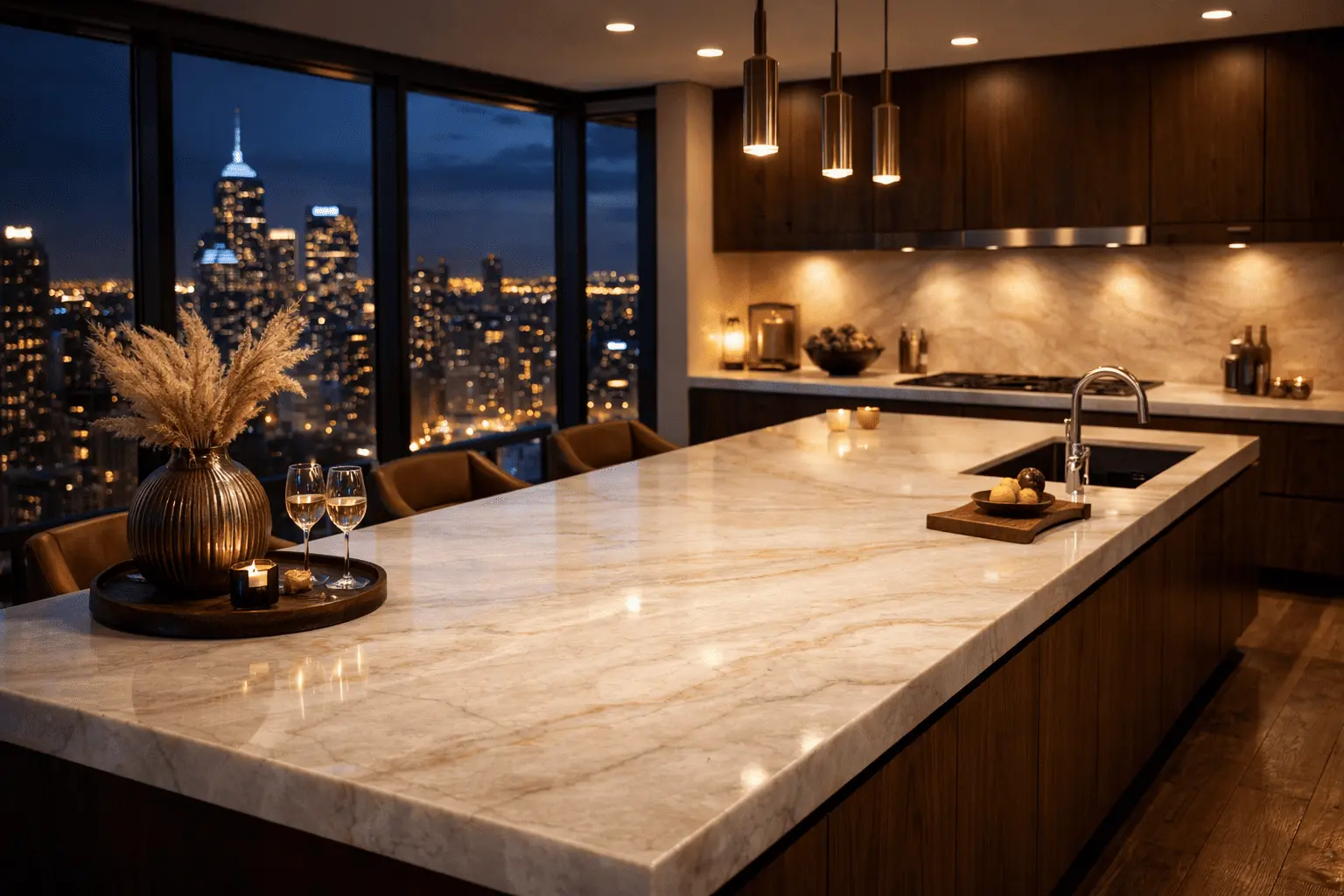
Popular Quartzite Varieties Right Now
While quartzite comes in a wide range of colors and movements, a few varieties are generating the most interest among buyers this year.
Taj Mahal remains one of the most requested slabs in our inventory. Its soft cream background with warm gold undertones and subtle, quiet veining works across a wide range of cabinet colors and hardware finishes. It suits a wide range of design directions without dominating the space.
Super White is a bright, white quartzite with light gray veining that appeals to buyers who want a crisp, clean look with better durability than white marble. It is often compared to Calacatta marble in appearance but is harder.
Sea Pearl brings cool gray tones with layered movement and is a strong choice for kitchens where silver or chrome fixtures are part of the design.
Beyond these well-known options, we also regularly see bold and character-driven quartzite slabs with deep blue, green, and brown veining. These are gaining traction with buyers who want their countertop to function as a statement piece rather than a background element.
What to Know Before You Buy
Quartzite requires the same basic care as most natural stone. It benefits from sealing, particularly on slabs with higher porosity. While it is acid-resistant compared to marble, some quartzite varieties are dolomitic in composition, which means they can have limited sensitivity to prolonged acid contact. This is worth confirming when you look at specific slabs. Our team can help you understand the characteristics of individual stones before you commit.
Because quartzite is a natural material, the slab you select in the showroom is the actual stone being installed in your home. We always encourage buyers to come in and view slabs in person rather than relying on photos, which can shift the perceived color, movement, and overall character significantly. You can request a quote in advance to help frame the conversation before your visit.
For trade professionals specifying quartzite for client projects, our trade account program offers access to our full slab inventory and direct importer pricing. We work with designers, builders, and contractors across Northern Nevada and Northern California from our showrooms in Reno, Minden, Sacramento, and Fernley.
Buyers who want to research further before visiting a showroom may find natural stone countertop selection guidance from This Old House and countertop planning resources from Fine Homebuilding useful starting points.
Conclusion
Quartzite's rise in 2026 is not a trend in the short-cycle sense. It reflects a real shift in what buyers want from a countertop material: natural beauty, durability, and a surface that holds its character over years of use. For buyers who have admired marble but had concerns about maintenance, or who have grown tired of the uniform patterns of engineered stone, quartzite is a different option worth considering. It is a material that tends to reward the effort of shopping in person and selecting a slab with intention.
If you are in the research phase and want to see what quartzite looks like in person, we invite you to visit one of our showrooms or get in touch with our team directly. Natural stone is best understood when you can stand in front of it.
Note: Some images on this page may be conceptual renderings created to illustrate design possibilities and may not depict actual installations.
Frequently Asked questions
No. Quartzite is a 100 percent natural stone formed from sandstone that has been transformed by heat and pressure over millions of years. Engineered quartz is a manufactured surface made by combining crushed stone with polymer resin and pigments. The two materials share a name similarity but are very different in origin, composition, and appearance.
Yes, like most natural stone, quartzite benefits from sealing. It is a porous material, and a quality penetrating sealer helps protect the surface from staining and moisture penetration. Sealing frequency depends on the specific slab's porosity and the amount of use the surface receives, but most quartzite countertops benefit from resealing once every one to two years.
Quartzite is significantly more resistant to etching than marble because it does not have the same calcite-based composition. However, some quartzite slabs have dolomitic characteristics and may show limited sensitivity to prolonged exposure to acids. Confirming the specific mineralogy of the slab you are considering is worthwhile, and our team can walk you through this before you purchase.
Quartzite typically registers around 7 on the Mohs hardness scale, placing it at or slightly above granite, which generally registers around 6 to 6.5. Both are hard, durable stones well suited to kitchen countertop use. The practical difference in daily use is minimal, but quartzite's higher quartz content gives it excellent scratch resistance.
Yes, and we strongly recommend it. Quartzite is a highly variable material, and photos rarely capture the true depth, movement, and color of an individual slab. Visiting one of our showrooms in Reno, Minden, Sacramento, or Fernley gives you the opportunity to view full-size slabs under real lighting conditions before making a decision.