Taj Mahal quartzite is a natural stone known for its soft white background, warm beige veining, and exceptional hardness, making it one of the most sought-after materials for kitchen countertops, bathroom surfaces, and high-end interior applications. Quarried exclusively from Uruoca, Brazil, it is classified as a true quartzite, composed of 99 percent quartz crystals formed through the metamorphism of quartz-rich sandstone under intense heat and pressure.
This process makes it harder than granite, resistant to scratches, heat, and acid etching, and low-maintenance by nature. Its neutral, calming aesthetic pairs with a wide range of design styles, and its non-porous surface requires only routine cleaning with mild soap and water to maintain.
For homeowners and designers evaluating natural stone, Taj Mahal quartzite consistently stands out for combining long-term durability with timeless visual appeal. To see natural variation and select the right piece for your project, you can explore our curated Taj Mahal quartzite slabs available for viewing in person. If sustainability and material transparency are part of your decision-making process, it’s also helpful to review how environmental and health product labels apply specifically to natural stone materials.
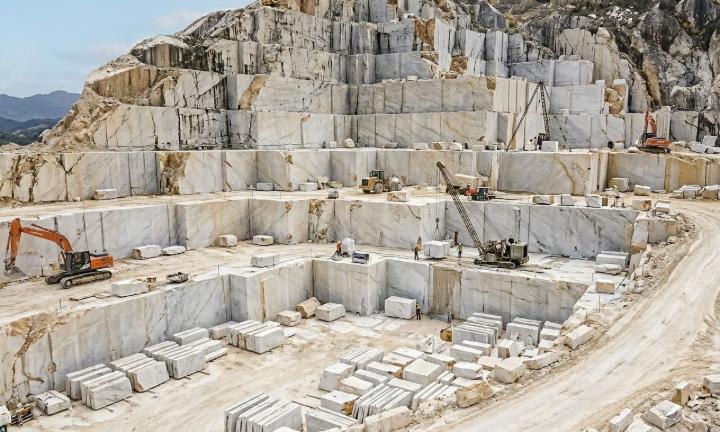
Shaped by Nature's Own Process
Only two quartzites in the world are recognized as truly authentic, and Taj Mahal is one of them. Quartzite forms through the metamorphism of quartz-rich sandstone, a gradual transformation in both structure and composition driven by sustained exposure to extreme heat and pressure over decades. What qualifies Taj Mahal as a true quartzite is the completion of its full rock cycle, producing a stone that is denser, more refined, and structurally compact.
Sourced Exclusively from Brazil
Taj Mahal quartzite originates from Uruoca, a city in Brazil defined by its remarkable geological conditions. The region provides the precise environment required to produce the stone's distinctive characteristics, making it entirely unique to that part of the world.
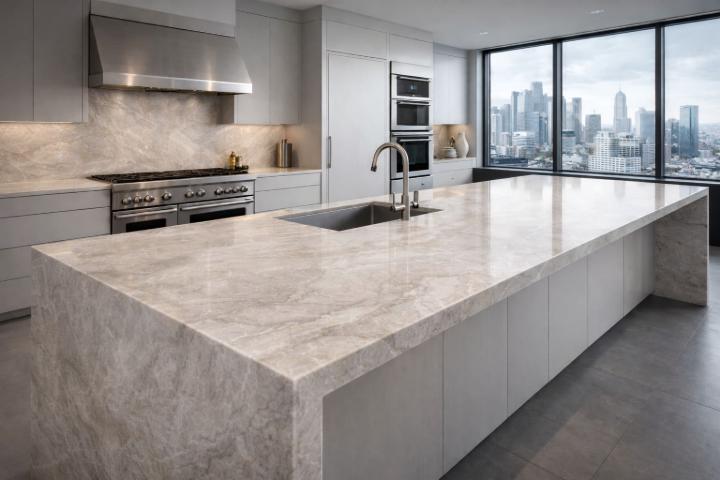
Aesthetics That Bring Calm to Any Space
What sets Taj Mahal apart aesthetically is its restrained, quiet elegance, something relatively rare in the quartzite family, which more commonly presents in bold, dramatic colorways like Amazonite and Blue Louise. For those drawn to neutral palettes, Taj Mahal delivers. A soft white base is traversed by gently flowing beige veins, and the warmth those tones carry introduces a natural sense of calm into any room. The long, linear striations that run across the surface work especially well in kitchen countertops, visually elongating the space and lending it an air of quiet sophistication.
For additional industry perspectives and upcoming educational opportunities related to natural stone design, you may review the Natural Stone Institute’s calendar of professional events and educational resources.
Strength Built Over Decades
The extended metamorphic process that forms Taj Mahal also makes it exceptionally hard, in fact, harder than granite. At 99 percent quartz crystal composition, the stone ranks among the most durable natural materials available. Its tightly interlocked crystal structure produces a surface that is smooth, dense, and highly resistant to scratches, stains, and heat. Acidic substances like lemon juice, vinegar, and wine do not etch the surface, which means everyday kitchen activity can proceed without the anxiety of permanent damage.
For those who prefer sourcing materials locally and viewing stone in person before making a selection, you can shop local and explore our available natural stone options at nearby showrooms.
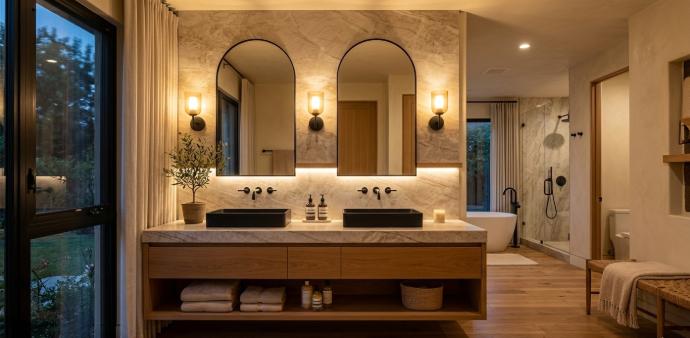
Versatile Enough for Any Application
The balance of beauty and durability in Taj Mahal opens up a wide range of design possibilities beyond the countertop. Designers use it confidently across accent walls, fireplace surrounds, shower panels, vanity tops, flooring, and outdoor bar surfaces. Its neutral base pairs naturally with a broad spectrum of design directions, monochromatic schemes, warm wood tones, dark furniture, or bold decorative accents, giving it the flexibility to anchor a space without competing with it.
If you're planning a kitchen project and want to understand how different materials perform in real-world applications, you can review the guide to stone countertop options and kitchen design considerations.
Low-Maintenance by Nature
As lifestyles become busier, the materials that support them need to keep pace. Taj Mahal has become a practical answer to that demand. Its non-porous structure resists staining effectively, and routine cleaning with mild soap and water is sufficient to keep the surface in excellent condition. Periodic sealing, however, is worth incorporating into the care routine, as it reinforces the stone's long-term durability and preserves its appearance over time.
For industry professionals managing multiple projects, you can apply for a trade account to access professional support and natural stone sourcing benefits.
An Investment Worth Making
At Nova Tile and Stone, sourcing is taken seriously. Every slab in the collection is selected after extensive vendor evaluation, with quality as the deciding factor. Taj Mahal countertop surfaces are chosen not just for their visual impact but for the long-term value they bring to a property. When you invest in this stone, you are investing in something that performs as well as it looks.
To get accurate pricing based on your specific project requirements, you can request a slab quote directly from our team for Taj Mahal quartzite and other natural stone selections.
Conclusion
Taj Mahal quartzite is one of those rare materials that genuinely delivers on every front. It brings the kind of visual calm that elevates a space without overpowering it, and it backs that beauty with a level of structural integrity that few natural stones can match. Whether you are designing a high-use kitchen, a spa-like bathroom, or a statement living area, this stone adapts to the vision without compromise. Its low maintenance demands make it a practical long-term choice, and its ability to pair with nearly any design direction gives it staying power well beyond passing trends.
At Nova Tile and Stone, the Taj Mahal slabs available across all four showrooms in Reno, Sacramento, Minden, and Fernley are sourced to the highest standard, because a stone this exceptional deserves nothing less. To experience the material firsthand, visit us, a trusted tile and stone company and schedule a showroom appointment to view Taj Mahal slabs in person
Frequently Asked Questions
Is Taj Mahal quartzite a good choice for kitchen countertops?
Taj Mahal quartzite is widely regarded as one of the best natural stone options for kitchen countertops. Its 99 percent quartz crystal composition makes it harder and more durable than granite, and its surface resists scratches, heat, and stains effectively. Unlike marble, it does not etch when exposed to acidic substances like lemon juice, vinegar, or wine, which makes it particularly well-suited to the demands of everyday kitchen use.
Does Taj Mahal quartzite require sealing?
Taj Mahal quartzite has a non-porous structure that gives it natural resistance to staining, but periodic sealing is still recommended. Sealing the surface adds an additional layer of protection and helps preserve the stone's appearance and performance over the long term. Consulting a stone care professional for guidance on sealing frequency is the best way to tailor maintenance to the specific conditions of your space.
Can Taj Mahal quartzite be used outdoors?
Yes, Taj Mahal quartzite is suitable for select outdoor applications. Its density and heat resistance make it a viable option for outdoor bar tops and similar surfaces. That said, exposure to the elements does introduce additional wear considerations, so consulting with a stone professional before committing to an outdoor installation is advisable to ensure the application aligns with the stone's properties.
How does Taj Mahal quartzite compare to marble in appearance?
At first glance, Taj Mahal quartzite can be mistaken for marble due to its soft white background and flowing veined pattern. The key visual distinction lies in the character of its veining, Taj Mahal presents with long, linear striations and warm beige tones rather than the sharper, more dramatic veining typical of white marble varieties. The result is a subtler, warmer aesthetic that reads as elegant without being overstated.
Where does Taj Mahal quartzite come from?
Taj Mahal quartzite is sourced exclusively from Uruoca, a city in Brazil known for its exceptional geological conditions. The region produces the specific combination of heat, pressure, and mineral composition required to form this stone, which is part of what makes it distinct from quartzites found elsewhere in the world. Its Brazilian origin, paired with its name inspired by India's most iconic monument, reflects the global reach of its appeal.