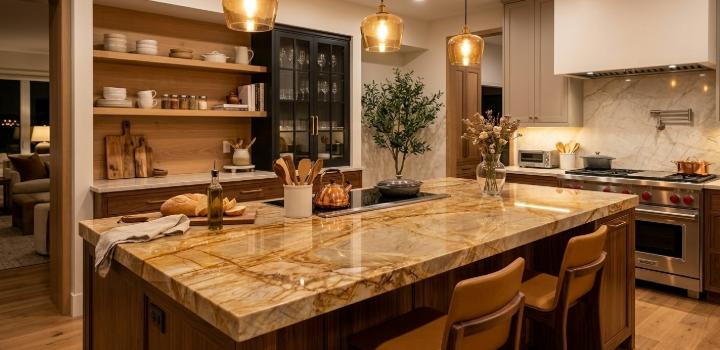
Taj Mahal quartzite has earned a well-deserved reputation as one of the most sought-after natural stone surfaces in modern interior design. Quarried primarily in Brazil, this metamorphic stone captivates homeowners with its creamy white background, warm gold veining, and a luminous quality that echoes the grandeur of high-end marble without the fragility. Whether used as a kitchen countertop, bathroom vanity, or statement wall accent, its visual depth is genuinely unmatched.
Even the most durable natural stones require consistent, informed care to retain their character over time. Understanding what to do and what to avoid is the foundation of any solid long-term upkeep plan. This guide breaks down the essential maintenance practices that keep Taj Mahal quartzite surfaces looking as refined as the day they were chosen.
What Makes Taj Mahal Quartzite Unique
Before diving into care practices, it helps to understand what this stone actually is. Taj Mahal quartzite is a 100% natural metamorphic rock formed when sandstone rich in quartz is subjected to extreme heat and pressure over millions of years. The result is a surface that ranks approximately 7 to 7.5 on the Mohs hardness scale, making it harder than most granites and significantly more resilient than marble. According to This Old House, natural stone countertops each carry distinct care requirements that depend on their mineral composition and porosity, and quartzite is among the more forgiving of the natural stone family.
Its soft, warm tones and dramatic veining make it a versatile choice for countertops and natural stone slabs in kitchens and bathrooms alike. Because each slab is entirely natural, no two pieces are identical, which adds an element of exclusivity to every surface it graces.
Despite its impressive hardness, Taj Mahal quartzite is still a porous material. Like all natural stone, it can absorb liquids and oils if left unprotected, which is why a proper maintenance routine makes the difference between a surface that ages beautifully and one that gradually dulls.

The Dos: Practices That Preserve Its Beauty
Do Use pH-Balanced Cleaners
The single most important cleaning rule for any quartzite surface is to use a pH-balanced, stone-safe cleaner. For everyday upkeep, mild dish soap diluted in warm water works effectively. Wipe the surface down after use to prevent buildup, and always dry it afterward to avoid water spots, especially on polished finishes.
For deeper periodic cleaning, specialty stone cleaners formulated for quartzite are the right choice. These products are designed to lift residue without altering the stone's natural composition or surface finish. Consistent cleaning using appropriate products keeps the surface clear of staining agents before they have a chance to penetrate.
Do Seal the Surface Regularly
Sealing is a critical part of caring for Taj Mahal quartzite. Because it has a more open crystalline structure than engineered surfaces, a penetrating stone sealer is necessary to guard against moisture, cooking oils, and everyday liquids. Initial sealing should be done thoroughly before the surface enters regular use, and resealing every 12 to 18 months is generally recommended for most homes. High-use surfaces such as busy kitchen countertops may benefit from resealing every 6 to 9 months.
A practical way to check whether the sealant is still working is a simple water drop test: if water beads on the surface, the seal is intact; if the water absorbs quickly or darkens the stone, it is time to reseal. After any sealing application, allow the sealant to cure completely before putting the surface back into service. The Natural Stone Institute offers detailed guidance on sealing schedules and approved products for a wide range of natural stone surfaces.
Do Use Soft Cloths and Non-Abrasive Tools
Always clean quartzite with soft microfiber cloths or gentle sponges. The stone's hardness protects it from typical daily wear, but the surface finish, whether polished or honed, can be dulled by rough scrubbing pads over time. A polished finish is particularly susceptible to fine scratching from abrasive materials, so soft tools should be the only option used directly on the surface.
Do Address Spills Promptly
Even with a quality sealant in place, allowing liquids to sit on quartzite for extended periods is a risk worth avoiding. Acidic substances and highly pigmented liquids are particularly worth addressing quickly. Blot rather than wipe spills to avoid spreading them, then clean the area with a damp cloth and a small amount of stone-safe cleaner. If you are unsure which products work best for your specific slab, our team is available through a free design consultation to offer personalized guidance.
Do Use Trivets and Cutting Boards
Although Taj Mahal quartzite is heat-resistant due to its formation under intense geological conditions, repeated exposure to extremely hot cookware directly on the surface is not advisable as a standard habit. Using trivets is a simple protective measure that also helps preserve the sealant layer over time. Similarly, while the stone is hard enough that cutting on it will likely dull knife blades before scratching the surface, using a cutting board protects both the stone's finish and your kitchen tools.
The Don'ts: Habits That Cause Long-Term Damage
Don't Use Acidic or Alkaline Cleaners
This is perhaps the most critical rule to internalize. Vinegar, lemon juice, bleach, and ammonia-based cleaners should never come into contact with quartzite surfaces. While Taj Mahal is harder and more resistant to etching than marble, acidic or highly alkaline substances can still compromise the surface over time, dulling its natural sheen and weakening the sealant layer.
Many common household multi-surface sprays fall into this category. Always check product labels before using anything on a natural stone surface, and when in doubt, stick to products specifically formulated for stone care.
Don't Neglect Resealing
One of the most common maintenance mistakes is treating the first sealing as a permanent solution. Sealants wear down with use, cleaning, and exposure to moisture. Skipping scheduled resealing leaves the stone increasingly vulnerable to staining and absorption. Keeping a maintenance calendar to track resealing intervals is a practical habit that protects the long-term value of the surface.
Don't Use Abrasive Scrubbing Pads
Steel wool, rough scouring pads, and stiff-bristle brushes have no place on quartzite. Even for stubborn residue, patience and a gentle cleaner are far more effective than scrubbing with abrasive tools. The surface finish, particularly on polished slabs, can be permanently affected by repeated abrasive contact. Homeowners or contractors who want to better understand finish types and their care profiles can reference the Use Natural Stone finish guide for a thorough breakdown.
Don't Confuse Quartzite With Engineered Quartz
A common misconception is that Taj Mahal quartzite and engineered quartz require the same level of care. Engineered quartz contains resins that provide built-in stain resistance and require far less maintenance. Taj Mahal quartzite is entirely natural and contains no resins, which means it depends entirely on proper sealing and regular care to maintain its resistance to staining and moisture. Treating it as though it were engineered quartz leads to neglected sealing and eventual surface damage. Trade professionals who regularly specify natural stone for client projects can apply for a trade account to access dedicated support and resources.
Don't Allow Standing Water Around Edges and Seams
Moisture that lingers around sink edges, faucet holes, or seams can work its way into the stone over time, especially in areas where the sealant may be thinner or worn. Keeping these areas dry after use significantly reduces the risk of moisture absorption in the most vulnerable parts of the surface.
Matching Taj Mahal With the Right Tile Surroundings
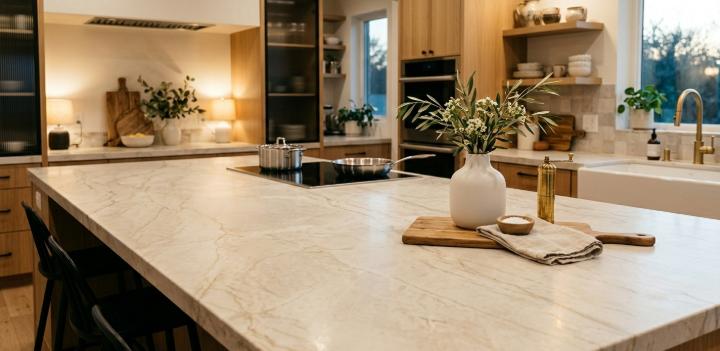
Part of preserving the visual impact of Taj Mahal quartzite is surrounding it with complementary materials that elevate rather than compete with the stone. Classic white ceramic subway tiles work beautifully as a backsplash backdrop, allowing the stone's warm veining to take center stage. For a more layered aesthetic, neutral porcelain field tiles in earthy tones can bridge the stone's warmth with surrounding cabinetry and flooring.
Choosing the right finish for surrounding tile and stonework is just as important as the material itself. Whether the design calls for a high-gloss pairing or a matte contrast, finish cohesion across surfaces makes a significant difference in the final result. Homeowners looking to explore options in person are welcome to book an appointment at a nearby showroom to view tile and stone pairings firsthand.
Conclusion
Taj Mahal quartzite is one of those rare surfaces that rewards careful ownership. Its natural hardness and heat resistance give it genuine longevity, but its sustained beauty over the years depends on consistent, informed care. Using the right cleaning products, staying on top of periodic resealing, and avoiding the common mistakes outlined here are the habits that keep this stone looking extraordinary long after it is first installed. When maintenance is treated as a routine rather than an afterthought, Taj Mahal quartzite more than lives up to its legendary name.
Nova Tile and Stone offers a curated selection of natural stone slabs alongside free design consultations to help guide every surface decision with confidence. Request a slab quote to get started on your next project.
Frequently Asked Questions
How often should Taj Mahal quartzite be resealed?
For most residential settings, resealing every 12 to 18 months is sufficient. High-traffic surfaces such as kitchen countertops may benefit from resealing every 6 to 9 months, while lower-use areas like bathroom vanities can often extend comfortably to the 18-month mark. A simple water drop test helps determine when a reseal is needed: if water no longer beads on the surface and instead absorbs or darkens the stone, it is time to reapply.
Can Taj Mahal quartzite be damaged by everyday kitchen use?
Due to its hardness rating of 7 to 7.5 on the Mohs scale, Taj Mahal quartzite holds up well against the demands of a busy kitchen. Normal contact with cookware, dishes, and utensils is unlikely to cause scratching. However, the surface finish can be affected over time by abrasive cleaning tools or neglected sealing, which is why consistent upkeep matters.
Is Taj Mahal quartzite the same as engineered quartz?
No. Despite the name similarity, they are entirely different materials. Taj Mahal quartzite is a 100% natural metamorphic stone, while engineered quartz is a manufactured product composed of ground quartz minerals bound with resins. Because quartzite contains no resins, it requires regular sealing to maintain its protective barrier against stains and moisture.
What type of cleaner is safe to use on quartzite surfaces?
pH-balanced, stone-specific cleaners are the safest option. For routine cleaning, mild dish soap diluted in warm water is effective. Products containing vinegar, bleach, citrus, or ammonia should be avoided entirely, as these can etch or weaken the surface and break down the sealant over time.
Does Taj Mahal quartzite work for spaces beyond kitchen countertops?
Yes. Its durability and visual versatility make it well suited for bathroom vanities, accent walls, flooring, and waterfall island edges. When paired thoughtfully with complementary tile and stone options, it creates a cohesive, elevated look across multiple surfaces within the same space.