Natural stone countertops are extracted from quarries as large blocks, then cut into slabs measuring 2-3 cm thick at fabrication facilities. The process involves diamond wire saw cutting, surface polishing or honing, templating for precise measurements, and professional installation with sealing to protect porous materials like marble and limestone. This journey from extraction to installation typically takes several weeks to months, transforming raw geological formations into functional kitchen and bathroom surfaces.
Natural stone countertops bring timeless beauty and lasting durability to any home, delivering an elegance and distinctive character that man-made materials simply cannot match. But have you ever considered the remarkable path these exquisite stone slabs travel from their origins in the earth to becoming the focal point of your kitchen or bathroom? Let's delve into the captivating process of how natural stone slabs, including granite, marble, quartzite, onyx, and limestone are extracted, processed, and installed.
The Natural Beauty of Marble
Marble develops as a metamorphic rock, forming when limestone is subjected to intense heat and pressure, resulting in its signature crystalline structure. This natural process gives marble its unmistakable character, defined by rich color variations and intricate veining. No two slabs are ever the same, each reveals a one-of-a-kind story through its unique mineral patterns and flowing swirls.
In interior applications, marble brings an undeniable sense of sophistication and timeless luxury. Its smooth, polished surface reflects light beautifully, creating an open and elegant atmosphere. From the classic appeal of white Carrara with soft grey veining to the dramatic presence of black Marquina, there is a marble style to suit every design vision. By choosing to shop local, you gain access to carefully selected slabs while supporting regional craftsmanship and expertise that help bring these natural stones to life.
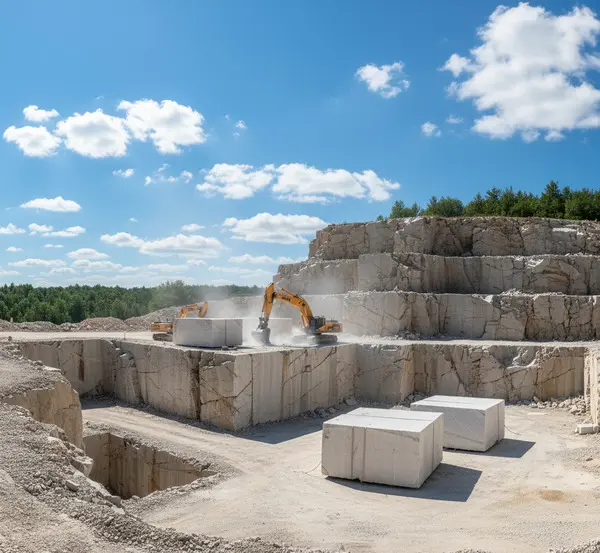
Sourcing the Stone: The Quarry
A stone slab’s journey begins at the quarry, where massive blocks of natural stone are carefully extracted from beneath the earth’s surface. Quarries are usually located in remote areas where these stone formations occur naturally.
The extraction process includes:
- Identifying the Quarry Site: Geologists and mining specialists locate areas containing high-quality stone deposits.
- Extraction: Large stone blocks are meticulously removed using specialized machinery, a process that requires precision and skill to maintain the stone’s structural integrity.
- Cutting the Blocks: Once removed, the blocks are transported to a processing facility, where they are cut into smaller, workable sections using gang saws or diamond wire saws.
Understanding the quarrying and cutting process is an important part of Natural Stone Care, as it helps ensure the stone retains its natural beauty and durability from the moment it leaves the earth.
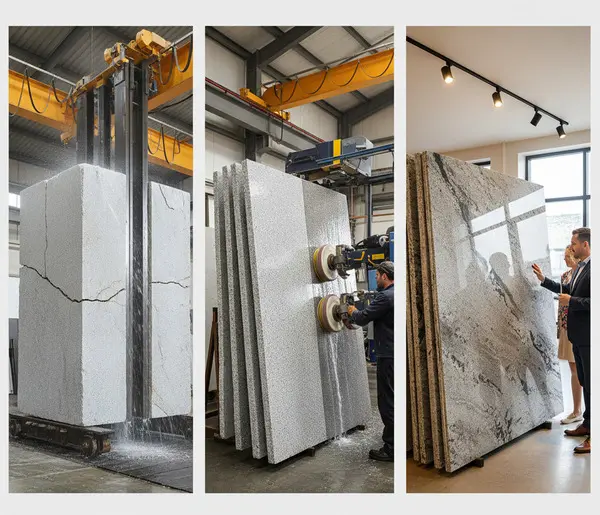
Fabrication: Transforming Raw Stone into Slabs
When stone blocks arrive at the fabrication center, they undergo several processes to transform them into finished slabs ready for installation. This stage ensures that each slab meets both aesthetic and structural standards.
The fabrication process includes:
- Slab Cutting: Blocks are cut into slabs of varying thickness, typically 2 cm to 3 cm using advanced cutting machinery, depending on their intended application.
- Surface Treatment: Slabs are then polished or honed to achieve the desired finish. Polishing enhances the stone’s natural color and veining, producing a reflective, mirror-like surface, while honing creates a smooth, matte appearance for a more subtle look.
- Quality Control: Each slab is carefully inspected for defects or irregularities. Only slabs that meet strict quality standards move forward to the next stage.
Once fabricated, the slabs are ready to be showcased in our display center, allowing customers to see the full beauty and variety of stones available for their projects.
Craftsmanship: Customizing the Slabs
After cutting and polishing, slabs can be customized to meet specific design requirements. This stage highlights the skill and innovation involved in creating beautiful, functional countertops.
The customization process includes:
- Templating: A precise countertop template is created to ensure a perfect fit. This template guides the cutting and shaping of the slab.
- Cutting and Shaping: Using computer-guided saws and routers, slabs are cut and formed according to the template. This allows for precise cuts, intricate designs, and detailed edge treatments.
- Finishing Touches: Edges are smoothed and polished, and additional features such as sink cutouts or custom inlays are added. These final details reflect the expertise and meticulous craftsmanship of the team.
This level of precision and artistry is especially important for Engineered Stone COS, ensuring each piece meets the highest standards of quality and design.
Installation: Bringing the Stone to Your Home
The final stage of the stone’s journey is its installation, where careful handling and professional expertise ensure the slab looks flawless and performs beautifully in your space.
The installation process includes:
- Transportation: Finished slabs are carefully transported to the home to prevent any damage during transit.
- Preparation: The installation area is prepared, and slabs are positioned and secured. This step often includes reinforcing the foundation to support the stone’s weight.
- Sealing: A protective sealant is applied to the surface, safeguarding the stone and extending its lifespan, especially important for porous materials like marble and limestone.
- Final Adjustments: The installation team makes any final tweaks to ensure a perfect fit. They verify levelness and alignment, confirming the countertops are stable, functional, and visually stunning.
Before leaving your home, you can also view similar slabs and installation examples at our showroom, helping you envision the finished look in your own space.
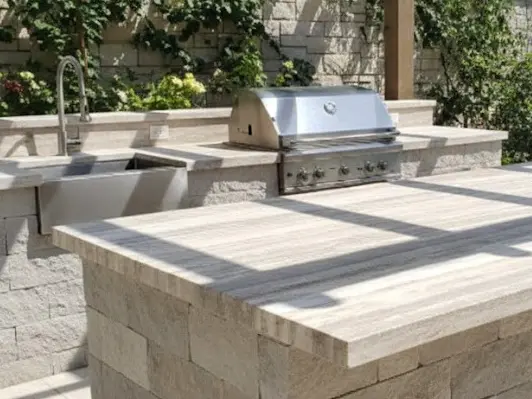
The Beauty and Value of Natural Stone
From quarry extraction to your finished countertop, a stone slab's journey exemplifies the fusion of natural splendor, skilled craftsmanship, and modern technology. Every slab of quartzite, granite, marble, onyx, or limestone is a distinctive work of art, offering exceptional aesthetics and performance for your home. Understanding this journey enhances your appreciation for these remarkable materials while highlighting the value and quality they bring to your living space.
Whether you’re updating your kitchen, designing a luxurious bathroom retreat, or adding a standout feature in any room, natural stone countertops provide enduring elegance and strength that withstand the test of time. Explore our wide range of stone selections and find the perfect slab to elevate your home’s beauty at one of our four exhibition spaces.
Conclusion
The transformation of raw stone from deep within the earth into a stunning countertop for your home represents a remarkable blend of nature's artistry and human expertise. Each step of this journey, from quarry extraction to fabrication, customization, and professional installation, requires meticulous attention to detail and specialized knowledge.
Understanding this comprehensive process helps you appreciate why natural stone slabs remain an unmatched choice for homeowners seeking both aesthetic appeal and lasting performance. When you select a natural stone countertop, you're not just choosing a functional surface; you're investing in a piece of geological history that has been expertly crafted to enhance your living space.
Visit one of our four showrooms in Reno, Sacramento, Minden, or Fernley to witness the stunning variety of marble, granite, quartzite, onyx, and limestone slabs and begin your own stone journey today.
Frequently Asked Questions
How long does the entire process take from quarry to installation?
The complete journey from quarry extraction to installation in your home typically spans several weeks to months. The quarrying and initial processing phase can take weeks, while fabrication and customization of your specific slabs usually require 2-3 weeks once your selection is made. Transportation and professional installation add another few days to a week. The timeline varies based on stone availability, customization complexity, and your project's scheduling requirements.
What's the difference between 2 cm and 3 cm thickness for stone slabs?
The thickness you choose affects both the appearance and structural requirements of your countertop. 2 cm slabs are thinner and typically require additional support or lamination for certain applications, while 3 cm slabs offer greater strength and durability without extra reinforcement. Thicker slabs also provide more substantial edge profile options and a more luxurious appearance. Your fabricator can recommend the appropriate thickness based on your specific application and design goals.
Why is sealing necessary for natural stone countertops?
Sealing creates a protective barrier on porous stone surfaces like marble, limestone, and certain granites, preventing liquids, oils, and stains from penetrating the stone. While the sealant doesn't make the stone completely impervious, it significantly extends the time you have to wipe up spills before they absorb into the material. The frequency of resealing depends on the stone type and usage, typically ranging from every six months to several years. Denser stones like quartzite may require less frequent sealing.
Can natural stone slabs be repaired if they chip or crack?
Minor chips and surface damage can often be repaired by professional stone restoration specialists using color-matched epoxy resins and polishing techniques. The repair visibility depends on the stone's color, pattern, and the damage location. However, significant cracks or structural damage may require slab replacement. Proper installation with adequate support and careful daily use minimize the risk of damage. Working with experienced fabricators and installers helps ensure your stone is properly supported from the beginning.
How do I choose the right stone type for my specific application?
Choosing the right stone depends on several factors, including your aesthetic preferences, budget, and the area where it will be used. Granite and quartzite are excellent for high-traffic kitchen countertops due to their durability, while marble makes a sophisticated statement in bathrooms or other lower-use spaces.
It’s also important to consider the stone’s porosity, maintenance needs, and resistance to heat and scratches. Visiting our showrooms lets you see full slabs in person, experience the unique character of each stone, and get expert guidance tailored to your project. When you’re ready, you can easily submit a slab quote request to receive detailed pricing and availability for your chosen material.