Why Your Next Home Upgrade Starts With the Right Surface
There is something undeniably magnetic about a room finished with real stone. Natural stone slabs deliver warmth, character, and permanence that no engineered surface can truly replicate.
When planning a renovation, surface selection defines the entire mood of a space. The wrong choice blends into the background. The right one becomes the centerpiece of every conversation.
Whether you are refreshing kitchen countertops, designing a new island layout, or upgrading a bathroom vanity, understanding your stone options is the first step. This guide covers the benefits, popular applications, and practical advice you need before making a final decision.
The Undeniable Benefits of Investing in Stone Countertops
Choosing stone over manufactured alternatives is a long-term investment in both beauty and function. Surfaces that endure daily wear while maintaining their appearance pay dividends for decades.
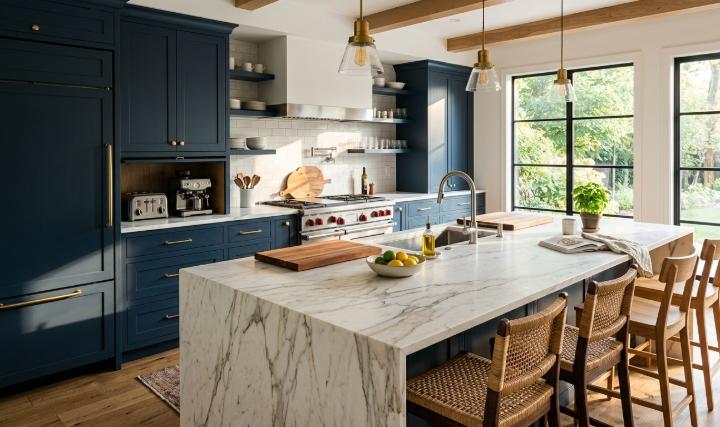
A kitchen island finished in natural stone becomes a gathering point in the home. It handles heat, resists daily scratches, and never goes out of style regardless of shifting design trends.
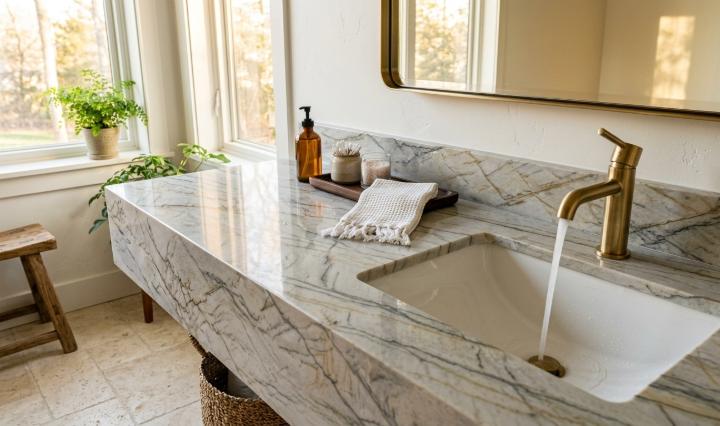
For a bathroom vanity, stone introduces a spa-quality finish that paint or laminate simply cannot achieve. Every slab carries its own unique veining pattern, making your installation genuinely one of a kind.
Key advantages of choosing natural stone:
- Increases home resale value across most property markets
- Each slab is unique due to natural veining and mineral variation
- Withstands heat and heavy use on kitchen island surfaces
- Moisture-resistant options available for bathroom vanity applications
- Outlasts most other countertop materials with proper sealing and care
- Works across multiple design styles from traditional to contemporary
According to the Natural Stone Institute, stone surfaces maintained with regular sealing and proper cleaning routines can retain their beauty for a lifetime. Caring for your investment is far simpler than most homeowners initially expect.
Design Applications for Every Room in the House
Natural stone performs beautifully across different rooms and layout styles. Knowing which variety suits each application saves both time and money during the planning phase.
Browsing a curated stone slab collection in person or online helps you visualize scale, pattern movement, and finish options before committing to a purchase.
Marble for Kitchen Islands and Feature Surfaces
Marble remains the gold standard for kitchen island surfaces in residential design. Its bright white background paired with flowing grey veins adds refinement to both simple and elaborate kitchen layouts.
Marble requires periodic sealing to guard against acidic foods and liquids. With that care routine in place, it actually develops a richer character over time rather than appearing worn.
Pairing a Calacatta or Carrara marble island top with dark lower cabinetry creates an elegant contrast. A honed or leathered finish softens the reflective quality while preserving the stone's natural depth.
For a comprehensive overview of stone selection for kitchen environments, Fine Homebuilding's countertop resource guide offers detailed, expert-reviewed information.
Quartzite and Granite for Bathroom Vanity Surfaces
Quartzite is rapidly overtaking marble as the preferred slab for bathroom vanity applications. Its crystalline structure provides the visual elegance of marble alongside far greater resistance to moisture and scratching.
A quartzite slab in soft ivory or pale grey sets an elevated tone in any bathroom. The natural variation in the stone ensures that no two vanity tops will ever look identical.
Granite remains a dependable choice for both bathroom countertops and high-traffic kitchen surfaces. Its dense mineral composition makes it one of the most moisture-resistant natural stones available for residential use.
Travertine and Limestone for Warm, Organic Countertops
Travertine delivers a warm, earthy character that suits Mediterranean, transitional, and Tuscan-inspired interiors beautifully. Its subtle texture creates an organic, inviting quality that polished stones sometimes lack.
Limestone offers a softer, more restrained palette that coordinates naturally with minimalist and Scandinavian design schemes. It pairs particularly well with brushed brass or matte black plumbing fixtures for a modern, cohesive finish.
How to Select and Source the Right Slab for Your Project
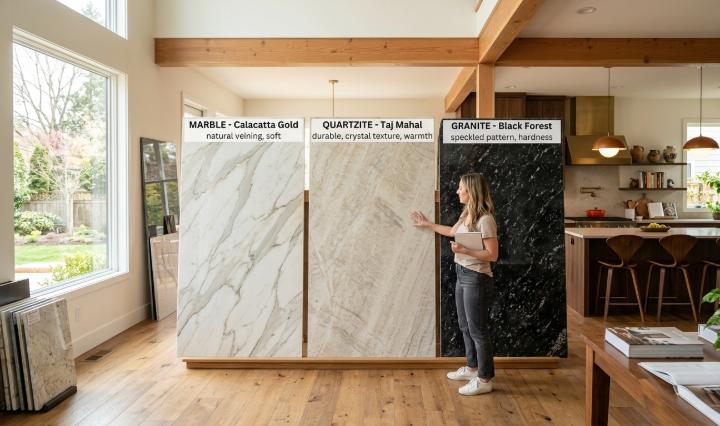
Selecting a slab in person transforms the entire decision-making process. Photographs rarely capture the true scale, depth, and movement of a full stone panel.
A showroom visit allows you to hold physical samples beside cabinet samples, tile swatches, and paint chips. That direct comparison removes guesswork and prevents expensive surprises after installation.
Shop local to connect with stone specialists who understand regional design preferences and can help match your budget to the best available material.
A 5-Step Slab Selection Walkthrough:
- Define your design style before visiting any showroom, whether modern, farmhouse, or transitional
- Set a realistic budget range that accounts for both material and professional installation costs
- Bring physical samples of cabinet doors, flooring, and fixtures for accurate side-by-side comparison
- Request full-slab layout images to understand how the veining pattern will appear across the installed surface
- Confirm sealing and maintenance requirements with your supplier before finalizing your selection
Trade professionals handling client renovations can apply for a professional trade account to access priority service, exclusive pricing, and a dedicated project support team.
Showroom locations in Reno, Minden, Fernley, and Sacramento all offer hands-on slab viewing and consultations with experienced stone specialists.
Stone Variety Comparison at a Glance:
Feature | Marble | Quartzite | Granite | Travertine |
Appearance | Soft, elegant veining | Crystalline patterning | Speckled, earthy tones | Warm, textured surface |
Hardness | Moderate | High | Very High | Moderate |
Maintenance | Regular sealing | Occasional sealing | Low maintenance | Filling and sealing |
Best Use | Vanities, islands | Countertops, vanities | High-traffic kitchens | Feature walls, floors |
Price Range | Moderate to High | Moderate to High | Moderate | Affordable to Mid |
Pros and Cons of Natural Stone Slabs
Pros:
- Genuinely timeless aesthetic that never follows a trend cycle
- Raises property resale value in most residential markets
- Extremely durable under daily use when properly maintained
- Wide spectrum of colors, finishes, and pattern intensities available
Cons:
- Requires periodic sealing to maintain stain and moisture resistance
- Heavier than engineered stone alternatives, requiring structural consideration
- Certain varieties, particularly marble, are sensitive to acidic substances
For marble-specific care and cleaning techniques, Bob Vila's marble countertop maintenance guide provides straightforward, practical advice for homeowners at every experience level.
Conclusion
Natural stone slabs stand apart from every other surface material available to homeowners today. They combine organic beauty, structural durability, and genuine individuality in a way that cannot be manufactured or replicated.
From a statement-making kitchen island to a serene bathroom vanity, the correct slab choice unifies a room and holds its appeal through every design trend that comes and goes.
Ready to find the one that speaks to you? Explore the full curated collection featuring marble, quartzite, granite, travertine, limestone, and more. The right slab is already waiting.
Frequently Asked Questions
What is the most popular natural stone for kitchen countertops?
Marble and quartzite are the top choices for kitchen countertop surfaces. Marble delivers timeless visual elegance, while quartzite offers greater hardness and reduced maintenance demands for busy cooking environments.
How often do natural stone countertops need to be sealed?
Most stone countertops benefit from sealing once per year. High-use surfaces such as kitchen islands may require sealing every six months to maintain full protection against staining and moisture.
Is natural stone a practical choice for a bathroom vanity?
Yes, stone is an excellent material for bathroom vanity surfaces. Quartzite and granite are particularly well-suited to wet conditions because of their high density and natural moisture resistance.
Can I view full slabs in person before purchasing?
Absolutely. Visiting a dedicated showroom is the most reliable way to assess color accuracy, veining movement, and true surface scale. In-person consultations with stone specialists are available at showroom locations in Reno, Minden, and Sacramento.
What is the difference between marble and quartzite?
Marble is a metamorphic limestone prized for its soft, flowing veining and refined appearance. Quartzite is a harder metamorphic sandstone that visually resembles marble but offers significantly greater resistance to scratching, etching, and daily wear.