The standard height for countertops is 36 inches, measured from the finished floor to the top of the surface. This applies to most kitchen countertops and is the accepted industry benchmark for residential construction. Bathroom vanities follow a slightly different standard, typically ranging from 32 inches for traditional vanities to 34 to 36 inches for comfort-height models.
Here is a quick reference for standard countertop heights by space:
- Kitchen countertops: 36 inches
- Kitchen islands for prep: 36 inches
- Kitchen islands for dining: 42 to 48 inches
- Traditional bathroom vanity: 32 inches
- Comfort-height bathroom vanity: 34 to 36 inches
- ADA-compliant countertops: 34 inches maximum
These measurements exist because of ergonomic research and decades of construction practice, but they are not fixed rules. Factors like user height, countertop material thickness, flooring type, and accessibility needs can all influence what the right height is for your specific space. This guide breaks down everything you need to know about standard countertop heights for kitchens and bathrooms, when to customize, and the most common mistakes to avoid.
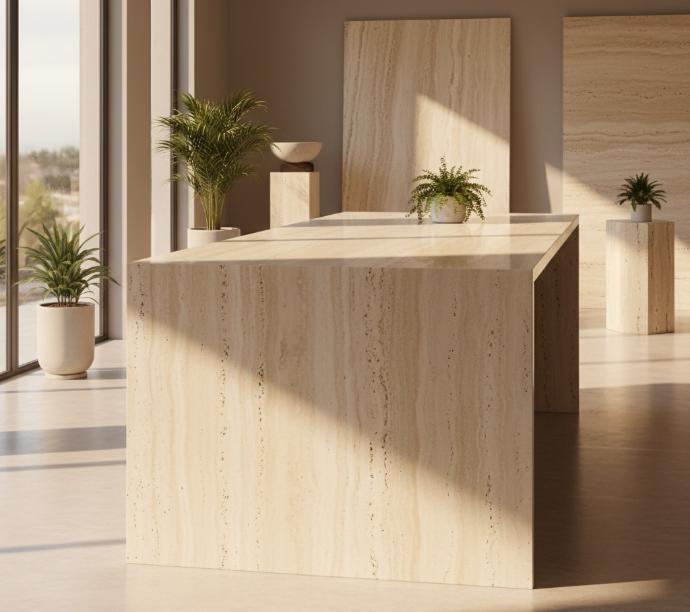
Standard Countertop Height Explained
Standard countertop height provides the foundational framework that guides residential construction across the country. It keeps cabinetry, appliances, and surface installations consistent while meeting the ergonomic needs of the widest possible range of users.
Why 36 Inches Is the Industry Benchmark
The 36-inch standard has earned its place as the industry benchmark because it aligns closely with the average adult elbow height when standing. At this position, most people can prep food, clean surfaces, and handle everyday tasks without excessive bending or shoulder strain. From a construction standpoint, this measurement is achieved by combining a 34.5-inch base cabinet with a 1.5-inch countertop, a pairing that creates a reliable, repeatable system across kitchens of every style and size. Appliance manufacturers have also designed dishwashers, ranges, and under-counter refrigerators to integrate seamlessly at this height, further reinforcing its widespread adoption.
How Countertop Height Is Properly Measured
Countertop height is measured from the finished floor surface up to the top of the installed countertop, accounting for flooring thickness, underlayment, the cabinet box height, and the countertop material itself. Even minor variations, such as switching from tile flooring to hardwood, can subtly shift the final working height if not accounted for during planning. This becomes especially important in remodels where new flooring is installed after the cabinetry is already set. Accurate early planning ensures the finished surface performs exactly as intended, both ergonomically and visually. For a deeper look at how stone surface thickness and weight factor into countertop planning, this guide from Fine Homebuilding is a helpful reference.
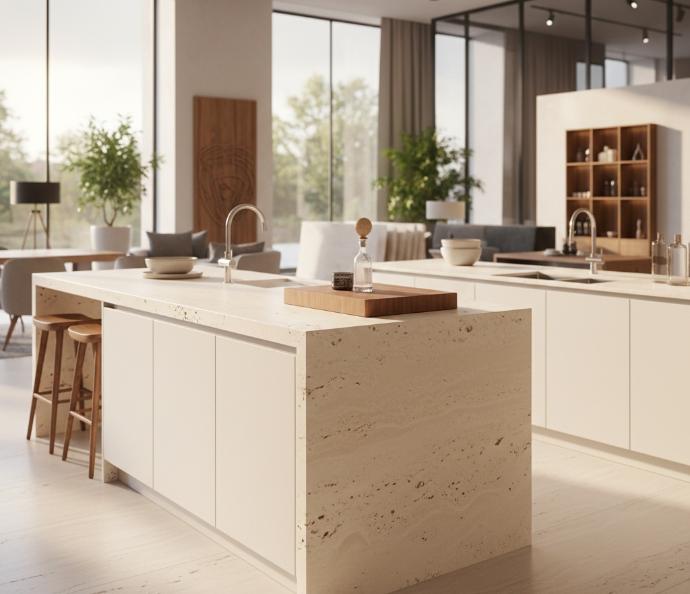
Kitchen Countertop Height Standards
The Standard Kitchen Work Surface
A 36-inch kitchen countertop height provides a balanced working surface that allows users to chop, mix, and prepare food without placing strain on the wrists or lower back. It aligns precisely with standard built-in appliances, ensuring a clean, seamless visual line throughout the kitchen. For most households, this height is the ideal starting point before any ergonomic adjustments are considered.
Kitchen Island Countertop Height
Kitchen island height should be determined by how the island is actually used rather than simply defaulting to the standard 36-inch perimeter height. Islands dedicated to food prep typically match perimeter counters to maintain ergonomic consistency. When an island doubles as a casual dining spot, a raised surface between 42 and 48 inches can visually separate the seating area from the work zone, a particularly effective move in open-plan kitchens where you want to define space without adding walls.
Counter Height vs. Bar Height Seating
Counter-height seating, paired with a 36-inch surface, typically calls for stools between 24 and 26 inches tall, offering a comfortable and accessible dining experience for most users. Bar-height countertops, which rise to around 42 inches, require taller stools and create a more elevated, pub-style feel. While bar height can add visual drama, it can feel less welcoming for children, older adults, or anyone with mobility concerns. Counter height strikes a better balance between inclusivity and style for everyday family use.
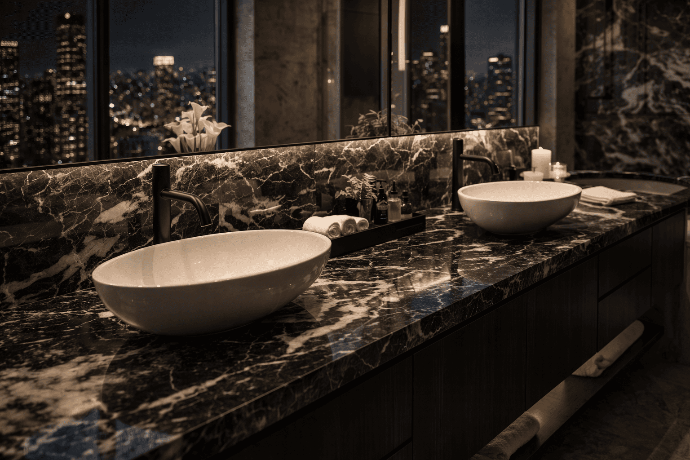
Bathroom Countertop Height Guidelines
Traditional Bathroom Vanity Height
Traditional bathroom vanity heights typically sit around 32 inches, a standard rooted in older construction conventions that prioritized family-friendly layouts. While this height is more accessible for children, it requires adult users to bend noticeably during everyday routines like brushing teeth or washing hands. Today, 32-inch vanities are best suited for guest bathrooms or secondary spaces rather than primary bathrooms.
Comfort Height Vanities for Modern Bathrooms
Comfort-height vanities range from 34 to 36 inches and are now the preferred choice for most modern primary bathrooms. This range supports a more natural standing posture, reduces strain on the lower back and shoulders, and pairs well with contemporary sink styles and faucet configurations. Natural stone and porcelain slab countertops at this height also tend to present beautifully, as the proportions feel balanced and intentional. If you are exploring stone slab options for a bathroom countertop, comfort height is almost always the better investment for long-term daily ease.
ADA-Compliant Bathroom Counter Heights
ADA-compliant countertops must sit no higher than 34 inches from the finished floor, with specific provisions for knee and toe clearance beneath the sink to accommodate wheelchair users. When thoughtfully executed, ADA-compliant design enhances independence and inclusivity without making the space feel institutional. These guidelines serve as a useful reference for any bathroom intended to remain functional and accessible over the long term.
Countertop Height and User Ergonomics
Matching Countertop Height to the User
Ideal countertop height correlates more closely with elbow height than overall stature, since elbow alignment determines how comfortably tasks can be performed over time. Even modest adjustments of one to two inches can make a meaningful difference in reducing fatigue, improving posture, and preventing cumulative strain. Custom cabinetry makes these adjustments straightforward, allowing homeowners to fine-tune heights without disrupting the overall design.
Ergonomics for Food Prep and Cooking
Different kitchen tasks benefit from different working heights. Lower surfaces, typically between 32 and 34 inches, provide better leverage for force-intensive tasks like kneading dough or rolling pastry. Slightly higher surfaces reduce neck and shoulder strain during precision work such as detailed slicing. In kitchens designed for serious home cooks, tiered work surfaces that incorporate two distinct heights can dramatically improve both efficiency and physical comfort. For more on how stone surfaces hold up to the demands of an active kitchen, This Old House offers a thorough breakdown of stone countertop performance.
Standing vs. Seated Use
Ergonomic planning must account for whether tasks are performed while standing, seated, or a mix of both. Seated use typically requires countertops between 28 and 32 inches to maintain proper reach and prevent shoulder elevation, which is especially important for wheelchair users or anyone who benefits from a seated work position. Addressing both standing and seated use from the outset makes countertops more functional and inclusive over the long term.
Custom Heights and Common Mistakes to Avoid
Custom countertop heights are most valuable for taller households, homeowners with specific mobility needs, dedicated baking stations, or households practicing aging-in-place design. When executed correctly, the result is a surface that fits the user rather than forcing the user to adapt. Introducing height variation across a single kitchen, such as a lower prep station alongside a standard cooking zone, can also define functional areas and improve workflow without adding walls or partitions.
The most frequent planning mistake is failing to account for flooring thickness when calculating final height. New tile flooring adds meaningful elevation, and if installed after cabinetry without being factored into the original measurements, the countertop can end up noticeably higher than intended. Another common error is selecting seating that does not align with the finished counter height, resulting in awkward leg clearance and poor posture at the island.
Thick slab materials and dramatic edge profiles should also be coordinated with cabinet height from the very beginning of the design process, not added at the end as aesthetic upgrades. It is worth noting that engineered stone countertops, which have become increasingly popular in recent years, come with their own set of material and safety considerations that homeowners should be aware of. The CDC has published guidance on engineered stone that is worth reviewing before making a final material decision. And it always pays to think beyond the primary user. Designing with the full range of household members in mind, including children, older family members, and guests, produces spaces that remain functional across decades of use.
Conclusion
Standard countertop height exists because it works for most people, in most kitchens and bathrooms, most of the time. The 36-inch benchmark is the product of ergonomic research, decades of construction practice, and the practical demands of modern living. But it is a starting point, not a rule. Understanding when to follow it, when to adjust it, and how material thickness and edge profiles influence the final result allows you to design spaces that genuinely perform for the people who use them every day.
Whether you are planning a full kitchen renovation, updating a bathroom, or exploring natural stone and tile surfaces for a countertop project, our team is here to help.
You can also find a showroom near you to explore materials in person. Visit our locations in Reno, Minden, Sacramento, or Fernley to connect with a designer who can help you bring your vision to life.
Frequently Asked Questions
What is the standard countertop height for a kitchen?
The standard kitchen countertop height is 36 inches, measured from the finished floor to the top of the counter surface. This is achieved through a combination of a 34.5-inch base cabinet and a 1.5-inch countertop and is considered the ergonomic benchmark for most adult users during everyday food preparation tasks.
What is the difference between counter height and bar height?
Counter height refers to a surface at approximately 36 inches, paired with stools measuring 24 to 26 inches. Bar height typically measures around 42 inches and requires taller stools in the 28-to-30-inch range. Counter height is more inclusive for everyday use, while bar height suits entertaining-focused spaces.
What height should a bathroom vanity be?
Traditional bathroom vanities sit at 32 inches, while comfort-height vanities range from 34 to 36 inches. For most adults in a primary bathroom, comfort height is the better choice as it reduces back and shoulder strain during daily grooming. ADA-compliant countertops must not exceed 34 inches and require specific knee and toe clearance beneath the sink.
Can I customize my countertop height?
Yes. Custom countertop heights are achievable by adjusting base cabinetry before installation. They are particularly beneficial for taller or shorter users, households with accessibility needs, dedicated baking stations, or aging-in-place designs. Early coordination between your designer, cabinetmaker, and installer is essential for the best result.
Does countertop material thickness affect the final height?
Absolutely. Thick natural stone slabs, porcelain panels, and mitered-edge countertops all add measurable height to the finished surface. If a thicker material is selected without adjusting the base cabinet height, the countertop can end up higher than intended. Always coordinate material specifications with cabinet height during the planning phase.