What is the difference between 2cm and 3cm stone slabs? The thickness of a stone slab determines its structural strength, the edge profiles a fabricator can create, and whether the surface needs additional substrate support. A 2cm slab (approximately ¾ inch) is lighter and better suited for wall cladding, backsplash panels, and vertical surfaces. A 3cm slab (approximately 1¼ inches) is the standard for kitchen countertops, bathroom vanities with overhangs, and outdoor entertainment surfaces because it holds its own weight without backing.
Understanding this distinction upfront helps homeowners and designers avoid costly mismatches between material and application, whether working with natural granite, marble, quartzite, or large-format porcelain.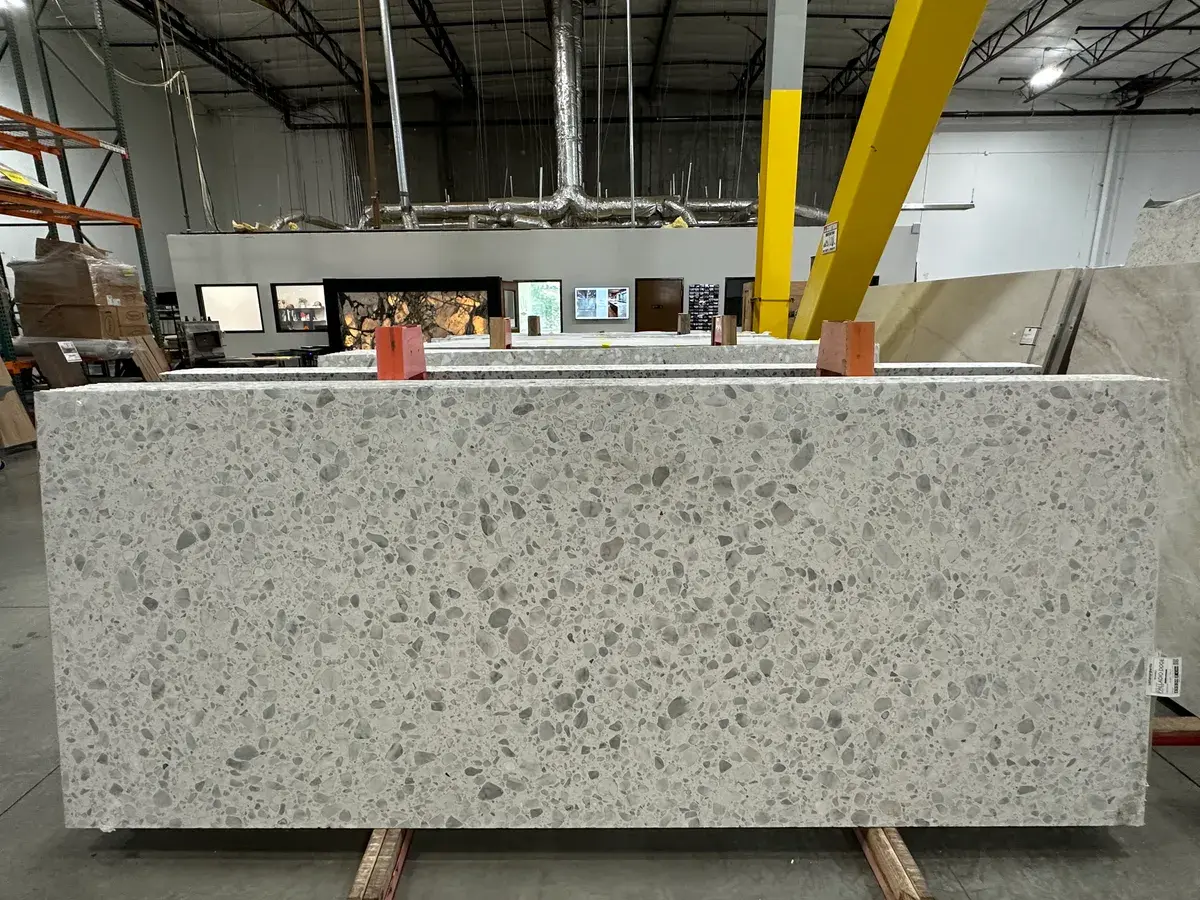
What Slab Thickness Actually Means
When fabricators and suppliers refer to slab thickness, they are describing the depth of the stone from its face to its back edge. This measurement determines how much structural support a slab requires, how it handles weight and stress over time, and what the finished edge profile will look like once shaped.
For natural stone varieties such as granite, marble, quartzite, travertine, and dolomite, both 2cm and 3cm options are commonly available depending on the quarry and the specific material. Engineered and porcelain slab formats, including those found in our live slab inventory, may also include thinner format options such as 6mm and 12mm for specialized wall and cladding applications.
The choice between these two measurements is not purely visual. It is a functional decision shaped by the intended application, the daily demands placed on the surface, and the support structure beneath it.
2cm Slabs: Lightweight and Versatile
A 2cm slab is the lighter of the two standard formats, making it well suited for applications where load is a consideration. Wall cladding, backsplash panels, furniture surfaces, and certain bathroom vanity configurations all benefit from the reduced weight of a thinner format. When stone is applied vertically or bonded to an existing substrate, a 2cm thickness helps keep the overall structural load manageable without sacrificing the visual impact of natural stone.
In residential countertop settings, thinner natural stone is sometimes paired with a plywood or substrate backing to add stability. This approach is especially common in bathroom vanities where overhangs are minimal and the surface does not face the same daily impact stress as a high-traffic kitchen workspace. According to This Old House, understanding how stone thickness interacts with substrate support is one of the more practical decisions homeowners face when planning a countertop project.
Porcelain slab formats in the 6mm range, available through our Infinity Surfaces porcelain slab collection, follow a similar principle. These thinner formats are specifically engineered for lightweight cladding and vertical surfaces rather than heavy-duty countertop use.
For homeowners seeking the look of stone on a wall feature or kitchen backsplash without adding significant structural weight, a thinner slab profile is often a practical solution worth considering.
3cm Slabs: The Countertop Standard
The 3cm thickness has become the dominant choice for kitchen countertops, bathroom surfaces, and any application where the stone is freestanding or subject to consistent daily use. Its added depth provides greater rigidity, meaning it typically does not require a substrate backing to perform reliably. Stone at this thickness can span cabinet openings, support overhangs for seating, and bear the weight of kitchen appliances without reinforcement beneath.
From a design standpoint, 3cm stone also carries a more substantial visual presence. The edge profile has more material to work with, allowing fabricators to create a wider range of treatments, from simple eased edges to elaborate profiles that become a focal point of the space. A waterfall countertop, where the stone continues vertically down the sides of an island, generally requires this thickness to look visually proportional and balanced.
According to the Natural Stone Institute, heavier stone applications benefit significantly from proper structural support, and 3cm slabs are well suited to countertop spans that exceed standard cabinet widths. This is why most granite, quartzite, and marble countertop projects specify this format as the default.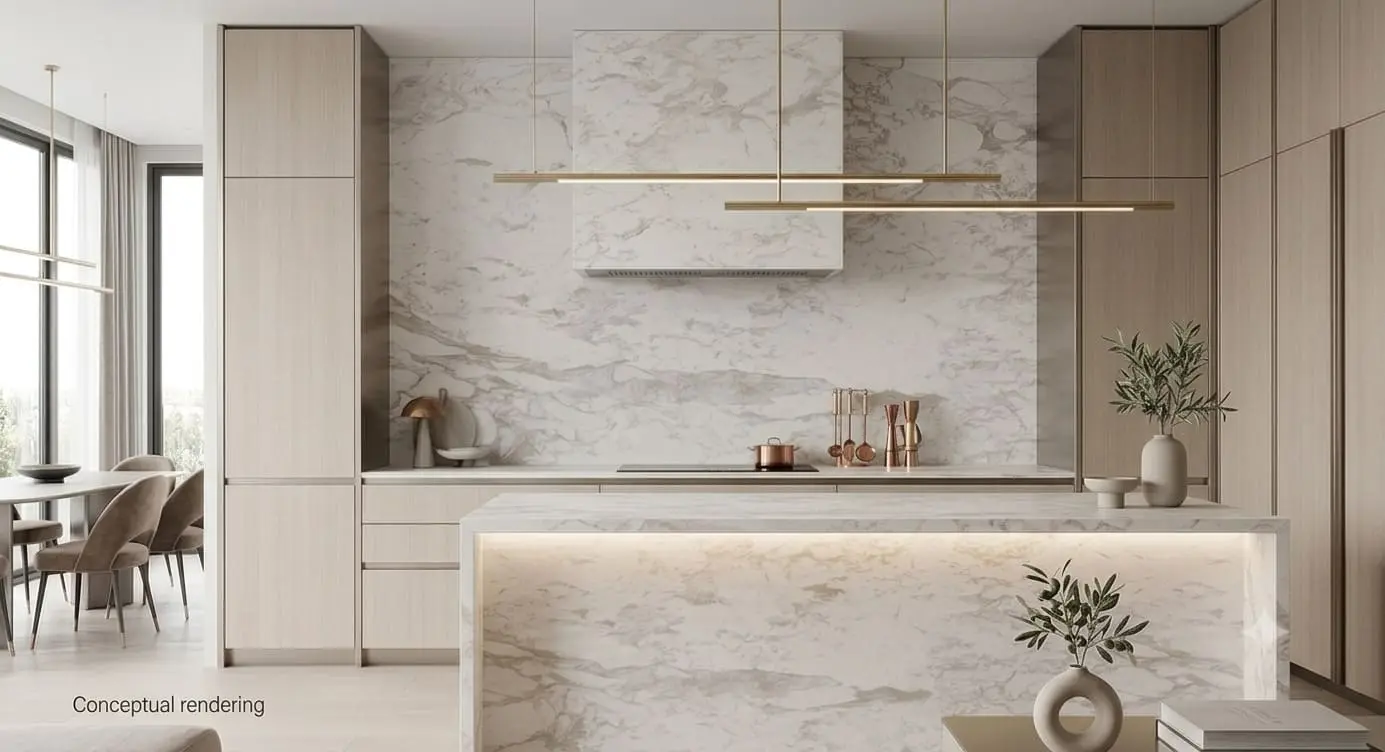
Matching Thickness to Application
Rather than thinking of one thickness as universally superior, it is more useful to match the measurement to the intended use. Kitchen countertops and islands generally perform better at 3cm. These surfaces endure impact from cutting, the weight of heavy cookware, heat exposure, and the kind of repeated daily stress that a thinner slab may be less equipped to absorb over the long term.
Bathroom vanities can work well in either format depending on the overall design. A vanity top with a simple undermount sink and minimal overhang may perform reliably for years at 2cm. A floating vanity or a vessel sink configuration with a larger surface area will generally benefit from the added rigidity a thicker slab provides.
For outdoor applications, thickness intersects with the stone's own durability profile. Materials such as granite and quartzite, available through our stone surface collection, tend to perform well outdoors in part because their density can help resist moisture and temperature variation. A 3cm outdoor countertop for an exterior kitchen is generally better suited to handle both structural demands and environmental exposure than a thinner alternative.
Wall panels and vertical cladding remain the clearest use case for thinner formats. When stone is adhered to a wall rather than resting on a cabinet structure, the reduced weight of 2cm or a thin-format porcelain is not a compromise but a purposeful design advantage.
Shop Nova Tile and Stone's Overstock Sale for deeply discounted tile selections available for in-store pickup across their Reno, Minden, Sacramento, and Fernley locations.
Edge Profiles and Visual Impact by Thickness
One area where thickness creates a noticeable difference is in the finished edge. A 3cm slab gives fabricators more material to shape, opening up possibilities for mitered edges, beveled profiles, ogee details, and the kind of substantial straight edge that reads as refined and intentional in a high-end kitchen setting.
With a 2cm slab, edge options are more limited simply because there is less stone to work with. A laminated edge, where a strip of matching stone is bonded beneath the visible edge to create the appearance of greater depth, is a common technique used to achieve a more substantial look on thinner slabs without using full 3cm material throughout.
This approach is widely used in bathroom vanities and furniture-style applications where the full countertop does not require 3cm weight, but the design still calls for a finished edge that looks polished and considered. Homeowners weighing their countertop options can also explore the Fine Homebuilding guide to natural stone countertops for a broader look at how thickness, material, and edge selection work together.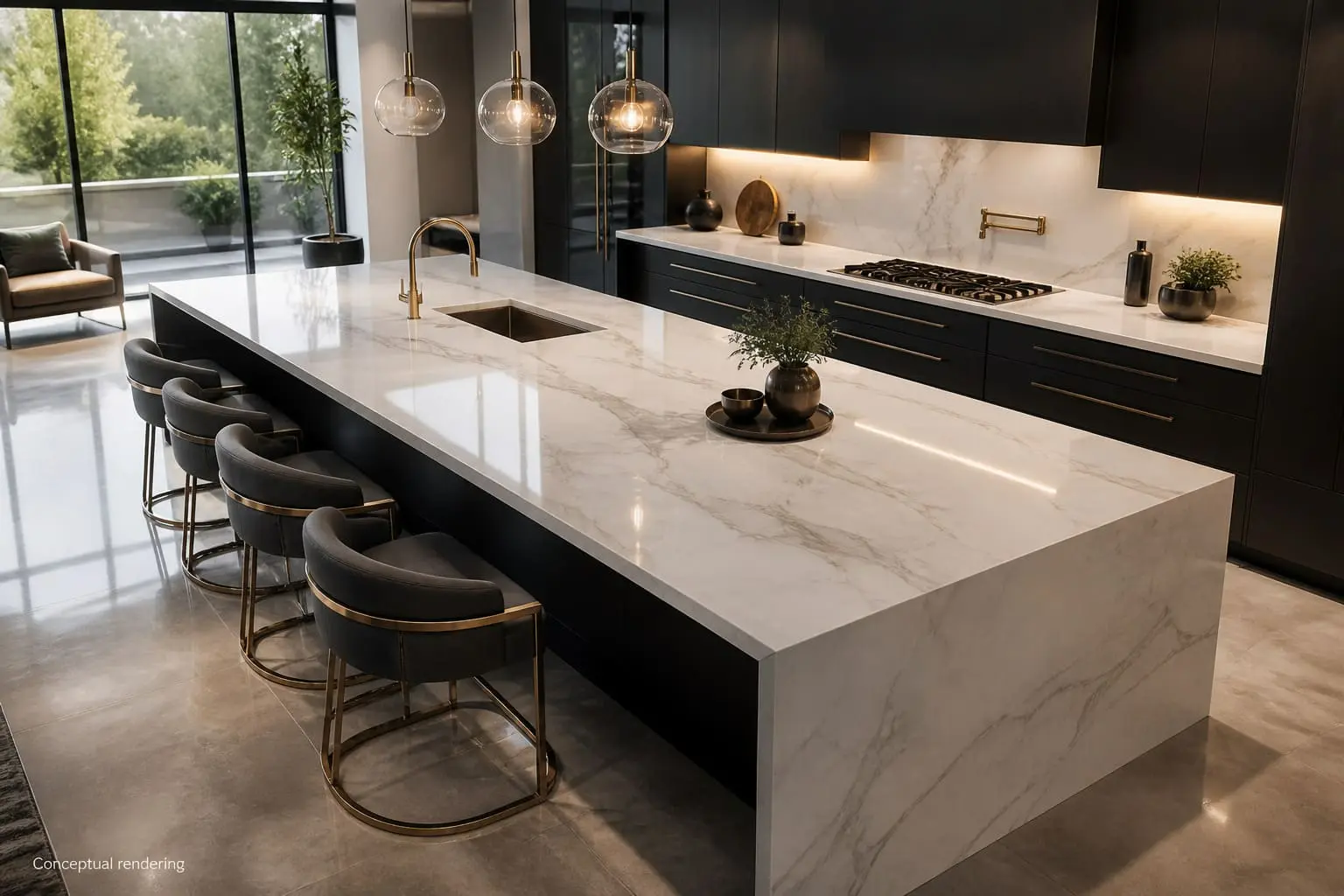
Porcelain Slab Thickness: A Different Set of Rules
Porcelain and sintered stone slabs follow a slightly different thickness logic than natural stone. Because of how they are engineered, porcelain slabs can deliver strong performance at thinner measurements. A 12mm porcelain slab from our Infinity Surfaces collection may offer countertop-suitable durability without requiring the same depth as a natural stone equivalent, though suitability still depends on the specific product, application, and installation conditions.
The 6mm option, available in select formats, is specifically suited to wall coverage, interior cladding, and design applications where the goal is visual continuity across large surfaces rather than structural countertop performance.
This distinction matters because porcelain's non-porous, engineered composition generally allows it to achieve strong impact resistance, heat resistance, and scratch resistance at a thinner profile than natural stone typically requires. For projects where weight is a primary concern or where large vertical surfaces need to be covered efficiently, porcelain slab formats can offer a technically sound and visually compelling alternative.
Choosing the Right Format for Your Project
When evaluating stone slab thickness for a specific application, the most useful starting point is the surface itself. A high-use kitchen countertop with a seating overhang calls for 3cm. A bathroom feature wall using stone as a visual backdrop calls for 2cm or a thin-format porcelain. An outdoor kitchen surface benefits from a thicker natural stone that can handle both use and weather exposure. A delicate furniture application or an interior accent panel works well in a lighter format.
Our team offers free design consultations to help homeowners and professionals work through these decisions with the actual slabs in hand. Seeing the material in person, understanding the edge options available, and discussing the structural context of the project are all part of arriving at a decision that holds up well beyond the day of installation. If you are ready to move forward, you can also submit a slab quote request to get the process started.
Conclusion
Slab thickness is one of those technical details that shapes nearly every aspect of how a stone surface performs and presents itself. The difference between 2cm and 3cm is not simply a measurement. It reflects a set of structural requirements, design possibilities, and long-term expectations that vary considerably depending on where and how the stone will be used.
Nova Tile and Stone carries a broad range of natural stone and porcelain slab options across multiple thickness formats, giving every project the right material for the right application. Whether the focus is granite for a kitchen island, travertine for an outdoor wall, or a large-format porcelain for a feature surface, understanding thickness puts you in a far stronger position to choose with confidence.
Frequently Asked Questions
What is the main difference between a 2cm and 3cm stone slab?
The primary difference is structural depth. A 3cm slab provides greater rigidity and is generally better suited for countertop applications with overhangs, while a 2cm slab is lighter and more commonly used for wall cladding, vertical surfaces, and applications where substrate backing provides added support.
Is 3cm always the right choice for kitchen countertops?
For most kitchen countertop applications, 3cm is the recommended thickness because it provides the structural stability needed for daily use, including impact from kitchen tools, the weight of appliances, and overhangs for seating. Specific project conditions such as substrate type and cabinet configuration can still influence the final recommendation.
Can porcelain slabs perform as well as natural stone at thinner measurements?
In many cases, yes. Because porcelain is an engineered material with a non-porous, dense composition, it can achieve comparable performance to natural stone at thinner measurements. A 12mm porcelain slab, for example, may be suitable for countertop applications where a natural stone equivalent would typically require 3cm thickness, though the specific product and installation conditions always matter.
Does slab thickness affect the types of edge profiles available?
It does. A thicker slab gives fabricators more material to work with, which expands the range of edge profiles that can be cut. Thinner slabs have fewer options, though laminated edges can be used to create the visual appearance of greater depth when a more substantial finished edge is desired.
How does slab thickness factor into outdoor applications?
For outdoor countertops and feature surfaces, a 3cm natural stone is generally preferred because it tends to handle environmental exposure, temperature variation, and structural load more reliably than thinner alternatives. Dense natural stones such as granite and quartzite are often well suited to exterior applications, and the added depth of 3cm can provide greater long-term performance in those conditions, particularly when the stone is properly sealed and maintained.