Slab shower walls are large-format panels of natural or engineered stone used to line the interior of a shower enclosure. Unlike traditional tile, slabs are installed in a small number of full-sized pieces, creating a seamless surface with minimal grout lines. The most common materials are marble, granite, quartzite, porcelain, and sintered stone, each offering a different balance of aesthetics, durability, and maintenance. Porcelain and sintered stone are non-porous and require no sealing, making them the lowest-maintenance options. Natural stone materials like marble and quartzite deliver a more luxurious look but require periodic sealing to perform well in wet environments. Slab shower walls are available in polished, honed, and leathered finishes and suit modern, transitional, and spa-inspired bathroom designs.
What Are Slab Shower Walls?
Slab shower walls replace individual tiles with large, single-piece panels of stone or engineered material. Rather than assembling dozens of smaller tiles around a shower enclosure, slab installations use a handful of full-sized panels that cover each wall from floor to ceiling, or close to it, with minimal visible seams.
Standard slab dimensions run approximately 9 feet by 5 feet, with thickness options in 2cm and 3cm for natural stone. Large-format porcelain and sintered stone slabs are available in even more expansive formats, with some panels reaching up to 63 inches by 126 inches. That scale dramatically reduces the number of joints in a shower, cutting down on grout upkeep and creating the uninterrupted surface that defines the slab shower aesthetic.
The appeal is both visual and practical. Fewer grout lines mean fewer places for moisture, soap residue, and mildew to accumulate. The result is a shower surface that is easier to clean, more resistant to everyday wear, and visually calmer than a tiled enclosure. Browse our natural stone and engineered slab options to see the full range of materials available for shower wall applications.
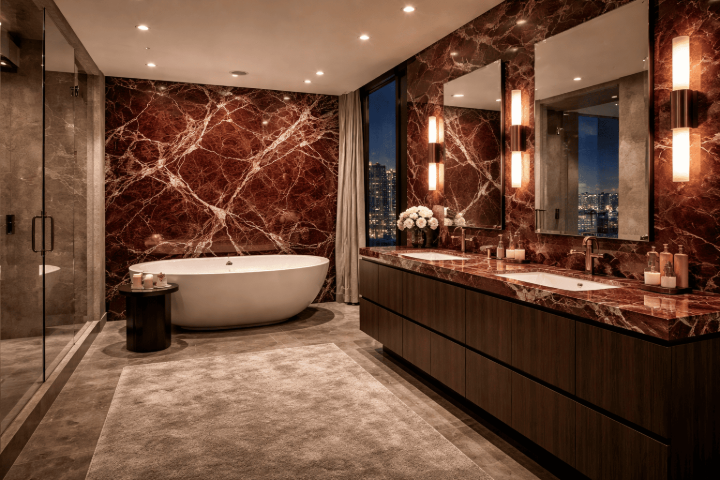
Best Stone Types for Slab Shower Walls
Choosing the right material is the most important decision in a slab shower project. Each stone brings its own look, performance profile, and maintenance considerations.
Marble Marble is the classic choice for slab shower walls. Its soft white and cream backgrounds, paired with flowing grey or gold veining, create the timeless spa aesthetic that drives much of the demand for slab showers. Marble is cooler to the touch and reflects light beautifully, which opens up smaller shower spaces visually. Because marble is a porous stone, it requires sealing before use in a wet environment and periodic resealing over time to prevent staining and etching from soap and cleaning products. With proper care, a marble slab shower is a lasting investment that elevates the entire bathroom. This Old House offers a helpful overview of how different natural stones perform across wet and high-use applications.
Granite Granite brings durability and visual depth to slab shower walls. Its coarse-grained, speckled surface is distinctive, and the interlocking mineral patterns create a cohesive continuity across a full shower enclosure. Granite is one of the harder natural stones, making it highly resistant to chipping and physical wear. Like marble, granite is porous and requires sealing in wet applications, but it is generally more forgiving of moisture exposure than softer stones.
Quartzite Quartzite is a metamorphic natural stone that combines the aesthetic warmth of marble with considerably greater hardness. Its resistance to water, heat, and scratching makes it an excellent performer in shower environments. Quartzite slab shower walls are particularly well-suited for walk-in and curbless shower designs where the stone is always in full view. Because quartzite can closely resemble marble in appearance, it is a popular choice for homeowners who want the look of marble without the associated sensitivity to acidic cleaners and etching.
Porcelain Porcelain slabs have become one of the most popular choices for modern slab shower walls. As a non-porous engineered material, porcelain never requires sealing and resists mold, bacteria, and moisture naturally. Advanced digital printing technology allows porcelain to replicate the appearance of marble, granite, concrete, and travertine with remarkable accuracy, offering a broad range of design options. Large-format porcelain panels are also lighter than natural stone, which simplifies handling during installation. For homeowners who want a grout-free shower with minimal long-term maintenance, porcelain is a compelling option.
Sintered Stone Sintered stone, including materials like Dekton and similar products, is manufactured by applying extreme heat and pressure to raw minerals to create an ultra-dense, non-porous surface. Sintered stone slabs are highly resistant to UV exposure, heat, moisture, and surface staining, making them a premium choice for both indoor and outdoor applications. Their sleek, contemporary appearance and exceptional durability place them at the top of the performance spectrum for shower wall applications. The CDC and NIOSH provide guidance on working safely with engineered stone materials during fabrication and handling.
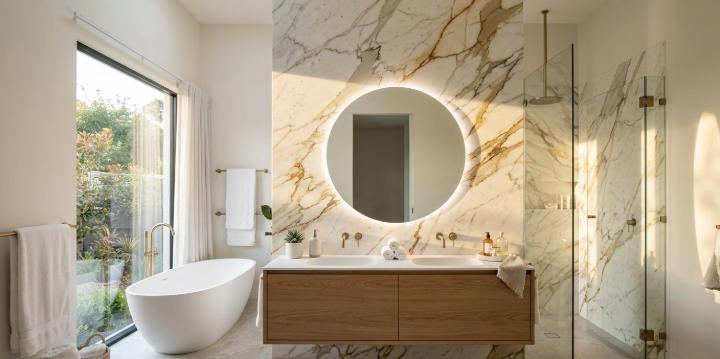
Slab Shower Walls vs. Tile: Key Differences
The choice between slabs and tile is one of the most common questions we hear from customers visiting our showrooms. Both are excellent options, but they serve different design goals and maintenance preferences.
Grout Maintenance The defining advantage of slab shower walls is the near-complete elimination of grout lines. Traditional tile showers have dozens, sometimes hundreds, of grout joints that trap soap scum, moisture, and mildew over time. Slab showers reduce that surface dramatically, making routine cleaning faster and more effective.
Aesthetic Impact Tile offers considerable design flexibility through patterns, colors, and layouts. Slab walls, by contrast, prioritize continuity. They let the natural character of the stone, its veining, movement, and texture, speak without interruption. For homeowners pursuing a spa-like or minimalist aesthetic, slabs are typically the stronger choice.
Repairability Individual damaged tiles can be replaced without disturbing the rest of the installation. Slabs are more difficult to repair if a panel is chipped or cracked, though the durability of quality stone and porcelain makes damage uncommon in normal use.
Finish Options for Slab Shower Walls
The finish you choose affects both the look and the maintenance of your slab shower walls.
Polished finishes deliver a high-gloss, mirror-like surface that maximizes the visual depth of the stone's veining. Polished slabs reflect light generously, which can make a shower feel larger and more luminous. Water spots and soap residue are more visible on polished surfaces, so they benefit from regular wiping.
Honed finishes are matte or satin in sheen, producing a softer, more understated look. Honed stone is slightly more porous than polished, so natural stone in this finish requires diligent sealing. The low-reflectance surface hides everyday water marks better than polished, making it a practical choice for heavily used showers.
Leathered finishes add a subtle texture and depth to the stone surface while retaining a low sheen. Leathered slabs are tactile and distinctive, and their textured surface naturally conceals fingerprints and water spots. This finish works particularly well with granite and quartzite in shower applications.
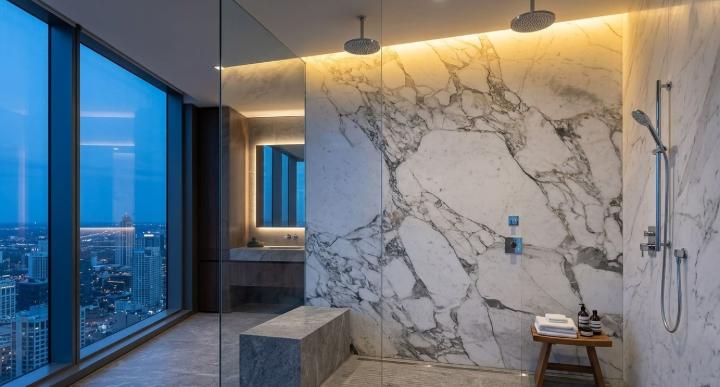
Design Considerations for Slab Shower Walls
Bookmatching One of the most dramatic design options available with slabs is bookmatching, a technique where two consecutive slabs from the same block are opened like pages of a book and installed side by side, creating a mirrored pattern. In a shower enclosure, bookmatched panels transform the veining of natural stone into a symmetrical focal point. Fine Homebuilding's guide to natural stone notes that bookmatching works best when slabs are selected in person at the stone yard, where you can evaluate the match before cutting.
Color and Vein Direction The orientation of veining affects the visual flow of the shower. Horizontal veining creates a grounding, expansive effect. Vertical veining draws the eye upward and makes ceilings feel higher. Diagonal veining adds movement and a more contemporary feel. Visiting our stone and slab showroom allows you to evaluate these characteristics under natural light before committing.
Pairing With Other Surfaces Slab shower walls create the strongest visual impact when they are carried through to adjacent surfaces. Matching the shower walls to a slab vanity top, a shower bench, or a floor panel ties the bathroom together. Contrasting stone types (a quartzite wall with a slate floor, for example) can also work well when the tones are complementary.
Niche Integration Recessed shower niches are one of the most requested design details in slab shower projects. A niche built from the same slab material as the surrounding walls maintains the seamless look while providing practical storage. For personalized guidance on your slab shower project, our team offers free design consultations at all four of our showroom locations.
Caring for Slab Shower Walls
Maintenance requirements vary by material, but a few principles apply broadly to all slab shower walls.
Natural Stone Marble, granite, and quartzite shower walls should be sealed before first use and resealed annually or as needed depending on traffic and exposure. Use pH-neutral, stone-safe cleaners and avoid anything with vinegar, citrus, or bleach, which can etch or discolor natural stone over time. Rinse the walls after each use to prevent soap buildup, and dry with a soft cloth or squeegee to minimize water spotting.
Porcelain and Sintered Stone Non-porous materials like porcelain and sintered stone require no sealing and tolerate a wider range of household cleaners. For routine care, warm water and a mild detergent are sufficient. Avoid abrasive scrubbers that can dull the surface finish over time. The grout lines in slab shower installations, while minimal, should still be sealed and inspected periodically to maintain water integrity behind the panels.
Conclusion
Slab shower walls represent one of the most significant upgrades available in bathroom design. Whether you choose the timeless warmth of marble, the durability of quartzite, the low-maintenance performance of porcelain, or the precision of sintered stone, a slab enclosure transforms an everyday shower into a considered, lasting space. The reduction in grout lines simplifies upkeep, the large-format panels showcase the full character of the stone, and the seamless aesthetic creates a calm, spa-like environment that standard tile simply cannot replicate.
If you are planning a slab shower project, the best place to start is seeing the material in person. Visit our showrooms in Reno, Minden, Sacramento, or Fernley to view our current slab inventory and speak with our design team about your project.
Frequently Asked Questions
What is the best material for slab shower walls?
The best material depends on your priorities. Porcelain and sintered stone are the top choices for low-maintenance performance because they are non-porous and never require sealing. For natural stone, quartzite offers the best balance of durability and aesthetic appeal in a wet environment. Marble delivers the most luxurious look but requires consistent sealing and pH-neutral cleaners to maintain its appearance.
Do slab shower walls require grout?
Slab shower walls dramatically reduce the number of grout joints compared to tile, but they are not entirely grout-free. The seams between panels and the transitions at corners and floor edges are typically filled with grout or waterproof silicone caulk. The goal is to minimize these joints as much as possible by using fewer, larger panels.
How thick should a slab be for shower walls?
Natural stone shower slabs are most commonly available in 2cm (approximately 3/4 inch) and 3cm (approximately 1-1/4 inch) thicknesses. Porcelain and sintered stone panels are available in thinner formats, some as slim as 6mm, which reduces weight and simplifies handling. Your selection may depend on the structural conditions of your shower and the material you choose.
Can natural stone slab shower walls get moldy?
Natural stone is porous and can support mold growth if it is not properly sealed and maintained. Keeping natural stone shower walls sealed, using pH-neutral cleaners, and drying the surface after use significantly reduces the risk of mold and staining. Non-porous materials like porcelain and sintered stone are inherently mold-resistant and do not require the same level of preventive care.
How do I choose a slab for my shower in person?
Selecting slabs in person gives you the opportunity to evaluate veining patterns, tone, and finish options under natural light, all of which look different on a screen than they do in real life. We recommend visiting one of our showrooms in Reno, Minden, Sacramento, or Fernley, where our design team can walk you through our current slab inventory and help you find panels that work with your shower dimensions and overall bathroom design.