Slab countertops are large, continuous stone or engineered surfaces used for kitchen counters, bathroom vanities, walls, and fireplace surrounds. The most common slab materials are granite, marble, quartzite, dolomite, travertine, semi-precious stone, porcelain, and engineered quartz. Each material differs in hardness, porosity, finish options, suitable applications, and maintenance requirements.
Granite and quartz are generally considered the most practical choices for kitchen food preparation surfaces. Quartzite, granite, travertine, and porcelain are suitable for outdoor use, while marble, dolomite, semi-precious stone, and engineered quartz are recommended for indoor applications only. Most natural stone slabs are available in polished, honed, leathered, and specialty finishes, with the right finish depending on the aesthetic goal and how the surface will be used.
Selecting the right slab involves weighing the specific demands of the space against visual priorities and long-term maintenance expectations. A free design consultation can help narrow the options based on the actual conditions of the project.
Why Full Slab Surfaces Stand Apart
Unlike modular tile or sectional countertops, a full slab surface offers a continuous, unbroken plane that reads as both refined and practical. Without grout lines interrupting the surface, day-to-day cleaning tends to be more straightforward, and the visual weight of a large stone slab lends a sense of permanence and craftsmanship to kitchens, bathrooms, and living spaces alike.
Most slabs are available in multiple finish types, including polished, honed, leathered, and specialty treatments. Each finish draws a distinctly different character from the same base material. A polished surface tends to amplify the natural movement and depth within the stone, while a honed or matte treatment softens the overall appearance for a more understated result. For a closer look at how each finish type affects both aesthetics and maintenance, the Natural Stone Institute's guide to selecting stone finishes is a useful reference.
Those looking to browse current slab options can visit the slab catalog to view what is available.
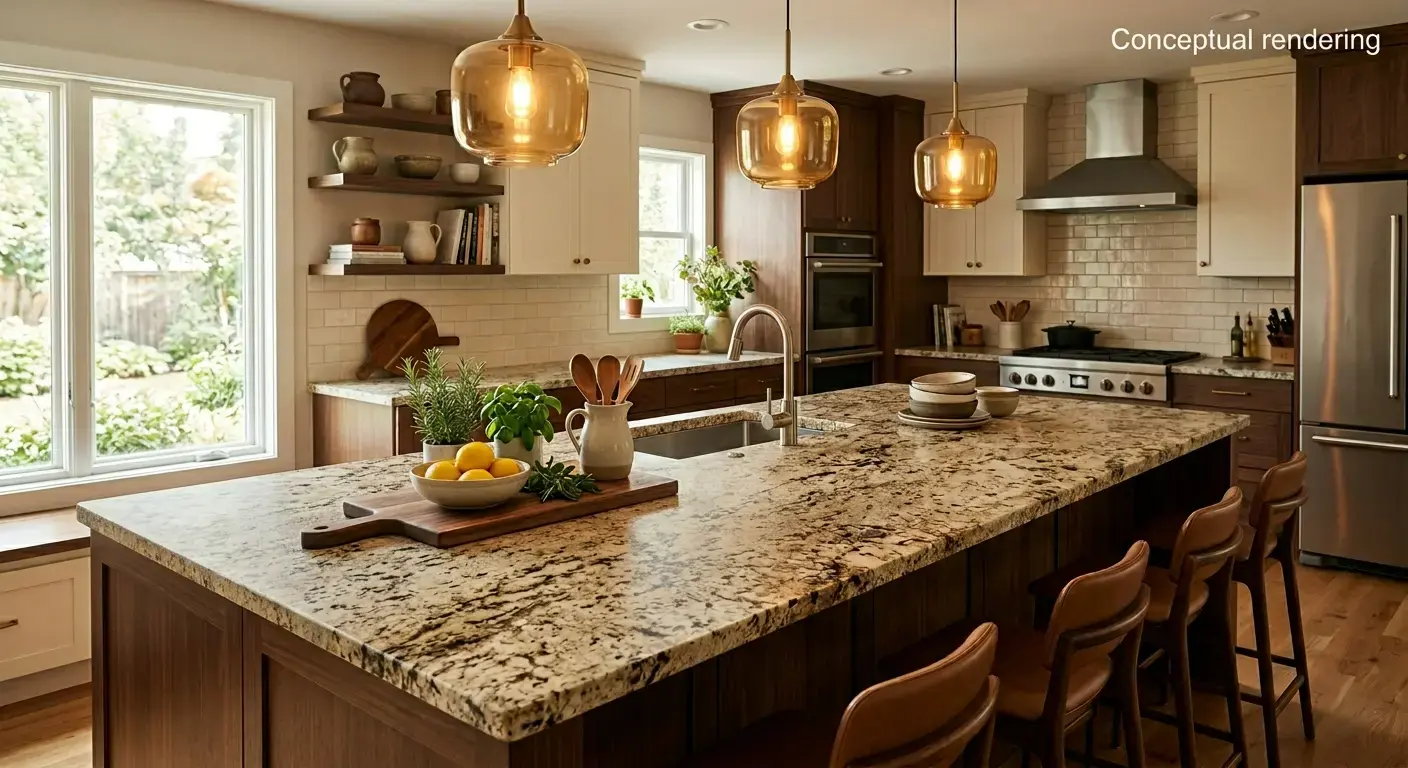
Granite: A Dependable Choice for Kitchen Countertop Surfaces
Granite has maintained a strong reputation as a countertop material across many decades of residential and commercial use. Formed deep within the earth over an extended geological period, each granite slab carries its own unique configuration of minerals, movement, and color variation. No two slabs are ever identical, which gives each installation a natural individuality.
From a practical standpoint, granite is generally considered suitable for food preparation surfaces and is a commonly recommended choice for kitchen countertops. Its natural density and low porosity, when properly sealed and maintained, contribute to its performance in active cooking environments. Granite is also widely used in outdoor applications where UV exposure is a factor, though performance will depend on the specific material, finish, and maintenance approach.
Available in polished, honed, leathered, and specialty finishes, granite can be used across floors, walls, and fireplace surrounds in addition to countertops, making it one of the more adaptable natural stone options for whole-home projects. For guidance on keeping granite surfaces in good condition over time, Bob Vila's granite countertop care guide covers the core maintenance practices worth knowing.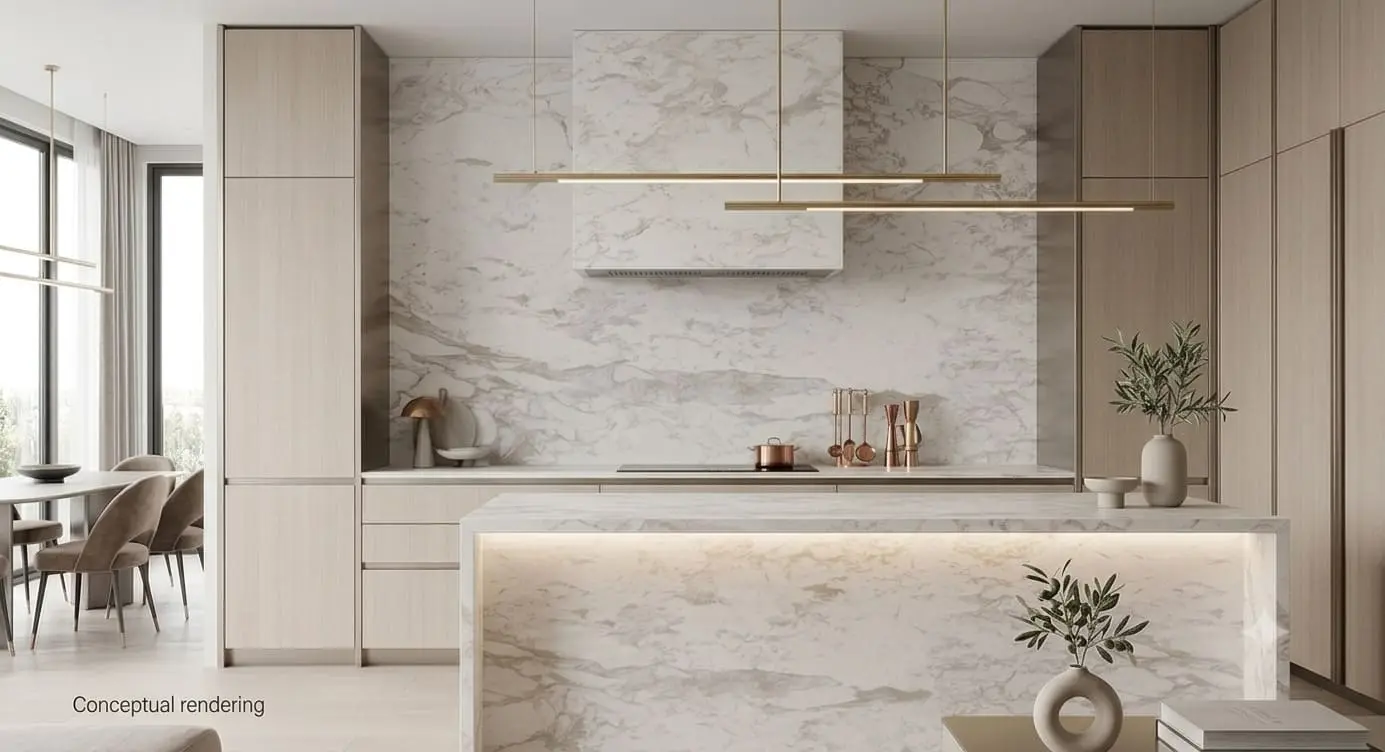
Marble: Interior Elegance With Considered Care
Marble has long been associated with refined interior design. Its characteristic veining, soft tonal range, and light-reflective surface make it one of the most visually distinctive materials available for countertop and wall applications. When used as a slab surface, marble can bring a sense of elegance to bathrooms, vanities, feature walls, and decorative surfaces.
Marble is best suited to indoor use and performs well when given appropriate care and maintenance. It is available in polished, honed, leathered, and specialty finishes, which allows for meaningful creative flexibility across different interior styles. For floors, accent walls, and fireplace surrounds, marble can deliver strong visual results.
It is worth noting that marble is softer than many other natural stones and is more sensitive to acidic substances and surface wear. Regular sealing and prompt attention to spills help preserve its appearance over time, making it a material that benefits from consistent upkeep.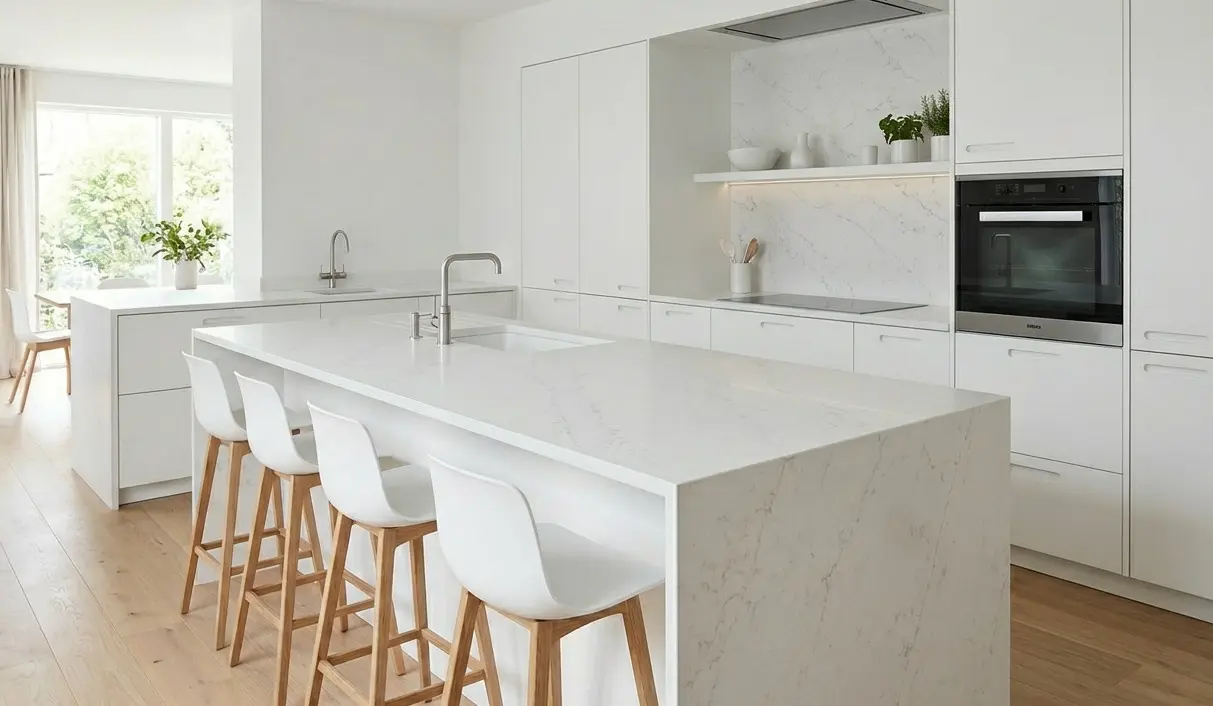
Quartzite: A Natural Stone With Broad Application Range
Quartzite is frequently confused with engineered quartz, but the two are entirely different materials. Quartzite is a natural stone formed when sandstone undergoes significant heat and pressure over time. The result is a dense, crystalline material with natural hardness and visual depth that varies from slab to slab.
One of quartzite's practical attributes is its suitability for both indoor and outdoor environments. It is generally considered UV resistant, meaning it tends to hold its appearance in sun-exposed settings better than some other natural stones, though actual performance will depend on the specific slab, finish, and conditions of exposure. Its relative hardness compared to marble makes it a commonly chosen option for surfaces that experience regular use.
Available in polished, honed, leathered, and specialty finishes, quartzite can also be used on floors, walls, and around fireplaces, giving it a wide range of application possibilities across residential and commercial projects.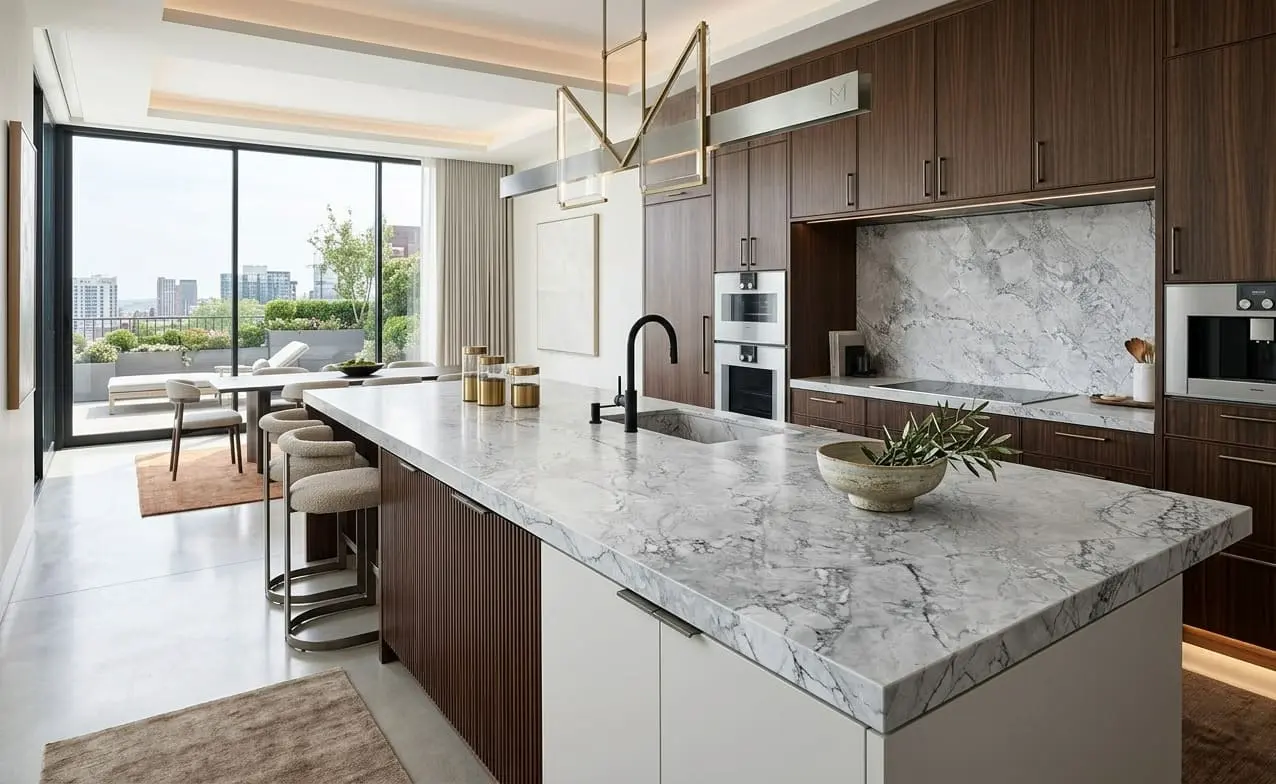
Dolomite: Natural Stone With a Softer Aesthetic
Dolomite occupies an interesting position among natural stones. Visually, it shares qualities with marble, including soft veining and lighter base tones, which makes it appealing to those drawn to classic, understated aesthetics. It is generally considered harder than marble, which can make it a more practical alternative in certain interior settings, though it still benefits from regular sealing and care.
Suited to indoor use, dolomite works well on floors, walls, and fireplace surrounds. It is available in polished, honed, leathered, and specialty finishes, and its visual range allows it to complement both contemporary and traditional design contexts.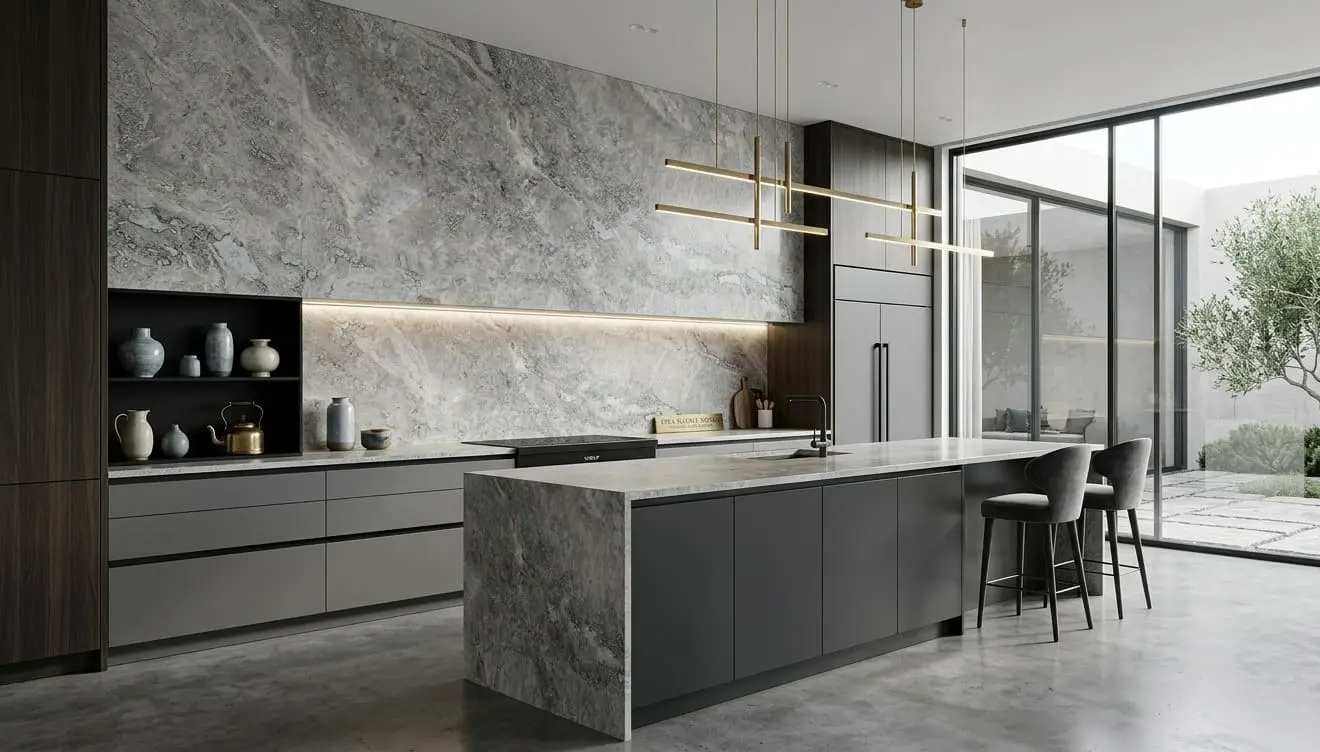
Travertine: Organic Character Across Indoor and Outdoor Spaces
Travertine brings a warmth and textural quality to surfaces that can be difficult to achieve with engineered materials. Formed as a sedimentary limestone through mineral deposit processes, it carries natural tonal variation and a surface character that gives installations an organic, artisanal quality. Each slab has its own natural range of tone and texture.
Travertine can be used in both indoor and outdoor settings, making it a versatile option for covered exterior areas, garden feature walls, interior floors, and fireplace surrounds. It is available in polished, honed, leathered, and specialty finishes. As with most natural stones, proper sealing and regular maintenance are important factors in how well travertine performs over time.
Semi-Precious Stone: Distinctive Slabs for Interior Feature Surfaces
For spaces where a surface is intended to function as a visual focal point, semi-precious stone slabs offer a character that differs from conventional countertop materials. Materials such as agate and onyx carry translucent depth, natural color, and patterning that varies considerably from slab to slab, making each installation genuinely unique.
Semi-precious stone is generally best suited to accent walls, feature panels, and decorative interior surfaces rather than high-traffic countertop applications. Available in polished and specialty finishes, these slabs are intended for indoor use and are most appropriate for clients whose design vision calls for a material that prioritizes visual impact. Designers looking to stay current on natural stone trends and education can find upcoming events through the Natural Stone Institute's events calendar.
Porcelain Slabs: Engineered for Versatility and Consistent Performance
Large-format porcelain slabs have grown in popularity as manufacturing processes have allowed for more sophisticated surface graphics and larger formats. As an engineered material, porcelain offers a level of visual consistency and application range that can be difficult to achieve with natural stone alone.
The Infinity Surfaces porcelain slab collection, available through the showroom and online, is imported directly from Italy and represents a curated selection of large-format slabs suited to a variety of residential and commercial projects. These slabs are non-porous and are generally considered suitable for both indoor and outdoor applications, including kitchens, bathrooms, floors, walls, fireplace surrounds, and exterior cladding, though suitability for any specific application should be confirmed based on the product specifications.
Infinity Surfaces porcelain slabs are available in 6, 12, and 20 mm thicknesses and come in polished, honed, leathered, and specialty finishes. Their non-porous surface generally eliminates the need for sealing and tends to be more resistant to staining than many natural stones, though cleaning practices and installation quality still play a meaningful role in long-term performance.
Quartz: Engineered Consistency for Kitchen and Interior Surfaces
Engineered quartz countertops are produced by combining natural quartz aggregate with resin binders and pigments to create a surface that is consistent in appearance and non-porous by design. The controlled manufacturing process allows for a broad range of visual options, from subtle veined patterns that reference natural stone to bolder, more uniform tones.
Engineered quartz is generally considered suitable for food preparation and is a commonly recommended option for kitchen countertop surfaces. Its non-porous composition means it does not typically require sealing and tends to be easier to clean in food preparation contexts, though care practices still matter for long-term appearance. Available in polished and honed finishes, quartz performs well on floors and walls within indoor settings.
It is important to note that engineered quartz is not recommended for outdoor use or direct fireplace applications. The resin content used in its production is sensitive to prolonged UV exposure and sustained high heat, which limits its suitability to controlled interior environments.
Choosing the Right Surface for the Space
Selecting a slab material involves weighing the specific demands of the space against aesthetic priorities. Outdoor kitchens and sun-exposed areas generally call for materials with stronger UV resistance, such as granite, quartzite, or Infinity Surfaces porcelain. Refined interior bathrooms and feature walls can be well suited to marble or dolomite when maintained appropriately. Kitchen environments where food preparation is a priority often benefit from granite or quartz.
Nova Tile and Stone offers free design consultations at showroom locations across Northern Nevada and Sacramento, where specialists can help match materials to specific project conditions. Clients can book a consultation or request a slab quote to get started.
Conclusion
Slab countertops represent one of the more significant material decisions in any interior or exterior project. The surface chosen shapes the character of the room, affects how the space functions day to day, and reflects the broader design intent of the build. From the dependable performance of natural granite and the timeless appeal of marble to the engineered consistency of quartz and the design flexibility of large-format porcelain, each material brings its own combination of visual quality and practical characteristics. Understanding those differences, along with the care and conditions each material requires, leads to selections that can serve a space well for many years ahead. Trade professionals working across multiple projects can also explore the trade account program for access to dedicated support and resources.
Frequently Asked Questions
What is the difference between quartzite and engineered quartz?
Quartzite is a natural stone formed through geological processes, while engineered quartz is a manufactured product made from crushed quartz aggregate combined with resin binders. Quartzite is generally considered suitable for outdoor use, whereas engineered quartz is recommended for indoor applications only due to its resin content and sensitivity to UV exposure.
Which countertop slab materials are generally considered suitable for food preparation?
Granite and engineered quartz are both commonly recommended for food preparation surfaces. Granite performs well in kitchen environments when properly sealed and maintained, while engineered quartz is non-porous by design, which can simplify cleaning in active cooking spaces.
Can natural stone countertop slabs be used outdoors?
Granite, quartzite, and travertine are among the natural stones that can be suitable for outdoor applications, though actual performance will depend on the specific material, finish, installation, and maintenance conditions. Infinity Surfaces porcelain slabs are also generally rated for exterior use. Marble, dolomite, semi-precious stone, and engineered quartz are recommended for indoor use only.
What surface finishes are available for stone and porcelain slabs?
Granite, marble, quartzite, dolomite, travertine, and Infinity Surfaces porcelain are available in polished, honed, leathered, and specialty finishes. Engineered quartz is available in polished and honed finishes. Semi-precious stone is available in polished and specialty finishes.
How do I find the right slab material for my specific project?
A good starting point is to consider whether the space is indoor or outdoor, how much daily activity the surface will experience, and the overall aesthetic direction of the design. Booking a free design consultation allows for a more personalized review of available options and helps ensure the final material choice aligns with both the functional requirements and design goals of the project.