The two primary geological categories for natural stone countertops are siliceous and calcareous, and the distinction between them determines whether a surface will etch, how it responds to acidic contact, and what kind of maintenance it requires over its lifespan.
- Siliceous stones include granite, quartzite, soapstone, and slate. They are composed primarily of silica and quartz minerals, which resist acid reactions and do not etch.
- Calcareous stones include marble, travertine, limestone, and onyx. They are composed primarily of calcium carbonate, which reacts to acidic substances and can etch or dull with exposure. Dolomite, composed of calcium magnesium carbonate, behaves similarly under acidic contact and is included in this category for practical countertop purposes.
- Etching is a chemical reaction, not a stain. It occurs when acid contacts calcium carbonate and erodes the polished surface, leaving a dull or matte mark.
- Sealing slows stain penetration in both stone types but does not prevent etching in calcareous stone.
- Finish choice matters more for calcareous stone. A honed or matte finish on marble or limestone makes etch marks far less visible than a polished surface would.
Understanding the Two Categories
Natural stone is formed through geological processes that determine its mineral composition, and that composition governs how it performs in a kitchen or bathroom. Two broad categories cover most of the stones used in residential countertops: siliceous and calcareous. Understanding which category a stone falls into is one of the most practical pieces of information a buyer can have before selecting a slab.
Siliceous stones are made up primarily of silica, quartz, feldspar, and mica. These minerals are chemically stable, meaning they do not react with the acids commonly encountered in kitchens and bathrooms. Granite, quartzite, soapstone, and slate all fall into this category. Their composition gives them a natural resistance to etching, and while they can still absorb liquids if left unsealed, they will not dull or develop surface marks from contact with wine, citrus, tomato, or vinegar.
Calcareous stones are made up primarily of calcium carbonate. This mineral compound is what gives marble its soft, translucent depth and travertine its warm, textured surface. Marble, travertine, limestone, and onyx are all calcareous. Dolomite, composed of calcium magnesium carbonate, behaves similarly under acidic contact and is included in this category for practical countertop purposes. Calcium carbonate reacts chemically with acids, and that reaction is what causes the etching that calcareous stone owners frequently encounter. The reaction is not a stain and cannot be removed by cleaning alone. It is a physical change to the surface itself.
Knowing this distinction before visiting a showroom shapes every conversation about material selection. A buyer who cooks frequently with acidic ingredients, has children, or prefers a low-maintenance surface has different needs than someone selecting a vanity top or a decorative island that sees lighter daily use. As a direct stone importer, we carry both siliceous and calcareous options across our showroom locations, and understanding the category helps narrow the conversation immediately.
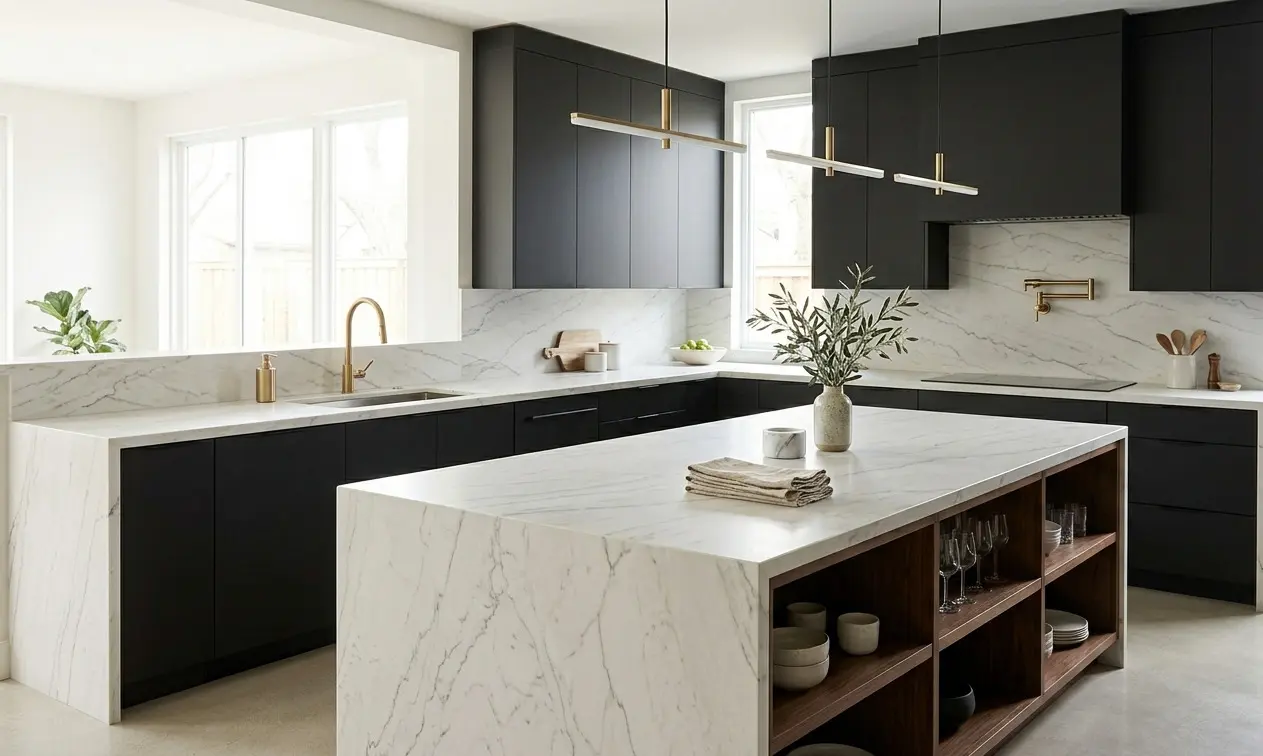
What Etching Is and Why It Happens
Etching is one of the most misunderstood aspects of natural stone ownership. Many homeowners discover dull, hazy marks on their marble countertops and assume they have a stain. Cleaning products do not remove etch marks because the problem is not a substance sitting on the surface. It is a loss of the surface itself.
When an acidic liquid contacts calcium carbonate, a chemical reaction takes place. The acid dissolves a thin layer of the stone's polished surface, leaving behind a matte or frosted mark where the finish once was. Common household acids include lemon juice, orange juice, wine, tomato-based products, vinegar, and certain cleaning solutions. Even sparkling water, which contains carbonic acid, can etch polished marble with repeated exposure.
Siliceous stones do not contain calcium carbonate, so this reaction does not occur. A quartzite countertop or granite surface can have those same acidic liquids come into contact with it without producing etch marks. The stone may absorb the liquid and stain if it is unsealed, but the polished finish will not be chemically altered. This is one reason quartzite has become a widely preferred alternative for buyers who want the visual character of marble without its reactivity. Our natural stone slabs include a range of quartzite varieties that carry the soft, veined appearance often associated with marble.
Sealing: What Each Stone Type Requires
Both siliceous and calcareous stones are porous to varying degrees, which means both benefit from sealing. A penetrating sealer works by filling the microscopic pores in the stone and slowing the rate at which liquids are absorbed, reducing the risk of deep staining from oils, coffee, or pigmented liquids. However, the role sealing plays differs between the two categories.
For siliceous stone, sealing is the primary protective measure against staining. A properly sealed granite or quartzite countertop resists most household liquids long enough that spills can be wiped away before any absorption occurs. Sealing does not affect the surface finish and does not alter the appearance of the stone. Fine Homebuilding covers stone sealing practices as part of broader kitchen renovation guidance for homeowners.
For calcareous stone, sealing is still important but it does not address etching. A sealed marble countertop is still vulnerable to acid contact. The sealer reduces stain risk but has no ability to prevent the chemical reaction that dulls the surface. Buyers selecting marble, travertine, limestone, or dolomite should understand this clearly before purchase. The stone can be a functional and visually appealing choice, but it requires a different relationship with daily use than granite or quartzite does.
Sealing frequency depends on the density of the specific stone. Dense granite may only need sealing every few years under normal use, while lighter marble or travertine may benefit from more frequent applications. A simple water test is useful for checking whether a seal is still active: if water dropped on the surface beads up, the seal is intact; if it absorbs quickly, resealing is worth considering. This Old House provides practical guidance on stone sealing timing and technique for both stone categories.
One additional note on siliceous stones: while they are acid-resistant in daily use, the silica content in stone dust produced during cutting and fabrication carries inhalation risks. CDC/NIOSH provides guidance on silica dust exposure for those involved in stone fabrication or renovation work.
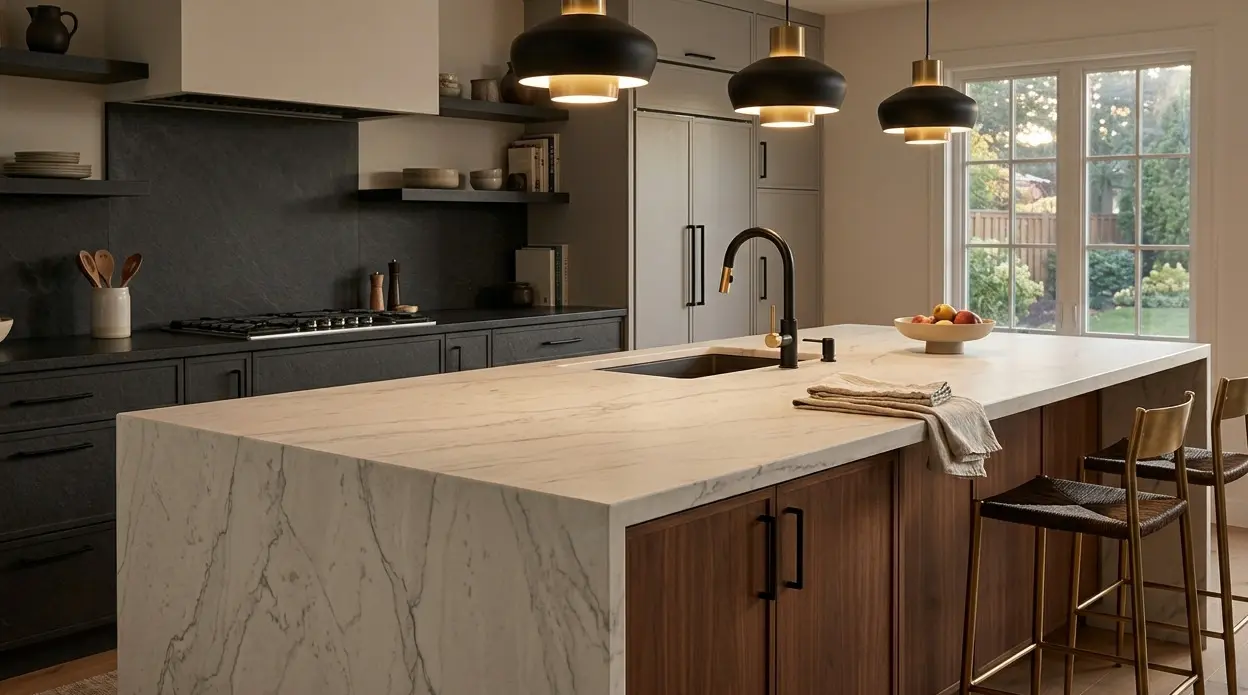
Choosing the Right Stone for Your Kitchen
In a kitchen, the countertop is exposed to more acidic contact than in almost any other room. Cooking with citrus, working with tomatoes, vinegars, and fermented ingredients, and cleaning with various products are all part of normal kitchen use. The frequency of that exposure is the central question when evaluating siliceous versus calcareous stone for kitchen applications.
For high-use kitchens, siliceous stone is the lower-maintenance choice. Granite, quartzite, and soapstone handle kitchen acids without etching, and a properly maintained seal prevents most staining. These stones are also generally harder, which gives them better resistance to surface scratching from cutlery and cookware.
Calcareous stones are not disqualified from kitchens. Marble has been used in working kitchens for centuries, and it remains a choice for buyers who understand and accept the trade-offs. The surface will develop character over time, including a softening of the polished finish and cumulative light etching that gradually forms a patina. Some buyers specifically prefer this outcome and choose marble for that reason. The key is making the decision with accurate expectations rather than discovering the material's behavior after installation.
Buyers who want a surface that looks identical to the day it was installed years into ownership will find the demands of polished marble more burdensome than quartzite or granite. We work with buyers across our four showrooms in Reno, Minden, Sacramento, and Fernley to match material to lifestyle. Scheduling a free design consultation with our team is a practical first step for anyone working through this decision.
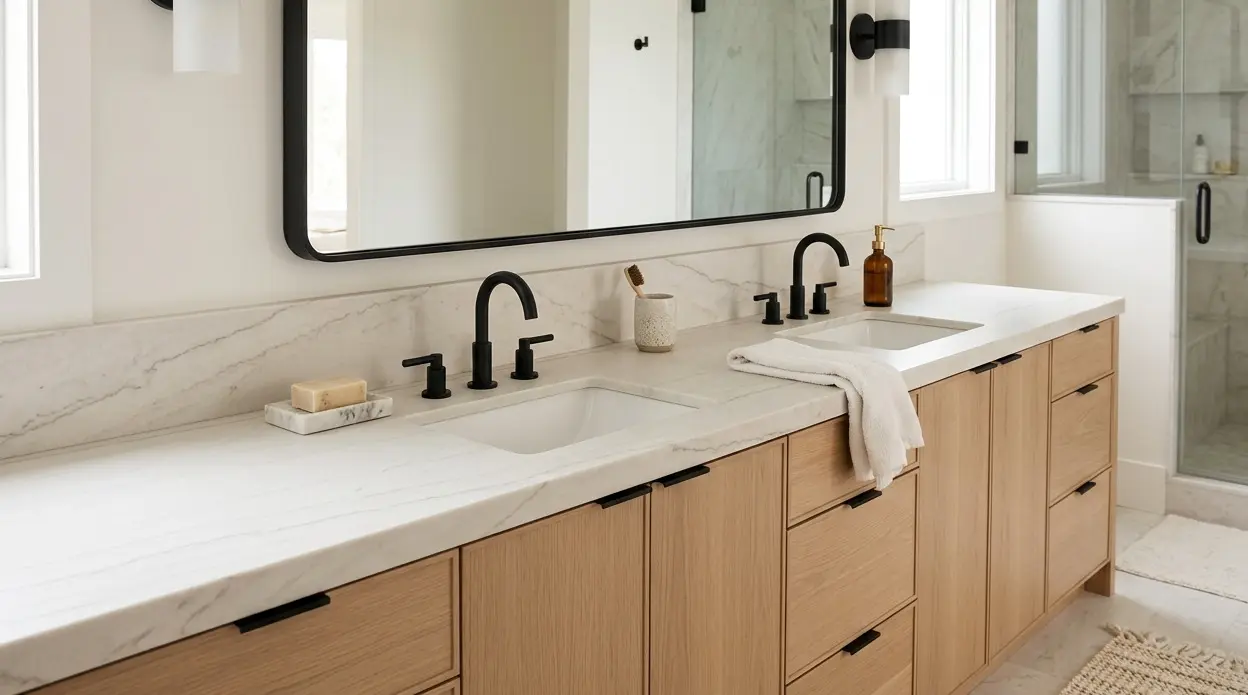
Choosing the Right Stone for Your Bathroom
Bathroom countertops and vanity surfaces see less acidic contact than kitchen countertops in most households, which makes calcareous stone a more practical fit for bathroom applications. Haircare products, soaps, and water are the primary substances that contact a bathroom vanity surface. Most are not highly acidic, and exposure frequency is lower than in a working kitchen.
Marble, travertine, and limestone are all commonly used in bathroom settings. Their susceptibility to etching is less relevant in a bathroom context, and their visual qualities, including warmth, depth of veining, and tonal variation, make them a common selection for vanity tops, shower surrounds, and feature walls.
Siliceous stones work equally well in bathrooms and may be the better fit for households with children or for wet areas where cleaning products with varying pH levels will be used regularly. Quartzite and granite maintain their finish regardless of the cleaning routine, which reduces the care burden in a high-use shared bathroom. Whether selecting for a kitchen or a bath, our team can assist with a slab quote request to support the planning process.
Finish Considerations for Calcareous Stone
The finish on a calcareous stone countertop is worth careful thought because it directly affects how visible any etching will be over time. A polished marble surface reflects light evenly. When acid contacts it and dulls a section of that finish, the difference between the etched area and the surrounding polished surface is immediately apparent.
A honed finish, which is matte rather than glossy, changes this dynamic significantly. Because the surface is already matte, the contrast between an etched area and the surrounding stone is far less pronounced. Etch marks still occur, but they are much harder to see against a honed background. Many stone specialists recommend honed finishes for marble countertops in kitchens for this reason, particularly in households with active cooking.
A leathered finish, which creates a slightly textured surface through a brushing process applied during fabrication, also reduces etch visibility compared to polished marble. It is worth noting that finish selection does not change the underlying mineral composition of the stone. A honed marble countertop still contains calcium carbonate and will still etch on contact with acid. The finish choice manages how visible that etching becomes, not whether it occurs.
Buyers who are drawn to calcareous stone but want to reduce the visual impact of daily wear often find that a honed or leathered finish makes the material more forgiving in everyday use. Our showrooms carry siliceous and calcareous stone across polished, honed, and leathered finishes for side-by-side comparison. Designers and trade professionals working with these materials are welcome to apply for a trade account for full access to our slab inventory.
Conclusion
The siliceous and calcareous distinction is among the most useful pieces of geology a countertop buyer can bring into the selection process. It explains why some stones etch and others do not, why sealing serves a different function depending on the material, and why finish choice carries more weight for certain stones than others. Siliceous stones, including granite, quartzite, and soapstone, offer reliable acid resistance and lower day-to-day maintenance, particularly in kitchens with active cooking. Calcareous stones, including marble, travertine, limestone, dolomite, and onyx, are known for pronounced veining and tonal depth, and perform well in bathrooms and lower-contact applications. Both categories carry trade-offs worth understanding before purchasing. Buyers who want to view slabs from both categories in person and work with our commission-free design team are welcome to visit any of our showroom locations in Reno, Minden, Sacramento, and Fernley.
Frequently Asked Questions
What is the difference between siliceous and calcareous stone?
Siliceous stone is composed primarily of silica and quartz minerals and does not react to acidic substances. Calcareous stone is composed primarily of calcium carbonate and will etch when it comes into contact with acids. This difference in mineral composition determines how each stone type performs in daily use and what kind of maintenance it requires.
Which natural stones are siliceous?
Granite, quartzite, soapstone, and slate are the most common siliceous stones used for countertops. These materials do not etch from kitchen acids such as citrus juice, wine, vinegar, or tomato-based products, making them lower-maintenance options for active kitchens.
Which natural stones are calcareous?
Marble, travertine, limestone, and onyx are all calcareous stones. Dolomite, composed of calcium magnesium carbonate, behaves similarly under acidic contact. Each of these materials is susceptible to etching when acidic substances come into contact with the surface.
Does sealing prevent etching on calcareous stone?
No. Sealing reduces the risk of staining by slowing liquid absorption into the stone's pores, but it does not prevent etching. Etching is a chemical reaction between acid and calcium carbonate that occurs at the surface level and is not blocked by a penetrating sealer.
Can calcareous stone be used in a kitchen?
Yes. Marble, travertine, and other calcareous stones are used in kitchens regularly. Buyers who choose these materials should understand that etching will occur with acid contact, particularly on polished surfaces. A honed or leathered finish reduces the visibility of etch marks, and some buyers find that the patina calcareous stone develops with use adds to its character over time.