Natural stone countertops need to be replaced when damage has progressed beyond what repair can correct. The clearest signs include deep structural cracks that catch a fingernail and continue to spread, permanent staining that has fully penetrated the stone and cannot be lifted by professional treatment, widespread etching that polishing can no longer restore, sections of the slab that have lifted or become unstable, and severe edge damage that creates exposed fragments or hygiene concerns. Granite and quartzite typically last fifty years or more with proper care, while softer stones like marble, travertine, and limestone tend to show wear earlier, particularly in active kitchen environments where acidic exposure and sealing lapses are common.
This guide explains each replacement indicator in detail, how to distinguish them from ordinary wear that can be repaired, and what to consider when deciding between restoration and full replacement.
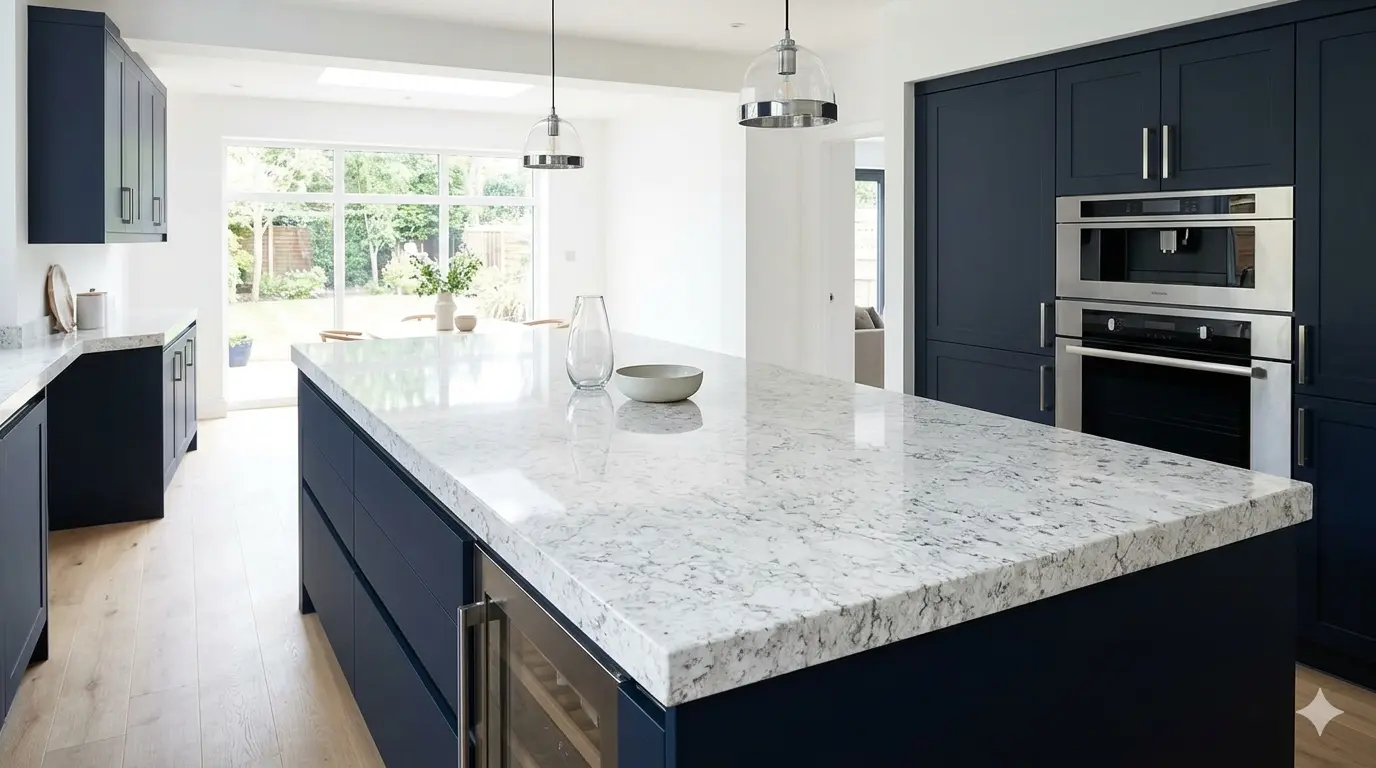
1. Deep, Spreading Cracks
Minor fissures are a natural feature of many stone types. Granite and quartzite, for example, often contain hairline fissures that formed during the geological process and are part of the stone's natural character. These are shallow, follow the mineral grain, and are entirely stable.
True cracks are different. A true crack runs through the depth of the slab rather than along the surface, catches your fingernail when you drag it across, and may grow over time. Cracks that radiate outward from a sink cutout or cooktop opening are especially serious because those are high-stress zones where the slab is most vulnerable to flexing and weight.
When a crack is spreading, crosses multiple sections of the surface, or has caused the countertop to separate from the cabinet edge, repair is rarely sufficient. Epoxy fills can stabilize small cracks cosmetically, but they do not restore structural integrity. A countertop fractured deeply near a sink or across a working surface presents both a hygiene and a safety concern and is generally best replaced rather than patched.
2. Persistent Staining That Will Not Lift
Natural stone is porous to varying degrees, and all porous stone can absorb liquids when the sealant has degraded or was never properly applied. Marble, travertine, and limestone are particularly susceptible. Granite and quartzite are denser, but they are not stain-proof under all conditions.
Surface stains from oil, wine, coffee, or rust can often be treated with a stone poultice if addressed early. However, stains that have fully penetrated the stone, have been present for years, or have repeated despite resealing are a different matter. When discoloration has become a permanent part of the stone's appearance and professional polishing or treatment has not resolved it, replacement is often the most practical solution.
A countertop that consistently looks stained or uneven regardless of maintenance effort is no longer serving its aesthetic purpose, and in kitchen applications where food is prepared, deeply absorbed staining can raise hygiene concerns.
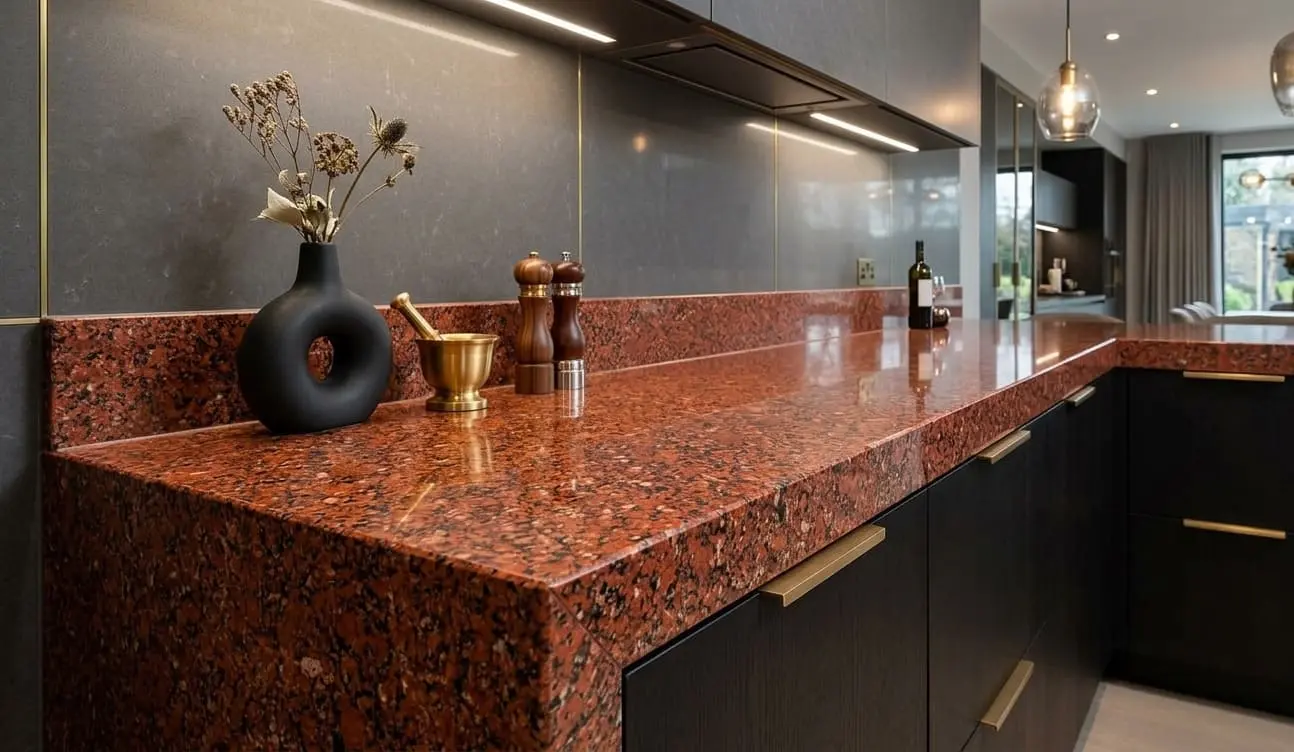
3. Severe or Widespread Etching
Etching is surface damage caused when acidic substances react chemically with the calcium carbonate in certain stone types. Marble, travertine, limestone, and some dolomite varieties are all vulnerable to etching from lemon juice, vinegar, wine, and many common household cleaners. Etching leaves dull, hazy marks that disrupt the surface finish and are distinct from staining because they represent actual material removal, not absorption.
Light etching can sometimes be addressed through professional honing and repolishing. However, when etching is deep, covers a large portion of the surface, or has been compounded over many years of acidic exposure, the stone may not polish back to a consistent finish. A countertop with widespread, severe etching that cannot be remediated typically needs to be replaced, especially if the stone type was not well-suited for the installation location. Fine Homebuilding's guide to natural stone countertop materials is a useful reference for choosing a more appropriate replacement material.
4. Structural Instability or Movement
A properly installed stone countertop should sit completely flat and stable on its base cabinets with no movement whatsoever. If a section of the countertop rocks, has lifted away from the cabinet edge, or flexes when pressure is applied, that is a sign of either a failed installation or deterioration of the support structure beneath.
Instability can result from inadequate substrate support, moisture damage to the cabinet structure, a failing adhesive joint between slabs, or a crack that has widened over time. When movement is present, there is an active risk of the slab shifting or cracking further, and any gaps between the stone and cabinet edge can trap moisture and harbor bacteria.
A countertop that has become structurally unstable warrants professional evaluation. The underlying support issue needs to be addressed as part of any replacement so the problem does not recur.
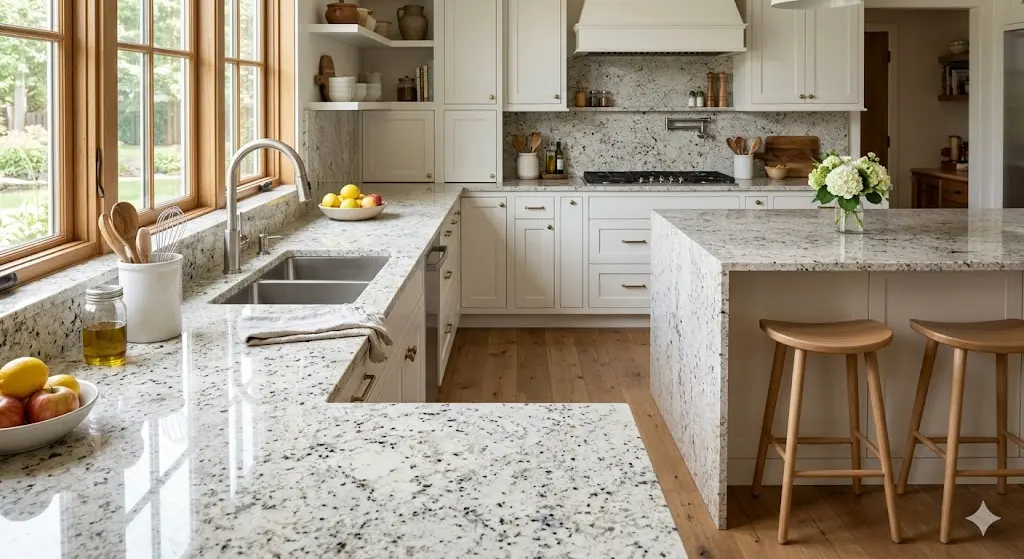
5. Failed Sealant That Resealing Can No Longer Correct
Sealant does not last forever. For most natural stone countertops, resealing every one to three years is standard maintenance, with frequency depending on the stone type, finish, and level of use. This Old House covers natural stone countertop care and sealing in detail for homeowners who want a full maintenance reference. The simplest test is to place a few drops of water on the surface in different areas and observe whether the water beads up or absorbs into the stone. If water absorbs within a few minutes rather than beading, the sealant is depleted.
Worn sealant is a maintenance issue, not a replacement trigger on its own. Resealing is straightforward and effective when the stone beneath is sound. However, when a countertop has been left unsealed for an extended period, absorbed significant amounts of oil and moisture over time, has developed deep staining throughout the material, or when the stone itself has become so degraded that sealer no longer adheres properly, the surface has moved past what resealing can correct.
6. Chips and Edge Damage That Compromise the Surface
Stone countertops can chip along their edges and around sink cutouts when subjected to sharp impacts. Small chips along a bullnose or beveled edge are sometimes repairable with a color-matched epoxy, though the repair may remain visible on lighter stones.
When chipping is extensive, concentrated near high-use areas, or has produced fragments with sharp exposed edges, repair becomes less practical. A countertop with large missing sections along the front edge or around sink cutouts presents both a visual problem and a potential safety hazard, particularly in households with children. Widespread edge damage across the length of a countertop, especially where the stone has flaked or fractured rather than cleanly chipped, is a strong indicator that replacement is the better path.
7. Design or Layout No Longer Matches the Space
Not all reasons for replacement are about damage. A countertop that was well-suited to a kitchen from fifteen years ago may no longer reflect the current design direction, cabinet finish, or how the space is used. If a kitchen or bathroom remodel is planned and the existing countertop is structurally sound but aesthetically incompatible, replacement makes sense as part of the broader renovation. Browsing the current slab inventory is a practical first step for homeowners who have already decided to move forward.
Similarly, a layout change that requires expanding countertop coverage, adding an island, or reconfiguring around a new sink or appliance may make it practical to replace the entire countertop as a cohesive unit rather than attempting to match an aging slab with new material. Viewing full slabs in person at one of our four showroom locations makes it easier to evaluate how a new material will read in the space. Homeowners replacing with engineered quartz or sintered stone should also be aware of silica dust safety guidelines that apply during fabrication.
When to Repair vs. Replace
Not every sign of wear requires full replacement. The general guidance for natural stone is:
Minor chips, small surface scratches, light etching, and depleted sealant are maintenance and repair issues. Professional stone restoration can address many of these conditions, and resealing is always worth doing before concluding that replacement is necessary.
Replacement is more appropriate when structural cracks are present and growing, staining or etching is permanent and widespread, the stone has lifted or is unstable, or the damage has combined to a point where the surface can no longer function cleanly and safely.
When in doubt, having a stone professional evaluate the countertop in person is the most reliable way to assess whether the surface can be restored or replaced. Scheduling a design consultation is a good starting point for homeowners weighing repair against a full replacement.
Conclusion
Natural stone countertops can last for decades when properly maintained. But wear, improper sealing, impact damage, and incompatible material choices for the installation location can shorten that lifespan significantly. Recognizing the difference between surface-level wear and damage that requires full replacement helps homeowners make informed decisions rather than continuing to spend on a surface that has reached the end of its useful life.
Deep structural cracks, permanent staining, widespread etching that cannot be corrected, instability, and severe edge damage are the clearest indicators that replacement is the right course. As direct stone importers, we carry granite, quartzite, marble, porcelain, and sintered stone slabs across all four showrooms. Submit a slab quote request to get started, or apply for a trade account if you are a designer or contractor sourcing material for a client project.
Frequently Asked Questions
How do I tell the difference between a natural fissure and a crack that needs attention?
A natural fissure is a shallow line that follows the mineral grain of the stone and does not catch your fingernail when you run it across the surface. A true crack typically runs through the slab's depth, catches your nail, may show visible separation, and can grow over time. Fissures are cosmetic and stable. Cracks near sink cutouts, cooktop openings, or seam joints warrant professional evaluation because they occur in high-stress zones.
Can a deeply stained stone countertop be cleaned professionally, or does it always need to be replaced?
Professional stone restoration services can address many staining situations using deep-cleaning agents, poultices, and honing techniques. Whether treatment is effective depends on the stone type, how long the stain has been present, and how deeply it has penetrated. Surface-level and moderate staining is often treatable. Staining that has fully saturated a porous stone like marble or travertine over many years is more likely to be permanent, and replacement may be more practical than ongoing treatment attempts.
My countertop has noticeable etch marks from lemon juice and vinegar. Does that mean it needs to be replaced?
Not necessarily. Light to moderate etching on marble, travertine, or limestone can often be addressed through professional honing and repolishing, which removes a thin layer of the surface to restore a consistent finish. However, if the etching is deep, covers most of the countertop, or the stone has been repeatedly etched to the point where polishing can no longer produce a consistent result, replacement may be the better solution. Choosing a material that is more resistant to etching during replacement, such as quartzite or granite, can prevent the same issue from recurring.
How long should a natural stone countertop last before replacement is expected?
A well-maintained natural stone countertop can last fifty years or more. Granite and quartzite are among the most durable options and rarely need replacement due to wear alone when properly sealed and maintained. Marble, travertine, and limestone are softer and more susceptible to etching and staining, meaning they may show wear more visibly over time, particularly in active kitchen environments. The most common reasons for replacing a structurally sound stone countertop are aesthetic: an outdated design, a change in cabinet finish, or a renovation that requires a different layout.
Is it worth repairing a stone countertop rather than replacing it?
Repair is worth pursuing for isolated damage that does not affect the structural integrity of the slab, such as small chips along an edge, a single hairline crack that is not spreading, or surface staining that has not fully penetrated the stone. For damage that is widespread, structural, or has resulted in a surface that cannot be cleaned effectively, replacement is typically more cost-effective than repeated repair attempts. A professional stone assessment can clarify which category the damage falls into and help determine the most practical path forward.