What Makes Engineered Stone Countertops a Top Design Choice
Engineered stone countertops, most commonly quartz slabs, rank among the most recommended surfaces in residential and commercial design today. They deliver a uniform appearance, a wide range of finish options, and reliable performance in high-use spaces such as kitchens, bathrooms, and bars. In short: engineered quartz combines the beauty of natural stone with a more predictable surface profile, making it a practical anchor for almost any interior scheme.
Interior designers return to this material because it removes guesswork. Natural stone carries inherent variation, which many clients love, but others need absolute color consistency across a large run of countertop. Engineered stone fills that gap. The Tile Council of America (TCAA) notes that surface material selection is one of the first decisions that shapes an entire design direction, and quartz slab repeatedly earns its place at that stage.
Color forecasters at Elle Decor point to neutral and warm-toned kitchens as a leading direction for 2026, a palette where the clean, consistent tones of engineered quartz read especially well against cabinetry. Pairing a slab surface with a classic color scheme ensures the countertop remains relevant through multiple refresh cycles rather than dating a room prematurely.
Key Benefits of Engineered Quartz Slabs
Designers cite these advantages most often when specifying engineered stone for residential and hospitality projects:
- Consistent patterning. Color and veining repeat across the full slab run, simplifying layout planning for large kitchen islands or continuous bar tops.
- Non-porous surface. Quartz slabs resist staining from common household liquids when maintained properly, though prompt spill cleanup remains essential.
- Broad finish selection. Polished and honed are standard; specialty finishes expand creative options further, though leathered is not available for quartz.
- Indoor versatility. Quartz performs well on floors, walls, and horizontal work surfaces in interior settings.
- Dimensional stability. The engineered composition minimizes the natural variation found in 100% natural stone, giving project managers predictable lead times.
- Design longevity. Neutral and veined options complement shifting color trends without requiring full replacement.
Note that quartz slabs are specified for indoor, floor, and wall applications only. Outdoor or UV-exposed environments call for granite, quartzite, or porcelain instead.
Where Engineered Stone Slabs Shine: Kitchens, Bathrooms, and Bars
Kitchen Countertops and Islands
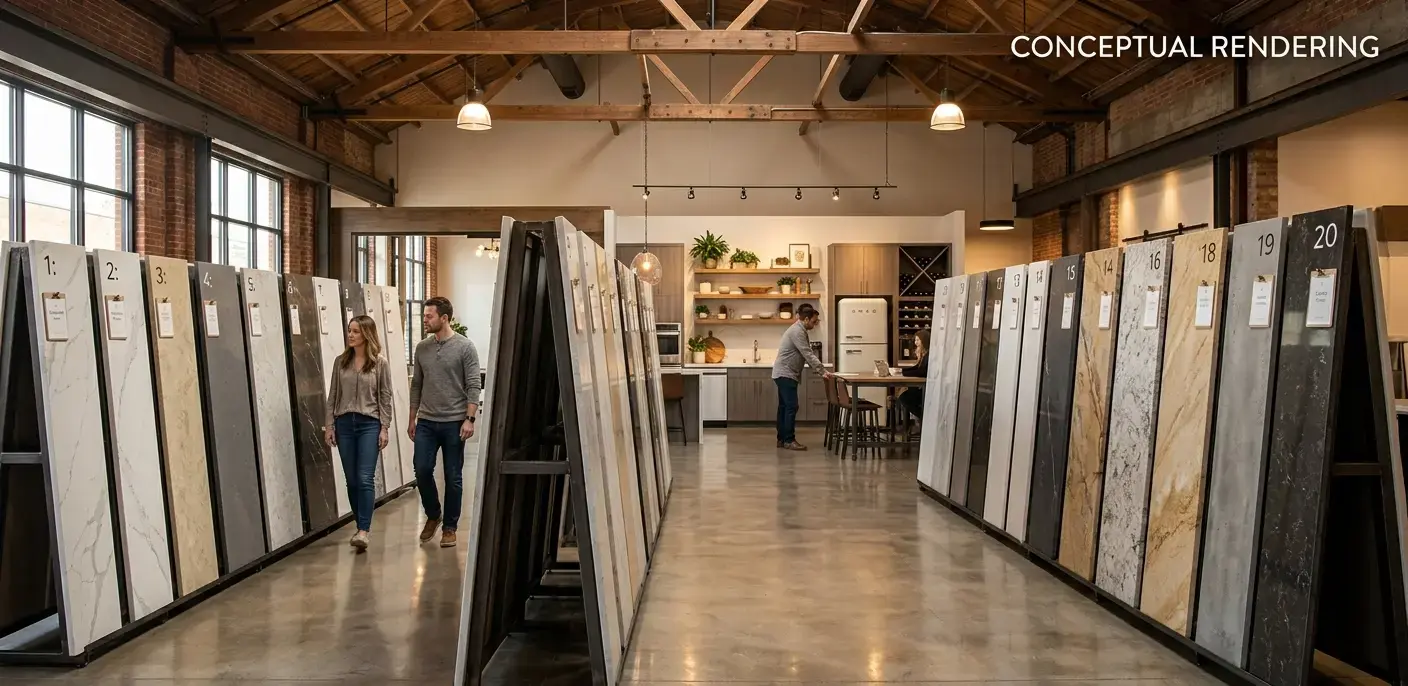
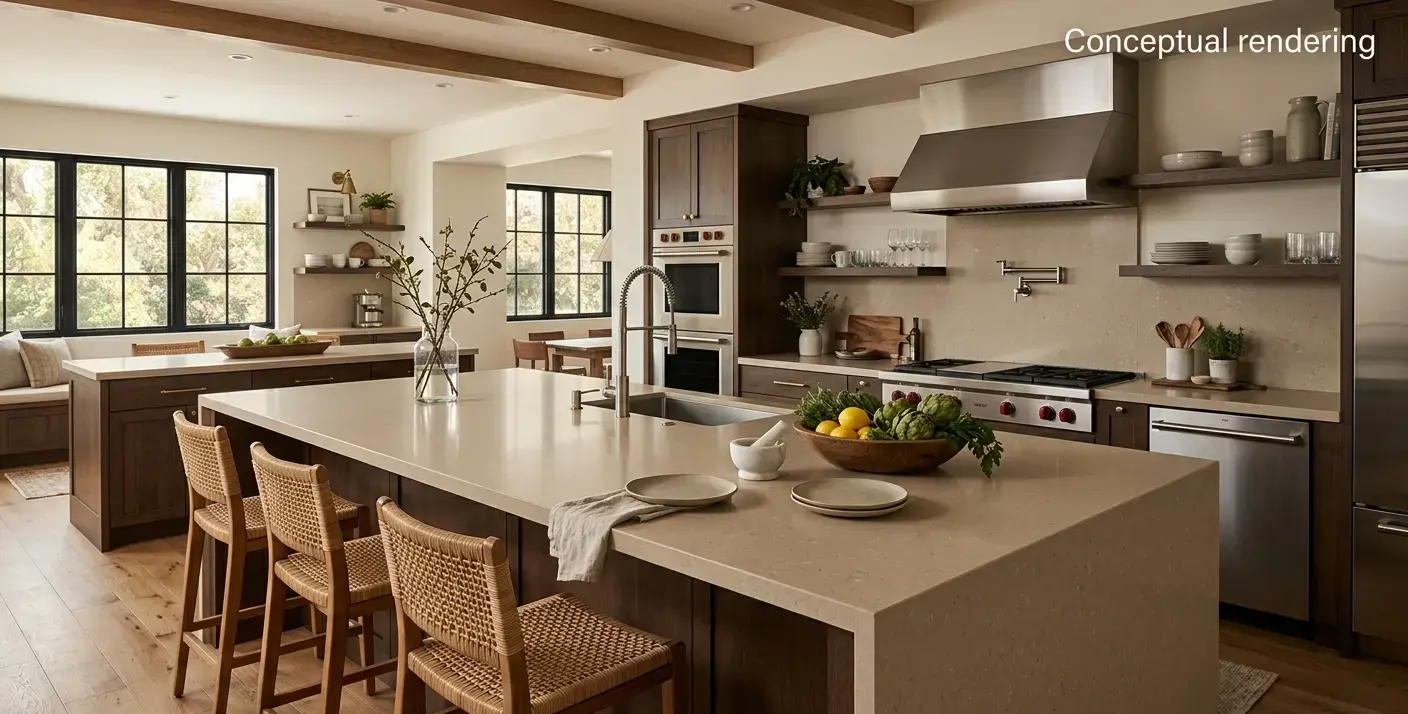
Kitchens demand surfaces that can handle daily activity while maintaining a polished look. Engineered quartz meets that standard with appropriate care. Cutting boards protect against surface scratches, and trivets prevent thermal shock from hot cookware, since heat resistance does not equal thermal-shock resistance. A honed finish reduces glare in bright, open kitchens and provides a slightly more matte texture underfoot if used as a floor application in adjacent areas. Browse the full slab collection to compare tone and movement options side by side.
Bathroom Vanities and Feature Walls
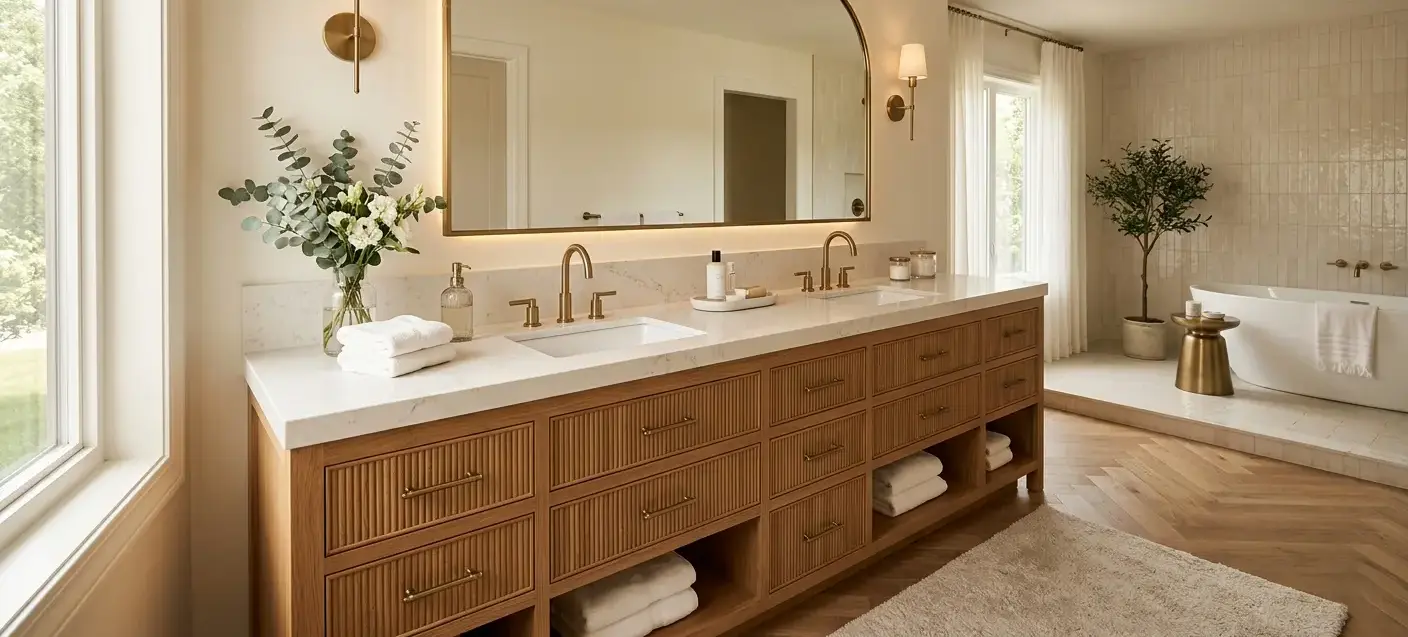
Bathrooms reward engineered quartz with consistent humidity and cleaning routines that suit the material well. The non-porous quality minimizes moisture penetration at the surface level, provided seams and edges are properly finished during fabrication. For wet areas, a honed or specialty finish is preferable to polished, which becomes slippery when wet. Wall applications, from vanity backsplashes to full shower surrounds, allow designers to carry the same material vertically for a seamless look.
Bar Tops and Hospitality Surfaces
Bars benefit from quartz because the surface handles frequent cleaning without the etching risk associated with more sensitive natural stones. A leathered finish is not available in quartz, so designers working with bars typically choose between polished for a high-gloss statement or honed for a softer, more tactile surface. Prompt attention to spills from acidic mixers remains important regardless of finish. Designers sourcing materials for hospitality projects can apply for a trade account to streamline procurement.
Comparison: Engineered Quartz vs. Other Slab Options
Feature | Quartz (Engineered) | Granite | Quartzite | Porcelain |
Finish options | P, H, S | P, H, L, S | P, H, L, S | P, H, L, S |
Outdoor use | No | Yes | Yes | Yes |
UV stability | No | Yes | Yes | Yes |
Floor application | Yes | Yes | Yes | Yes |
Wall application | Yes | Yes | Yes | Yes |
Color consistency | High (engineered) | Varies (natural) | Varies (natural) | High (manufactured) |
Sealing required | Rarely | Often | Often | No |
Pros and Cons of Engineered Stone Countertops
 Conceptual rendering
Pros
- Uniform color and veining across large slab runs
- Non-porous surface resists staining with proper maintenance
- Available in polished, honed, and specialty finishes
- Suitable for floors, walls, and countertops in interior spaces
- Lower sealing demands compared to most natural stone
Cons
- Not rated for outdoor or UV-exposed applications
- Leathered finish is unavailable in quartz
- Polished surfaces require caution in wet areas due to slip potential
- Thermal shock risk remains; trivets are non-negotiable near heat sources
- Scratch resistance is real but not absolute; cutting boards extend surface life
How to Select the Right Engineered Stone Slab: A 4-Step Guide
Step 1: Define the application. Confirm whether the surface is a countertop, wall panel, or floor. Quartz performs across all three but is limited to indoor environments.
Step 2: Choose a finish. Polished delivers maximum sheen and the most dramatic veining. Honed is softer and more slip-resistant. Specialty finishes open textural options for feature walls or lower-traffic surfaces.
Step 3: Match to the palette. Pull the dominant cabinet or wall color and identify whether a warm-toned, cool-toned, or neutral slab complements it. Large samples viewed in the actual lighting of the project space prevent costly surprises.
Step 4: Request a slab quote. Measurements in hand, a quote confirms slab availability and quantity needed before finalizing the design. Submit a slab quote request to move the project forward efficiently.
Nova Tile and Stone: Slab Expertise and Free Consultation
Nova Tile and Stone supplies engineered quartz slabs alongside granite, marble, quartzite, travertine, dolomite, porcelain, and semi-precious stone, giving designers access to a full material library from a single source. Expert guidance is available at every stage, from material selection through final measurement confirmation, without pressure toward any single product category.
A free consultation makes it easier to source large slab quantities without logistics overhead cutting into project budgets. Designers and contractors across the region can shop local or visit showroom locations in Reno, Minden, Sacramento, and Fernley to view full slabs in person before committing. Seeing a slab at scale, under real light, changes the decision-making process in a way that small samples cannot replicate.
Schedule time with a material specialist to narrow options against project requirements, timeline, and aesthetic goals. That conversation typically surfaces combinations and alternatives that save time later in the process.
Conclusion
Engineered stone countertops earn consistent specification because they deliver where projects demand it most: color reliability, surface performance with proper care, and design flexibility across kitchens, bathrooms, and bar applications. The material is not maintenance-free, but its care routine is straightforward and well-documented. For designers building interiors that age well, quartz slab remains one of the most dependable tools available. Book a consultation through the Nova appointment page to explore the full range and match the right slab to each project.
Frequently Asked Questions
Is engineered stone the same as quartz countertops?
Yes. The terms refer to the same category of slab product. Engineered stone countertops are manufactured by combining natural quartz aggregate with resins and pigments to produce a consistent, non-porous surface.
Can engineered stone countertops be used outdoors?
No. Quartz slabs are rated for indoor use only. UV exposure degrades the resin component over time. For outdoor countertops or surfaces in direct sunlight, granite, quartzite, or porcelain slabs are appropriate alternatives.
Do engineered quartz slabs need to be sealed?
Quartz slabs are non-porous by nature and generally do not require periodic sealing the way granite or quartzite does. However, spills should still be cleaned promptly to protect the surface and any surrounding grout lines or seams.
What finishes are available for engineered stone slabs?
Engineered quartz slabs are available in polished, honed, and specialty finishes. Leathered finish is not available for quartz. Polished surfaces are slipperier when wet, so honed or specialty textures are preferred for wet-area applications.
Are engineered stone countertops heat resistant?
Quartz slabs carry a degree of heat resistance, but heat resistant does not mean thermal-shock proof. Placing extremely hot items directly on the surface can cause cracking or discoloration. Trivets and hot pads are required to protect the slab long term.