Quartzite and marble are both premium natural stones used for countertops, vanities, and accent walls, but they differ significantly in hardness, maintenance, and long-term performance. Quartzite ranks 7 to 7.5 on the Mohs hardness scale and resists scratching, etching, and heavy daily use, making it the stronger choice for active kitchens and high-traffic spaces. Marble ranks 3 to 4 on the Mohs scale, is more porous and prone to etching from acidic substances, and requires sealing every 6 to 12 months, but offers a timeless elegance and luminous finish that no other stone replicates.
The right choice depends on how you use your space. Quartzite suits homeowners who prioritize durability and lower maintenance. Marble suits those who value classic aesthetics and are comfortable with consistent upkeep. This guide covers both stones across appearance, durability, maintenance, and best-use applications so you can make a confident, informed decision.
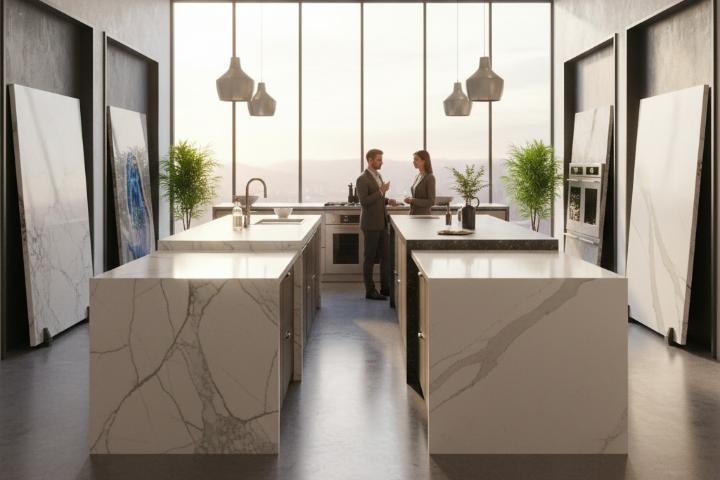
What Are These Stones, Exactly?
Before comparing the two, it helps to understand where each one comes from.
Quartzite is a metamorphic rock that begins as sandstone. Over millions of years, intense heat and pressure deep within the earth fuse the sandstone's quartz grains together, producing one of the hardest stone surfaces available for residential use. The result is a dense, durable material that often features flowing veining and soft, luminous tones. Many people are drawn to quartzite precisely because it delivers a marble-like aesthetic with significantly greater toughness.
Marble also forms through metamorphism, but it starts from limestone or dolomite rather than sandstone. The process produces a softer, more porous stone with the kind of distinctive veining and luminous finish that has been celebrated in architecture and art for centuries. Both are entirely unique from slab to slab, and both are available as stone slabs suited for countertops, vanities, accent walls, and more.
How Do They Look?
Aesthetics are often the first thing that draws people toward one stone over the other, and both materials have a great deal to offer visually.
Marble is celebrated for its soft, flowing veining and cool, luminous finish. The most iconic varieties, such as Carrara and Calacatta, feature white or grayish white backgrounds with delicate gray veining that feels timeless and refined. Marble has a softness to its appearance that is genuinely difficult to replicate, which is part of why it has remained a symbol of luxury for so long.
Quartzite can look strikingly similar to marble, particularly lighter varieties like Taj Mahal, White Macaubas, and Super White. However, it also comes in a wider range of tones and patterns, from warm creams and golds to more dramatic blues, greens, and silvers. If you want the elegance of marble but with more variety and visual boldness, quartzite gives you more options to work with.
Finish also plays a significant role in how each stone reads in a space. Both are available in polished, honed, and leathered finishes, each of which brings out different qualities in the material. Our team is happy to walk you through the options during a free design consultation at any of our showroom locations.
Durability: Where the Biggest Difference Lives
This is where quartzite and marble diverge most significantly, and it is the factor that tends to be most decisive for homeowners with busy households.
Quartzite ranks approximately 7 to 7.5 on the Mohs hardness scale, making it harder than granite and significantly more resistant to wear than marble. It resists scratches, stands up well to heat, and holds its appearance under heavy daily use. It is also far less prone to etching, meaning acidic substances like lemon juice, wine, and vinegar are unlikely to dull its surface. According to This Old House, understanding each stone's hardness and porosity is one of the most important steps before committing to any natural stone countertop.
Marble sits around 3 to 4 on the Mohs scale, which makes it considerably softer. It is more susceptible to scratching and etching, especially in kitchens where acidic foods and beverages are common. That said, marble is still a durable stone that has stood the test of time in some of the world's most demanding architectural settings. Its softer nature simply means it requires more attentive care in a home environment.
For families with young children, frequent entertainers, or anyone who wants a surface that handles the realities of daily life with minimal worry, quartzite tends to offer greater peace of mind. For homeowners who cook lightly, care attentively for their surfaces, and appreciate the patina marble develops over time, it can be a genuinely rewarding choice.
Maintenance: What to Expect From Each Stone
Neither quartzite nor marble is maintenance-free, but the level of attention each one demands is noticeably different.
Quartzite requires sealing, typically every 12 to 18 months depending on use, and routine cleaning with a pH-balanced stone cleaner. Once sealed properly, it is quite forgiving. Spills do not need to be addressed with the same urgency as they do on marble, and the surface is less likely to show wear from normal daily activity.
Marble requires more consistent attention. Because it is more porous, it should be sealed every 6 to 12 months, wiped down promptly after spills, and cleaned exclusively with pH-neutral products. Acidic substances left on marble, even briefly, can cause etching that permanently dulls the surface finish. Over time, marble in a working kitchen will likely show some signs of wear, which many homeowners come to appreciate as part of the stone's lived-in character.
You can also request a slab quote and speak with our team about the specific maintenance needs of any slab you are considering.
Where Each Stone Works Best Around the Home
Both quartzite and marble are versatile enough to be used throughout a home, but their performance differences make each one better suited to certain applications.
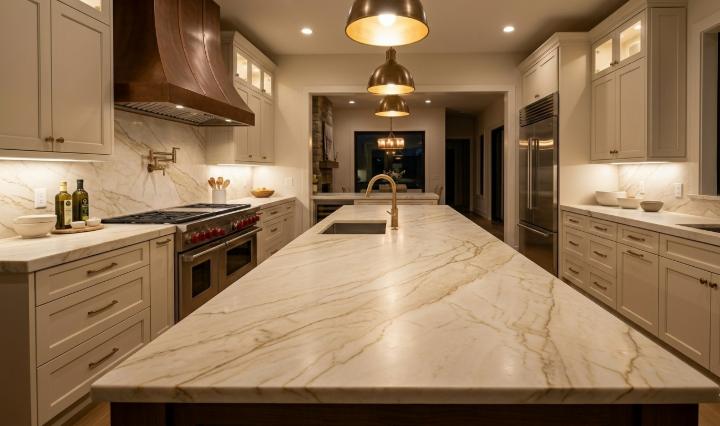
Quartzite performs exceptionally well in kitchens, high-traffic floors, and any space that sees heavy daily use. Its hardness and resistance to etching make it a practical choice for areas where spills, heat, and regular wear are part of the routine. It also works beautifully in bathrooms, where its resistance to moisture gives it a durability advantage over softer stone options.
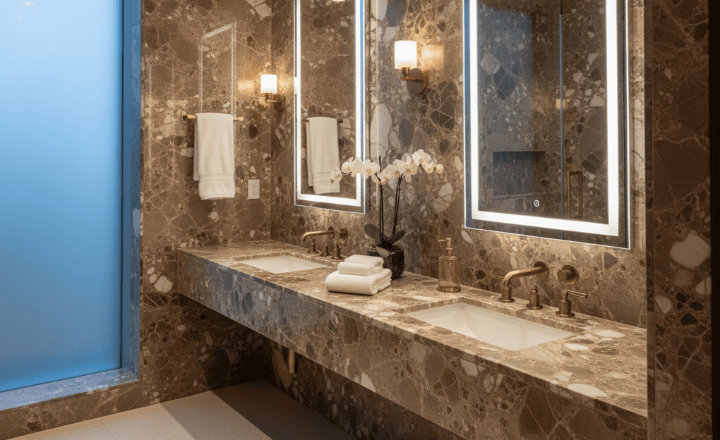
Marble is an excellent choice for spaces where it will be admired as much as it is used. Bathroom vanities, fireplace surrounds, accent walls, and powder rooms are all areas where its refined aesthetic shines without the daily wear concerns of a busy kitchen. It can absolutely be used in a kitchen, and many homeowners do so happily, but it works best in settings where careful upkeep is part of the everyday routine. The Natural Stone Institute offers reliable guidance on care requirements for both stones across different applications and environments.
Which One Should You Choose?
There is no universal right answer here, and that is the honest truth. The better stone is the one that fits how you actually live.
If you prioritize durability, lower maintenance, and a surface that holds up under real daily use, quartzite is likely the stronger match. If you are drawn to marble's singular elegance, appreciate the character it develops over time, and are comfortable with the care it requires, it is a genuinely rewarding material that has stood the test of time for good reason.
Understanding how different finishes interact with each stone can also help narrow down your decision. The Use Natural Stone finish guide is a valuable resource for comparing how polished, honed, and leathered surfaces perform differently across quartzite and marble. The best way to make a final decision is to see both materials in person. Book an appointment at your nearest showroom to view slab options side by side and get personalized guidance from our team.
Conclusion
Quartzite and marble both bring something genuinely special to a home. Quartzite offers the beauty of stone with the durability to match a busy lifestyle, while marble offers a timeless elegance that has inspired designers and homeowners for centuries. Neither is the wrong choice. They simply suit different priorities and different households.
Understanding those differences is the first step toward choosing a surface you will love for years to come. Trade professionals looking to specify either material for client projects are welcome to apply for a trade account for dedicated support, samples, and expert resources.
Frequently Asked Questions
Is quartzite harder than marble?
Yes. Quartzite ranks approximately 7 to 7.5 on the Mohs hardness scale, while marble falls between 3 and 4. This makes quartzite significantly more resistant to scratching, etching, and everyday surface wear.
Does marble need to be sealed more often than quartzite?
Yes. Because marble is more porous, it generally requires sealing every 6 to 12 months. Quartzite is less porous and typically needs resealing every 12 to 18 months, making it a lower-maintenance option over time.
Can both quartzite and marble be used in bathrooms?
Yes, both work well in bathrooms. Quartzite is particularly well suited for shower surrounds and vanity tops due to its moisture resistance. Marble is a classic choice for vanities and accent walls, where its elegance can shine in a lower-traffic environment.
Which stone is better for a busy kitchen?
Quartzite is generally the more practical choice for a high-traffic kitchen. Its hardness and resistance to etching from acidic foods make it easier to maintain in a space that sees heavy daily use. Marble can work in a kitchen but requires more careful and consistent upkeep.
Do quartzite and marble look similar?
Many quartzite varieties closely resemble marble, particularly lighter options with flowing veining. However, quartzite also comes in a wider range of colors and patterns, offering more variety for different design styles and preferences.