Two Stones, One Kitchen: Here Is What You Need to Know
Choosing the right countertop surface is one of the most rewarding and overwhelming parts of any kitchen renovation. Both quartzite and granite are premium natural stone slabs that deliver durability, beauty, and long-term value.
Quartzite is harder, more heat-resistant, and offers a marble-like look, making it ideal for modern, high-traffic kitchens. Granite provides a wider color range at a more accessible price point. The best choice depends on your kitchen habits, design style, and budget.
Whether you are planning a full kitchen remodel or refreshing a single surface, the material you select sets the tone for everything else. From your kitchen island centerpiece to every prep surface lining the perimeter, the right stone carries both aesthetic weight and practical purpose.
By the end of this guide, you will know the key differences between quartzite and granite, understand their real-world performance, and feel confident choosing the surface that fits your lifestyle.
Why Countertop Selection Shapes the Entire Kitchen
Your countertop endures more daily contact than almost any other surface in your home. It faces heat, sharp tools, acidic ingredients, and constant foot traffic. A material that looks beautiful but fails to perform will cost you far more in the long run.
According to This Old House's comprehensive stone countertop resource, natural stone surfaces consistently rank among the top features that drive home resale value. Buyers notice quality stone immediately.
When evaluating countertops and kitchen island surfaces, these are the factors that matter most:
- Hardness and scratch resistance
- Heat and impact tolerance
- Porosity and stain vulnerability
- Sealing requirements and upkeep
- Visual character and veining patterns
- Total installed cost
Both stones bring genuine strengths to the table. Understanding where each excels helps you invest wisely.
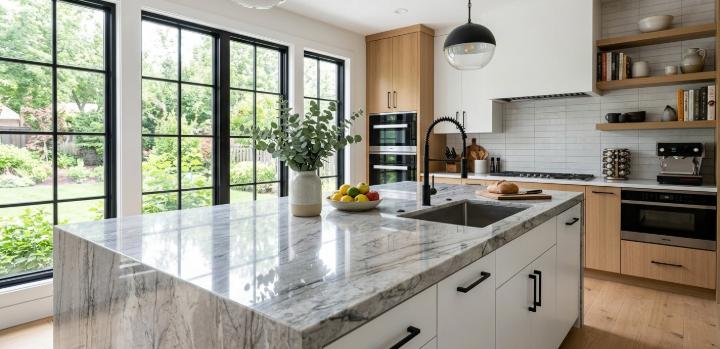
Styling Your Kitchen With Natural Stone Slabs
Quartzite on the Kitchen Island: A Bold Focal Point
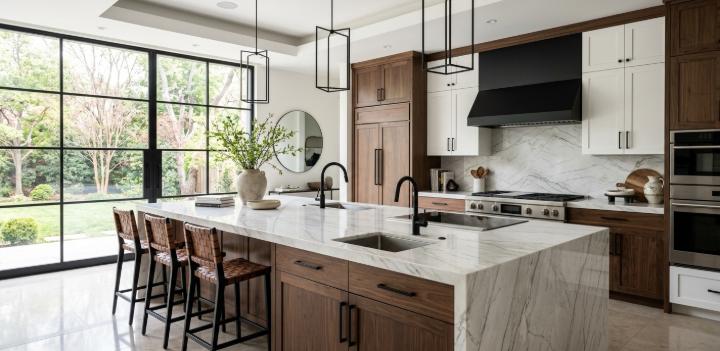
The kitchen island is the stage of any modern kitchen. Quartzite, with its sweeping veins and crystalline surface finish, performs brilliantly as a centerpiece that draws the eye and anchors the entire room.
Quartzite forms deep underground under extreme heat and pressure, producing a surface with natural luminosity that photographs cannot fully capture. It pairs powerfully with dark cabinetry, matte black hardware, and open-plan layouts where visual drama is the goal.
Explore the full range of premium quartzite and granite slab options available in a variety of sizes, finishes, and veining styles suited for island applications.
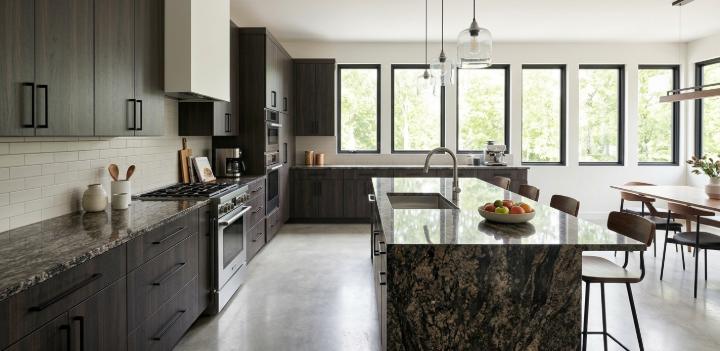
Granite Countertops: Timeless and Versatile
Granite has remained a kitchen standard for generations because it adapts to almost every design direction. Its speckled, mineral-rich patterns work equally well in traditional farmhouse kitchens and clean contemporary spaces.
A warm beige or honey-toned granite blends naturally with wood cabinetry and open shelving. A deep black granite with consistent fleck patterns creates a polished, high-end look alongside white or gray cabinets.
Granite also performs exceptionally across longer perimeter countertop runs where visual consistency matters more than dramatic movement. Bob Vila's stone surface maintenance guide offers practical care advice that applies directly to granite upkeep as well.
Side-by-Side Comparison: Quartzite vs. Granite
Feature | Quartzite | Granite |
Hardness (Mohs Scale) | 7+ | 6 to 7 |
Heat Resistance | Excellent | Very Good |
Scratch Resistance | Very High | High |
Porosity | Low to Medium | Medium |
Maintenance Level | Moderate | Moderate |
Price Range | $$ to $$$ | $ to $$$ |
Best Style Fit | Contemporary, Transitional | Traditional, Versatile |
Color Availability | Whites, Grays, Blues | Broad spectrum |
How to Select the Right Stone for Your Kitchen: A Step-by-Step Guide
Choosing a stone surface does not need to feel overwhelming. Follow these five steps to move from consideration to confident decision.
Step 1: Assess Your Kitchen's Daily Demands High-traffic kitchens with frequent cooking and heavy use benefit most from quartzite's superior hardness. Lower-activity kitchens can work beautifully with granite.
Step 2: Establish a Clear Budget Granite offers strong entry-level pricing. Quartzite runs higher, particularly for slabs with pronounced veining or rare coloring.
Step 3: See the Stone in Person Digital images rarely capture how stone truly looks and feels. Visit stone suppliers near you to view full slabs under natural and artificial lighting before committing.
Step 4: Test Samples in Your Actual Kitchen Bring samples home and observe them under your specific lighting conditions at different times of day. Colors and tones shift dramatically between morning and evening light.
Step 5: Consult a Stone Professional A qualified consultant will recommend the right finish (polished, honed, or leathered), edge profile, and sealing schedule based on your specific stone and kitchen conditions.
Pros and Cons at a Glance
Quartzite
Pros:
- Harder and more durable than most natural stones
- Delivers marble aesthetics without marble's fragility
- Superior heat and impact resistance
- Lower porosity on denser varieties
Cons:
- Higher price point for premium slabs
- Narrower color palette compared to granite
- Still requires periodic professional sealing
Granite
Pros:
- Extensive range of colors, patterns, and movement
- More accessible starting price per square foot
- Proven decades-long performance in residential kitchens
- Widely stocked across suppliers
Cons:
- More porous than quartzite on average
- Slightly lower scratch resistance
- Busy patterning can feel heavy in minimalist spaces
Partnering With a Stone Expert Who Understands Your Vision
The supplier you choose matters as much as the stone itself. A knowledgeable partner will guide you through slab selection, finish choices, edge profiles, and installation logistics without pressure or confusion.
Quality stone providers carry carefully sourced inventory and understand both the technical and design dimensions of every material they stock. Their guidance helps you avoid costly mismatches between stone, cabinetry, and flooring before fabrication begins.
Discover the full collection of natural stone slabs available for residential kitchen projects, including quartzite and granite options for both island and full countertop applications.
For those who want to deepen their knowledge of stone selection, the Natural Stone Institute events calendar offers access to industry education, trade resources, and expert-led sessions open to homeowners and designers.
A free consultation with an experienced stone specialist is one of the most valuable steps you can take before purchasing any slab. It removes guesswork and ensures your investment holds up beautifully for years.
Conclusion
Both quartzite and granite are outstanding surfaces for modern kitchens. Quartzite leads in hardness and contemporary visual appeal. Granite delivers variety, value, and proven long-term performance.
The right answer is personal. It depends on how you cook, what you love visually, and what level of maintenance fits your routine. What both stones share is the ability to elevate every kitchen they inhabit.
When you are ready to move forward, find the perfect stone for your kitchen and connect with a professional team that puts your vision first.
Frequently Asked Questions
Is quartzite a better option than granite for busy kitchen countertops?
Quartzite ranks higher on the hardness scale and resists heat more effectively than granite, making it well-suited for heavily used kitchens. Granite remains a strong performer and is more accessible in price for budget-focused projects.
Does quartzite require sealing like other natural stones?
Yes. Even with its dense composition, quartzite is still a porous natural material. Annual sealing helps protect against staining and moisture absorption, particularly around the sink and stovetop areas.
Which natural stone slab tends to cost more per square foot?
Quartzite generally carries a higher price, especially for dramatically veined or rare varieties. Entry-level granite is more affordable, though exotic granite slabs can reach quartzite pricing at the premium end.
Is quartzite a practical choice for a kitchen island surface?
Yes. Its exceptional hardness, heat resistance, and visual presence make quartzite one of the most sought-after options for a kitchen island. It holds up well to daily activity while functioning as a design statement.
What is the best way to maintain granite countertops long-term?
Use a pH-neutral cleaner daily, seal the surface once or twice per year, and avoid abrasive pads or acidic cleaners.