Quartzite countertops are a natural metamorphic stone known for their durability, heat resistance, and distinctive veining patterns. Formed from sandstone under intense heat and pressure, it benefits from periodic sealing depending on use and sealer type, and can last decades with proper care. Costs depend on slab quality, thickness, and color rarity while professional installation is quoted separately based on project complexity.
What Is Quartzite?
Quartzite is a naturally formed metamorphic rock extracted directly from the earth. Its origin story begins as sandstone, which gradually transforms through intense heat and pressure over millions of years into the dense, resilient stone we know today. Throughout this process, quartz crystals within the sandstone fuse and interlock, producing a material that surpasses the hardness of many other popular stones, granite included. One distinction worth noting is that quartzite is not the same as quartz. Though both share quartz crystals, quartz countertops are engineered composites, a manufactured blend of crystals and resin, while quartzite is entirely natural.
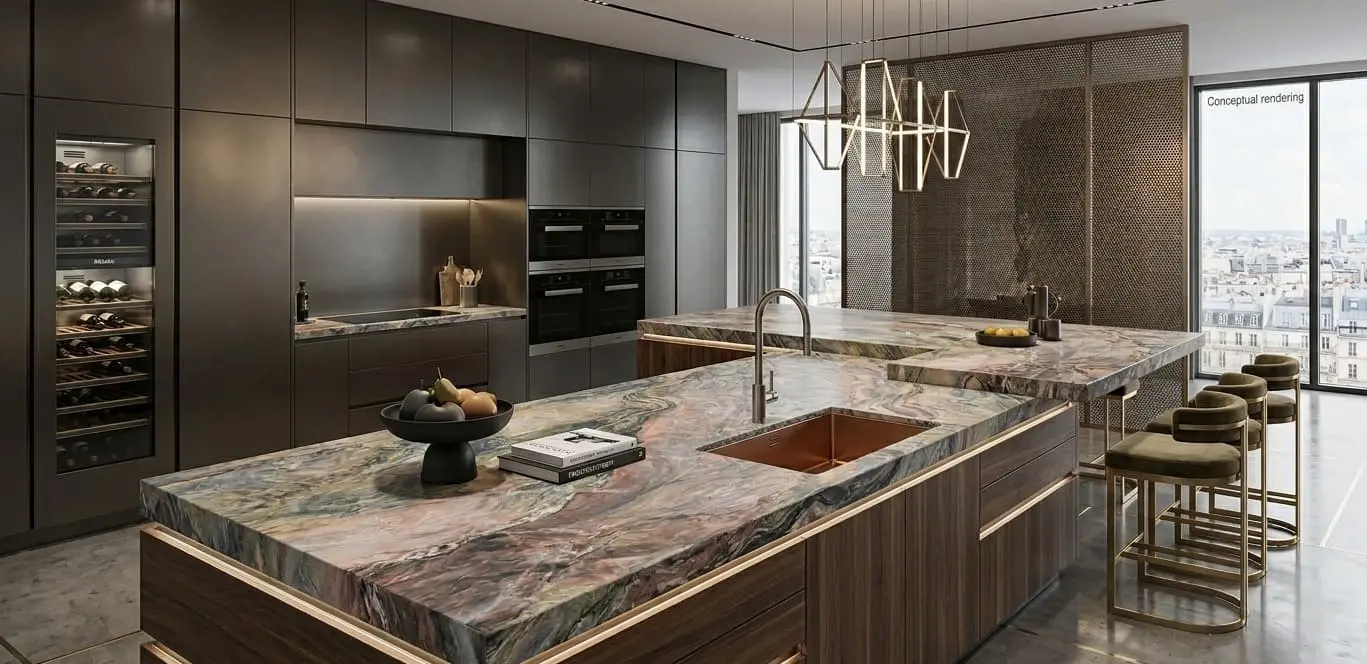
Quartzite Benefits
From its head-turning aesthetics to its impressive staying power, quartzite countertops bring real value to kitchens and bathrooms alike.
Aesthetic Appeal
The visual appeal of quartzite is hard to overlook. With options ranging from soft, neutral tones to deep blues and rich emerald greens, there is a color palette suited to virtually any design direction. Quartzite transitions effortlessly across styles, equally at home in a sleek, contemporary kitchen as it is in a warm, traditionally styled space.
Much of its beauty lies in its individuality. Because quartzite is a product of nature, no two slabs are identical. Each one carries its own pattern of veining and color variation, making it truly unique. Some slabs feature particularly bold, eye-catching characteristics that naturally draw attention and serve as stunning focal points in any room.
Quartzite Durability
Quartzite has built its reputation on toughness. Among the naturally occurring stones commonly used for countertops, it consistently ranks as one of the hardest and most resilient, outperforming many widely used alternatives. This strength makes it well-suited for demanding environments, whether that is a busy kitchen or a frequently used bathroom.
It stands up well to the rigors of daily life. Heavy impacts, sharp utensils, and repeated cleaning cycles are no match for its surface. Even under consistent use, quartzite maintains its refined appearance and remains a timeless feature in high-traffic spaces, especially when crafted from premium natural stone slabs designed for lasting beauty and performance.
Heat Resistance
Like most natural stones, quartzite handles heat exceptionally well. A hot pan placed on its surface or a styling tool set down in the bathroom is unlikely to cause lasting damage. While protective pads and trivets are still a good habit, quartzite is far more resistant to heat than most synthetic countertop alternatives.
Quartzite Longevity
Beyond its toughness and heat tolerance, quartzite offers an outstanding lifespan. With proper care and routine maintenance, these countertops can last for decades, making them a sound long-term investment that continues to add value and elegance to your home over time, especially when sourced from a trusted local tile and stone showroom offering premium quartzite selections for every design style.
Quartzite Cost
Quartzite countertop pricing is influenced by several variables, including slab quality, thickness, and color rarity. Premium slabs, which are thicker cuts in uncommon color variations, command higher price points, while thinner slabs in more widely available colors tend to fall at the lower end of the range. Keep in mind that these figures typically reflect material costs only. Installation adds to the total, with labor rates varying depending on your location and the complexity of the project. Factors like sink cutouts, edge profiles, and corner detailing all play a role in the final quote.
For more accurate planning, homeowners and design professionals can benefit from applying for a trade account for exclusive stone pricing or requesting a personalized slab quote based on project specifications and material selection.
Quartzite Maintenance
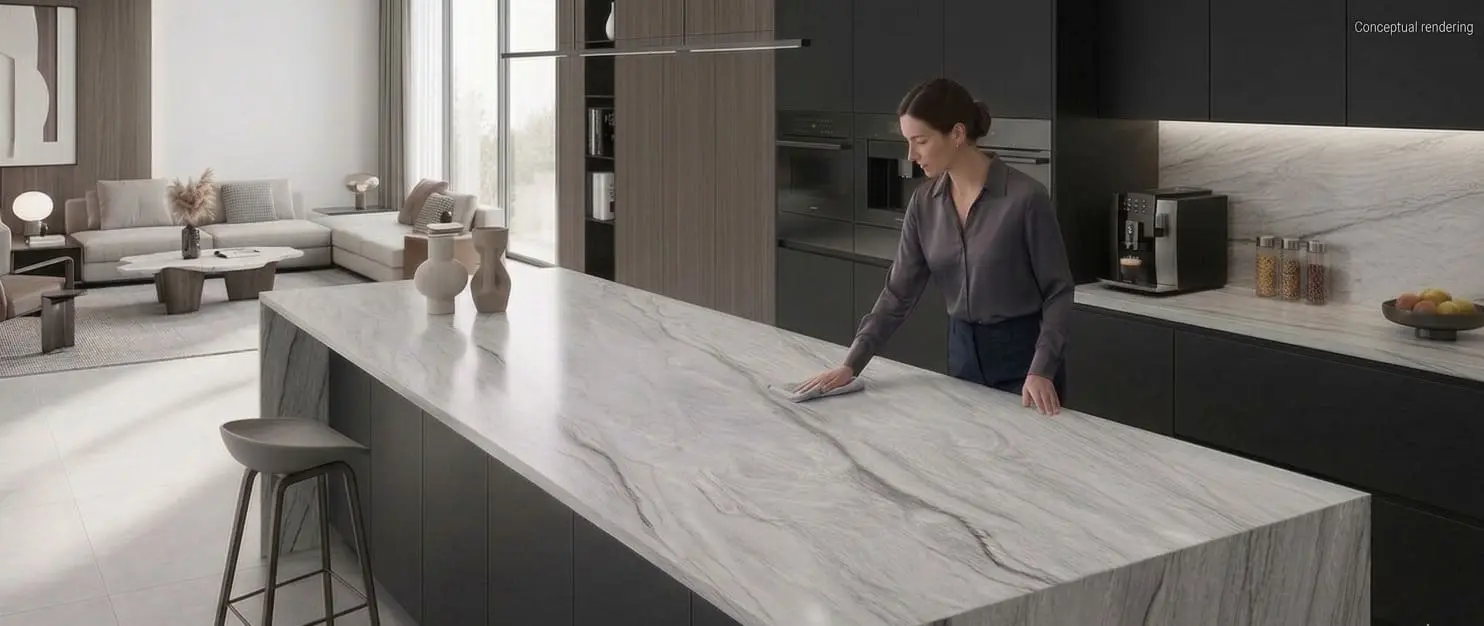
Caring for quartzite countertops is refreshingly straightforward. This is a stone that has withstood the forces of nature for millions of years, so day-to-day upkeep at home is comparatively minimal, particularly when measured against other natural stone options.
Keeping quartzite looking its best comes down to a few consistent habits. Periodically perform a water test on the stone's surface to determine whether resealing is needed, as a properly maintained sealant is your best defense against spills and stains. For routine cleaning, reach for a mild, non-acidic cleaner or a product specifically formulated for natural stone. Address spills promptly, especially from food and beverages, to prevent staining before it has a chance to set.
How to Choose the Right Quartzite Slab
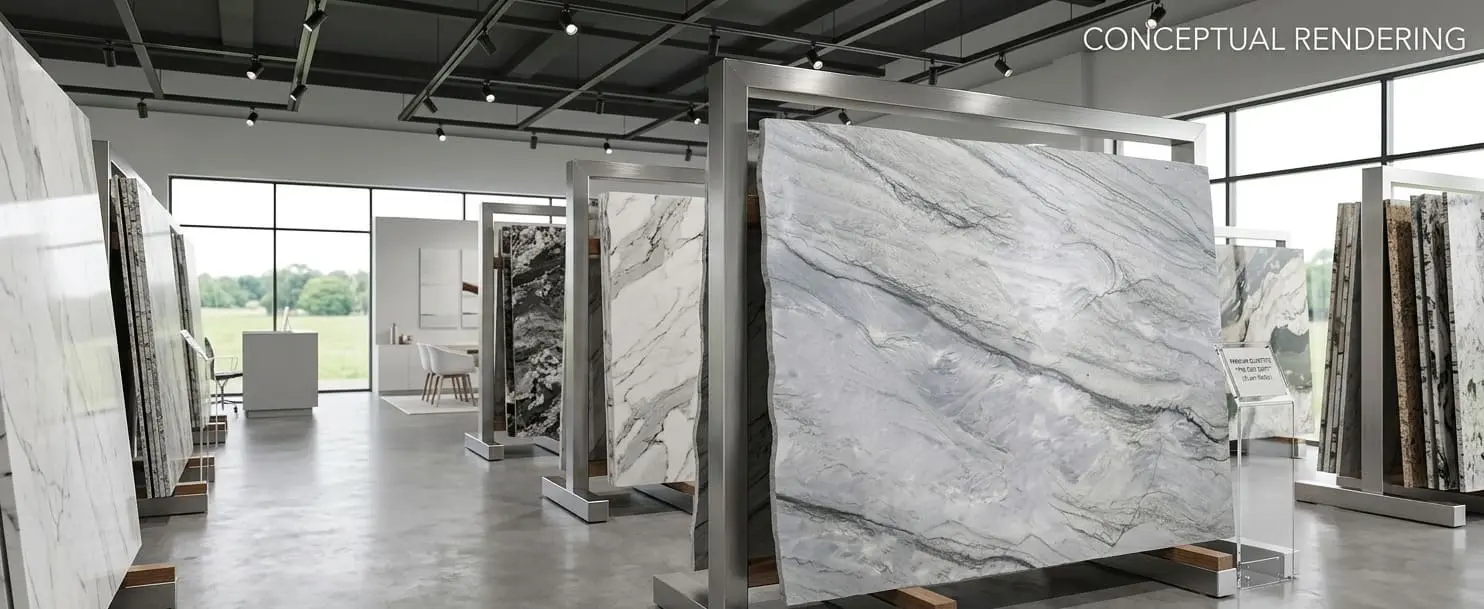
Choosing the right quartzite slab for your space calls for thoughtful consideration. Begin with a clear vision of the aesthetic you want to achieve. Identify the mood or atmosphere you are working toward, then select a color and pattern that support that direction, whether you want your countertops to make a bold statement or complement the existing elements in the room. Take stock of everything in the space, as cabinetry, wall color, and decorative accents all contribute to the overall look and feel.
Once you have narrowed down your color and pattern preferences, it is time to start sourcing. Viewing full slabs in person is always the recommended approach, since small samples rarely capture how a stone will read in an entire space. If an in-person visit is not practical, an online slab inventory tool offers a convenient way to browse available options and get a realistic sense of what each slab has to offer.
Conclusion
Quartzite countertops continue to prove themselves as one of the most well-rounded natural stone options available today. Their combination of striking natural beauty, exceptional hardness, heat resistance, and decades-long lifespan makes them a compelling choice for homeowners who refuse to compromise on either form or function. While the upfront cost may be higher than some alternatives, the long-term value quartzite delivers in everyday performance and visual appeal makes it an investment worth serious consideration.
Whether you are redesigning a kitchen, refreshing a bathroom, or building from the ground up, quartzite is a surface that rewards thoughtful selection and proper care with lasting elegance, especially when working with Nova Tile and Stone, a trusted supplier of premium natural stone surfaces for every project.
Frequently Asked Questions
No, quartzite and quartz are two very different materials. Quartzite is a naturally occurring metamorphic rock formed from sandstone through heat and pressure deep within the earth. Quartz, on the other hand, is an engineered, man-made material composed of crushed quartz crystals mixed with resin and pigments. While both are durable and visually appealing, quartzite is entirely natural, whereas quartz is manufactured.
The frequency of quartzite sealing depends on how heavily your countertops are used and the specific quartzite variety you have. Rather than following a fixed schedule, perform a simple water test: place a small amount of water on the surface and observe. If the water beads up, the sealant is still effective. If it absorbs into the stone, it is time to reseal.
Quartzite is one of the hardest natural stones used in countertop applications, ranking high on the Mohs hardness scale. This makes it highly resistant to scratches under normal everyday use. That said, no natural stone is completely scratch-proof. Using a cutting board instead of cutting directly on the surface is always a good practice to preserve the finish and keep your countertops looking pristine over time.
Absolutely. Quartzite is an excellent choice for kitchens specifically because of its durability, heat resistance, and low maintenance requirements. It stands up well to the demands of a busy kitchen environment, where heavy pots, sharp utensils, frequent cleaning, and occasional spills are all manageable with a properly sealed quartzite surface. Its wide range of colors and natural veining patterns also makes it easy to integrate into virtually any kitchen design.
Quartzite generally edges out granite in terms of hardness. Because of the way quartzite forms, through the intense fusion of quartz crystals under extreme heat and pressure, it produces a denser, harder surface than most granite varieties. Both stones are highly durable and suitable for countertop use, but quartzite's superior hardness gives it a slight advantage in scratch and impact resistance, making it a strong contender for high-traffic areas in the home.
Note: Some images on this page may be conceptual renderings created to illustrate design possibilities and may not depict actual installations.